
Medically reviewed by ChatWithDr Medical Team
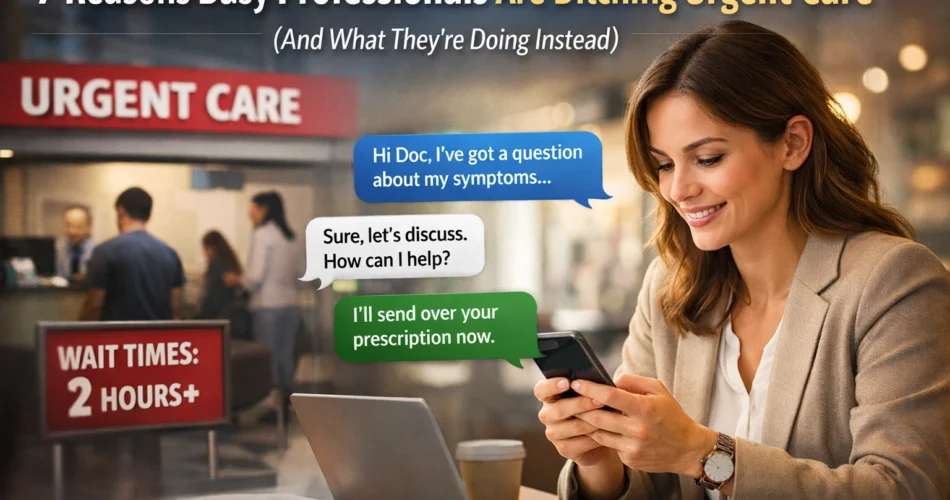
It's 2:00 PM on a Tuesday, and you're in back-to-back meetings. That scratchy throat from this morning has turned into a full-blown sore throat, and you're pretty sure you need antibiotics. The thought of leaving work, driving to urgent care, sitting in a waiting room for an hour, and missing the rest of your workday sounds exhausting: because it is.
You're not alone. Busy professionals across the country are rethinking how they access healthcare for non-emergency conditions. While urgent care centers were once the go-to solution for quick medical attention, a growing number of working adults are discovering faster, more convenient alternatives that fit their schedules without compromising quality care.
1. The Average Urgent Care Wait Time Is Actually 90+ Minutes
Despite being marketed as "quick care," the reality at most urgent care centers tells a different story. According to healthcare industry data, the average wait time at urgent care facilities ranges from 60 to 120 minutes during peak hours: which unfortunately coincide with most professionals' lunch breaks and after-work hours.

Here's what that timeline actually looks like:
- 15-30 minutes: Drive time and parking
- 45-90 minutes: Waiting room time
- 15-30 minutes: Actual consultation
- 10-15 minutes: Pharmacy stop (if needed)
That's easily a 2-3 hour commitment for a condition that might need a simple prescription refill or quick diagnosis.
What busy professionals are doing instead: Text-based telehealth platforms that respond in under 2 hours: often while you're still at your desk. Services like ChatWithDr allow you to message with licensed physicians and receive treatment plans, prescriptions, and medical advice without leaving work.
2. Your Time Is Worth More Than $39.99
Let's do the math. If you earn $50,000 annually, your time is worth approximately $24 per hour. A 2-3 hour urgent care visit costs you $48-72 in lost productivity: before you even pay the medical bill.
Traditional urgent care visits typically cost between $100-$250 with insurance co-pays, and significantly more without coverage. When you factor in lost work time, transportation costs, and the mental energy of disrupting your entire day, the true cost skyrockets.
The smarter alternative: Flat-rate online consultations at $39.99 with no hidden fees, no insurance hassles, and no account required. You can chat with a doctor during your coffee break and get back to work in minutes, not hours.
3. Simple Conditions Don't Require In-Person Visits
Studies published by the American Journal of Managed Care indicate that approximately 70% of urgent care visits are for conditions that can be effectively diagnosed and treated remotely through telehealth. These include:
- Sinus infections
- UTIs
- Pink eye
- Cold, flu, and COVID symptoms
- Minor allergic reactions
- Prescription refills for chronic conditions
For these common ailments, describing your symptoms through secure medical messaging is just as effective as sitting in an exam room: and considerably more convenient.

4. Urgent Care Exposes You to Other Sick People
Walking into an urgent care waiting room during cold and flu season is like entering a germ incubator. You're sitting shoulder-to-shoulder with people experiencing contagious conditions, touching shared surfaces, and breathing recirculated air.
According to the CDC, healthcare settings are common places for disease transmission, particularly for respiratory illnesses. If you're visiting urgent care for something minor like a migraine or allergies, you might leave with something worse than what brought you in.
The healthier option: Text with a doctor from your home, office, or anywhere you feel comfortable. Zero exposure risk, same quality care.
5. No Appointment Needed Actually Means "First Come, First Served"
The "no appointment needed" promise at urgent care centers sounds appealing until you realize it's essentially a queuing system. Arrive at 4:00 PM and there are eight people ahead of you? You're waiting: possibly for hours.
The unpredictability makes planning impossible. You can't schedule your day around uncertain wait times, especially when you have back-to-back meetings, client calls, or family commitments.
What's replacing this model: 24/7 telehealth services where medical professionals respond within 2 hours, guaranteed. Send your message whenever it's convenient: early morning, lunch break, or late evening: and receive care on your schedule, not theirs.
6. Prescription Refills Shouldn't Require a 3-Hour Detour
For professionals managing chronic conditions like asthma, high blood pressure, or high cholesterol, running out of medication shouldn't mean derailing your entire workday. Yet traditional urgent care often requires you to physically show up for routine prescription renewals.

This is particularly frustrating when:
- Your regular doctor isn't available for weeks
- You're traveling for work
- You're between primary care physicians
- Your pharmacy needs a quick refill authorization
The streamlined solution: Online prescription services that handle routine refills through secure messaging. Physicians can review your medical history, verify your prescription needs, and send orders directly to your pharmacy: all without requiring you to leave your desk.
7. Continuity of Care Is Nearly Impossible
Urgent care centers rarely provide follow-up care or maintain ongoing patient relationships. You see whoever is working that shift, they handle your immediate concern, and that's it. If your condition doesn't improve or you have questions later, you're starting from square one with a different provider.
This fragmented approach creates gaps in your medical records and often leads to redundant testing or conflicting treatment advice. For busy professionals trying to manage their health efficiently, this lack of continuity wastes time and money.
What Smart Professionals Are Doing Instead
The shift away from traditional urgent care isn't about abandoning professional medical care: it's about accessing it smarter. Modern professionals are turning to text-based telehealth platforms that offer:
Speed: Get medical advice and prescriptions in under 2 hours, not 2-3 hours of waiting room time
Affordability: Transparent, flat-rate pricing at $39.99 with no surprise bills or insurance complications
Accessibility: No account setup, no app downloads: just quick access to licensed physicians when you need them
Convenience: Chat with doctors during your commute, lunch break, or from your couch at 11 PM
Privacy: Discuss sensitive concerns like STD testing or hair loss discreetly through secure medical messaging

Is Online Healthcare Right for Your Situation?
Text-based telehealth works exceptionally well for:
- Common acute conditions (sore throats, UTIs, sinus infections)
- Prescription refills and medication management
- Minor skin conditions requiring dermatologist consultation
- Women's health needs like birth control or emergency contraception
- Follow-up questions after in-person visits
- Health concerns that don't require physical examination
However, emergencies requiring immediate intervention: severe chest pain, difficulty breathing, heavy bleeding, or suspected fractures: still require emergency room care or in-person urgent care evaluation.
Making the Switch: What to Expect
Transitioning to online healthcare is simpler than most professionals expect. Platforms like ChatWithDr have eliminated the barriers that made telehealth feel complicated:
- No registration hassle: Start chatting with a doctor immediately without creating accounts or downloading apps
- Transparent pricing: Know exactly what you'll pay upfront: $39.99, flat rate
- Fast response times: Receive physician replies in under 2 hours, often much faster
- Direct-to-pharmacy prescriptions: If medication is appropriate, prescriptions go straight to your chosen pharmacy
- Secure messaging: HIPAA-compliant communication protecting your private health information
The transformation in how busy professionals access healthcare isn't about replacing all traditional care: it's about having efficient options for the situations where they make sense. For the majority of non-emergency medical concerns that previously required urgent care visits, secure medical messaging with licensed physicians offers a faster, more affordable, and equally effective alternative.
Ready to experience healthcare that actually fits your schedule? Book a consultation and chat with a licensed doctor today: no waiting room required.
Disclaimer: This information is not a substitute for professional medical advice, diagnosis, or treatment. Always seek the advice of your physician or qualified health provider with questions regarding medical conditions or treatments.
Related posts:
 7 Reasons Busy Professionals Are Ditching Urgent Care for Online Doctor Visits
  Best Telemedicine Platforms: best telemedicine platforms for 2025
  The 7 Best Online Doctor Services of 2025: A Detailed Review
  Online Medical Chat: Why Busy Professionals Are Ditching Waiting Rooms for Instant Doctor Access
  Difference Between Urgent Care and Emergency Explained