

When that queasy, unsettling feeling of nausea hits, all you want is relief—and you want it fast. The pharmacy aisle is packed with options, but grabbing the right one is crucial. The most common types of nausea medicine OTC include antihistamines like Dramamine for motion sickness, bismuth subsalicylate like Pepto-Bismol for an upset stomach, and simple antacids for indigestion.
The trick is knowing which one to reach for, and it all comes down to what's causing your symptoms in the first place.
Your Roadmap to Nausea Relief
Feeling sick isn't just a physical annoyance. It completely hijacks your day, kills your appetite, and can leave you feeling totally wiped out. Staring at a wall of boxes in the pharmacy is the last thing you want to do when you're already feeling miserable.
Think of this as your quick guide to navigating those choices. The key to feeling better is matching the medicine to the source of your nausea. What works wonders for a dizzying car ride won't do much for a stomach bug you picked up. Getting this right is the first step toward feeling human again.
Matching the Medicine to the Cause
Different triggers need different solutions. A stomach bug, for example, directly irritates your digestive system. Motion sickness, on the other hand, is all about your brain getting mixed signals from your eyes and inner ears, making it think you've been poisoned.
This flowchart breaks down how to think about your symptoms based on their most likely cause.
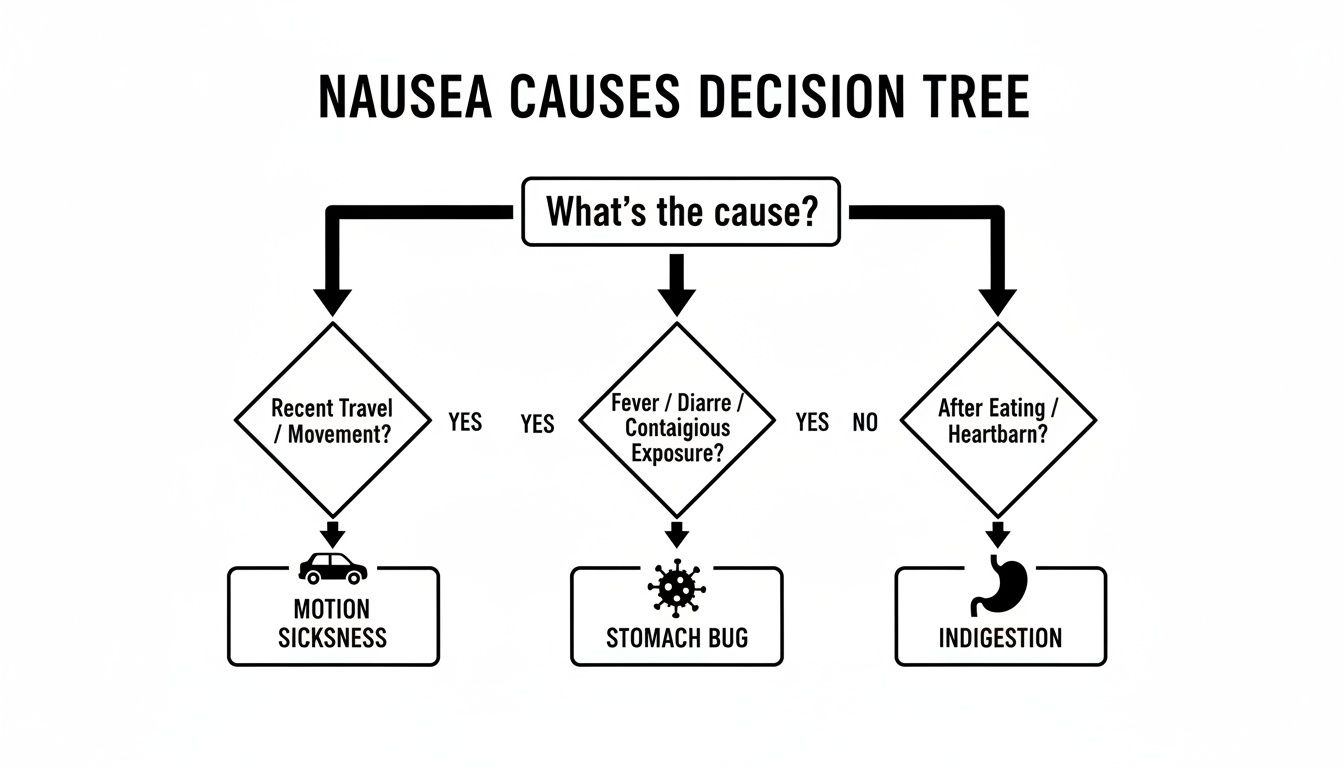
Once you've pinpointed whether your nausea is from motion, indigestion, or a virus, you can zero in on the best remedy.
To make it even simpler, here's a quick look at the most popular OTC options and where they shine.
Quick Guide to Common OTC Nausea Medicines
This table gives you a snapshot of the go-to medications you'll find on the shelf. It's a great starting point for identifying the best choice for your situation before we dig into the details of how each one works.
| Medication Type | Common Brand Names | Best For | Key Feature |
|---|---|---|---|
| Antihistamines | Dramamine, Bonine | Motion Sickness, Vertigo | Blocks brain signals causing dizziness |
| Bismuth Subsalicylate | Pepto-Bismol, Kaopectate | Stomach Flu, Indigestion | Coats and soothes the stomach lining |
| Antacids | Tums, Rolaids | Heartburn, Acid Indigestion | Neutralizes excess stomach acid |
| Phosphorated Solution | Emetrol | Stomach Bug, Overeating | Calms stomach muscle contractions |
Use this as your cheat sheet. It helps you quickly connect your symptoms to a solution so you can get relief and get back to your day.
Decoding the Most Common OTC Nausea Fighters

Walking into the pharmacy with a churning stomach can feel pretty overwhelming. You’re faced with a wall of options, and they all promise relief. But picking the right nausea medicine OTC isn't about grabbing the first box you see; it’s about matching the medicine to the cause of your misery.
These remedies work by targeting specific triggers in your body. Let's break down how the most common ones work so you can stop guessing and start feeling better, faster.
Antihistamines for Motion Sickness
Ever wonder why that winding road or choppy boat ride makes your stomach turn? It’s all about a communication breakdown in your brain. Your eyes are telling your brain you’re still, but the fluid in your inner ear is sloshing around, screaming that you’re moving. This sensory mismatch confuses your brain, which defaults to thinking you’ve been poisoned and triggers the urge to vomit.
Antihistamines like dimenhydrinate (Dramamine) and meclizine (Bonine) are basically signal jammers. They get in the middle of that frantic conversation between your inner ear and your brain’s nausea center, calming everything down. By blocking those confusing nerve signals, they stop your brain from overreacting. That’s what makes them the go-to for any kind of motion-related queasiness.
Nausea is a huge global issue, and the market for treatments reflects that. Valued at USD 3.17 billion in 2025, the nausea medicine market is expected to surge to USD 4.86 billion by 2032. Antihistamines are a huge piece of that pie, projected to hold around 25% of the market share because they're so easy to get. You can dive deeper into these trends on the BioSpace website.
Bismuth Subsalicylate for Stomach Irritation
When your nausea is coming from something you ate or a nasty stomach bug, the problem is usually direct irritation in your stomach lining. This is where bismuth subsalicylate—the powerhouse ingredient in Pepto-Bismol—steps in.
Think of it as a soothing, protective blanket for your angry stomach. It works in two key ways:
- It coats your stomach lining, creating a shield that protects it from stomach acid and other irritants.
- It has mild anti-inflammatory properties, which helps calm down the underlying inflammation that’s making you feel so awful.
This one-two punch makes it the perfect choice when your nausea is paired with heartburn, indigestion, or diarrhea.
Antacids and Other Stomach Calmers
Sometimes, nausea is just a simple case of too much stomach acid. If you’re dealing with heartburn or acid reflux, that acidic backup can easily make you feel queasy. Antacids like Tums or Rolaids offer a fast and direct fix.
They work by chemically neutralizing the excess acid in your stomach. It's a straightforward chemical reaction that raises the stomach's pH, calms the irritation, and eases that acid-induced nausea. Simple, but effective.
Another interesting option is a phosphorated carbohydrate solution (like Emetrol). This thick, syrupy liquid works in a totally different way by targeting your stomach muscles directly. When you're nauseous, your stomach often contracts erratically. Emetrol helps relax those muscle spasms, quieting the queasy feeling at its source. It's especially good for nausea from overeating or the stomach flu.
Navigating Side Effects and Safety Guidelines
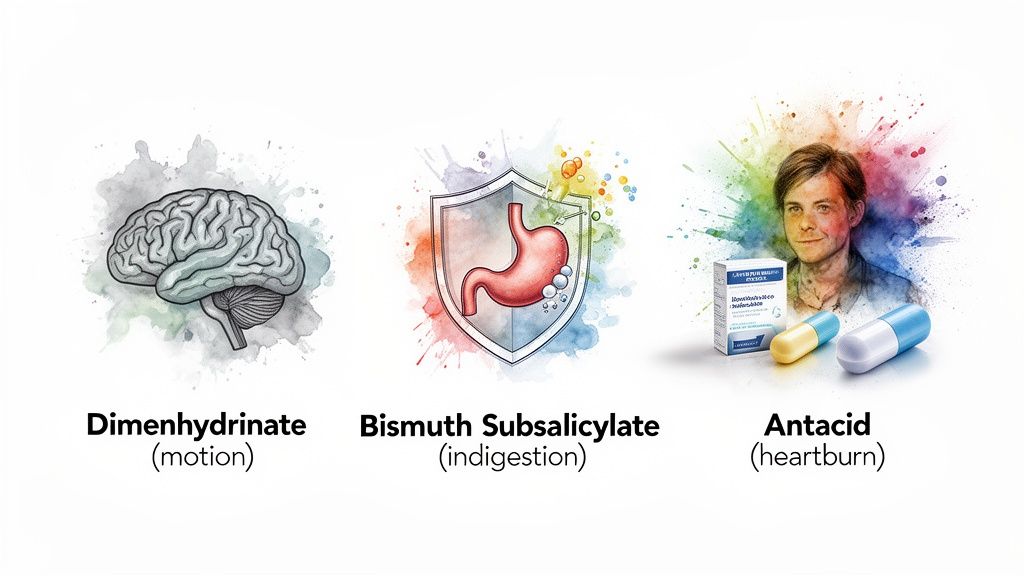
Picking the right over-the-counter nausea medicine is just the first step. Knowing how to use it safely is what really counts. These medications might be easy to grab off the shelf, but they’re still powerful and come with potential side effects and critical precautions you can't ignore.
One of the most common side effects, especially with antihistamines like dimenhydrinate and meclizine, is drowsiness. This isn't just a minor inconvenience—it can seriously impair your ability to drive, operate machinery, or make important decisions. Think of it like taking a red-eye flight; even if you feel okay, your reaction time isn't what it should be.
Special Considerations for Children and Teens
Giving medication to children demands extra caution because their bodies process things differently than adults. There's a critical warning that applies to any product containing bismuth subsalicylate, like Pepto-Bismol.
This ingredient is chemically related to aspirin. If you give it to a child or teenager who is recovering from a viral illness like the flu or chickenpox, it’s been linked to Reye's syndrome. This is a rare but extremely serious condition that can cause dangerous swelling in the liver and brain.
The bottom line is simple: always check with a pediatrician before giving any nausea medicine OTC to a child. They can recommend the safest option and the right dose based on your child's age and weight, helping you avoid accidental harm.
Guidance for Pregnancy and Breastfeeding
Nausea during pregnancy is a familiar struggle, but managing it means making careful choices. While some OTC options are generally considered lower risk, no medication is 100% risk-free during pregnancy. It is absolutely non-negotiable to consult your doctor before taking anything.
For breastfeeding mothers, the big question is whether the medication can pass into breast milk and affect the baby. It's also vital to consider the latest safety guidelines for breastfeeding mothers when sick. A healthcare provider can give you the most current and personalized advice for your situation.
Potential Drug Interactions to Watch For
It’s easy to forget that OTC nausea medicines can interact with other drugs you're taking, sometimes in dangerous ways. This is a detail that’s too important to overlook.
The following table breaks down the most common side effects and safety considerations for each major type of OTC nausea treatment. Think of it as your quick-reference safety checklist.
OTC Nausea Medicine Safety Checklist
| OTC Medication Type | Common Side Effects | Key Precaution (Pregnancy, Children, etc.) | Potential Drug Interactions |
|---|---|---|---|
| Antihistamines | Drowsiness, dizziness, dry mouth, blurred vision | Avoid in children under 2; use caution during pregnancy. Avoid driving or operating heavy machinery. | Increased sedation with alcohol, sleeping pills, or tranquilizers. |
| Bismuth Subsalicylate | Darkening of the tongue or stool, constipation | Do not give to children/teens with viral illness due to Reye's syndrome risk. Use caution in pregnancy. | May increase the effect of blood thinners (e.g., warfarin) and interfere with some diabetic medications. |
| Antacids | Constipation (aluminum-based) or diarrhea (magnesium-based) | Generally considered safe in pregnancy, but check with a doctor first. Safe for older children. | Can interfere with the absorption of many drugs, including antibiotics and thyroid medications. |
| Ginger | Heartburn, gas, stomach upset (in high doses) | Generally safe in pregnancy for nausea, but consult a doctor. Safe for children in food form. | May increase the risk of bleeding when taken with blood thinners. |
This checklist is a great starting point, but it doesn't replace a conversation with a professional.
Always tell your pharmacist about all other medications and supplements you use. Key interactions to be aware of include:
- Sedatives or Alcohol: Combining these with antihistamines can dangerously amplify drowsiness and suppress breathing.
- Blood Thinners: Bismuth subsalicylate can increase the effects of medications like warfarin, raising the risk of bleeding.
- Other Medications: Antacids can interfere with the absorption of certain antibiotics or thyroid medications, making them less effective.
A quick chat with your pharmacist can help you sidestep these potential problems. They are an invaluable and accessible resource for making sure your combination of medications is safe. By keeping these guidelines in mind, you can use OTC remedies confidently and get back to feeling better without creating new risks.
Natural and Drug-Free Ways to Settle Your Stomach
While a good over-the-counter nausea medicine can be a real game-changer, sometimes you might want a more natural approach or something to use alongside your treatment. The good news is, several drug-free remedies are backed by solid evidence. They work by tapping into your body's own systems to calm a queasy stomach.
These aren't just old wives' tales; they target specific biological responses to soothe your digestive tract and ease that awful feeling.
The Power of Ginger and Peppermint
Ginger is probably the most famous natural remedy for an upset stomach, and for good reason. Its power comes from compounds called gingerols and shogaols, which help relax your gastrointestinal muscles and get food moving through your stomach more efficiently. This stops the sluggish digestion that often leads to feeling sick.
Whether you sip it as a tea, chew on some crystallized ginger, or take it in a capsule, this powerful root is a versatile and effective first line of defense. For a combination that packs a punch, a Ginger Turmeric Blend tea is well-known for its digestive soothing properties and immune support.
Peppermint is another fantastic option. The menthol in it acts as a natural muscle relaxant, especially for the smooth muscles lining your stomach. This calming effect can dial down the uncomfortable spasms and churning that make nausea so miserable. You can find relief by drinking peppermint tea or even just inhaling peppermint essential oil.
Simple Tweaks to Your Diet and Body
When your stomach is feeling fragile, what you eat—and what you don't—can make all the difference. Sticking to a simple diet gives your digestive system a much-needed break.
A popular and effective strategy is the BRAT diet, which includes:
- Bananas
- Rice
- Applesauce
- Toast
These foods are bland, low in fiber, and incredibly easy to digest, so they provide gentle nutrition without making your stomach work overtime. Just as important is staying hydrated. Dehydration can make nausea worse, but chugging a huge glass of water can backfire. Instead, focus on taking small, frequent sips of clear liquids like water, electrolyte drinks, or light broths throughout the day.
Acupressure is another powerful, drug-free technique you can do absolutely anywhere. It involves applying firm, steady pressure to a specific point on your inner wrist known as Pericardium 6 (P6). To find it, place three fingers across your wrist at the base of your palm; the point is right between the two large tendons. Studies suggest that stimulating this spot helps interrupt the nausea signals your stomach sends to your brain, offering relief from everything from motion sickness to morning sickness. You can also find wristbands designed specifically for this purpose in most pharmacies.
When OTC Nausea Medicine Is Not Enough

Over-the-counter nausea medicine is a fantastic first line of defense for those common, short-lived bouts of sickness. Think of it as your digestive system's first-aid kit. But just like you wouldn't use a bandage to fix a deep wound, an OTC remedy isn't the right tool for every situation.
It's crucial to recognize when your symptoms are pointing to something more serious that needs a doctor's attention. Persistent nausea or vomiting is your body’s alarm system, and ignoring it can mean delaying the right treatment and letting the real problem get worse.
Red Flags That Signal a Doctor's Visit
Knowing when to switch from self-care to professional medical care is key. If you experience any of the following, it's time to put down the nausea medicine OTC and pick up the phone to call your doctor.
Here are the critical warning signs to watch for:
- Vomiting Lasts Over 24 Hours: If you can't stop vomiting for more than a day, your body is losing fluids and electrolytes at a dangerous rate.
- Signs of Dehydration: Look for extreme thirst, infrequent urination, dark-colored urine, weakness, or feeling dizzy when you stand up. Dehydration can escalate fast.
- Severe Abdominal Pain: Nausea that comes with sharp, localized, or severe pain in your stomach or abdomen isn't normal. It could signal issues like appendicitis or gallbladder problems.
- High Fever: A fever above 101°F (38.3°C) along with nausea points to a possible infection or inflammatory condition that needs a proper evaluation.
- Unexplained Weight Loss: Losing weight without trying, especially when paired with chronic nausea, is a major red flag that warrants a thorough investigation.
- Inability to Keep Fluids Down: If you can't even sip and hold down clear liquids, you are at risk of severe dehydration and need immediate medical help.
These symptoms can be markers for a whole range of conditions, from severe food poisoning and migraines to more complex digestive disorders. A doctor can help pinpoint the root cause, which is always the first step toward effective treatment.
When symptoms are persistent but not a full-blown emergency, telehealth can be an excellent middle ground. Services that provide an online prescription make it easy to get a professional diagnosis and a stronger treatment plan without having to leave your home, bridging the gap between OTC care and a trip to the clinic.
When It's Time for a Doctor's Help with Nausea
So, you've tried the over-the-counter options, but the nausea just won't quit. When it becomes a persistent problem, that's your body's clear signal that you need a professional medical opinion. But let's be honest, scheduling an in-person appointment when you feel awful is the last thing you want to do.
This is where modern telehealth really shines, bridging the gap between suffering at home and dragging yourself to a clinic. Instead of waiting for an appointment or traveling to a doctor’s office, you can get a diagnosis and a personalized treatment plan right from your couch. It’s the perfect solution for stubborn nausea that might need something stronger, like a prescription antiemetic.
A Smarter Way to Get Medical Care
This approach completely changes how we access healthcare, making it faster and far more direct. For anyone dealing with tougher nausea from conditions like UTIs, sinus infections, or allergies, blending OTC remedies with a quick online consultation is a game-changer. While OTC options give you a head start, having 24/7 access to an online doctor for a flat fee means you can get a same-day prescription if your symptoms don't improve. You can dig into more of these healthcare trends and stats over at the Consumer Healthcare Products Association website.
The benefits are built for real, modern life:
- No Video Call Needed: Consultations are text-based, which is great for privacy and convenience.
- Transparent Pricing: You pay one flat, affordable fee. No hidden costs, no surprises.
- Fast Prescriptions: If you need one, a prescription is sent straight to your local pharmacy, often within hours.
Think of it as your immediate next step. This service is a smart, accessible way to get expert medical help on your terms, ensuring that when a standard nausea medicine OTC isn't cutting it, you can get stronger, more effective treatment without all the hassle.
Frequently Asked Questions About Nausea Medicine
https://www.youtube.com/embed/5e9iRrrdq_c
Navigating the pharmacy aisle for a good nausea medicine OTC can bring up a lot of practical questions. Getting clear, straightforward answers helps you choose wisely and find relief faster. Here are some of the most common queries we see.
How Fast Do These Medicines Work?
Most over-the-counter nausea medications, like dimenhydrinate (Dramamine) or meclizine (Bonine), typically start working within 30 to 60 minutes. If you're trying to prevent motion sickness, the best bet is to take a dose about an hour before you start your travel.
Remedies that coat the stomach, like bismuth subsalicylate, also tend to kick in within a similar timeframe by directly soothing any irritation.
Is It Safe to Combine Different OTC Nausea Medicines?
It's generally not a good idea to mix different types of OTC nausea medications without talking to a doctor or pharmacist first. Combining them can ramp up the risk of side effects, like excessive drowsiness, or cause unexpected drug interactions you definitely want to avoid.
The safest approach is to stick to one product at a time. Always read the active ingredients on the labels to make sure you aren’t accidentally doubling up on the same type of medicine from different brands.
What Helps Nausea from the Stomach Flu?
For that awful nausea caused by gastroenteritis (the stomach flu), products with Bismuth Subsalicylate (Pepto-Bismol) can be a big help since they soothe the stomach lining. A phosphorated carbohydrate solution like Emetrol may also calm down stomach muscle contractions.
However, your top priority should always be preventing dehydration by sipping clear fluids. If you can’t keep liquids down, it’s important to seek medical advice. For more answers to common health questions, explore our detailed FAQ page.
When OTC options aren't cutting it, get a personalized treatment plan from a board-certified physician with ChatWithDr. Get the care you need, including prescriptions sent to your pharmacy, without leaving home. Start your consultation today for just $39.99.