
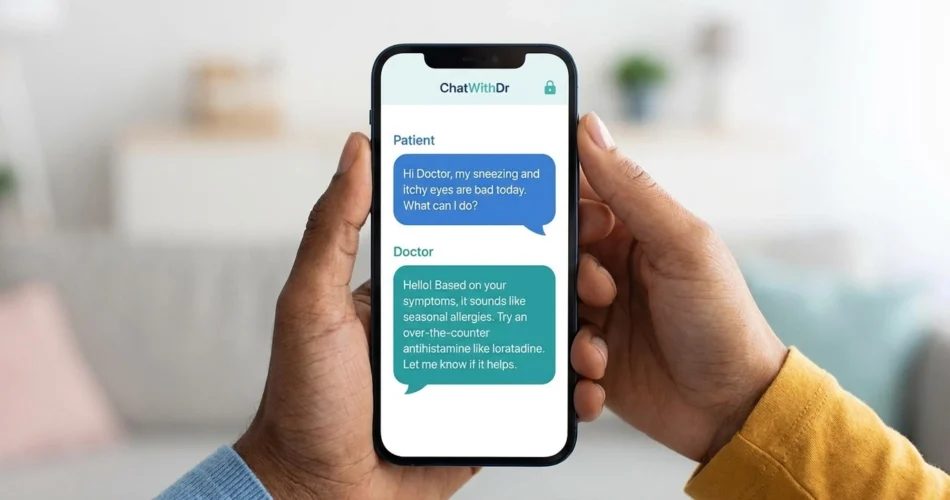
Spring arrives with blooming flowers, fresh air, and for millions of Americans, the familiar return of seasonal allergies. That familiar trio of sneezing, watery eyes, and nasal congestion can range from mildly annoying to completely debilitating. The big question many people face: when can you manage allergy symptoms on your own, and when should you seek professional medical care through a text-based online doctor consultation?
Understanding the difference between manageable allergy symptoms and those requiring medical intervention can save you time, money, and unnecessary discomfort. With secure medical messaging and text-based telehealth, getting professional allergy care has never been more accessible.
When You Can Manage Allergies Independently
Mild seasonal allergy symptoms that respond well to over-the-counter medications generally don't require immediate medical attention. These manageable symptoms typically include:
- Light sneezing and runny nose
- Mild nasal congestion that clears with decongestants
- Watery, itchy eyes that improve with antihistamine eye drops
- Occasional throat clearing or mild scratchy throat
- Symptoms that occur predictably during specific seasons
Effective Over-the-Counter Options
Several OTC treatments can effectively manage mild seasonal allergies:
Antihistamines like loratadine (Claritin), cetirizine (Zyrtec), and fexofenadine (Allegra) block histamine release and reduce sneezing, itching, and runny nose. These non-drowsy options work well for daily management.
Nasal decongestant sprays provide quick relief for stuffed sinuses, though they shouldn't be used for more than three consecutive days to avoid rebound congestion.
Saline nasal rinses help flush allergens from nasal passages and can be used daily without side effects.
Eye drops specifically designed for allergies can relieve itchy, watery eyes when used as directed.

When Professional Medical Care Becomes Necessary
While many allergy symptoms can be managed independently, certain situations warrant consultation with a healthcare provider through a text-based online doctor consultation or in-person care when needed.
Persistent or Worsening Symptoms
Chronic symptoms lasting more than three months that interfere with sleep, work productivity, or daily activities need professional evaluation. If over-the-counter medications provide no relief after consistent use for several weeks, it's time to seek medical guidance.
Symptoms that worsen over time compared to previous allergy seasons may indicate developing sensitivities or secondary complications like sinus infections that require prescription treatment.
Secondary Complications
Seasonal allergies can lead to complications requiring medical intervention:
- Frequent sinus infections characterized by thick, colored nasal discharge, facial pain, and pressure
- Ear infections causing pain, pressure, or hearing changes
- Asthma symptoms like wheezing, chest tightness, or persistent cough
- Sleep disruption from severe congestion leading to fatigue and concentration problems
Impact on Quality of Life
When allergies significantly affect your ability to function normally: missing work, avoiding outdoor activities, or experiencing constant discomfort: professional treatment can provide more effective management strategies than OTC options alone.
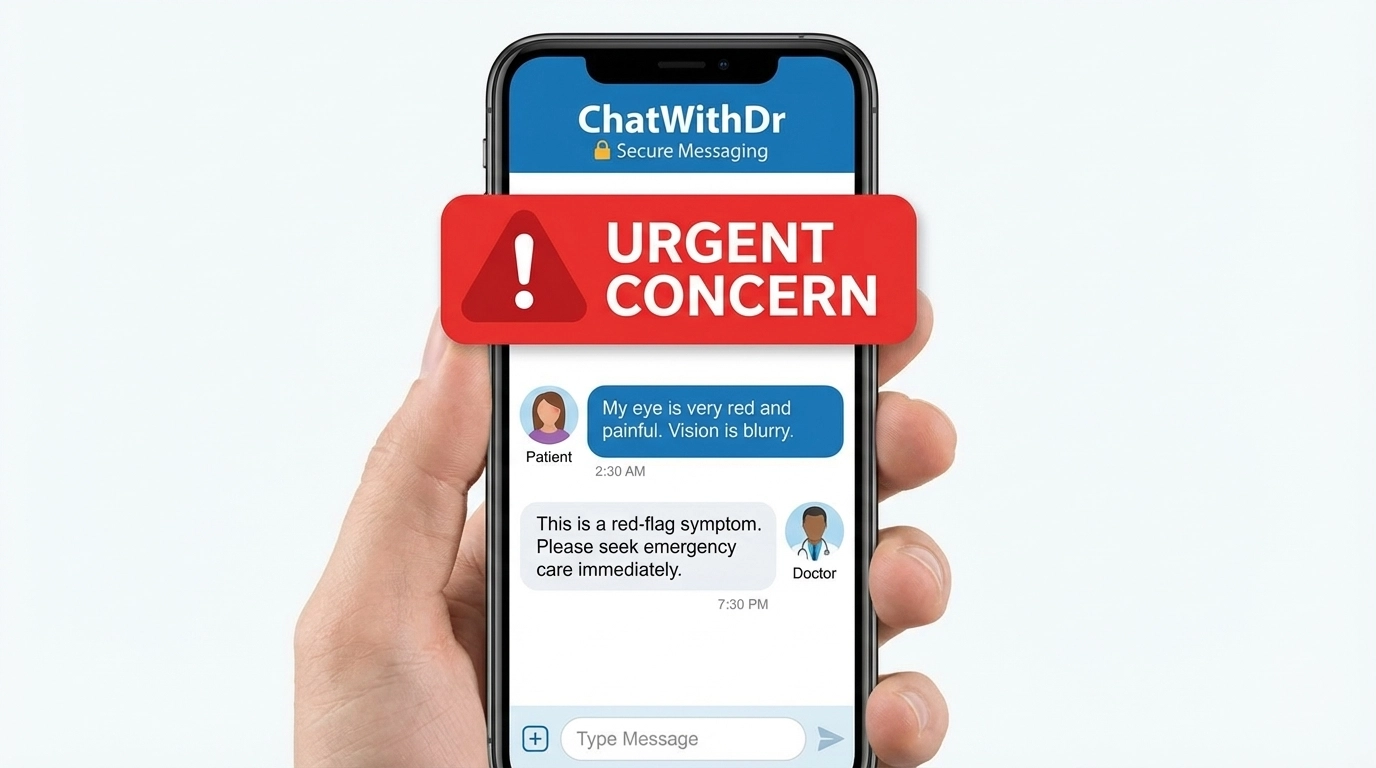
Emergency Red Flags: When to Seek Immediate Care
Certain allergy-related symptoms require immediate medical attention and should never be ignored:
Severe Allergic Reactions (Anaphylaxis)
- Difficulty breathing, wheezing, or chest tightness
- Swelling of face, throat, tongue, or lips
- Rapid heartbeat or dizziness
- Widespread hives combined with nausea or vomiting
- Severe drop in blood pressure
These symptoms can be life-threatening and require emergency medical care or calling 911 immediately.
Concerning Respiratory Symptoms
- Persistent cough with blood
- Severe shortness of breath
- High fever combined with allergy symptoms
- Inability to speak in full sentences due to breathing difficulty
If you experience these symptoms, seek immediate care at an emergency room rather than waiting for an online medical chat consultation.
How Text-Based Online Doctor Consultations Work for Allergies
Text-based telehealth via secure medical messaging has revolutionized allergy management, making professional medical guidance accessible without traditional appointment scheduling or office visits. Online consultations are particularly effective for allergy care because many assessments can be done through symptom description and medical history review—no video calls required.
Benefits of Online Allergy Care
Convenience and accessibility let you chat with a licensed physician 24/7 from home via secure medical messaging, especially valuable during high pollen days when leaving the house worsens symptoms.
Faster access to treatment means you can get professional guidance and prescription medications without waiting days or weeks for traditional appointments.
Cost-effective care often costs less than urgent care visits or emergency room trips for non-emergency allergy management.
Follow-up ease makes it simple to adjust treatments or address new symptoms as allergy seasons progress.
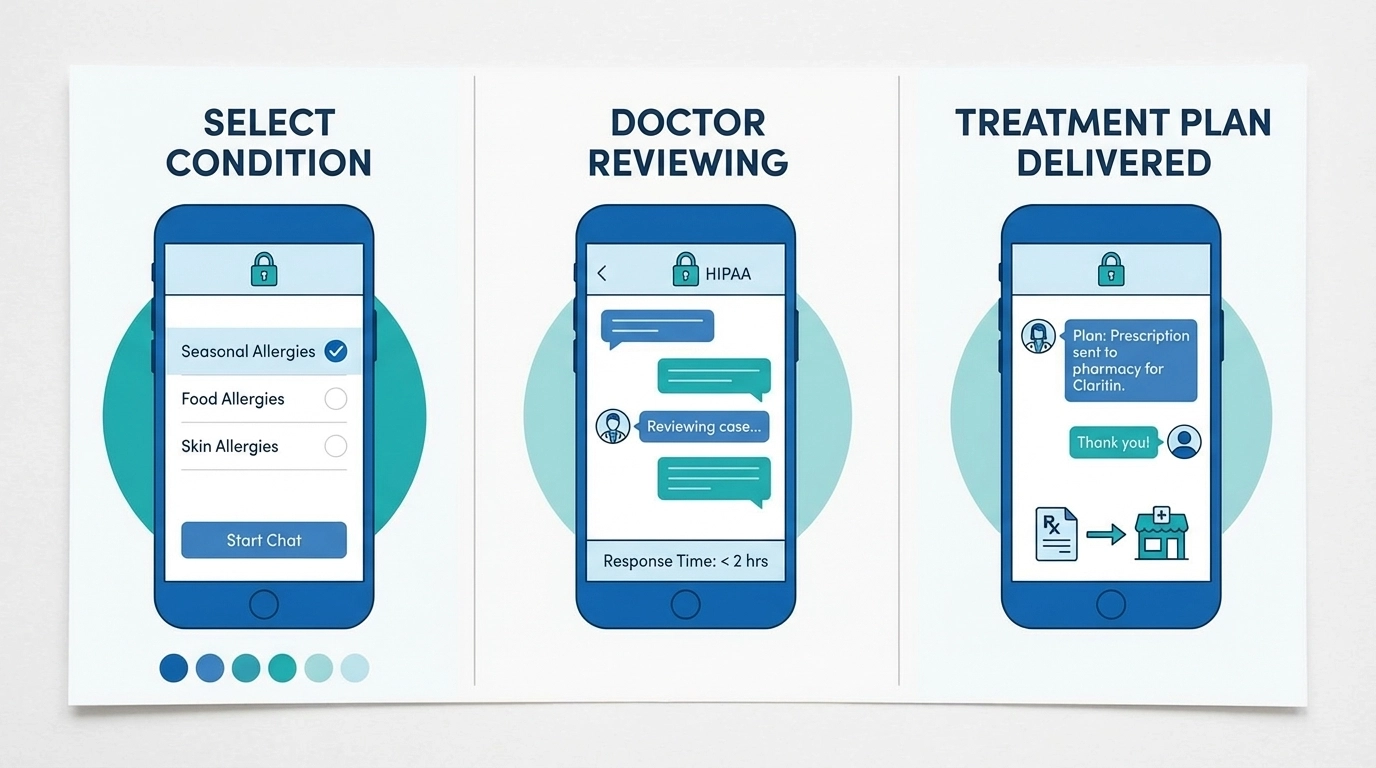
How ChatWithDr Works for Seasonal Allergies
Step 1: Choose Your Condition
Select seasonal allergies from our condition list and describe your specific symptoms, their duration, and what treatments you've already tried.
Step 2: Doctor Reviews Your Case
A licensed physician reviews your information within 2 hours and messages you in our secure chat, evaluating your symptoms and medical history to determine the best treatment approach.
Step 3: Get Your Treatment
Receive a personalized treatment plan right in the chat and any necessary prescriptions sent directly to your preferred pharmacy.
Telehealth vs Urgent Care vs Emergency Room: Making the Right Choice
Understanding when to use different care options ensures you get appropriate treatment while avoiding unnecessary costs and delays.
Choose Text-Based Telehealth (Chat) When:
- Symptoms are bothersome but not severe
- You need prescription allergy medications
- OTC treatments aren't providing adequate relief
- You want to establish an allergy management plan
- Symptoms are interfering with daily activities but aren't dangerous
Choose Urgent Care When:
- You suspect a sinus infection requiring evaluation
- Symptoms include concerning features like high fever
- You need immediate physical examination
- Your primary care doctor isn't available and symptoms are worsening
Choose Emergency Room When:
- You experience any signs of anaphylaxis
- Severe breathing difficulties occur
- Facial or throat swelling develops
- You feel dizzy or faint with widespread hives
- Any life-threatening symptoms appear
Prescription Options Available Through Text-Based Online Consultations
When OTC medications aren't sufficient, several prescription options can provide more effective allergy relief through text-based online doctor consultation platforms.
Prescription Antihistamines
Stronger formulations or combinations not available over-the-counter can provide superior symptom control for severe seasonal allergies.
Nasal Corticosteroids
Prescription nasal sprays like fluticasone or mometasone reduce inflammation more effectively than OTC options and can be used long-term safely.
EpiPen Prescription Online
For patients with severe allergic reactions or risk of anaphylaxis, text-based online consultations can provide EpiPen prescriptions along with proper usage instructions.
Combination Medications
Prescription combinations of antihistamines and decongestants can provide more comprehensive symptom relief than single-ingredient OTC options.

Long-term Allergy Management Strategies
Effective allergy management goes beyond treating immediate symptoms to include prevention and long-term control strategies.
Environmental Control Measures
- Keep windows closed during high pollen days
- Use air purifiers with HEPA filters
- Shower and change clothes after outdoor activities
- Monitor local pollen counts and plan activities accordingly
Timing Your Treatments
Starting allergy medications before peak season begins often provides better control than waiting until symptoms develop. Text-based online consultations can help establish optimal timing for your specific allergen triggers.
Regular Monitoring and Adjustment
Working with healthcare providers through secure medical messaging allows for ongoing treatment adjustments based on symptom patterns and seasonal variations.
Getting Started with Professional Allergy Care
If your seasonal allergies are impacting your quality of life or OTC treatments aren't providing adequate relief, professional guidance can make a significant difference in your comfort and daily functioning.
Don't let another allergy season leave you suffering unnecessarily. Get personalized allergy treatment from licensed physicians through secure medical messaging who can evaluate your specific symptoms and recommend the most effective management approach for your situation.
Start your seasonal allergy consultation today and take the first step toward better allergy management and improved quality of life during allergy season. Chat with a doctor 24/7.
Related posts:
 Seasonal Allergies Getting Worse? Chat With a Doctor Online for Fast Relief
  Online Doctor for Allergies: Fast Diagnosis and Treatment from Home
  Seasonal Allergies: Quick Relief, Real Doctors, Try Online Medical Chat (No Video Call Needed)
  Seasonal Allergy Relief Online: Breathe Easier with Fast Care
  Seasonal Allergies Relief Online: Fast Care, No Waiting Room Required