
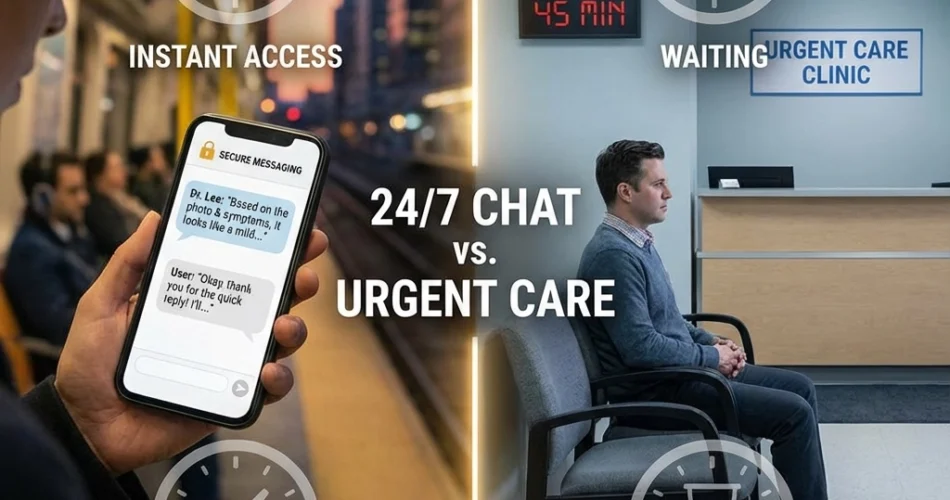
When you're juggling work deadlines, family responsibilities, and personal commitments, getting sick feels like the worst possible timing. You're dealing with a sore throat that won't quit or a UTI that's making your day miserable, but the thought of spending hours in an urgent care waiting room makes you want to postpone treatment altogether.
The good news? You now have options that fit your busy lifestyle. The rise of 24/7 telehealth services means you can chat with a doctor 24/7 from anywhere, anytime. But how does this compare to traditional urgent care visits? Let's break down which option works better for your packed schedule.
The New Reality: Healthcare That Fits Your Life
Traditional healthcare wasn't designed for busy people. Urgent care centers, while more convenient than emergency rooms, still require you to:
- Drive to a physical location
- Wait in crowded waiting rooms
- Take time off work or rearrange your schedule
- Potentially expose yourself to other illnesses
Meanwhile, text-based telehealth platforms like ChatWithDr have revolutionized how we access medical care. For just $39.99, you can get professional medical advice, treatment recommendations, and prescriptions delivered directly to your pharmacy: all without leaving your current location.

Speed: When Every Minute Counts
24/7 Doctor Chat Response Time: Most urgent health concerns can be addressed within 2 hours through secure medical messaging. No scheduling required: simply describe your symptoms and receive professional medical guidance from licensed physicians.
Urgent Care Wait Times: Even with shorter waits than emergency rooms, urgent care visits typically involve 30-60 minutes of travel and waiting time, plus the actual consultation.
For busy professionals, parents managing multiple schedules, or anyone dealing with time-sensitive symptoms like UTI discomfort, the speed advantage of text-based consultations is significant.
Cost Comparison: Your Wallet Will Thank You
Healthcare costs matter, especially when you're dealing with non-emergency conditions. Here's how the numbers typically break down:
- 24/7 Doctor Chat: $39.99 flat fee, HSA/FSA eligible
- Urgent Care Centers: $150-400+ depending on location and tests
- Emergency Room: $1,000+ for non-emergency visits
The financial advantage becomes even more pronounced when you factor in lost wages from missed work, transportation costs, and childcare arrangements needed for in-person visits.
Online Medical Chat: The Game-Changer for Busy Lives
The emergence of online medical chat platforms has fundamentally changed how we think about healthcare access. This isn't about replacing all medical care: it's about getting the right care for the right conditions in the most efficient way possible.
Text-based medical consultations excel at treating common acute conditions that don't require physical examination:
- Upper respiratory infections and cold symptoms
- Urinary tract infections with classic symptoms
- Sore throats and throat pain
- Allergic reactions and skin irritations
- Digestive issues like nausea or diarrhea
- Minor bacterial infections
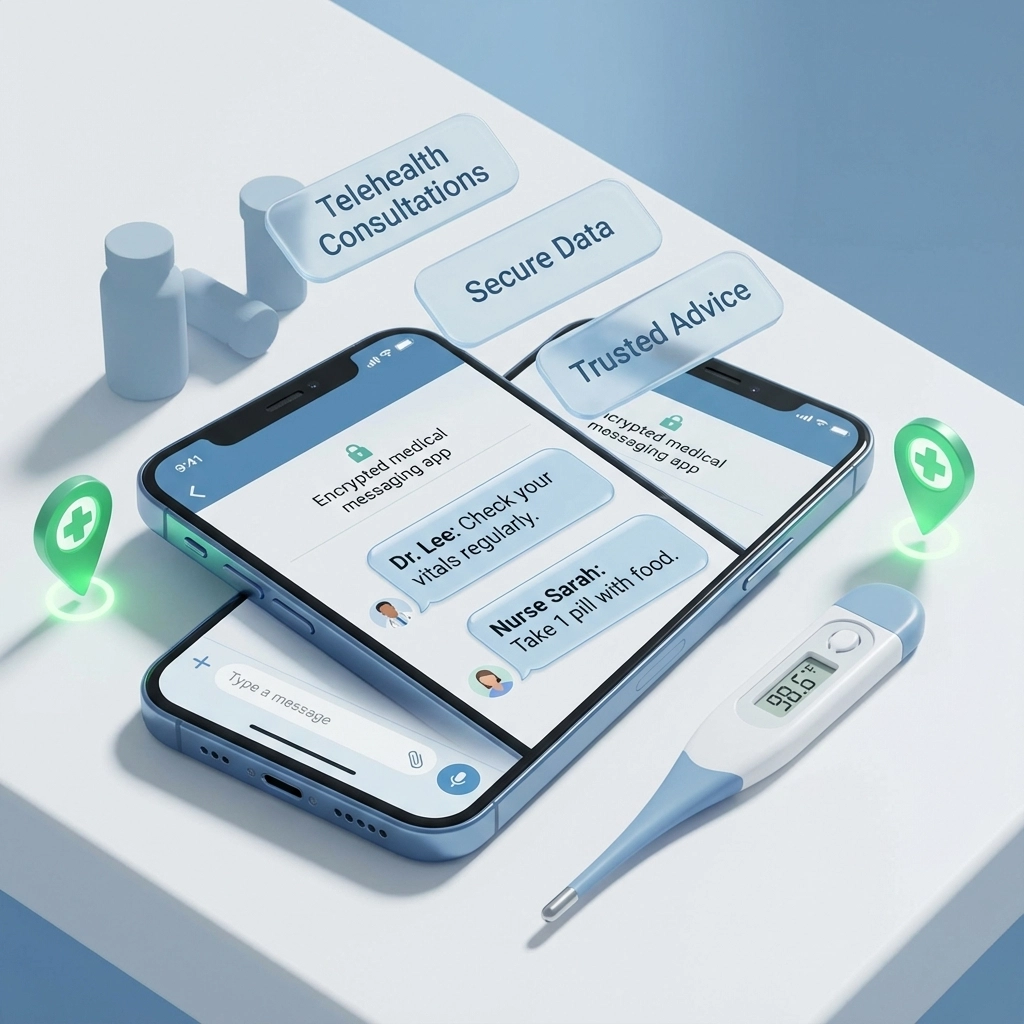
Licensed physicians can evaluate symptoms, provide diagnosis, and prescribe appropriate medications: all through secure, HIPAA-compliant messaging that protects your privacy.
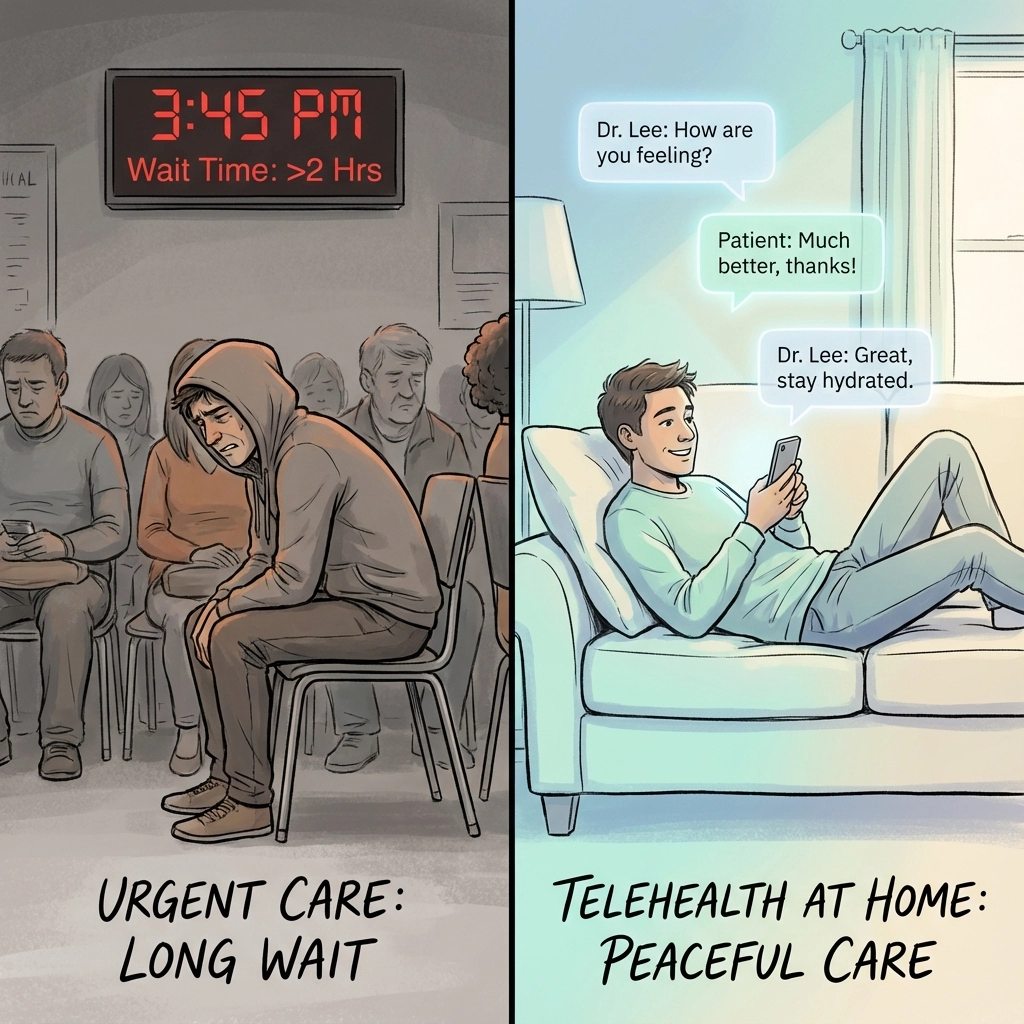
Conditions Perfect for 24/7 Doctor Chat
Live medical chat services shine when treating specific types of health concerns. You can get prescriptions online for conditions like:
Respiratory Issues: Cold symptoms, flu-like illness, sinus congestion, and mild cough don't require hands-on examination. Doctors can assess severity through detailed symptom descriptions and prescribe appropriate treatments including antibiotics when bacterial infection is suspected.
Urinary Problems: UTI symptoms are typically straightforward to diagnose based on classic signs like burning during urination, urgency, and frequency. Same day prescription online delivery means you can start treatment immediately.
Skin Conditions: Many rashes, insect bites, and minor skin infections can be effectively evaluated through photo sharing and symptom description within secure messaging platforms.
Gastrointestinal Symptoms: Nausea, mild food poisoning symptoms, and digestive upset often respond well to medications that can be prescribed remotely.
When Urgent Care Still Makes Sense
Despite the convenience of 24/7 doctor chat, certain situations require in-person evaluation:
- Physical injuries needing X-rays or stitches
- Severe pain requiring immediate pain management
- Conditions requiring lab work or diagnostic testing
- Physical examinations for lumps, swelling, or mobility issues
- Procedures like wound care or joint injections
Smart healthcare consumers use both options strategically: text-based consultations for straightforward medical issues and urgent care for conditions requiring hands-on evaluation.
Safety First: When to Skip Both Options
Regardless of your busy schedule, certain symptoms require immediate emergency care. Seek emergency room treatment immediately for:
- Chest pain or pressure
- Difficulty breathing or shortness of breath
- Severe allergic reactions with swelling or breathing problems
- High fever above 104°F
- Severe abdominal pain
- Signs of stroke (facial drooping, speech difficulties, weakness)
- Loss of consciousness or confusion
- Severe injuries with significant bleeding
No convenience is worth risking your health when dealing with potentially life-threatening symptoms.
The Practical Advantage: Real-World Scenarios
Consider these common busy-life situations:
Scenario 1: You're traveling for work and develop UTI symptoms. Through 24/7 doctor chat, you can receive treatment and have prescriptions sent to a pharmacy near your hotel: all while maintaining your business schedule.
Scenario 2: Your child wakes up with a sore throat on a school day. Instead of missing work for an urgent care visit, you can get medical guidance and prescription medication delivered to your local pharmacy before school pickup.
Scenario 3: Weekend cold symptoms emerge when most doctors' offices are closed. Rather than spending Sunday in urgent care, you can receive treatment recommendations and symptom management advice through secure messaging.

Coverage and Accessibility
One major advantage of established telehealth platforms is their broad coverage. Services like ChatWithDr operate with physicians licensed across all 50 states, meaning you can receive consistent care whether you're home, traveling, or relocating.
This nationwide availability contrasts with urgent care centers, which may not accept your insurance in different states or may have limited weekend and holiday hours when you're most likely to need care.
The Bottom Line for Busy People
Chat with a doctor 24/7 services aren't trying to replace all medical care: they're providing the right care for the right situations. For busy individuals dealing with common acute conditions that don't require physical examination, text-based medical consultations offer:
- Immediate access without scheduling conflicts
- Cost-effective treatment that respects your budget
- Professional medical care from licensed physicians
- Prescription delivery to your preferred pharmacy
- Privacy and convenience that fits your lifestyle
The key is knowing when to use each option. For straightforward conditions like cold and flu symptoms, UTIs, and minor infections, 24/7 medical chat provides faster, more affordable care that doesn't disrupt your schedule.
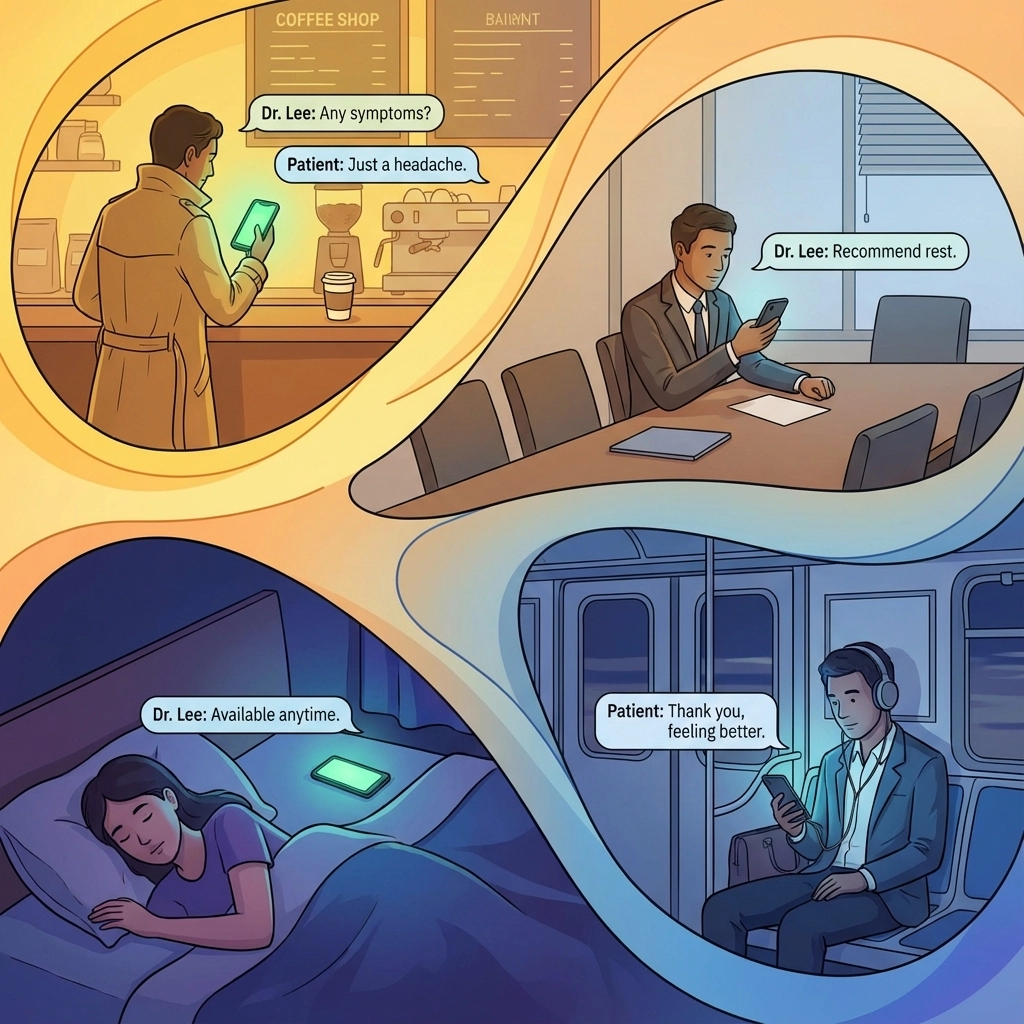
For conditions requiring physical examination, diagnostic testing, or hands-on treatment, urgent care centers remain the appropriate choice. The smartest approach combines both options based on your specific medical needs and life circumstances.
Your health shouldn't have to wait for a convenient appointment time. With 24/7 telehealth options now widely available, getting professional medical care can finally fit into your busy life rather than completely disrupting it.
Related posts:
 Difference Between Urgent Care and Emergency Explained
  Chat With a Doctor 24/7 vs. Urgent Care: Which Is Better For Your Busy Life?
  Chat With a Doctor 24/7 vs. Urgent Care: Which Is Better For Your Busy Life?
  Chat With a Doctor 24/7 vs. Urgent Care: Which Is Better For Your Busy Life?
  Chat With a Doctor 24/7: Is Live Medical Chat Really Better Than Urgent Care?