
When you feel that first tell-tale sting of a urinary tract infection (UTI), the last thing you want is a long wait in a clinic. The good news? You can get fast, effective UTI treatment online without ever leaving your home. Telehealth services like ChatWithDr let you get a diagnosis and a prescription sent straight to your pharmacy, often within hours, just by using your phone.
Why Online UTI Treatment Is a Game Changer
Dealing with a UTI is miserable enough without adding the hassle of scheduling a doctor’s appointment, driving across town, and sitting in a waiting room. That whole process can eat up your day, especially when symptoms decide to show up at the worst possible moment. Getting UTI treatment online turns that frustrating ordeal into a simple, private, and incredibly efficient process.
This shift to digital healthcare isn't just a trend; it's a practical solution to a massive need. In the United States, UTIs are behind about 8 million clinic visits every year. A deep dive into over 205 million emergency department encounters found that cystitis—a common, uncomplicated UTI—was the reason for a staggering 8.7 million of those visits. That kind of volume puts a huge strain on in-person healthcare, making online platforms an essential alternative for accessible care. You can learn more about the scale of UTI treatment needs from recent market analysis.
The Modern Approach to Urgent Care
Online services offer a direct path to relief. Instead of blowing up your schedule, you can fill out a secure medical questionnaire from your couch. A real, board-certified physician reviews your symptoms and medical history, decides if your situation is right for remote care, and sends a prescription to your pharmacy if it’s needed.
This method doesn't just save you time; it offers a level of discretion that most people really appreciate. You can handle a sensitive health issue privately and get back to your life faster.
The core benefit is simple: it puts you in control. You're no longer at the mercy of clinic hours or appointment availability. When you need help, it's there 24/7, right at your fingertips.
Online vs. In-Person UTI Care at a Glance
Understanding the key differences helps you make the best choice for your situation. While in-person visits definitely have their place, especially for complex or severe symptoms, the online model is built for the speed and simplicity that most uncomplicated UTIs demand.
The table below breaks down what you can expect from each option, showing exactly why millions are choosing the convenience of telehealth.
| Feature | Online UTI Treatment | In-Person Clinic Visit |
|---|---|---|
| Time Commitment | 15-20 minutes total (intake form + pharmacy trip) | 2-3 hours total (travel, waiting, appointment) |
| Accessibility | 24/7 access from anywhere with an internet connection | Limited by clinic hours and appointment availability |
| Cost | Typically a lower, flat-rate consultation fee | Variable costs, often higher due to facility fees and insurance copays |
| Privacy | Highly private; no waiting rooms or public interactions | Less private; involves receptionists and shared waiting areas |
| Convenience | Complete the entire process from home, work, or while traveling | Requires physical travel to and from the clinic |
Ultimately, for a straightforward, uncomplicated UTI, the speed, privacy, and convenience of an online consultation are hard to beat. You get the expert care you need on your own terms.
Figuring Out Your UTI Symptoms for Online Care
Knowing which symptoms point to a simple UTI is the most important first step to getting fast, effective treatment online. Not every bladder issue is the same, and telehealth is specifically designed to handle uncomplicated cases safely. Getting this right from the start empowers you to make the smartest choice for your health.
Maybe you’re a busy professional stuck in meetings when you start feeling that nagging, constant urge to go. Or you're a college student who wakes up with a painful burning sensation and needs help—fast and discreetly. These are perfect scenarios for online care, but only if the symptoms line up.
The Classic Signs of a Simple UTI
An uncomplicated UTI, often called cystitis, is an infection that’s just in your bladder and urethra. These are the exact kinds of infections that platforms like ChatWithDr can treat quickly and effectively. Be on the lookout for a mix of these tell-tale signs.
- A constant urge to pee: You feel like you have to go all the time, even when almost nothing comes out. It often feels like an intense pressure in your lower belly.
- Burning when you urinate: This is the most famous UTI symptom for a reason. It can be anything from a mild sting to a sharp, fiery pain (the medical term is dysuria).
- Cloudy or smelly urine: You might notice your urine looks murky or even has a pinkish hue from a little bit of blood. A strong, funky odor is another big clue.
- Pelvic pain or pressure: Many women feel a dull, persistent ache right in the center of their pelvis, just above the pubic bone.
If this sounds like what you’re going through and you're an otherwise healthy adult female, there’s a very good chance you’re a great candidate for online UTI treatment.
This decision guide can help you see at a glance whether it's safe to go online or if you need to see a doctor in person.
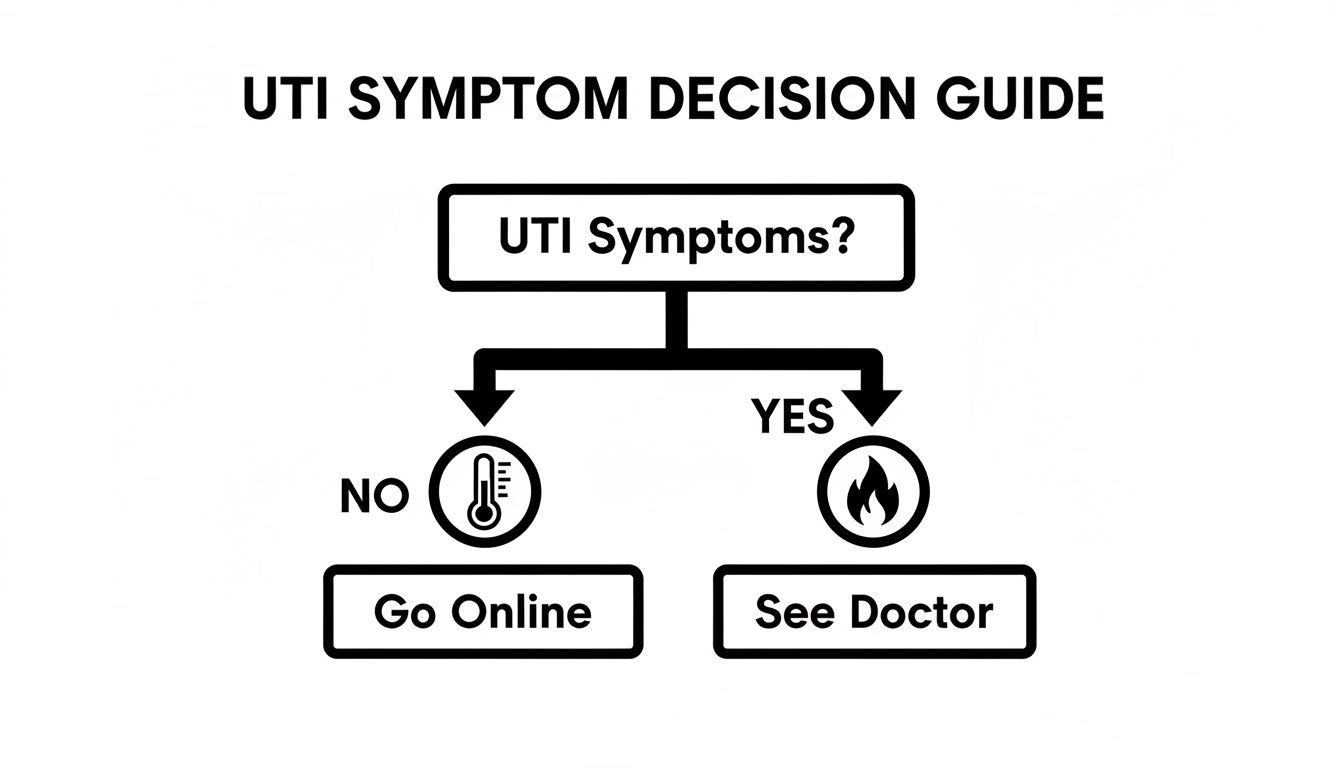
The main takeaway is crystal clear: a fever is the single biggest sign that separates a simple UTI from something more serious.
Red Flags That Mean You Need In-Person Care
While telehealth is an incredible tool, it has its limits. Certain symptoms are red flags, warning that the infection might have traveled up from your bladder to your kidneys. A kidney infection, known as pyelonephritis, is a serious medical problem that demands an immediate, hands-on evaluation.
Trying to get online treatment with these symptoms will only delay proper care and could lead to serious complications. It is absolutely critical to head to an urgent care clinic or an emergency room if you notice any of them.
Do not use an online service for a UTI if you have any of the following:
- Fever or Chills: A temperature over 100.4°F (38°C) is a major warning sign. It means your body is fighting a much bigger battle than a simple bladder infection.
- Back or Side Pain: This isn't your typical lower backache from sitting too long. It’s a specific pain on one side, between your ribs and hip—right where your kidneys are. It can be a dull throb or a sharp, stabbing pain.
- Nausea and Vomiting: Feeling sick to your stomach or being unable to keep anything down is a common sign that the infection has reached your kidneys.
On top of that, some people just aren't suited for an online UTI diagnosis because their situation is naturally more complex. If you are pregnant, male, or have a condition that weakens your immune system, you need a physical exam to get the right care. Knowing this distinction is key to making sure you get the right help, right away.
Navigating Your Online Medical Consultation
So, you’ve recognized the tell-tale symptoms and decided telehealth is the right move. What comes next? The online consultation itself. This process is designed to be incredibly thorough but also simple, swapping a physical waiting room for a secure, private digital one. The whole point is to give a qualified clinician all the information they need to make a safe, accurate diagnosis—without you ever needing to hop on a video call.
Your journey starts by heading to a platform like ChatWithDr and selecting your reason for the visit. You'll see a clear list of common issues; just choose "UTI" to kick off the focused intake process. This immediately takes you to a secure, HIPAA-compliant form that serves as the heart of your consultation.
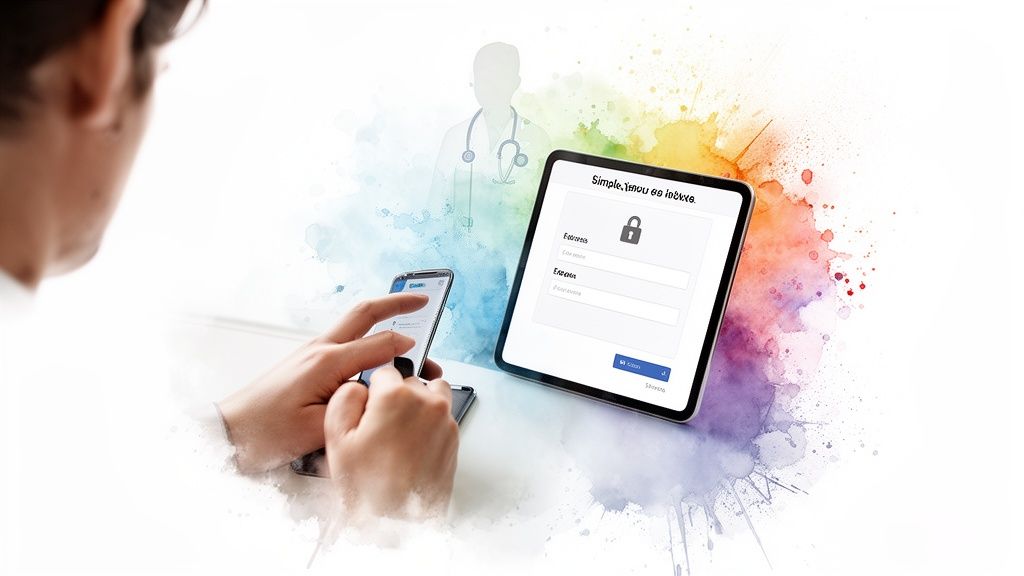
As you can see, the interface is clean and simple. You pick your condition and get right into the secure intake, all from your phone or computer.
What to Expect on the Intake Form
This secure questionnaire is your direct line to the doctor. Think of it as the conversation you’d have in an exam room, but in a written format you can fill out at your own pace. The questions are specific and targeted for a good reason—every detail helps the physician build a complete picture of your health to ensure a safe prescription.
You'll be asked to provide information in a few key areas:
- Symptom Details: How long have you felt this way? Are you dealing with that awful burning sensation, a constant urge to go, or pelvic pressure? The form will walk you through describing exactly what you're feeling.
- Medical History: This is vital context. Do you have any chronic conditions like diabetes or kidney issues? Have you had UTIs before?
- Allergies: This is one of the most critical sections. You absolutely must list any known allergies to medications, especially common antibiotics like sulfa drugs or penicillin.
- Current Medications: Be thorough here. List everything you take, including other prescriptions, over-the-counter drugs, and even herbal supplements. This is how the doctor avoids prescribing something that could cause a dangerous interaction.
Being clear and comprehensive in the intake form is the first step. For more tips, it can be helpful to learn about overcoming healthcare communication barriers that can pop up even in online settings.
Be as detailed and honest as you can. Holding back information about a past allergic reaction or a medication you're currently taking could lead to an unsafe treatment plan. Your transparency is what makes getting effective UTI treatment online possible.
After You Hit Submit
Once you’ve filled out the form, you’ll add your payment details and pick your preferred pharmacy. That's it—your part is done. Your information is securely sent to a board-certified, state-licensed physician for a careful review.
This is where the power of the asynchronous (text-based) model really shines. A real doctor will meticulously review your answers, just as they would a chart in a clinic. This isn't some automated system; it's a professional medical evaluation by a trained expert. They're assessing your symptoms, checking for any red flags based on your medical history and allergies, and making sure your case is appropriate for remote treatment.
If your case is a straightforward, uncomplicated UTI, the physician will put together a diagnosis and treatment plan. If they need a bit more information, they'll send you a secure message through the platform. For example, they might ask, "You mentioned a sulfa allergy. Can you describe the reaction you had?" This dialogue ensures all bases are covered before a single prescription is written.
Honestly, many patients prefer this text-based approach for its privacy and convenience. You don’t have to find a quiet spot for a video call or feel rushed trying to explain your symptoms live. You can give thoughtful, accurate answers from anywhere. Within a couple of hours, you'll typically get a notification with your diagnosis and confirmation that a prescription is on its way to your pharmacy.
Getting Your Diagnosis and Prescription
You’ve submitted your secure medical form, and now the real magic of online care begins. Instead of waiting days for an appointment, a qualified physician gets to work right away. You can typically expect a response in just a couple of hours, letting you get a diagnosis and treatment plan without putting your entire day on hold.
The whole process happens through a secure, private messaging portal. It's all text-based, which is great because it protects your privacy and gives you a written record of everything the doctor says. No need to clear your schedule for a video call or hover by the phone—you'll just get a notification when your review is ready.
How Your E-Prescription Is Handled
If the doctor confirms you have a standard, uncomplicated UTI and decides antibiotics are the right move, they’ll immediately send an e-prescription to the local pharmacy you picked. The system is designed to be incredibly efficient. By the time you get the notification on your phone, your pharmacy has probably already received the order.
All that’s left for you to do is swing by and pick it up. This seamless loop—from diagnosis to having medication in hand—is what makes getting UTI treatment online so effective. If you want to see how this works for other conditions, our guide on getting an online prescription for various conditions breaks it down.
Common Antibiotics for UTIs
Your doctor doesn't just pull a prescription out of a hat. Their choice is a careful medical decision based on your specific health history, any allergies you listed, and even local patterns of antibiotic resistance. This ensures you get the right medication to knock out your infection.
For simple UTIs, a few antibiotics are prescribed more often than others:
- Trimethoprim-sulfamethoxazole (Bactrim): This has been a go-to combination antibiotic for years, but its effectiveness can be lower in areas where bacteria have become resistant.
- Nitrofurantoin (Macrobid, Macrodantin): A top choice for uncomplicated UTIs because it works specifically in the urinary tract, and bacteria are less likely to be resistant to it.
- Fosfomycin (Monurol): This is a convenient single-dose option that comes as a powder you mix with water.
- Cephalexin (Keflex): A great alternative, especially if you have an allergy to sulfa drugs like Bactrim.
A doctor's main goal is antibiotic stewardship—using the right drug, at the right dose, for the right amount of time. This helps prevent the rise of superbugs and makes sure your UTI is cleared up correctly the first time.
Why Your Doctor Chooses a Specific Antibiotic
The decision-making here is more nuanced than you might think. For example, if you live in an area where local E. coli is known to be highly resistant to Bactrim, your doctor will likely prescribe Macrobid or Keflex instead. If you mentioned a sulfa allergy in your intake form, Bactrim is off the table completely.
This kind of precise, evidence-based care is exactly what telehealth makes more accessible. UTIs lead to 8 million clinic visits in the U.S. every year, and with antibiotic resistance on the rise, getting an expert virtual review is more important than ever. It ensures you get effective care quickly and responsibly. You can also explore available at-home diagnostic tools like these urinalysis services to be even more informed.
Ultimately, even though you’re getting care remotely, the medical expertise behind it is solid. The platform gives clinicians the information they need to make the right call and get you on the path to feeling better, fast.
Making Sense of Costs, Privacy, and Insurance
When you’re dealing with a UTI, the last thing you want to worry about is confusing bills, insurance headaches, or whether your private health information is actually private. Getting treatment online is designed to be simple and clear, especially when it comes to the practical stuff.
Most trusted telehealth services, like ChatWithDr, run on a straightforward, flat-fee model. You pay a single, upfront fee of $39.99 for the entire medical consultation. That one price covers the doctor's time to review your symptoms, make a diagnosis, create your treatment plan, and send an e-prescription to your pharmacy if you need one. No surprise charges, no follow-up bills for the consultation. Simple.
This no-fuss approach is a big reason why online treatment is becoming so popular. With UTI rates on the rise, the demand for convenient digital health is exploding. The market for uncomplicated UTI treatments in the U.S. is on track to hit USD 2.7 billion in 2025 and is projected to jump to USD 4.1 billion by 2035. Online platforms are grabbing a huge piece of that pie. Learn more about the growth of online UTI treatment.
How Insurance and Payments Work
People often wonder how insurance fits into the picture. It’s a clean, two-part process that’s easier than it sounds.
- The Consultation: You typically pay the flat consultation fee directly. This keeps things moving fast and avoids the delays of dealing with insurance pre-authorizations. You can use a standard credit or debit card, and most platforms also accept Health Savings Account (HSA) or Flexible Spending Account (FSA) cards.
- The Medication: This is where your insurance comes in. When you head to the pharmacy to pick up your prescription, you use your health insurance just like you always do. The cost of the antibiotics is completely separate from the consultation fee.
This hybrid approach gives you the best of both worlds: the speed of paying directly for the doctor's time and the cost savings of using your insurance for the actual medicine.
Your Privacy Is a Top Priority
Handing over sensitive health details online can feel a little unnerving, and that’s completely understandable. Reputable telehealth platforms are built on a bedrock of security and strict privacy rules. This is non-negotiable.
Your personal and medical information is protected by the very same federal law that governs hospitals and your local doctor's office—the Health Insurance Portability and Accountability Act (HIPAA). This means your consultation is confidential, and your data is encrypted and secure.
These services use enterprise-grade security to protect every bit of information you share, from your name and address to your symptoms. The entire process, from the intake form to any messages with your doctor, happens in a secure, protected digital space.
If you want to see the specific safeguards in place, you can always review a platform's policies. You can explore ChatWithDr’s privacy commitments to see exactly how your data is handled with the utmost care, giving you complete peace of mind.
Common Questions About Online UTI Care
Trying anything new with your health, even something as straightforward as getting UTI treatment online, can bring up a few questions. That’s completely normal. Let's walk through some of the most common things patients ask, so you can feel confident and ready to get the care you need.
How Can a Doctor Diagnose a UTI Without a Urine Test?
This is the big one, and it gets right to the heart of how effective telehealth can be. For an uncomplicated UTI in an otherwise healthy woman, the classic symptoms are incredibly telling. That combination of burning, constant urgency, and pelvic pressure creates a very clear clinical picture.
Experienced clinicians can accurately diagnose a simple UTI just by reviewing those symptoms and your medical history. A urine test often isn't needed for these clear-cut cases. Think of it like diagnosing a common cold—the distinct pattern of symptoms is usually enough for an expert to make a confident diagnosis and create a safe treatment plan.
Clinicians are trained to recognize symptom patterns. The detailed, secure intake form you fill out provides them with a robust clinical picture, allowing for an accurate diagnosis without the need for a physical test in many straightforward situations.
Of course, this only works for uncomplicated UTIs. If you have any red flags like a fever, back pain, or a complex medical history, a doctor will immediately tell you that an in-person visit and a urine culture are essential.
What if I Need to Speak With the Doctor?
While a platform like ChatWithDr is built for efficiency using a text-based model, you're never in the dark. If the physician reviewing your information needs a bit more detail, they'll reach out directly through the secure messaging portal.
For instance, they might send a quick clarifying question like, "You mentioned you've had UTIs before. Did the same antibiotic work for you then?" This kind of secure, two-way communication makes sure they have everything they need to prescribe safely.
And it works both ways. If you have a question after getting your diagnosis or treatment plan, you can use that same portal to send a follow-up message. It’s a direct line to your doctor for any treatment-related questions that pop up.
Is My Prescription Guaranteed with a Consultation?
A prescription is never guaranteed. The flat fee you pay covers the professional medical consultation itself—the time and expertise of a board-certified physician reviewing your case. Their number one priority is your health and safety.
The doctor will evaluate your symptoms and medical history to figure out the right course of action. If they determine that your symptoms line up with an uncomplicated UTI and an antibiotic is medically necessary, they'll write a prescription.
However, if they spot a red flag, suspect a more complex issue, or believe your symptoms don't point to a bacterial infection, their professional duty is to advise you to get an in-person evaluation. Their job is to provide the correct medical guidance, and sometimes that means not prescribing an antibiotic.
Can I Get a Refill on a UTI Prescription?
Generally, no. Antibiotics for a UTI are prescribed as a single, complete course designed to wipe out the infection entirely. If your symptoms come back right after you finish your medication, it’s not a simple matter of needing a refill.
A quick return of symptoms usually points to one of two things:
- Treatment Failure: The first antibiotic might not have been effective against the specific bacteria causing your infection.
- Recurrent Infection: You could be dealing with a brand-new infection or a more persistent underlying issue that needs a closer look.
In either case, a new medical evaluation is necessary. A doctor needs to reassess your current symptoms to decide on the next step, which might involve a different antibiotic or a recommendation for in-person testing. Starting a new evaluation to get UTI treatment online is often the quickest way forward.
What Happens if My Symptoms Don’t Improve?
You should start feeling some relief within 24 to 48 hours of starting antibiotics. If you're not feeling any better after two full days—or if you start feeling worse at any point—it's crucial to get more medical advice.
Use the platform’s secure messaging to contact the doctor who treated you. Give them an update on what's going on. Based on your report, they might:
- Prescribe a different antibiotic, in case the bacteria is resistant to the first one.
- Recommend an in-person visit with your primary care doctor or an urgent care clinic for a physical exam and urine culture.
Persistent symptoms are a clear sign that you need a different approach, and following up quickly is key. For more answers, you can always check out the comprehensive info on our frequently asked questions page for extra details.