
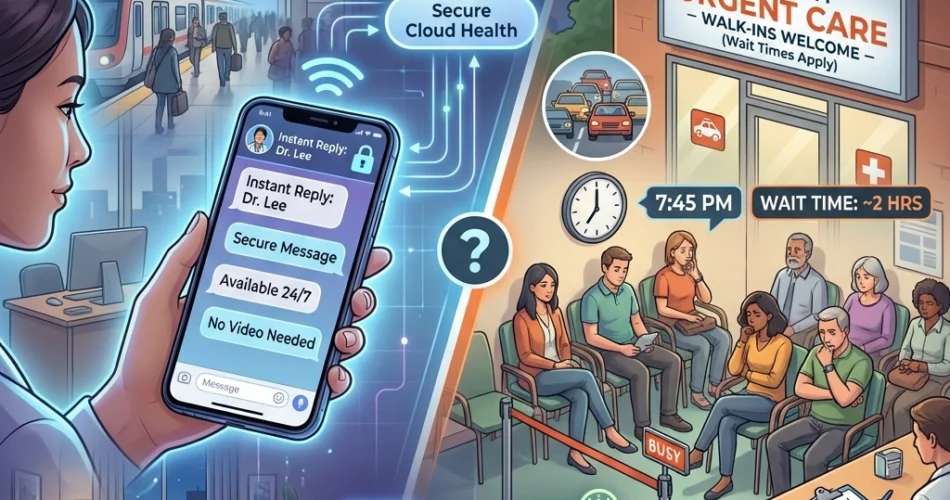
Between work deadlines, family obligations, and everything else on your plate, getting sick at an inconvenient time feels inevitable. When symptoms strike at 10 PM on a Tuesday or during a packed Saturday afternoon, you're faced with a choice: wait it out, drive to urgent care, or find another solution.
For millions of Americans, the ability to chat with a doctor 24/7 has become a game-changer. But how does online medical chat actually compare to traditional urgent care? Let's break down the real differences so you can make the smartest choice for your health and your schedule.
What Is Live Medical Chat?
Live medical chat connects you with licensed physicians through secure, text-based messaging. Unlike scheduling an appointment days in advance or sitting in a waiting room, you can describe your symptoms, answer questions, and receive a diagnosis: all from your phone or computer.

With platforms like ChatWithDr, you can access urgent care online without creating an account or booking an appointment ahead of time. The process is straightforward:
- Start a chat and describe your symptoms
- A licensed US doctor reviews your information
- You receive a diagnosis and treatment plan
- If needed, your prescription is sent to your local pharmacy
The entire process typically takes under two hours, and consultations cost a flat $39.99. It's HIPAA-compliant, available in all 50 states, and accepts HSA/FSA payments.
This model works particularly well for common conditions that don't require physical examination: think UTIs, cold and flu symptoms, sore throats, allergies, and prescription refills.
In-Person Urgent Care vs. Online Urgent Care
Both options serve an important purpose, but they're designed for different situations. Understanding the strengths of each helps you avoid wasted time, unnecessary expenses, and delayed treatment.
Traditional Urgent Care Centers
Brick-and-mortar urgent care clinics offer walk-in appointments for non-emergency medical issues. They're typically open evenings and weekends when your primary care doctor isn't available.
What urgent care can do:
- Perform X-rays and basic imaging
- Run blood tests and urine analysis on-site
- Administer stitches for minor lacerations
- Provide immunizations
- Conduct physical examinations
The downsides:
- Average wait times of 15-45 minutes (often longer)
- Limited hours compared to 24/7 availability
- Higher costs than telehealth options
- Requires travel and time away from work or family
Online Urgent Care Through Text-Based Telehealth
Online urgent care fills the gap for conditions that can be diagnosed through symptom discussion and don't require hands-on testing.

What online urgent care handles well:
- UTI treatment and prescriptions
- Cold, flu, and upper respiratory infections
- Sinus infections and allergies
- Sore throat evaluation
- Prescription refills for maintenance medications
- Skin rashes and minor dermatological concerns
The advantages:
- Available 24/7, including holidays
- No waiting room exposure to other sick patients
- Consultations from anywhere with internet access
- Faster turnaround (often under 2 hours)
- Lower cost than in-person visits
Comparing Cost, Speed, and Convenience
Let's look at the practical differences that matter most when you're not feeling well.
Cost Breakdown
| Service Type | Average Cost (Uninsured) |
|---|---|
| Emergency Room | $500-$3,000+ |
| Urgent Care Center | $100-$200 |
| Online Medical Chat | $39.99 (ChatWithDr) |
For conditions that don't require lab work or imaging, online consultations offer significant savings. You can also get your prescriptions online and pick them up at your local pharmacy: no additional trip to a clinic required.
Speed and Wait Times
Traditional urgent care visits involve travel time, check-in, waiting room delays, and the actual appointment. Even on a good day, expect to spend 1-2 hours total.
With live medical chat, you can start your consultation immediately and typically receive your diagnosis and prescription within two hours. For busy professionals, parents, or anyone managing a packed schedule, that time difference matters.
Convenience Factors
Online medical chat eliminates several friction points:
- No appointments needed: Start chatting when symptoms appear
- No account creation: Begin your consultation without lengthy sign-up processes
- No travel required: Connect from home, work, or anywhere else
- No exposure risk: Avoid waiting rooms full of other sick patients
- Pharmacy flexibility: Choose any local pharmacy for prescription pickup

When to Go to the ER: Red Flags You Shouldn't Ignore
While online urgent care and in-person urgent care handle many common conditions, some symptoms require emergency room care. Knowing these red flags could save your life.
Seek emergency care immediately for:
- Chest pain or pressure, especially with shortness of breath
- Signs of stroke (facial drooping, arm weakness, speech difficulty)
- Severe difficulty breathing
- Heavy, uncontrolled bleeding
- Loss of consciousness or confusion
- Severe allergic reactions (anaphylaxis)
- High fever with stiff neck (possible meningitis)
- Suspected broken bones with visible deformity
- Severe abdominal pain
- Symptoms of poisoning or overdose
Go to urgent care (in-person) when you need:
- X-rays for potential fractures
- Stitches for cuts deeper than half an inch
- IV fluids for severe dehydration
- Rapid strep or flu testing
- Wound cleaning for animal bites
Use online medical chat when:
- You have symptoms of a UTI
- You're experiencing cold or flu symptoms
- You need a prescription refill
- You have a sore throat without severe symptoms
- Allergies are flaring up
- You have a minor skin concern
When in doubt, starting with an online doctor consultation can help you determine whether your symptoms require in-person evaluation. Licensed physicians can assess your situation and recommend the appropriate level of care.
FAQs About 24/7 Online Doctor Chat
Is online medical chat as effective as seeing a doctor in person?
For conditions that don't require physical examination or diagnostic testing, text-based consultations are highly effective. Licensed physicians can diagnose and treat many common conditions based on symptom discussion, medical history, and your description of what you're experiencing.
Can I get prescriptions through online urgent care?
Yes. If your doctor determines that medication is appropriate, they can send prescriptions directly to your local pharmacy. ChatWithDr serves patients in all 50 states, so you can get your prescriptions online regardless of where you live.
How quickly will I hear back from a doctor?
Most consultations through ChatWithDr are completed in under two hours. Because the platform operates 24/7, you can start a chat at any time: including nights, weekends, and holidays.
Is my information secure?
Reputable telehealth services use HIPAA-compliant platforms to protect your health information. Your conversations with doctors remain private and encrypted.
What if the doctor determines I need in-person care?
If your symptoms suggest you need physical examination, lab work, or emergency treatment, your online doctor will recommend the appropriate next step. This guidance can help you avoid unnecessary ER visits while ensuring you get proper care when it's truly needed.
Making the Right Choice for Your Lifestyle
The best healthcare option depends on your specific situation. For conditions that can be evaluated through conversation: UTIs, cold symptoms, prescription refills, minor skin issues: chatting with a doctor 24/7 offers unmatched convenience and value.
When you need X-rays, stitches, or hands-on examination, in-person urgent care remains the right choice. And for true emergencies, the ER is always there.
The good news? You don't have to figure it out alone. Start a consultation and let a licensed physician help you determine the best path forward for your health.
Related posts:
 Chat With a Doctor 24/7: Is Live Medical Chat Really Better Than Urgent Care?
  Your Guide to Virtual Urgent Care Online Doctor Visits
  Chat With a Doctor 24/7: Why Online Medical Chat is the Future of Urgent Care
  Chat With a Doctor 24/7 vs. Urgent Care: Which Is Better For Your Busy Life?
  Difference Between Urgent Care and Emergency Explained