
For a long time, getting professional help for acne meant long waits for a dermatologist appointment. Not anymore. Now, getting effective acne treatment online is a reality, and for busy students or professionals, it’s a game-changer. Services like ChatWithDr offer a private, convenient, and surprisingly thorough way to get the right prescription, putting board-certified physicians just a few clicks away.
The Modern Way to Clear Skin
The whole healthcare landscape has shifted, making it easier than ever to manage skin conditions from home. Instead of scheduling an appointment months out and trekking to a clinic, you can get expert medical advice right from your couch. This convenience is the biggest reason teledermatology has taken off.
And it’s not just a trend; it’s a massive market shift. The global acne treatment market was valued at USD 7.66 billion in 2023 and is expected to nearly double by 2032. That boom is largely thanks to the rise of online pharmacies, which have become the go-to channel for millions.
So, Why is Online Care So Popular?
The appeal of online acne treatment goes way beyond just being convenient. These platforms are designed to fix the common frustrations people have with traditional healthcare.
Here’s why it works so well:
- Speed and Efficiency: With services like ChatWithDr, you can fill out an intake form and often get a diagnosis and prescription in hours, not weeks.
- Privacy and Discretion: Let's be honest, talking about skin issues can feel uncomfortable. Text-based consultations give you a private, low-pressure way to discuss your concerns.
- Access to Specialists: It doesn’t matter where you live. You can connect with board-certified physicians licensed to practice in your state.
This new way of getting care puts you in the driver's seat. It gets rid of the old hurdles—travel, wait times, and scheduling headaches—making professional skincare something anyone can actually stick with.
Deciding between seeing a doctor online or heading to a traditional clinic can be tricky. Here’s a quick breakdown to help you see the difference.
Online vs In-Person Acne Care at a Glance
| Feature | Online Treatment (like ChatWithDr) | Traditional In-Person Visit |
|---|---|---|
| Speed to Treatment | Often same-day diagnosis and prescription. | Can take weeks or months to get an appointment. |
| Convenience | Consult from anywhere, anytime. No travel needed. | Requires travel, taking time off work/school. |
| Cost | Typically a flat, transparent fee. More affordable. | Varies widely; includes consultation, follow-ups, and facility fees. |
| Privacy | Discreet, text-based communication. | Face-to-face consultation in a public clinic setting. |
| Follow-Up Care | Easy, quick check-ins via messaging. | Requires scheduling another in-person appointment. |
| Access | Connect with specialists regardless of your location. | Limited to dermatologists available in your local area. |
Ultimately, online care removes the friction from getting professional help, making it a powerful and practical choice for most common acne concerns.
On top of prescription treatments, it’s worth looking into other modern, effective approaches. Exploring innovative methods like LED light therapy for acne can offer a non-invasive way to target breakouts and calm inflammation. This guide will be your roadmap to navigating virtual skincare with confidence and finally taking control of your skin's health.
How to Prepare for Your Virtual Consultation
A successful online consultation for acne treatment really starts before you even open the website. Honestly, being well-prepared is the single best thing you can do to help a physician make an accurate diagnosis and create a treatment plan that actually works for you. It’s all about giving them the full picture of your skin's history.
Think of it like being a detective for your own skin. The more clues you can provide, the faster your doctor can solve the case. This just means gathering a bit of information beforehand so you’re not scrambling to remember the details when you're filling out the intake form.
This is a great illustration of how a good online care process is supposed to work—it's designed to be simple and direct.
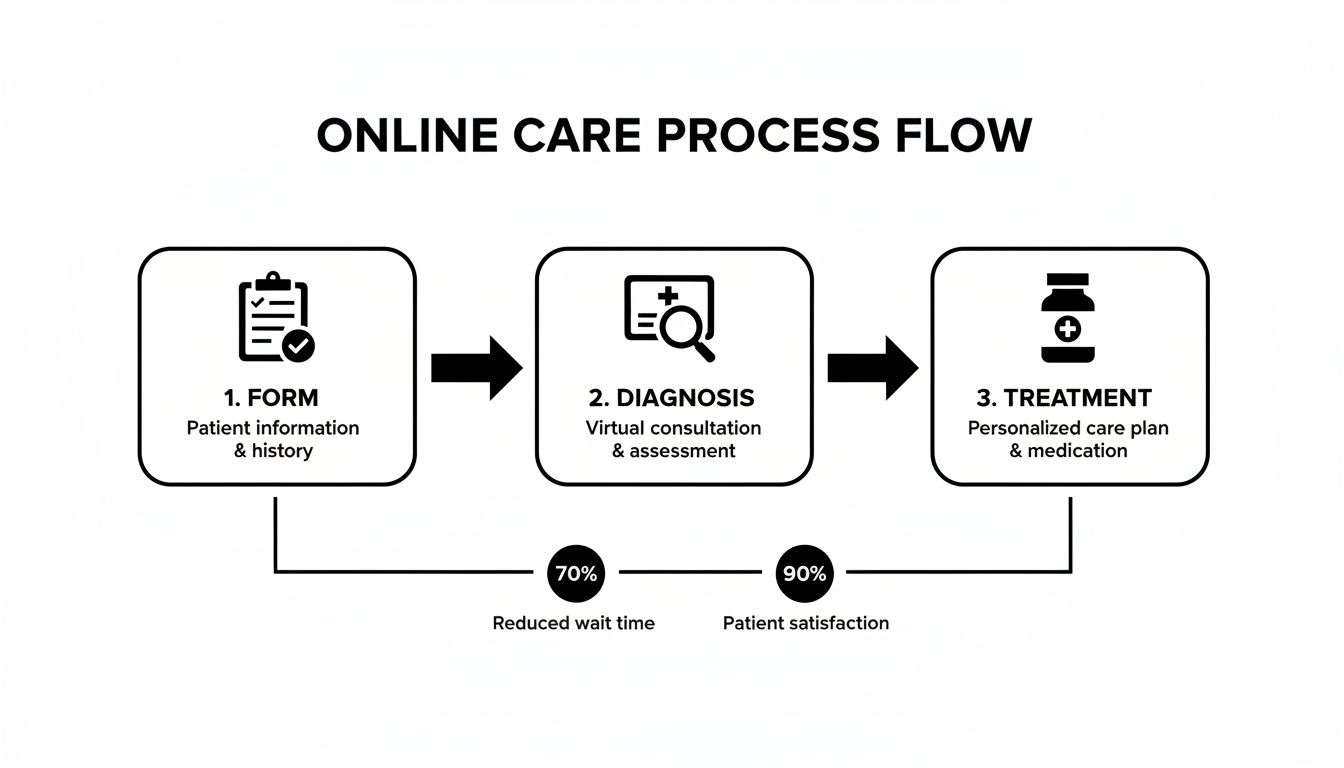
You can see how a thorough intake form flows right into an expert diagnosis and a solid treatment plan, cutting out all the usual hassle on the path to clearer skin.
Gather Your Skin Story
Before you start typing, just take a few minutes to get your thoughts and medical info organized. I can't stress this enough—this simple prep work can make a huge difference in the quality of care you get back.
Try to have this information ready:
- Past Treatments: Jot down a quick list of everything you've tried before, both prescription and over-the-counter. Make a note of what worked, what didn't, and any side effects you had. For example, did a certain benzoyl peroxide wash leave your skin red and flaky? Did an antibiotic you tried seem to stop working after a few months?
- Current Skincare Routine: List every single product you use on your face right now, from cleansers and moisturizers to serums and sunscreens. It helps to be specific with brand names if you can.
- Medical History: Note any allergies you have, other medications you're on (including supplements), and any existing medical conditions. This context is absolutely crucial for a doctor to prescribe a treatment that’s both safe and effective for you.
Remember, this isn't just about filling out a form. You are giving your physician the critical insights they need to provide truly personalized care that goes beyond a surface-level diagnosis.
Take Clear, Helpful Photos
For an online acne consultation, your photos are the physician's eyes. It's tough to get an accurate diagnosis from blurry or poorly lit images, so taking good pictures is essential. You don't need a fancy camera; your smartphone is perfect if you follow a few simple tips.
Find a spot with good, natural light, like facing a window. Try to avoid harsh overhead lights or weird shadows that can either hide your acne or make it look worse than it is.
Take clear, focused shots of the affected areas from a few different angles—front, left side, and right side usually does the trick. Make sure the photos really show the texture and type of acne you're dealing with, whether it’s blackheads, white bumps, or deeper, more painful cysts. This visual evidence, combined with your detailed history, is the foundation of your acne treatment online.
You can explore more about how the ChatWithDr process works to see exactly how this information gets used in a real consultation.
What to Expect During Your Digital Assessment
So, you’ve gathered your info and snapped your photos. Now comes the part where the magic happens: the digital assessment. This is where a board-certified physician steps in to review everything you’ve sent over. Don't mistake this for a quick glance; it’s a detailed medical review designed to be just as thorough as sitting in a doctor's office.
The physician will carefully examine your photos to figure out exactly what kind of acne you're dealing with. They're trained to spot the subtle differences between various forms, and that's critical because the right diagnosis is the first step toward the right treatment.
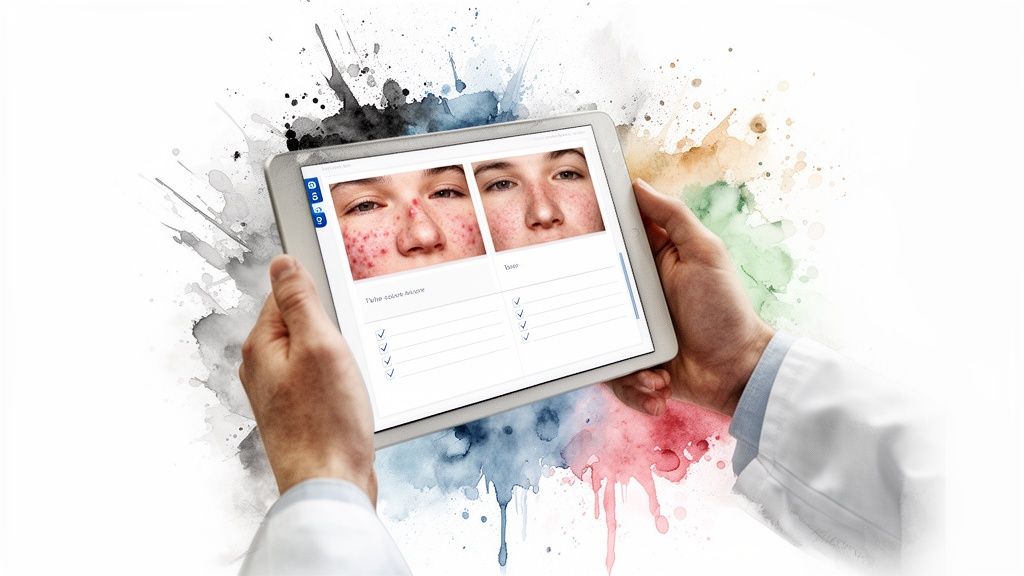
And it really works. Teledermatology has been proven to match the accuracy of face-to-face visits for assessing acne severity. It's no wonder that online pharmacies led global distribution for acne treatments in 2023, a trend that’s expected to keep growing at a 6.6% rate through 2030. It's a massive shift in how we get care.
The Clinician's Checklist
Your doctor isn't just looking at pimples; they're putting together a complete puzzle of your skin's health. They dig into your intake form and photos to distinguish between the main acne types, since each one needs a different game plan.
- Comedonal Acne: Think blackheads and whiteheads. This is the non-inflammatory stuff that often responds really well to topical retinoids that help unclog pores.
- Inflammatory Acne: This is when you see red, swollen bumps (papules and pustules). The doctor will look for signs of bacterial involvement, which might mean adding topical or even oral antibiotics to the mix.
- Nodulocystic Acne: The most severe form, featuring large, painful nodules and cysts deep under the skin. This requires a more aggressive approach to prevent scarring down the road.
The goal here is to build a complete picture. A good clinician analyzes patterns, severity, and potential triggers to create a treatment plan that gets to the root cause, not just what you see on the surface.
Going Beyond the Blemishes
An effective acne treatment online also has to look at what's going on inside your body. Those questions on the intake form aren't just for show—they give the doctor crucial clues about your unique situation.
For instance, they'll want to know about:
- Lifestyle and Diet: For some people, things like high-glycemic foods or major stress can be huge acne triggers.
- Hormonal Patterns: A lot of women find their breakouts are cyclical, tied directly to their menstrual cycle. That’s a big clue pointing to a hormonal component.
- Treatment History: Knowing that you tried benzoyl peroxide in the past and it caused severe irritation helps the doctor steer clear of it and pick a gentler alternative.
By combining this personal history with a visual analysis, the physician can rule out other skin conditions and lock in an accurate diagnosis. It's this rigorous, multi-faceted approach that makes virtual care so professional and personalized. If you want to dive deeper into the process, you can find more in our guide on choosing an online dermatologist.
So, What Will Your Doctor Prescribe?
Once your online physician finishes their assessment, the next move is crafting a treatment plan just for you. This is where getting acne treatment online really shows its power—giving you access to proven, prescription-strength medications that hit acne where it starts. Knowing what these options are and how they work will help you feel confident in the plan your doctor creates.
Most of the time, treatment starts with topicals. They're the first line of defense against acne for a good reason: they're incredibly effective and you apply them right where the problem is. The market backs this up, too. Topical medications are a massive business, valued at USD 6.68 billion in 2022 and expected to more than double by 2030. You can see the demand everywhere, with U.S. sales of over-the-counter acne products alone hitting USD 536 million in 2023. It’s clear people are looking for these accessible solutions. You can dig into more of the trends shaping the acne medication market on gminsights.com.
The Heavy Hitters: Potent Topicals Your Doctor May Prescribe
When the stuff you buy at the drugstore just isn't getting the job done, your doctor has a powerful arsenal of topicals to turn to. These are a whole different league from your typical cleansers and spot treatments; they work on a cellular level to clear out pores and shut down inflammation.
Some of the most common and effective options include:
- Topical Retinoids (like Tretinoin): Often called the gold standard in acne care, retinoids work by accelerating skin cell turnover. This process is key to unclogging pores and preventing new blackheads and whiteheads from ever forming. They're especially great for that stubborn comedonal acne.
- Topical Antibiotics (like Clindamycin): If your acne is angry, red, and inflamed, there's a good chance bacteria is part of the problem. Clindamycin gets to work by killing the acne-causing bacteria living on your skin's surface, which helps calm down those painful papules and pustules.
- Combination Therapies: Sometimes, the best strategy is to attack acne from multiple angles at once. Your physician might prescribe a product that combines a retinoid with an antibiotic or even benzoyl peroxide to fight both clogged pores and bacteria simultaneously.
It's so important to remember that these medications are strong and they work, but they demand patience. You might not see a huge improvement for several weeks, so being consistent with your routine is absolutely crucial to getting the clear skin you're after.
To give you a clearer picture, here’s a quick rundown of what you might be prescribed.
Overview of Common Online Acne Prescriptions
| Medication Type | How It Works | Best For |
|---|---|---|
| Topical Retinoids | Speeds up skin cell turnover to unclog pores. | Blackheads, whiteheads, and preventing new breakouts. |
| Topical Antibiotics | Kills acne-causing bacteria on the skin. | Red, inflamed pimples (papules and pustules). |
| Oral Antibiotics | Reduces bacteria and inflammation from the inside out. | Moderate to severe inflammatory and cystic acne. |
| Hormonal Pills | Stabilizes hormones that trigger breakouts. | Hormonal acne in women, often flaring around periods. |
These are the go-to treatments that have helped countless people get their acne under control.
When It's Time for Oral Medications
For more stubborn or severe acne—especially the deep, painful cysts that just won't go away—a topical-only approach might not be enough. When that's the case, an online physician might decide that an oral medication is the right next step to get your acne under control from the inside out.
These medications work systemically, targeting the root causes of major breakouts.
- Oral Antibiotics (like Doxycycline): This type of medication is prescribed to reduce the bacteria fueling inflammatory acne and to lower overall inflammation throughout your body. Doctors typically prescribe them for a limited time to get a serious breakout under control while your topical treatments have a chance to kick in.
- Hormonal Medications (like certain birth control pills): For many women, acne is directly tied to their menstrual cycle, meaning hormonal fluctuations are the main trigger. Certain oral contraceptives can help stabilize these hormones, which can lead to a dramatic drop in breakouts.
Your doctor will always review your medical history carefully to make sure these medications are a safe and appropriate choice for you. Having a good grasp of these options will make it much easier to understand your doctor’s recommendations and stick with your treatment plan. For more details on the whole process, check out our guide on how to get an online prescription through our platform.
Making Your Online Acne Treatment a Success
Getting your prescription is a huge first step, but the real journey to clear skin is just beginning. Let’s be real: successful online acne treatment comes down to two things—consistency and patience. It’s not an overnight fix, but a process that demands you commit to a new routine.
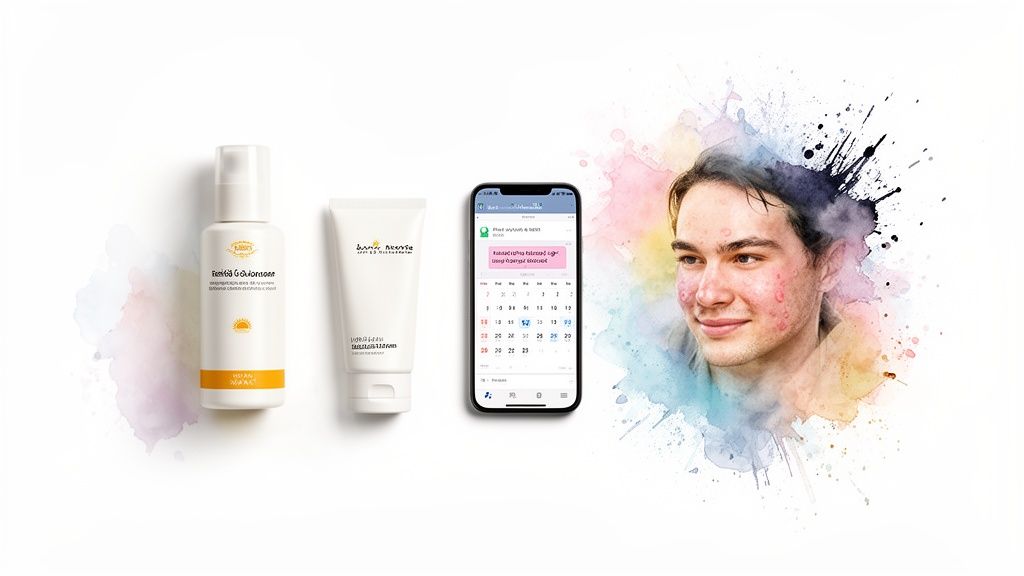
Many of the most effective prescription topicals, like retinoids, can take 8-12 weeks to really show a difference. Your skin might even get a little worse before it gets better, a phase dermatologists call "purging." Knowing this from the start helps you stick with the plan even when you feel discouraged.
Managing Side Effects and Supporting Your Skin
Prescription acne meds are powerful, and they often come with side effects like dryness, peeling, and a whole new level of sun sensitivity. Don't worry, these are almost always manageable if you give your skin the right support.
Think of your daily skincare routine as the essential support system for your treatment. Here are the absolute non-negotiables:
- A Gentle Moisturizer: Look for ingredients like ceramides or hyaluronic acid to help repair your skin's moisture barrier. Pro tip: applying it over your topical medication can buffer some of the irritation.
- Daily Sunscreen: This is critical. So many acne treatments make your skin more vulnerable to sun damage. A broad-spectrum SPF 30 or higher is a must—every single day, no excuses.
- A Mild Cleanser: Ditch the harsh scrubs and cleansers that strip your skin raw. A simple, hydrating formula will do the job without causing extra irritation.
To really get the most out of your treatment, you might consider incorporating high-quality Japanese skincare for acne products into your routine. They often focus on gentle, hydrating ingredients that are a perfect match for powerful prescription therapies.
Think of it this way: your prescription is the heavy lifter, but your daily skincare routine is the spotter, making sure everything goes smoothly and preventing bigger issues. Ignoring your routine is like trying to lift weights without a spotter—risky and way less effective.
Following Up with Your Online Doctor
One of the best things about online care is how easy it is to get follow-up support. Your first prescription isn't the final word. If you're really struggling with side effects or just not seeing the progress you hoped for after a few months, it's time to check in.
Most platforms, including ChatWithDr, make it super simple to send a message to your physician. They can help you troubleshoot side effects, adjust your dosage, or even switch to a different medication if what you're using isn't the right fit.
There are also times when an online doctor will recommend an in-person visit. If your acne is extremely severe, involves deep and painful cysts, or just isn't responding to standard treatments, they might refer you to a local dermatologist. This collaborative approach ensures you’re always getting the right level of care for your specific situation.
Your Questions About Online Acne Treatment, Answered
It’s smart to have questions before you jump into a new way of getting healthcare. When it comes to acne treatment online, a few common concerns always seem to pop up. Getting straight answers helps you move forward with confidence and feel good about your choice.
Let's tackle those frequently asked questions head-on. My goal here is to clear up any lingering doubts and show you why teledermatology is a trusted, secure, and genuinely effective way to finally get your acne under control.
Is It Really Safe to Get an Acne Prescription Online?
Yes, it’s absolutely safe—as long as you’re using a legitimate, compliant platform. Services like ChatWithDr connect you only with U.S.-licensed, board-certified physicians. These are the same doctors who are required to follow the exact same strict medical standards they would in a physical clinic.
These platforms are also HIPAA-compliant, which is the legal gold standard for protecting your private health information. A doctor will only write a prescription after they’ve done a thorough review of your medical history, current symptoms, and photos to decide if a treatment is both safe and medically right for you.
How Much Does Online Acne Treatment Usually Cost?
One of the best things about online care is how clear the costs are. Instead of getting confusing bills from a clinic weeks later, many online services have a single, flat consultation fee. For example, ChatWithDr charges a $39.99 fee that covers the entire medical review, your diagnosis, and the prescription itself.
That fee is often payable with HSA/FSA cards, which makes it an even more affordable option. The cost of the medication is separate and handled at your pharmacy, where you can use your health insurance just like you would with any other prescription.
What if My Acne Doesn't Get Better with the First Treatment?
Skincare isn't always a one-and-done deal; sometimes it takes a few adjustments to get it right. If you’re not seeing the results you hoped for after a few weeks, any good online service will have a clear way for you to get follow-up care.
You can easily get back in touch with your physician to talk about your progress. Based on your feedback, they might:
- Adjust the dosage of your current medication.
- Prescribe a different medication that could be a better fit.
- Recommend a combination of treatments to attack your acne from multiple angles.
The whole point is to find the specific regimen that works for your skin, and that follow-up support is a crucial part of the process.
Can I Get Strong Medications Like Isotretinoin Online?
Generally, the answer here is no. Powerful systemic medications like Isotretinoin (you might know it by its old brand name, Accutane) demand incredibly strict monitoring. This includes regular blood tests and required in-person check-ups. Because of these critical safety rules, these drugs are not prescribed through most telemedicine platforms.
However, an online physician can accurately diagnose severe or nodulocystic acne. If they determine that Isotretinoin is the right next step for you, they will give you a professional medical referral to see an in-person dermatologist in your area.
Ready to start your journey to clearer skin with the support of a board-certified physician? ChatWithDr provides fast, discreet, and affordable online consultations so you can get the right acne treatment plan from the comfort of your home. Get started today at https://chatwithdr.com.
Related posts:
 Allergies, Acne, or Eczema? Get Your Prescription Tonight (Even If It's 2 AM)
  Struggling For Quick Skin Relief? 50+ Conditions We Treat Online (Acne, Eczema, Rashes & More)
  Acne, Eczema, Rosacea, and Allergies: The Text-Based Treatment Guide for Busy People
  Your Guide to Hair Loss Treatment Online
  Acne, Eczema, Allergies, and Rosacea Treatment Online: Get Same-Day Prescriptions Without the Wait