

Think of telehealth as your digital first-aid kit for travel. It gives you on-demand access to licensed physicians for diagnoses and prescriptions anywhere you are in the U.S. Instead of derailing your trip to track down an urgent care clinic, you can get medical help for common problems right from your phone.
Your Essential Health Companion for Any Journey
Picture this: you're on a dream vacation or a critical business trip, and a sudden, non-emergency illness hits. It could be anything—a painful UTI, a sinus infection, or an unexpected allergic reaction. Trying to find a local clinic in an unfamiliar place just adds a huge layer of stress to an already miserable situation.
This is exactly where telehealth steps in, turning a potential travel nightmare into a manageable hiccup.
It’s best to think of telehealth for travelers as an essential part of your modern travel toolkit. It removes all the guesswork and anxiety that comes with needing medical attention on the road. Instead of trying to navigate a foreign healthcare system or wasting hours in a waiting room, you can connect with a qualified doctor discreetly and efficiently.
Why Telehealth Is a Game Changer for Travelers
The demand for virtual care among people on the move has absolutely skyrocketed. It’s easy to see why. A traveler on a cross-country trip gets a sinus infection. Instead of losing a day of their itinerary, they use a service like ChatWithDr for a simple flat fee and get a prescription sent to a nearby pharmacy.
This isn’t just a niche trend. In the United States, Medicare telehealth visits surged a staggering 63-fold in 2020 to almost 52.7 million, with countless users needing quick care while away from home.
This massive growth highlights a few key benefits for anyone away from their primary doctor:
- Immediate Access: Get a diagnosis and treatment plan, often within hours, without having to hunt for a pre-scheduled appointment.
- Ultimate Convenience: Consult a doctor from your hotel room, a quiet café, or even an airport lounge.
- Privacy and Discretion: Text-based platforms let you discuss sensitive issues without ever needing a video call, keeping your health concerns private.
With a reliable telehealth service, you’re basically carrying a doctor in your pocket. It’s all about peace of mind, knowing that professional medical advice for common issues is just a few taps away, no matter where your journey takes you within the U.S.
This guide will give you a clear roadmap for using telehealth effectively, from pre-trip prep to your first consultation. If you're looking for broader travel inspiration and practical advice, exploring some of the best travel blogs can also offer some great insights.
You can learn more about specific telehealth services and how they handle the most common travel-related conditions.
How to Prepare for Telehealth Before You Travel
The absolute best time to figure out telehealth is before you actually need it. Taking a few smart steps before you even pack your bags can turn a potential medical freak-out into a minor, manageable blip on your trip. Just like you’d book a flight or reserve a hotel, sorting out your virtual healthcare access is a non-negotiable part of modern travel planning.
Doing this prep work eliminates that frantic, middle-of-the-night search for help when you’re already feeling awful. Instead of scrambling to find your insurance card or remember your medical history while battling a fever in a hotel room, you'll have everything ready to go. You can connect with a doctor in minutes, not hours.
Choose Your Telehealth Service Wisely
Not all telehealth platforms are created equal, especially when you’re on the road. Before you sign up, look for a service that feels like a reliable travel partner—something simple, fast, and built for your exact situation.
Here's your pre-travel checklist for picking the right provider:
- Nationwide Physician Licensing: This is a big one. The doctor must be licensed in the state where you are physically located during the consultation. A service with a nationwide network means you’re covered whether you’re in California or Florida.
- Transparent, Flat-Fee Pricing: Medical billing can be a nightmare. Look for services that offer a clear, upfront cost, like a flat $39.99 fee per consultation, so you're never hit with a surprise bill.
- Flexible Consultation Formats: Convenience and privacy are everything for a traveler. A text-based service that doesn't require a video call is a game-changer, letting you get care discreetly from anywhere you have a signal.
Set Up Your Account and Medical Profile Now
Once you’ve picked a provider, the single most important thing you can do is set up your account before you leave. This is a total game-changer. Creating an account and filling out your medical history in advance saves precious time and cuts down on stress when you actually need care.
Think of it like pre-checking for a flight—you're getting all the administrative stuff out of the way so you can get to your destination (in this case, medical help) that much faster.
Setting up your telehealth account before you travel is the single most effective thing you can do to ensure a fast, seamless experience. It moves the process from a stressful, in-the-moment task to a simple, two-minute request for care.
During setup, you’ll usually take care of these quick steps:
- Create Your Login: Secure your account with a password you won’t forget.
- Complete Your Medical History: This is vital. Be thorough and list any pre-existing conditions, allergies, and current medications with their dosages. This information gives the doctor the context they need to treat you safely and effectively.
- Add Your Payment Information: Enter your credit card details. Many platforms also accept HSA or FSA cards, which is a fantastic way to use your pre-tax health funds for travel-related medical needs.
Organize Your Essential Digital Documents
Finally, make sure your important health documents are easy to get to. You don't want to be digging through a suitcase for an insurance card when you need to find a pharmacy. Create a secure digital folder on your phone or a cloud service you trust.
Be sure to include clear photos or digital copies of:
- Your health insurance card (front and back)
- Your driver's license or photo ID
- A list of your current medications and their dosages
- The name and phone number of your primary care physician back home
This level of preparation is the foundation of any successful trip. Just as you’d plan for other what-ifs, having your health plan dialed in provides priceless peace of mind. This is even more critical when you're traveling with family. Pet owners know this instinctually; there’s extensive guidance on how to travel with pets to keep them safe on the road. Applying that same diligence to your own health is one of the smartest moves any traveler can make.
Navigating Telehealth Rules and Regulations
Getting healthcare through your phone while you’re on the road feels simple, but there's a whole framework of rules working behind the scenes to make sure your care is safe, legal, and effective. Getting a handle on these regulations is the key to using telehealth correctly, especially when you start crossing state lines or heading abroad.
The single most important rule to understand is the “site of patient” law. It’s a legal requirement stating that the doctor providing care must be licensed in the state where you, the patient, are physically located during the consultation.
The Driver's License Analogy for Telehealth
The easiest way to think about a doctor’s medical license is to compare it to a driver's license. A doctor licensed in California can legally “drive”—or practice medicine—for any patient located within California’s borders. Simple enough.
But if that patient drives to New York for a week, their California doctor can't legally treat them unless they also hold a New York medical license. This is why it’s so critical to use a telehealth service with a nationwide network of physicians, ensuring a properly licensed doctor is ready to help, no matter which state you’re in.
This rule is all about protecting you. It guarantees the doctor you speak with meets the specific medical standards of the state you're visiting, which means you're getting high-quality, accountable care.
Services like ChatWithDr solve this tricky problem by maintaining a huge network of board-certified doctors licensed in all 50 states. When you start a consultation, the platform automatically connects you with a physician who is legally cleared to treat you right where you are.
International Travel and Prescription Rules
What happens when your travels take you outside the United States? The rules get a lot simpler—and much more restrictive.
U.S.-based telehealth services, including ChatWithDr, are legally authorized to treat patients only within the United States. A U.S. physician’s license just doesn't extend to providing care for a patient who is physically in another country.
The same logic applies to prescriptions. An e-prescription from a U.S. doctor is valid at pharmacies across the country. You can get a diagnosis while you’re in Arizona and have your medication ready for pickup in Maine without a hitch.
But that U.S. prescription is almost always not valid at international pharmacies. Other countries have their own healthcare regulations, pharmacy standards, and licensing systems. You can’t just walk into a pharmacy in Paris or Tokyo and expect them to fill a script from an American doctor.
This quick decision tree shows how your location dictates the right next step for care.
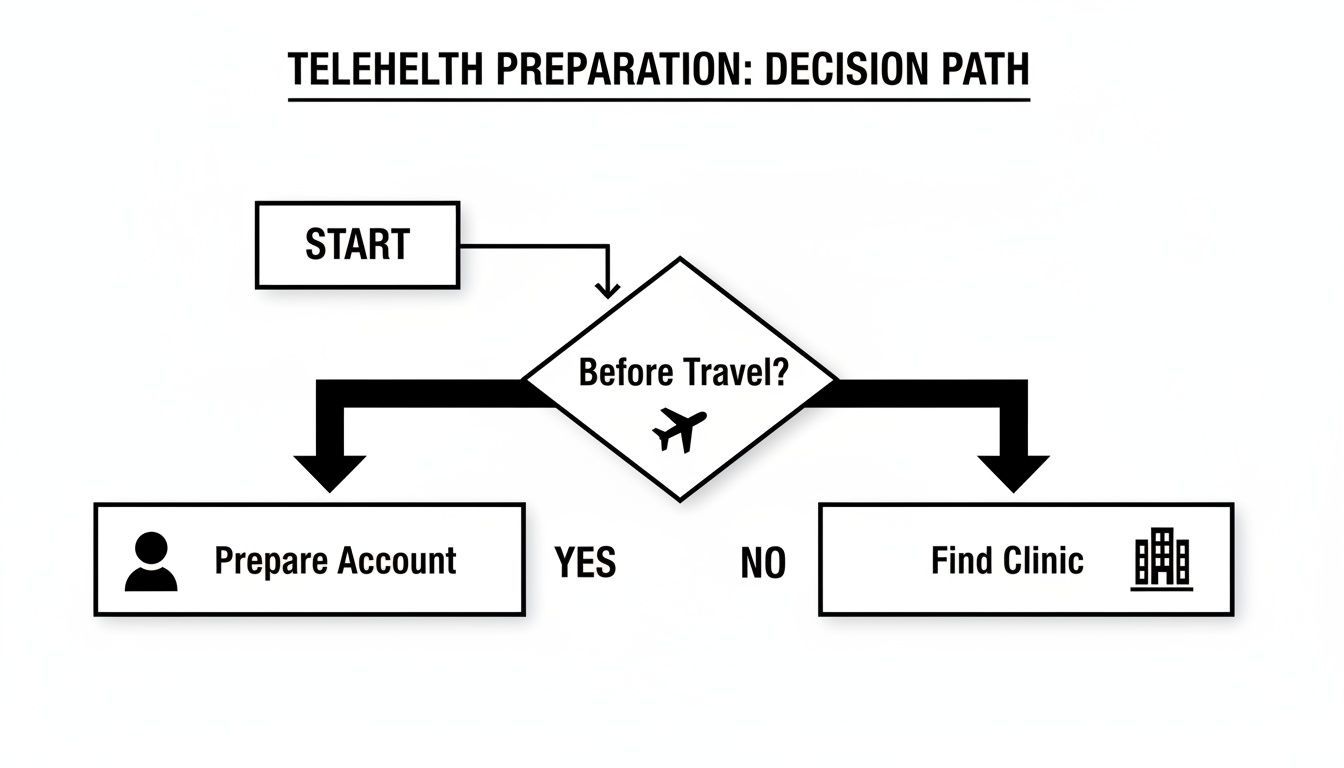
As the chart makes clear, the most important step happens before you even pack your bags: getting your telehealth account ready to go.
Your Prescription Playbook On the Road
So, how do you manage all these rules while traveling? It’s all about knowing the limitations and using telehealth for what it does best in each situation. This quick guide breaks down where and how you can get prescriptions filled using a US telehealth service.
Telehealth Prescription Guide for Travelers
| Travel Scenario | US Doctor Prescription Validity | Recommended Action |
|---|---|---|
| Traveling within the U.S. | Valid Nationwide | Use telehealth for a diagnosis and have your e-prescription sent to any local U.S. pharmacy. |
| Traveling Internationally | Not Valid Abroad | Get refills from a U.S. telehealth service before you leave. If you get sick overseas, you'll need to seek local medical care. |
For international trips, preparation is everything. If you take maintenance medications, make sure you have enough to last your entire trip—plus a little extra in case of travel delays. Forgetting your meds can turn into a huge headache, since you can't just call up a U.S. doctor for a refill once you're overseas.
If a non-emergency illness pops up while you're abroad, your best move is to find a local clinic or pharmacy. Many countries have fantastic healthcare services available to tourists.
By understanding these boundaries, you can use telehealth for travelers as a powerful tool for your domestic trips and plan smart for international adventures, making sure you're ready for whatever comes your way.
What Can a Virtual Doctor Actually Treat While You're Traveling?
When you're far from your home turf, even a minor health issue can feel like a full-blown crisis. This is exactly where telehealth for travelers shines—it's built to quickly and effectively handle the common, non-emergency problems that always seem to pop up on the road. It’s the perfect fix for getting you back to your trip without the hassle of tracking down a clinic in an unfamiliar place.
Just think about the typical things that can derail a vacation. Most of them don't need a hands-on physical exam or complicated lab tests. A licensed doctor can often figure out what's wrong based on your symptoms and a quick chat, making telehealth the ideal first line of defense.
Conditions That Are a Perfect Fit for Virtual Care
For a whole range of common travel sicknesses, a simple text-based chat is more than enough to get a diagnosis and a prescription. The whole process is fast, private, and unbelievably efficient when all you need is professional medical advice.
Here are some of the top ailments that telehealth services are great at treating on the go:
- Urinary Tract Infections (UTIs): The sudden, miserable symptoms of a UTI can completely ruin a trip. A telehealth doctor can quickly prescribe antibiotics based on what you tell them, often bringing relief in just a few hours.
- Sinus Infections and Colds: A nagging cold or sinus pressure is the last thing you want on vacation. A virtual consult can help figure out if it's a bacterial infection that needs antibiotics or just a virus that needs rest and fluids.
- Traveler’s Diarrhea: This incredibly common issue can be debilitating. A doctor can assess how severe it is, suggest ways to manage your symptoms, and prescribe medication if you need it.
- Skin Rashes and Minor Allergic Reactions: Not sure what caused that itchy rash? You can securely send a photo for the doctor to look at, which usually leads to a fast diagnosis and a prescription for a cream or antihistamine.
- Pink Eye (Conjunctivitis): With its very distinct symptoms, pink eye is easily diagnosed from afar. A doctor can send a prescription for medicated eye drops to a pharmacy near you in minutes.
These are prime examples of how telehealth cuts through the usual friction of getting healthcare. Instead of wasting hours in an urgent care waiting room, you can get a treatment plan right from your hotel. To see how virtual care works for respiratory issues, you can learn more about managing colds, flu, and COVID while you're away.
Routine Needs and Discreet Care on the Go
Telehealth isn't just for when you get unexpectedly sick. It's also an incredible resource for managing the routine health needs that don't stop just because you're on vacation. Forgetting to pack a key medication is a classic travel mistake, but it doesn't have to ruin your plans.
Services like ChatWithDr can handle prescription refills for many stable, ongoing conditions, like birth control, blood pressure medication, or allergy medicine. As long as you're within the U.S., a doctor can send a refill to a local pharmacy, saving you from a major headache.
Travelers also run into health issues that require fast, private care. Whether it's nausea from jet lag or something more discreet like erectile dysfunction for a man on a business trip, telehealth offers a confidential solution without the awkwardness of an in-person visit.
The explosive growth in this field says it all; physician adoption of telehealth in the US skyrocketed from 15.4% in 2019 to 86.5% in 2021. This massive shift was especially important for the 74% of millennials who prefer virtual consultations—a group that travels frequently and values the speed of text-based care.
Telehealth shines in situations where convenience and discretion are everything. It provides a judgment-free space to address sensitive health concerns, from sexual health to dermatology, without ever needing a face-to-face appointment.
Knowing When to Find In-Person Emergency Care
While telehealth is an incredibly powerful tool, it has very clear limits. It's designed only for non-emergency medical issues. Knowing when a situation is too serious for a virtual visit is absolutely critical for your safety.
You must get immediate, in-person medical help or call 911 if you experience any of these red-flag symptoms:
- Chest pain or difficulty breathing
- Severe bleeding that won't stop
- Sudden numbness, weakness, or confusion (signs of a stroke)
- High fever with a stiff neck
- Severe abdominal pain
- Serious injuries, like broken bones or deep cuts
These are true medical emergencies that demand a hands-on physical exam, imaging tests, or urgent procedures that can only be done at a hospital or ER. Using telehealth smartly means knowing it's one part of your healthcare toolkit—perfect for common problems, but never a replacement for emergency services.
A Step-by-Step Guide to Your First Consultation
Feeling sick in a new city is stressful. The last thing you want is to wrestle with a complicated medical system. Thankfully, kicking off a telehealth consultation is surprisingly simple. It's designed to be fast and intuitive, getting you from "I feel awful" to having a treatment plan without ever leaving your hotel room.
Let's walk through exactly what to expect. This guide will turn the abstract idea of a virtual doctor visit into a clear, actionable plan so you're never left guessing.
Step 1: Start the Conversation
The first move is yours. Just open the telehealth app or website and pick the condition that best matches what you're feeling. Whether it's a nagging sinus infection, a UTI, or a weird rash, you’ll start a secure intake process right on your phone.
This first step is built for speed. You’ll answer a few simple questions about your symptoms—think of it as the digital version of clinic paperwork, only much faster.
Step 2: Describe Your Symptoms Clearly
This is where you play a crucial role. Since the doctor isn't in the room with you, your description is the most important tool they have to make an accurate diagnosis. Be specific and don't leave anything out.
Think like a reporter telling the story of your illness:
- What are your main symptoms? (e.g., "I have a sore throat, a pounding headache, and a low-grade fever.")
- When did they start? (e.g., "The sore throat started yesterday morning, and the fever kicked in last night.")
- Is anything making them better or worse? (e.g., "Warm tea helps my throat, but the headache gets worse with bright lights.")
- Any other important details? (e.g., "I was on a long flight two days ago.")
For anything visual—like a skin rash, pink eye, or an insect bite—good photos are worth a thousand words. Take clear, well-lit pictures from a couple of different angles and upload them securely. This lets the doctor see exactly what you’re seeing and often leads to a much faster diagnosis.
Step 3: Get Ready for the Doctor's Review
Once you’ve submitted your information, a board-certified physician licensed in your state will review your medical history and everything you've provided. With text-based platforms like ChatWithDr, you don't have to sit by your phone waiting for a video call. This asynchronous model means you can get on with your day.
The doctor will reach out through a secure chat to ask follow-up questions for more clarity. Make sure your notifications are on so you can respond quickly.
To keep things moving smoothly, have a couple of key details ready:
- Find a Local Pharmacy: Do a quick search for a pharmacy near your hotel or current location. Have its name, address, and phone number handy to share with the doctor.
- Prepare Your Questions: While you wait, jot down any questions you have. Should you avoid certain foods? Are there any over-the-counter meds that could help?
Step 4: Receive Your Treatment Plan and Prescription
After a thorough review, the doctor will send a diagnosis and a complete treatment plan right to you in the secure chat. This plan will explain exactly what’s going on and what you need to do to start feeling better. To see a full breakdown of this process, check out our guide on the simple steps of a telehealth visit.
If the doctor decides a prescription is necessary, they'll send it electronically to the pharmacy you chose. Most pharmacies receive these e-prescriptions within minutes. You’ll usually get a notification from the platform once it's sent and another from the pharmacy when it’s ready to be picked up. From there, all you have to do is collect your medicine, often using your insurance just like you would back home.
Of course. Here is the rewritten section, crafted to sound completely human-written and natural, following the provided style guide.
Answering Your Top Telehealth for Travelers Questions
Even with a solid plan, it's totally normal to have a few questions about using telehealth on the road. Let’s tackle some of the most common ones travelers have. The goal here is to give you direct answers so you can feel confident managing your health from anywhere in the U.S.
Can I Use My Health Insurance While Traveling?
This is the big one, and the answer is usually simpler than you’d think. Most modern telehealth services, especially the ones built for convenience, run on a straightforward, flat-fee model for the consultation. You pay a set price upfront, which means no surprise bills later.
While the service probably won't bill your insurance directly for the visit, you can almost always use your Health Savings Account (HSA) or Flexible Spending Account (FSA) card to cover the cost. It’s a fantastic way to pay for medical care with pre-tax dollars while you’re traveling.
Better yet, you can typically submit the receipt from your consultation to your insurance provider to see if you can get reimbursed. Whether they cover it all comes down to your specific plan’s out-of-network benefits. And when it comes to prescriptions, you can use your insurance at the pharmacy just like you would at home.
What if the Doctor Determines I Need a Lab Test?
Telehealth is perfect for handling common, straightforward conditions that don’t require a hands-on exam. That said, a good physician will always put your health and safety first.
If a doctor reviews your symptoms and thinks a lab test or a physical exam is necessary for an accurate diagnosis, they’ll tell you straight up. In that scenario, they’ll recommend you find local, in-person care at an urgent care clinic or a nearby hospital.
A huge benefit of text-based telehealth is how easy it is to follow up. If you have questions about your treatment plan after the initial chat, you can just send a secure message to your doctor for clarification. You’re never left in the dark.
This approach makes sure you get the right level of care for your situation. Telehealth is a powerful tool, but it's designed to work with—not replace—traditional medicine when a hands-on evaluation is what you really need.
Is My Health Information Kept Private and Secure?
Absolutely. Privacy is the bedrock of any reputable telehealth service. This is a huge reason why it’s so important to choose a professional, HIPAA-compliant platform. HIPAA (the Health Insurance Portability and Accountability Act) is the federal law that sets the gold standard for protecting sensitive patient health information.
Compliant platforms use enterprise-grade security and encryption to lock down every piece of your data. This means all your personal health information, your conversations with the doctor, and your medical records are kept completely confidential and protected. Using a HIPAA-compliant service is worlds more secure than trying to discuss health issues over a standard email or text message.
The COVID-19 pandemic made telehealth a lifeline for travelers, pushing its adoption and security standards forward at lightning speed. Before the pandemic, U.S. physician use of telemedicine was at 43%; it shot up to 88% after the outbreak began. That explosive growth was matched by serious technological upgrades to protect patient data. You can dig into more of these telehealth trends in this report from the CDC's National Center for Health Statistics.
How Does Telehealth Work Across Different Time Zones?
Time zones are a classic travel headache, but they’re not an issue for the right kind of telehealth service. The trick is to pick a platform that is asynchronous—meaning it doesn't lock you into a real-time, scheduled appointment.
This is where text-based consultations are a game-changer. You can start a visit and send in your information whenever it works for you, no matter what the clock on the wall says.
- It's 2 AM in California: You can start a consultation.
- It's 5 AM in New York: You can submit your case.
- It's 4 AM in Texas: You can describe your symptoms.
A doctor licensed in the state you’re currently in will review your case and get back to you as soon as they are available, usually within a few hours. This 24/7 access gets rid of the hassle of trying to line up schedules across the country, making it the perfect healthcare solution for anyone on the move. You get care on your schedule, not the other way around.
When you need fast, reliable medical care on your travels, ChatWithDr is here to help. Get a diagnosis, treatment plan, and prescription from a board-certified U.S. doctor in any of the 50 states for a flat $39.99 fee—all through secure, private chat.
Related posts:
 The 7 Best Online Doctor Services of 2025: A Detailed Review
  Healthcare Anywhere: How to Get a Doctor’s Diagnosis While Traveling (No Insurance Required)
  Best Telemedicine Platforms: best telemedicine platforms for 2025
  Online prescription service: Safe, fast access to medications
  Top 5 Urgent Care Consultations USA: Why Text-Based Care is Better for Travelers