
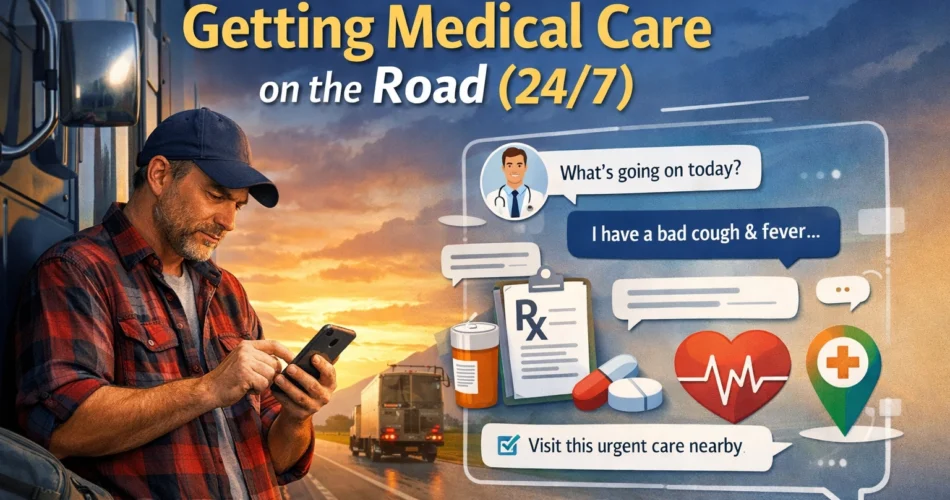
When you're hauling freight across state lines, getting sick isn't part of the schedule. But infections, rashes, and minor injuries don't care about your delivery deadlines. For long-haul truck drivers, accessing medical care on the road presents unique challenges that most people never have to think about: and traditional healthcare wasn't built with your reality in mind.
The Reality of Healthcare for Professional Drivers
You already know the drill. Most urgent care clinics don't have truck-friendly parking. Scheduling an appointment means pulling off route, finding somewhere safe to park your rig, and losing hours of drive time. Even truck stop clinics, while convenient, operate on limited hours and may not be available when symptoms strike at 2 AM in rural Wyoming.
According to the Federal Motor Carrier Safety Administration, there are approximately 3.5 million professional truck drivers in the United States, many spending weeks away from home. When a UTI flares up in the middle of Nebraska, or a suspicious rash appears while you're crossing Texas, the last thing you need is to waste four hours sitting in a waiting room.
The good news? Medical care on the road doesn't have to mean abandoning your route or your schedule anymore.

Common Health Issues Truck Drivers Face
Life on the road takes a toll. Extended sitting, irregular sleep patterns, limited food options, and stress create a perfect storm for certain health problems:
- Urinary tract infections (UTIs): Dehydration and delayed bathroom breaks increase UTI risk significantly
- Skin infections and rashes: Limited shower access and constant sitting can lead to fungal infections, boils, or irritation
- Sinus infections and respiratory issues: Recycled air, diesel fumes, and irregular sleep weaken immune defenses
- Back pain and joint issues: Hours in the driver's seat strain your musculoskeletal system
- Digestive problems: Irregular eating schedules and limited healthy food options cause acid reflux, constipation, and stomach issues
Most of these conditions don't require an emergency room visit, but they do need medical attention: and often prescription treatment: to prevent them from getting worse or sidelining you completely.
When It's a Real Emergency: Red Flags That Mean "Pull Over Now"
Before we talk about convenient care options, let's be clear about what requires immediate emergency attention. Pull over and call 911 if you experience:
- Chest pain or pressure, especially with shortness of breath, sweating, or pain radiating to your arm or jaw
- Sudden severe headache unlike any you've had before
- Difficulty breathing that's worsening or sudden
- Weakness, numbness, or difficulty speaking on one side of your body (stroke symptoms)
- Severe abdominal pain that's constant and worsening
- High fever (103°F+) with confusion or severe weakness
- Signs of blood clots: sudden leg swelling with pain, especially after long periods of sitting
These symptoms require immediate emergency care. For everything else: the infections, rashes, minor injuries, and ongoing health concerns: there's a better solution than losing half a day hunting for a clinic.
How Online Medical Care Works for Truck Drivers
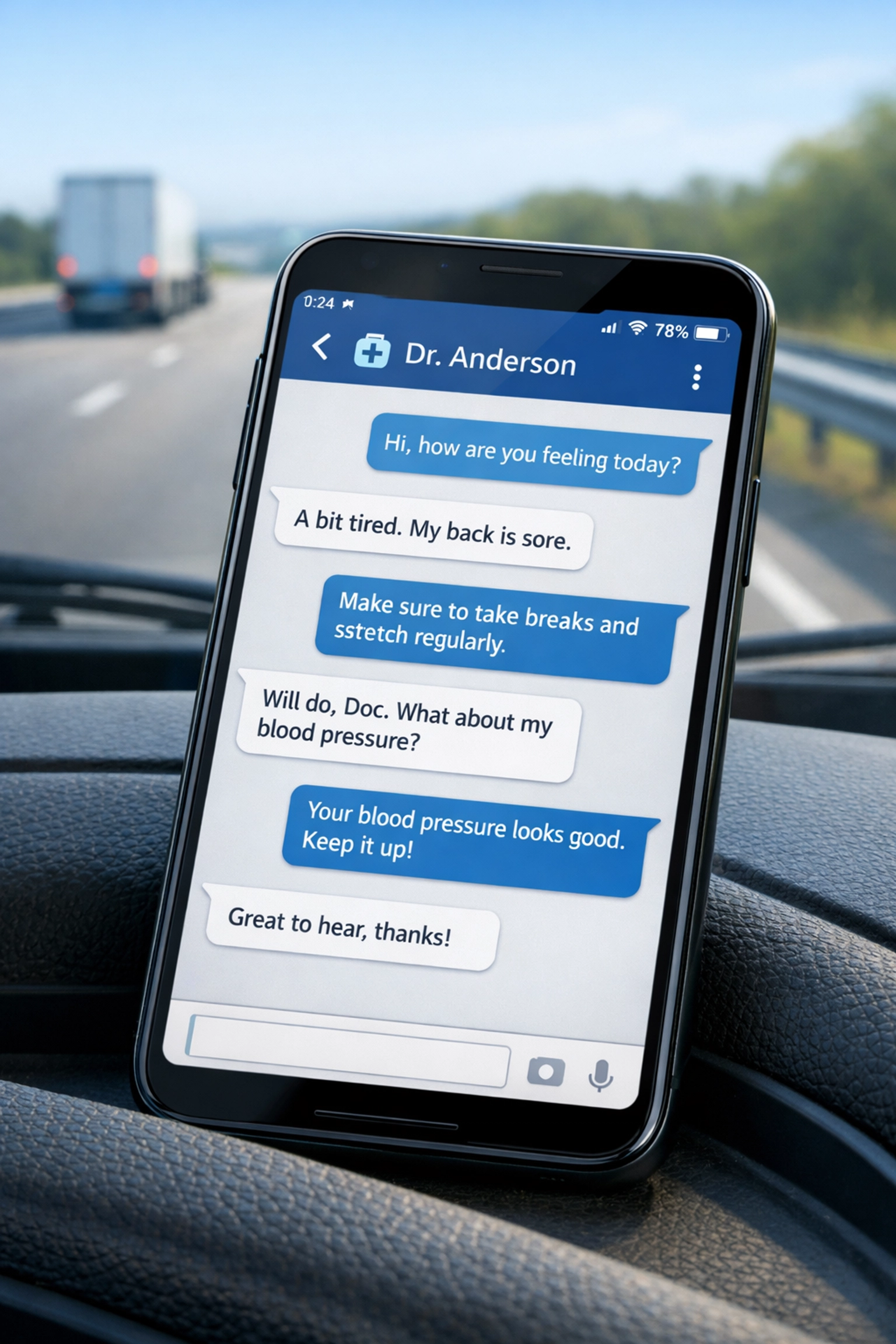
Text-based telehealth has transformed healthcare access for people who can't easily get to traditional clinics: and that includes professional drivers. Here's how chat with a doctor 24/7 works when you're on the road:
Step 1: Text From Your Truck (No App or Account Required)
Whether you're parked at a rest stop in Montana or waiting to unload in Georgia, you can start a medical consultation from your phone. No appointment scheduling, no downloading apps, no creating accounts. Just describe your symptoms in plain language.
This matters for drivers because you don't have the luxury of planning healthcare around appointment windows. Symptoms happen when they happen: 2 PM or 2 AM, weekend or holiday.
Step 2: Licensed Doctor Reviews and Responds (Under 2 Hours)
A licensed physician reviews your case and responds with a diagnosis and treatment plan: typically within two hours. They'll ask follow-up questions if needed to ensure accurate diagnosis. All communication happens via secure text messaging, so you can respond between stops or while waiting for loading.
The doctors are licensed to practice in all 50 states, which is crucial when your office is a 53-foot trailer moving across state lines. You don't need to worry about which state you're in when symptoms start.
Step 3: Prescription Sent to Any Pharmacy
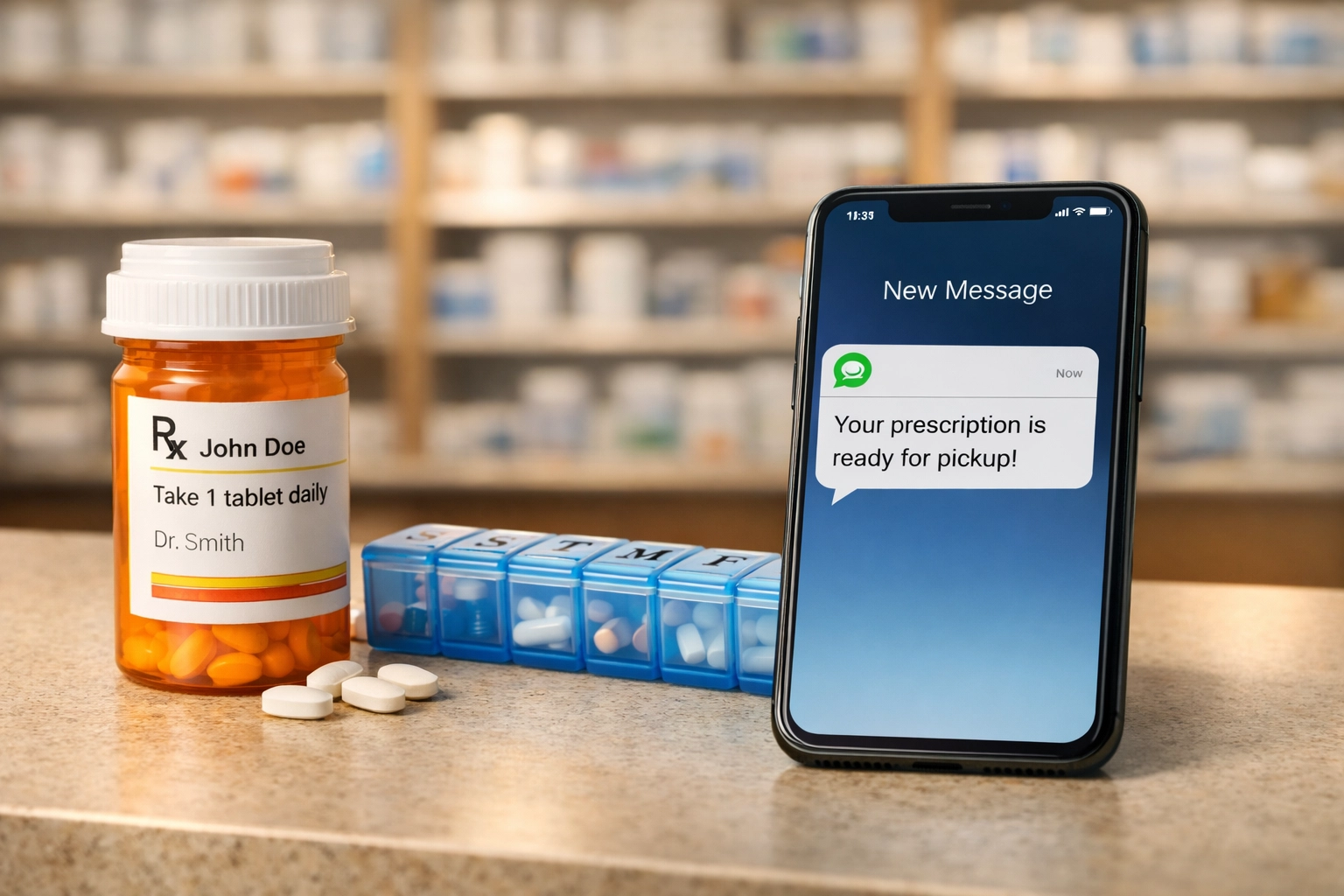
If you need medication, the prescription gets sent electronically to any pharmacy you choose: including truck stop pharmacies, major chains like Walmart or CVS, or independent pharmacies. You can pick it up at your next stop and use your regular pharmacy insurance.
The entire process costs $39.99 flat: no surprise bills, no insurance hassles for the consultation itself. You can pay with HSA or FSA cards if you have them.
Real Scenarios: How This Solves Driver-Specific Problems
Let's get practical. Here's how getting medical care on the road through secure text consultations solves real problems you face:
Scenario 1: UTI at Mile Marker 317
You've been pushing to make your delivery window, and now you're dealing with the burning urgency of a UTI. Traditional option: find a clinic with truck parking (good luck), wait 2-3 hours, and fall behind schedule. Online option: text a doctor while you're grabbing lunch, get antibiotics prescribed to the Walmart pharmacy at your next fuel stop, and stay on schedule.
Scenario 2: Suspicious Rash During a Long Haul
You notice an expanding rash on your leg that's getting worse. Is it a fungal infection? Cellulitis? Something that needs urgent care? Take a photo, describe the symptoms, and get a professional assessment without pulling off route. If it's something that can be treated with topical medication, you'll have a prescription waiting. If it needs in-person evaluation, you'll know that too: before wasting time at a clinic that can't help.
Scenario 3: Sinus Infection on a Holiday Weekend
Your sinuses are killing you, and it's Saturday night. Most clinics are closed until Monday. You could suffer through until then, or you could text a doctor tonight and have antibiotics ready at a 24-hour pharmacy by morning. No waiting, no driving around looking for open urgent care, no losing your weekend.
What Can (and Can't) Be Treated Online
Text-based medical consultations work well for conditions that don't require physical examination or diagnostic tests:
Commonly Treated Conditions:
- Urinary tract infections
- Sinus infections and upper respiratory infections
- Skin infections (rashes, fungal infections, mild cellulitis)
- Pink eye and ear infections
- Acid reflux and digestive issues
- Minor injuries (when you can describe and photograph them)
- Prescription refills for ongoing conditions
- Cold and flu symptoms
Not Appropriate for Online Treatment:
- Emergency conditions (chest pain, stroke symptoms, severe injuries)
- Conditions requiring imaging (X-rays, CT scans)
- Conditions requiring physical examination (suspected appendicitis, severe abdominal pain)
- Controlled substance prescriptions (pain medications, benzodiazepines)
When in doubt, describe your symptoms to a doctor through urgent care online consultation. They'll tell you if your condition can be treated via telehealth or if you need in-person care.
Why This Beats Truck Stop Clinics (When Available)
Truck stop medical clinics are a great resource when available, but they have limitations:
- Limited hours: Most operate 8 AM to 6 PM weekdays only
- Limited locations: You have to be near a truck stop that has a clinic
- Wait times: Even with convenient parking, you're still waiting
- Higher cost: Most charge $100-150+ for urgent care visits
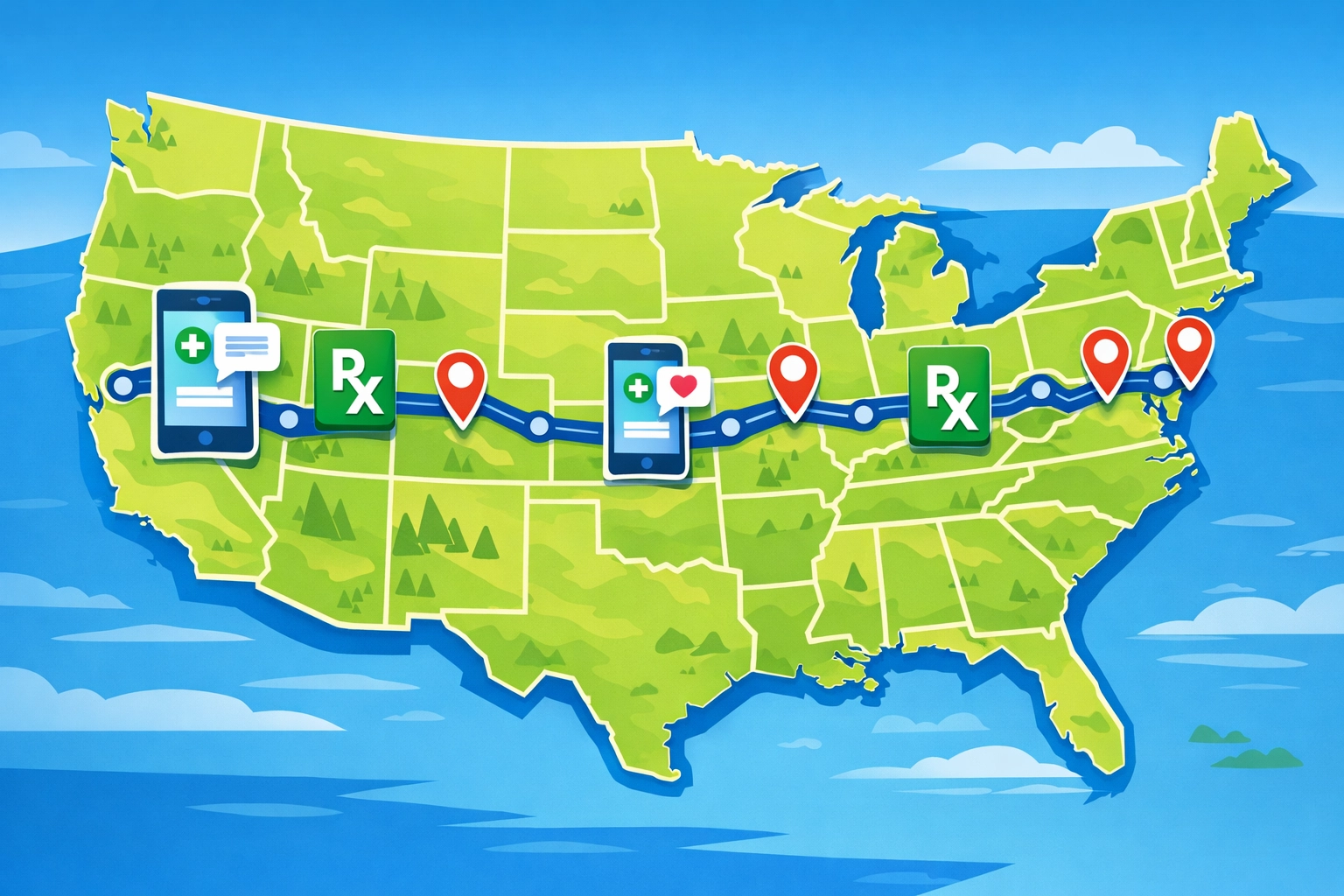
Text consultations with ChatWithDr cost $39.99 flat, work 24/7 including holidays, and are available wherever you have cell service. You don't need to be near any specific location. Treatment can start while you're still rolling.
This doesn't replace DOT physicals or comprehensive in-person care when you need it. But for the common infections and minor health issues that hit while you're on the road, it's faster, cheaper, and doesn't mess up your schedule.
Practical Tips for Staying Healthy on the Road
While convenient medical care helps when problems arise, prevention is always better. Here are proven strategies from drivers who've maintained their health despite the challenges:
Hydration: Keep a large water bottle in the cab and set reminders to drink. Dehydration increases UTI risk and fatigue.
Regular breaks: Federal regulations require breaks for safety: use them to walk, stretch, and move your body.
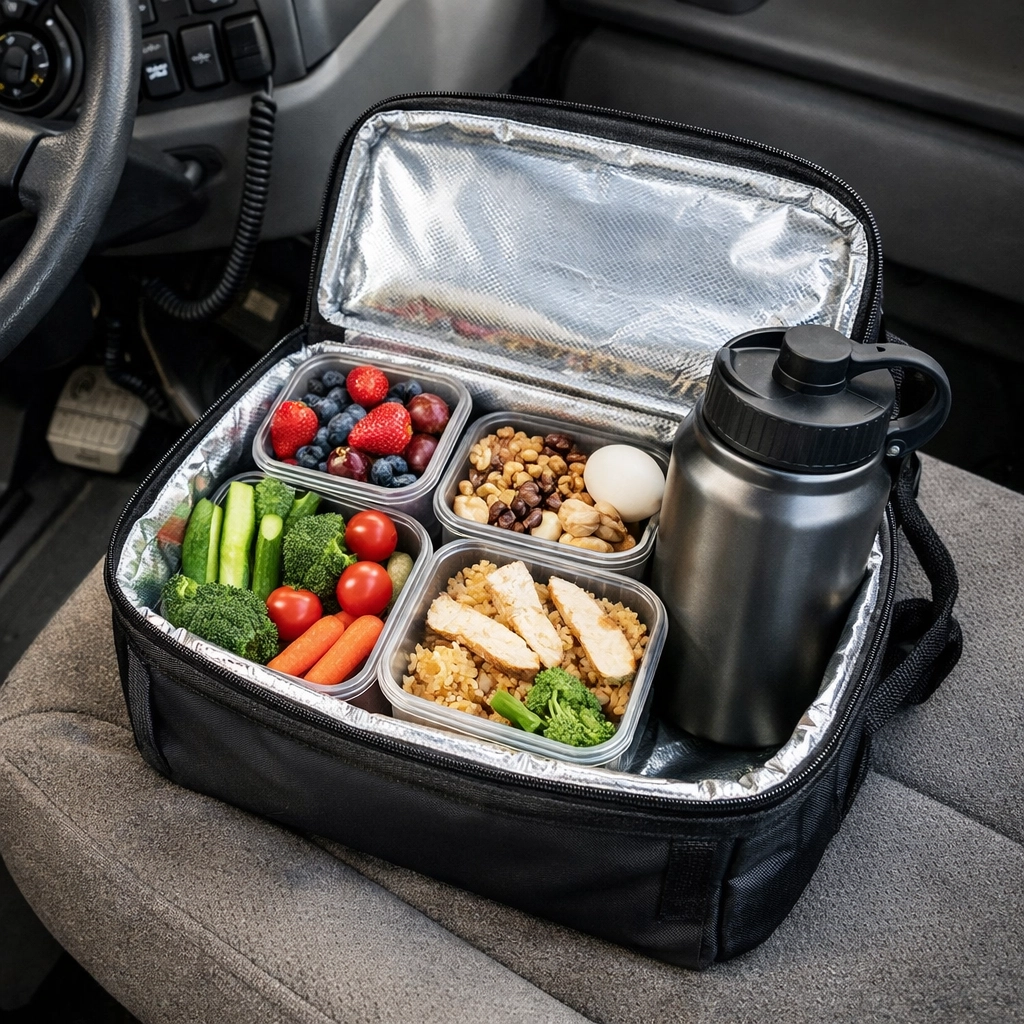
Portable healthy foods: Stock your cab with nuts, fresh fruit, protein bars, and vegetables that don't need refrigeration.
Sleep hygiene: Consistent sleep schedules (when possible) and a dark, quiet sleeping environment protect your immune system.
Basic hygiene supplies: Baby wipes, hand sanitizer, and antifungal powder prevent many common infections.
When health issues do arise despite your best efforts, having 24/7 access to medical care means they don't have to derail your schedule or your paycheck.
Getting Started With Medical Care on the Road
No setup required. When you need medical care, visit ChatWithDr urgent care consultation from your phone. Describe your symptoms, answer the doctor's questions, and get treatment recommendations: all via secure text messaging that's HIPAA-compliant and private.
The service is specifically designed for people who can't easily access traditional healthcare: travelers, night shift workers, people in rural areas, and yes, professional truck drivers whose office is constantly moving across the country.
You can't schedule when you'll get sick. But you can have reliable access to licensed medical care no matter where your route takes you, what time symptoms start, or what day of the week it is. That's how medical care on the road should work in 2026: and now it does.
Frequently Asked Questions
Can I really get prescriptions while traveling across state lines?
Yes. ChatWithDr physicians are licensed in all 50 states, so you can receive treatment regardless of your current location. Prescriptions are sent electronically to any pharmacy you choose.
What if I need a prescription refill for ongoing medication?
Routine refills for chronic conditions can often be handled through online consultation, getting your prescription sent to a pharmacy along your route.
Is this covered by my health insurance?
The $39.99 consultation fee is typically not covered by insurance, but you can use HSA or FSA cards. Importantly, when you pick up your prescription at the pharmacy, you use your regular pharmacy insurance just like normal.
How quickly will I get a response?
Most consultations receive initial physician response within 2 hours, often faster. Follow-up questions are typically answered within an hour.
What if the doctor says I need in-person care?
The physician will let you know if your condition requires in-person evaluation or emergency care, and can provide guidance on what type of facility to seek.
Your health matters as much as your cargo. Don't let minor health issues become major problems because accessing care is too complicated. When medical issues arise on the road, you now have options that actually work with your schedule and your reality.
Related posts:
 The Ultimate Guide to Telehealth for Truckers: Getting Prescriptions Anywhere on the Road
  Why Text-Based Care is Better for Travelers and Workers on the Road
  Why Text-Based Care is Better for Travelers and Workers on the Road
  Why Text-Based Care is the Best Telehealth Option for Travelers and Road Workers
  The Ultimate Guide to Online Medical Chat: Healthcare for People Who Never Stop Moving