
Starting the pill can feel like a big step, and it's totally normal to wonder how your body will react. The side effects of birth control can range from small physical tweaks, like spotting or nausea, to noticeable emotional shifts. The good news? Most of the common ones—think breast tenderness or mild headaches—usually fade away within two to three months as your body gets used to the new hormone levels.
Understanding Your Body's Response to the Pill
When you start taking birth control pills, you're introducing synthetic hormones into your system. Their job is to temporarily hit pause on your body's natural hormonal cycle to prevent pregnancy. It’s a bit like a new choreographer taking over a dance troupe that has its routine down pat; it just takes a little time for everyone to sync up to the new steps. This initial adjustment period is when most temporary side effects pop up.

The hormones in the pill—either a combination of estrogen and progestin or just progestin on its own—prevent ovulation and thicken your cervical mucus. Since hormones have a hand in everything from your mood to your skin, it's no surprise that these new signals can create a ripple effect across your body.
The most important thing is to recognize that your body is going through a change. While a lot of side effects are mild and don't stick around for long, it's crucial to listen to what your body is telling you during this transition.
The Initial Adjustment Phase
Think of the first few months as an observation period. Your body is figuring out how to work with the pill, and you might notice some changes you haven't felt before. This guide is designed to be your practical roadmap, helping you sort out what’s normal and what might mean it's time to try a different approach.
Our goal is to arm you with the knowledge to manage your contraceptive journey with confidence. That includes:
- Identifying common vs. rare side effects: Knowing the difference between a little temporary spotting and a sign of a more serious issue.
- Understanding timelines: Learning what to expect during the first few weeks and months.
- Making informed decisions: Feeling empowered to have a real, productive conversation with your doctor about your experience.
Why Every Experience Is Unique
No two people react to medication in the exact same way. Things like your personal health history, genetics, and even your lifestyle can influence how you respond to a specific pill. That’s why a pill that works wonders for your best friend might not be the right fit for you.
To help your body navigate the pill's hormonal effects, you might find it useful to learn more about different hormone balance supplements for women.
Ultimately, finding the right birth control is a partnership between you and your healthcare provider. This guide will walk you through the common and rare side effects, risk factors, and practical ways to manage them so you can navigate this process like a pro.
What to Expect in the First Three Months
Starting the birth control pill introduces a new hormonal rhythm to your body. Think of it like your body's internal orchestra getting a new conductor—it can take a few rehearsals for every section to play in perfect harmony. This initial adjustment period, which typically lasts up to three months, is when most temporary side effects show up.
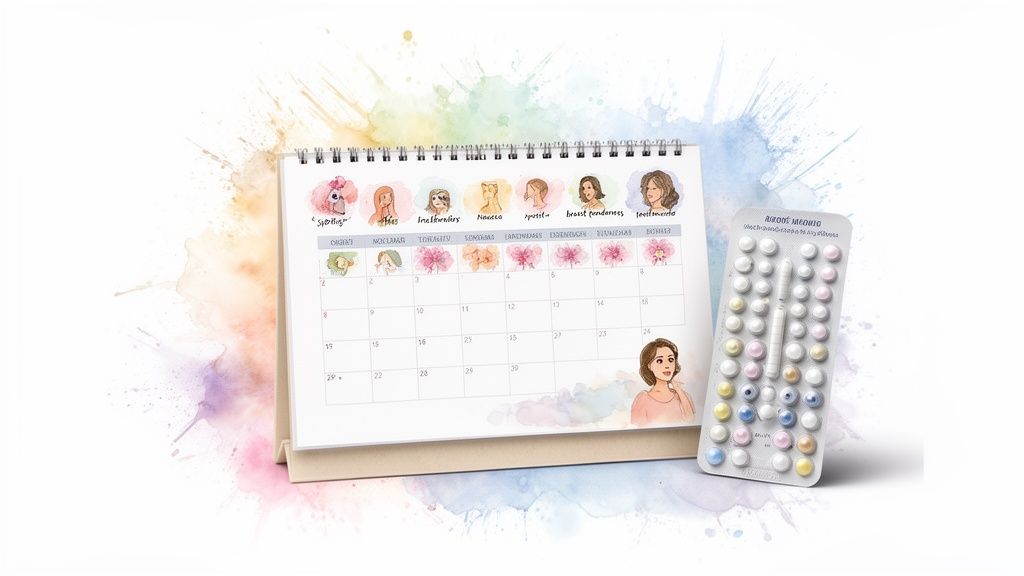
The synthetic hormones in the pill get to work preventing ovulation and creating an environment where pregnancy is highly unlikely. As your body adapts to these new instructions, you might notice some changes. It's so important to remember that many of these are normal signs of your system getting used to things and they often fade on their own.
Knowing what to expect can help dial down the anxiety and empower you to manage these early weeks with confidence. Let's break down the most common birth control pill side effects you might run into during this time.
Navigating Breakthrough Bleeding and Spotting
One of the most frequent experiences when starting the pill is breakthrough bleeding, or spotting between your expected periods. This happens because the hormones are stabilizing your uterine lining, and it can take a few cycles for this process to become predictable.
While it can definitely be inconvenient, this type of bleeding is usually much lighter than a regular period and is not a sign that the pill isn't working. For most people, it decreases significantly after the first two or three packs.
Managing Nausea and Mild Headaches
Some people experience mild nausea when they first begin taking the pill. This is often a reaction to the estrogen component, which can sometimes irritate the stomach lining. A simple and effective trick to manage this is to take your pill with a meal or right before you go to bed.
Similarly, slight headaches can pop up as your body adjusts to the hormonal shifts. These are typically temporary and feel very different from a severe migraine. Staying well-hydrated and keeping a consistent sleep schedule can often help take the edge off this initial discomfort.
The adjustment phase is temporary, but the side effects are very real. These initial symptoms are a primary reason why some people stop taking their contraception early, even though the issues often resolve with time.
Research really highlights how common these experiences are. For instance, one study found that 41.9% of women reported side effects from their contraception. Among them, irregular bleeding (87.9%), headaches (88.2%), and mood changes (93.5%) were the most frequently cited problems. You can explore the full findings of this study on contraceptive side effects to learn more.
Understanding Breast Tenderness and Mood Swings
Hormonal fluctuations can also lead to breast tenderness or a feeling of fullness, much like what some people feel right before their period. This is caused by the hormones affecting fluid retention in the breast tissue. Simply wearing a supportive bra can provide a lot of comfort as this symptom subsides.
You might also notice shifts in your mood. The hormones in the pill can influence the neurotransmitters in your brain that regulate emotions. For some, this might mean feeling more emotional or irritable than usual. Tracking your moods in a journal can help you identify patterns and see if these changes level out over the first few months.
Here are a few practical tips for managing that initial adjustment period:
- Be Consistent: Take your pill at the exact same time every single day. This helps maintain stable hormone levels in your body, which can minimize side effects like spotting and nausea.
- Give It Time: Remember the three-month rule. Your body really needs this time to fully adapt, so try not to get discouraged if you have side effects in the first few weeks.
- Stay Hydrated: Drinking plenty of water can help with bloating and may reduce the intensity of headaches.
- Communicate with Your Doctor: If any side effect feels severe or doesn't improve after three months, it's a clear signal to check in with a healthcare provider. A different pill formulation might be a much better fit for your body.
How Hormones Can Affect Your Mental Health
If you’ve ever felt your mood shift after starting the pill, you’re not imagining things. The link between hormonal birth control and mental health is a very real experience for many women. The synthetic hormones in the pill are designed to manage your reproductive system, but their influence doesn't just stop there—they can also interact with your brain's delicate chemistry.
Think of your brain's mood regulators, like serotonin and dopamine, as tiny messengers running along specific paths. When you introduce hormones from the pill, it’s like adding new traffic signals along those routes. For some, the flow continues just fine, but for others, it can cause slowdowns or detours, leading to emotional shifts you can actually feel.
This is why some people report mood swings, heightened anxiety, or feelings of sadness after starting a new birth control pill. It's a physiological response, not something you just have to tough out. Understanding this connection is the first step toward managing these side effects and validating what you're going through.
The Science Behind Mood Changes
The hormones in birth control pills—estrogen and progestin—can influence the parts of your brain that control emotion and stress. They interact with neurotransmitters, the chemical signals your brain cells use to talk to each other. This can subtly alter your emotional baseline, making you more sensitive to stress or more likely to feel down.
It’s crucial to remember that everyone's brain chemistry is unique. That’s why one person might feel great on a certain pill while someone else experiences significant mood-related side effects on the exact same prescription. There’s no one-size-fits-all reaction here.
Recent research really drives home how deeply these hormones can affect us. One UCLA study revealed that women on the pill process stress differently, showing higher levels of inflammatory markers linked to mood dips. With over 300 million women using these hormones worldwide, it's a major finding—especially since 43.6% report mood changes, even if most don’t develop serious mental health conditions.
Practical Steps for Monitoring Your Emotional Health
If you’re worried about the emotional side effects of birth control, being proactive is your best strategy. You can take concrete steps to track your mental well-being and spot any patterns related to your medication.
Here are a few practical ways to stay tuned in to your emotional health:
- Start a Mood Journal: This doesn't need to be complicated. Just jot down a few notes each day about how you're feeling. A simple 1-10 scale or a few words like "anxious," "irritable," "calm," or "happy" works perfectly.
- Track Your Cycle: Pay attention to where you are in your pill pack when you log your moods. This can help you and your doctor see if mood changes are tied to specific hormonal points in your cycle.
- Talk to Someone You Trust: Share what you're feeling with a partner, friend, or family member. Sometimes, just putting your experience into words can bring relief and a fresh perspective.
Your emotional well-being is just as important as your physical health. Dismissing significant mood changes as something you just have to "put up with" is not a solution. These symptoms are valid reasons to have a conversation with your healthcare provider.
Recognizing the signs that require a doctor’s visit is key. If you feel persistently sad, lose interest in things you used to love, or find that anxiety is getting in the way of your daily life for more than a couple of weeks, it’s time to get professional advice. Your doctor can help you figure out if these feelings are linked to your birth control and explore other options that might be a better fit.
Not all birth control pills are made the same, and figuring out the differences is key to finding the right one for you. Think of it like this: you have two different recipes for the same cake. Both aim for the same result—preventing pregnancy—but they use slightly different ingredients. Those small changes can totally alter the final experience.
When it comes to the pill, the main difference boils down to the hormones inside. The world of oral contraceptives is really split into two teams: combined pills and progestin-only pills. Each one has a unique hormonal recipe, which means a different profile of potential birth control pill side effects, benefits, and situations where it works best. Your personal health history is a huge factor in which one a doctor will recommend.
Combined Oral Contraceptives (COCs)
Combined pills are the most popular type, and just like the name says, they contain a combination of two synthetic hormones: estrogen and progestin. This powerhouse duo works together to consistently stop ovulation, which means your ovaries don't release an egg each month. They also thicken up your cervical mucus to create a roadblock for sperm.
This one-two punch is incredibly effective, but it’s the estrogen that links these pills to certain side effects.
- Benefits: They're fantastic for making periods lighter, more regular, and way less painful. A lot of women also notice their acne clearing up.
- Common Side Effects: Nausea, sore breasts, and mood swings can pop up, especially in the first few months as your body adjusts.
- Increased Risk Factors: Because estrogen can impact blood clotting, COCs come with a slightly higher risk of blood clots. This is a bigger concern for women over 35 who smoke, or anyone with a history of migraines with aura or high blood pressure.
This diagram gives you a simple visual of how the hormones from the pill can influence your brain, and in turn, your mood.
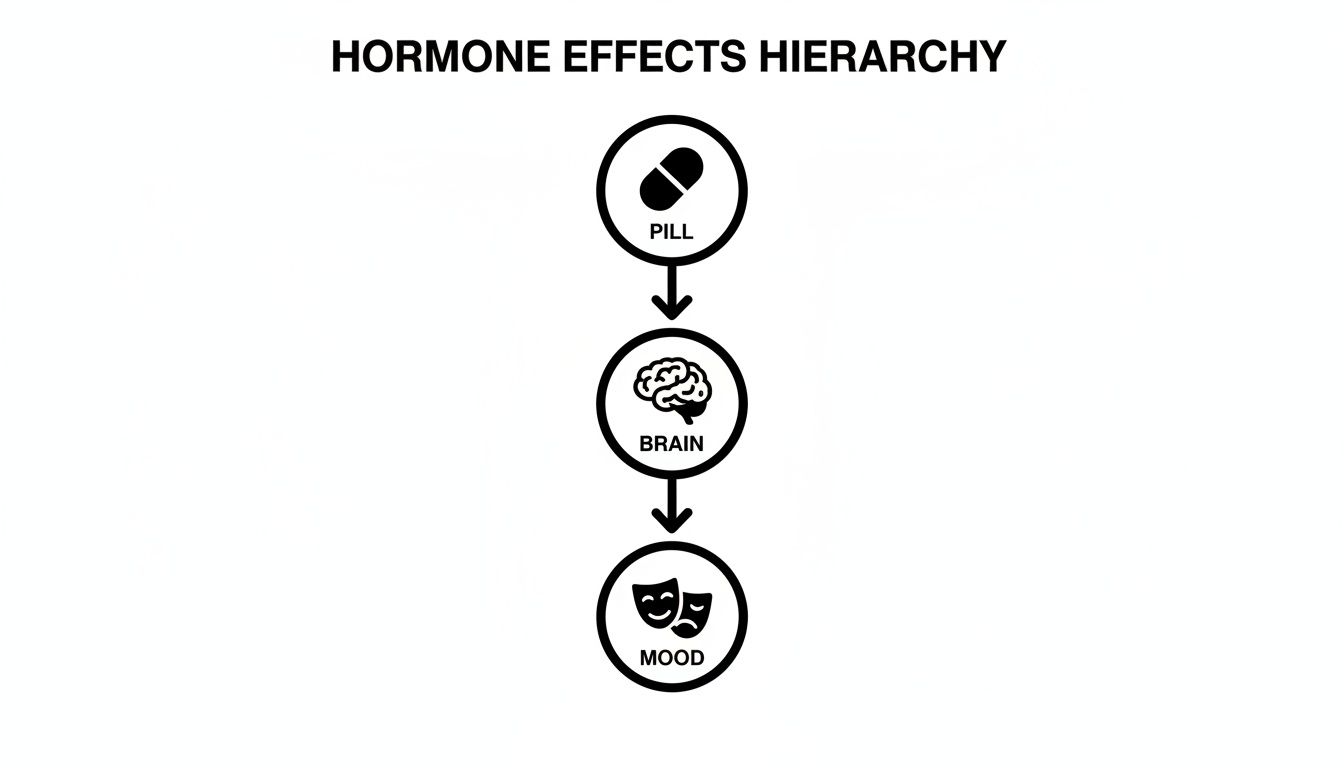
It really highlights the direct line from taking the pill to how you might feel emotionally, which is a super important thing to consider when making your choice.
Progestin-Only Pills (The Mini-Pill)
The progestin-only pill, which most people just call the "mini-pill," has only one hormone: progestin. This makes it a great alternative for anyone who can't or shouldn't take estrogen because of health risks—like a history of blood clots, being a smoker, or breastfeeding.
Mini-pills work mostly by thickening cervical mucus, creating a barrier that sperm just can't get through. For some people, they might also stop ovulation, but it’s not as consistent as with combined pills.
The biggest trade-off with the mini-pill is the timing. You have to take it within the same three-hour window every single day for it to work, which makes it a little less forgiving than most combined pills.
Since it’s estrogen-free, its side effect profile looks different. The risk of blood clots is way lower, but other issues can be more common.
- Benefits: It’s a much safer option for women with estrogen-related risk factors and for moms who are breastfeeding.
- Common Side Effects: Irregular bleeding and spotting are a lot more common with the mini-pill, particularly when you first start. You might also see some acne, breast tenderness, or ovarian cysts.
To make the differences even clearer, here's a side-by-side comparison.
Side Effect Profile Combined vs Progestin-Only Pills
| Side Effect / Benefit | Combined Pill (Estrogen + Progestin) | Progestin-Only Pill (Mini-Pill) |
|---|---|---|
| Period Regulation | Excellent – Periods usually become lighter, more regular, and less painful. | Poor to Moderate – Irregular bleeding and spotting are very common. |
| Acne | Often improves acne. | Can sometimes worsen acne. |
| Nausea | More common, especially at first. | Less common. |
| Breast Tenderness | Common, particularly in the initial months. | Can also be a side effect. |
| Mood Changes | Possible, due to both hormones. | Possible, though the pattern might differ. |
| Blood Clot Risk | Slightly elevated risk, especially with other risk factors. | No significant increase in risk; much safer for those at risk. |
| Timing Forgiveness | Generally more forgiving if a dose is missed. | Very strict; must be taken within a 3-hour window daily. |
| Use While Breastfeeding | Not recommended until at least 6 weeks postpartum. | Safe to use while breastfeeding. |
This table lays out the general trade-offs, helping you see at a glance how each pill type might affect you.
Choosing between them isn't a decision you have to make on your own. A doctor can help you weigh the pros and cons based on your unique health profile. If you're looking for guidance, getting an online birth control consultation makes the whole process so much simpler. A doctor will evaluate your needs and help you figure out which type of pill is the safest and most effective choice for you.
Understanding the Serious But Rare Risks
Millions of people take birth control pills safely every day, but it’s still smart to know about the more serious—though much less common—risks. Think of it like driving a car. It's a routine part of life, but you still learn what the warning lights on your dashboard mean.
Knowing about these rare side effects isn’t about causing fear. It’s about empowering you to be an active partner in your own healthcare.
Most of these serious risks are tied to the estrogen in combined pills, which can slightly increase the blood's tendency to clot. For the overwhelming majority of users, this change is so small it doesn't matter. But for a small group of people with certain risk factors, it can lead to cardiovascular problems.
The Connection to Blood Clots and Cardiovascular Health
The biggest concern is a slightly higher risk of blood clots, which can cause very serious medical emergencies. These clots might form in the legs (known as deep vein thrombosis or DVT), travel to the lungs (pulmonary embolism), or even lead to a stroke or heart attack.
It's really important to put this risk into perspective. A major analysis by the BMJ Group showed that the combined pill doubles the risk of certain types of stroke and heart attack compared to not using it. While "doubles" sounds scary, the actual numbers are still very low. This translates to about one extra stroke for every 4,760 women using the pill for a year. You can read the in-depth analysis of hormonal contraceptives for more details.
Some things can increase these risks, which is why your doctor will always ask about your medical history before writing a prescription. Key risk factors include:
- Smoking, especially if you're over 35.
- High blood pressure that isn't well-controlled.
- A personal or family history of blood clots, stroke, or heart attack.
- Migraines with aura, a specific type of migraine linked to a higher stroke risk. If you get migraines, our guide on managing migraine headaches might be helpful.
- Certain medical conditions, like lupus or some heart valve issues.
Know the Warning Signs: The ACHES Acronym
To help people remember the most critical warning signs, healthcare providers came up with a simple acronym: ACHES. If you experience any of these symptoms—especially if they come on suddenly and feel severe—you need to get medical help right away.
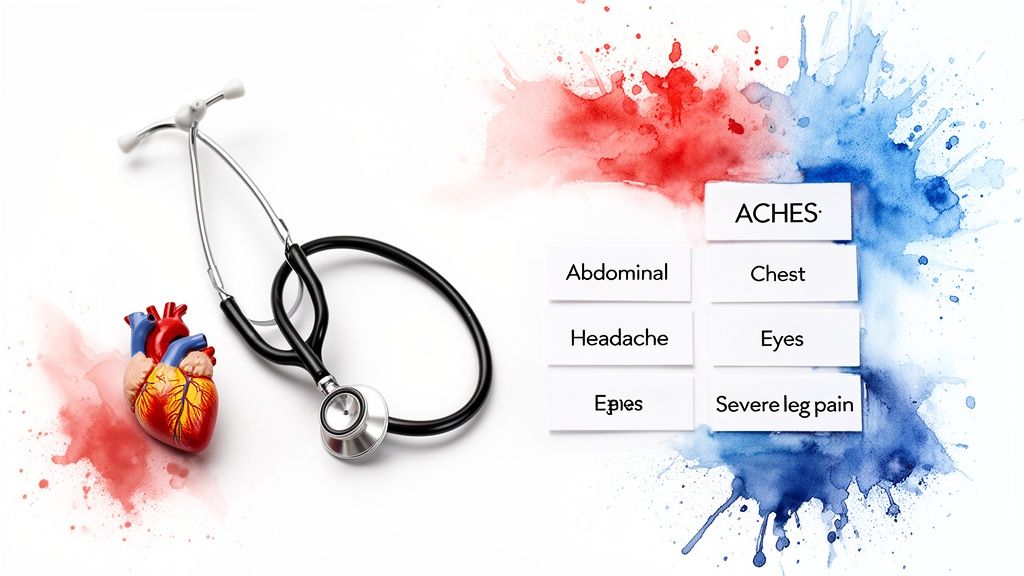
Here’s what to watch for:
- A – Abdominal Pain: Severe pain in your stomach could be a sign of a clot or a problem with your liver.
- C – Chest Pain: Sharp pain in your chest, feeling short of breath, or coughing up blood could signal a clot in your lungs.
- H – Headaches: A sudden, killer headache that’s unlike any you've had before might be a sign of a stroke.
- E – Eye Problems: Experiencing blurred vision, a total loss of vision, or seeing flashing lights could mean a clot in your eye.
- S – Severe Leg Pain: Pain, swelling, or redness in just one leg (usually your calf) is a classic sign of DVT.
Trust your instincts. These warning signs are rare, but they are serious. If something feels very wrong, it's always better to get checked out right away than to wait and wonder.
Understanding these risks allows you to use the pill with confidence. You can enjoy the benefits of reliable contraception while also knowing exactly what to look out for to keep yourself safe and healthy.
When and How to Talk to Your Doctor
While most side effects from the pill are temporary and fade away, your well-being should always come first. You're not supposed to just "tough it out."
If your symptoms are still hanging around after that initial three-month adjustment window, or if they're seriously messing with your daily life, that's a clear sign. It’s time to consider a change.
The good news? You have so many options. Often, the fix is as simple as switching to a pill with a different hormone type or a lower dose. The first step is always a conversation with a healthcare provider who can help you find a birth control that actually feels good for your body.
Preparing for a Productive Conversation
To get the most out of your doctor's appointment, a little prep work goes a long way. Showing up and just saying you "feel off" isn't nearly as helpful as bringing specific details to the table. Your goal is to paint a crystal-clear picture of your experience.
Before your visit, start keeping a simple log of your symptoms. This creates an invaluable record that helps your doctor spot patterns and make an informed recommendation.
Think of yourself as a detective gathering clues about your own health. The more specific information you can provide, the faster you and your doctor can solve the case of which pill is the best fit for you.
Here’s what you should aim to track:
- Symptom Type: Be specific. Is it bloating, mood swings, headaches, or breakthrough bleeding? Write it down.
- Timing and Frequency: When do the symptoms show up? Are they constant, or do they hit at a specific point in your pill pack each month?
- Severity: On a scale of 1 to 10, how much does each side effect really affect you? Is it a minor annoyance or something that completely disrupts your day?
What to Discuss During Your Appointment
Once you have your notes, you're ready to have a real, collaborative conversation with your doctor. Being clear and direct about your concerns ensures you walk away with answers and a plan that works for you.
When you speak with your provider, make sure you cover these key points:
- Share Your Symptom Log: Walk them through the patterns you’ve noticed. For example, "For the last two months, I've been feeling incredibly irritable during the third week of my pill pack."
- Explain the Impact: Describe how these side effects are affecting your quality of life. Mention if they're making work harder, straining your relationships, or just tanking your overall mood.
- Ask About Alternatives: Inquire if a different formulation could help. You could ask something like, "Would a pill with lower estrogen reduce my nausea?" or "Could a progestin-only pill be a better option for these headaches?"
This focused approach turns the conversation from a complaint session into a problem-solving one. If you need a convenient way to go over your options, you can book a consultation with a licensed physician online and get a personalized treatment plan without ever leaving home.
FAQs: Your Top Questions About Pill Side Effects, Answered
Let's be real—starting birth control can bring up a lot of questions. It's smart to want to know what to expect. This is your body, and feeling in control starts with getting clear, straightforward answers. We've gathered some of the most common concerns people have when they're thinking about the pill.
How Long Do Birth Control Pill Side Effects Actually Last?
For most people, any noticeable side effects are just part of a temporary adjustment phase. Think of it as your body getting acquainted with the new hormones. The usual suspects—like spotting, mild nausea, or breast tenderness—typically calm down within two to three months.
If those side effects are still hanging around after your third pack, or if they feel intense, that's a sign this particular pill might not be the right one for you. That’s the perfect time to talk to a doctor about trying a different formula.
Will Birth Control Pills Make Me Gain Weight for Good?
The idea that the pill causes major, permanent weight gain is one of the biggest myths out there, and large-scale studies just don't back it up. You might see the scale tick up a few pounds when you first start, but this is almost always temporary water retention from the hormones—not new body fat.
This initial bloating usually goes away within the first two or three months as your body adjusts. While it's true some types of progestin can ramp up appetite in some people, that doesn't automatically mean you'll gain weight. If you're worried about any changes you're seeing, a quick chat with your doctor can clear things up.
The connection between birth control and weight is complex, but significant, lasting weight gain is not a proven side effect for most users. Temporary fluid retention is the more common and expected experience during the initial adjustment phase.
Can I Just Stop Taking the Pill If the Side Effects Are Bad?
You always have the final say over what you put in your body, but it’s a really good idea to check in with a doctor before you stop. Quitting mid-pack can throw your cycle off and cause irregular bleeding. More importantly, your protection against pregnancy ends the moment you stop. A doctor can help you switch to a new method or stop altogether without leaving you unprotected.
There is one major exception. If you experience any of the serious symptoms from the "ACHES" acronym—like severe chest pain, intense leg pain, blinding headaches, or vision problems—seek immediate medical attention.
You don't have to figure out side effects or find the right birth control on your own. With ChatWithDr, you can get a personalized evaluation from a U.S.-licensed physician, often within hours. We'll send your prescription straight to your local pharmacy so you can get the expert care you need, right from home. Start your consultation today.
Related posts:
 Birth Control Options and Side Effects: Your Complete, Click-Worthy Guide
  Period delay pill: Your Complete Guide to Timing, Types, and Safety
  How to Increase Testosterone Naturally: how to increase testosterone naturally
  Can You Get Birth Control Online? Your Guide to Telehealth
  How to Prevent Recurring Yeast Infections for Good