
Introduction to Secure Medical Communication
Imagine a healthcare ecosystem where urgent clinical decisions, prescription clarifications, or follow‑up instructions are delivered not through chaotic phone trees, but via discreet, encrypted exchanges—enabling faster, safer collaboration without compromising privacy. In the age of digital transformation, clinicians and patients alike benefit from technology that reduces friction in critical communication workflows. A seamless, protected channel empowers interdisciplinary care teams to coordinate rapidly, enhancing treatment outcomes and patient experience.
Why security in medical communication matters now more than ever
Healthcare data breaches continue to pose serious threats, driving an increased demand for communication platforms that prioritize confidentiality and compliance. In 2024, the global market for secure messaging in healthcare was valued at approximately US$701 million and is forecasted to rapidly grow at a compound annual growth rate (CAGR) of 17.4%, reaching over US$3.5 billion by 2034. These projections underscore that healthcare providers and technology vendors alike are investing heavily to safeguard sensitive information while streamlining communication Fact.MR report.
Adoption trends and real-world use cases
Adoption of integrated messaging tools has surged across both hospital and outpatient settings. A six‑month study across 14 hospitals and 263 clinics documented a 29% increase in median daily message volume when using an EHR‑embedded messaging tool, revealing rapid organic adoption among more than 33,000 healthcare professionals. The volume jumped from approximately 54,000 to 70,000 messages per day, demonstrating how widely such communication tools have become part of routine clinical operations AMA‑supported JMIR study.
Setting the stage for deeper exploration
This article will delve into how secure medical chat solutions not only protect sensitive information but also reshape clinical workflows for greater efficiency and safety. We’ll explore tangible benefits—such as faster care coordination, reduced reliance on outdated paging systems, and improved documentation—while also acknowledging potential challenges like cognitive load and integration costs. Concrete examples from real-world deployments will illustrate both promise and pitfalls. Next, we will examine how healthcare organizations can responsibly implement these tools to elevate both privacy and productivity.
Implementation Challenges and Strategic Deployment Insights
Building on the benefits and complexities of modern communication systems, this section delves into pragmatic considerations when deploying tools in healthcare settings. A comprehensive evaluation of secure messaging applications can streamline decision-making. For instance, one study analyzed 19 vendors—categorizing them into tiers from basic secure communication to advanced collaboration platforms—based on essential requirements like message archiving, mobile device management, and Wi‑Fi architecture integration. The health system narrowed options effectively by aligning platform capabilities with clinical workflows and compliance criteria PubMed.
Real-world applications demonstrate how strategic implementation enhances patient safety and operational efficiency. Jackson‑Madison County General Hospital adopted a secure messaging app to support critical workflows such as Neuro alerts. Staff could initiate group notifications for stroke teams, including transport and radiology, ensuring fast, documented communication. The app also provided robust reporting capabilities—quality metrics and message histories became easily accessible, replacing archaic paging systems AnswerStat.
Another compelling example comes from pediatric care, where incorporating EMR‑integrated secure messaging enriched student and staff collaboration. During internal medicine rotations, student-reported communication quality with faculty improved from 50 % to 91 % post-implementation, with many messages directly involving patient management discussions. This underlined how integrated communication not only promotes education but also maintains privacy standards PubMed.
It is also essential to design deployment with human factors in mind. In systems supporting over 30,000 users across hospitals and outpatient clinics, message volume rose by 31 % within six months. While adoption was strong, the increased load highlighted risks of clinician cognitive burden and workflow disruptions. This underscores the need for rollout strategies that include usage policies, etiquette guidelines, and features such as priority tagging or batched alerts to maintain efficiency and safety PMC.
Together, these examples illustrate that successful deployment requires more than purchasing a tool—it demands aligning pedagogical, clinical, and operational objectives with technology capabilities. Thoughtful evaluation, built-in reporting, integration with EMRs, and sensitivity to clinician workload enable healthcare organizations to harness secure medical chat effectively and responsibly.
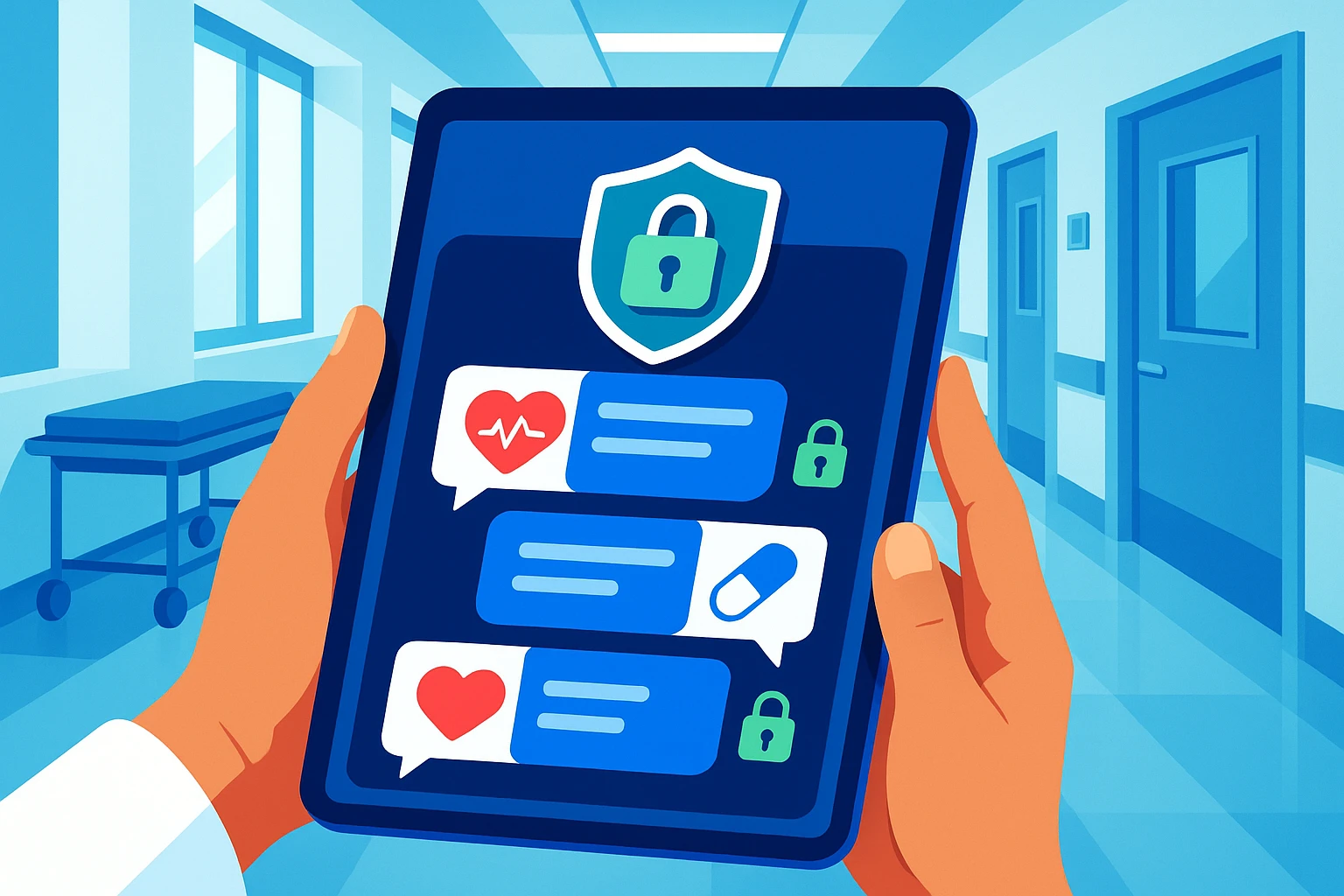
Implementing Secure Medical Chat in Healthcare Settings
In today’s digital healthcare landscape, implementing secure medical chat systems is paramount. Many healthcare providers face the challenge of ensuring real-time communication while protecting sensitive patient data. Platforms like ChatWithDr have emerged as reliable solutions designed to meet these specific needs. They offer encryption and compliance with health privacy regulations, providing a seamless blend of efficiency and security.
Real-World Applications of Secure Medical Chat
Hospitals and clinics utilize secure medical chat to enhance patient engagement. For example, large healthcare institutions have integrated these systems to enable quick consultation exchanges between doctors and their teams. This approach reduces response times and improves patient outcomes by facilitating fast decision-making in critical scenarios. An instance at the Mayo Clinic demonstrated significant improvements in workflow efficiency after adopting secure communication tools, streamlining the coordination of patient care across departments.
Security Measures and Compliance
Security in medical communications isn’t just about confidentiality—it’s a comprehensive approach involving multiple layers of protection. Encryption is fundamental, but compliance with regulations like HIPAA in the United States is equally essential. Secure medical chat platforms are designed to ensure that every message meets these stringent standards, safeguarding both clinician and patient data. According to a study by the Healthcare Information and Management Systems Society, over 80% of healthcare organizations prioritize cybersecurity investments in response to growing threats (HIMSS Report).
Benefits of Secure Communication
The adoption of secure medical chat systems offers multiple benefits beyond security. They facilitate better patient-provider relationships by enabling consistent, real-time communication. This allows patients to clarify medical instructions, leading to better adherence and improved health outcomes. Moreover, healthcare professionals report increased productivity due to streamlined administrative processes, minimizing the time and effort spent on traditional communication methods like phone calls and emails.
By integrating secure medical chat, healthcare facilities not only protect sensitive information but also enhance the quality of care delivered. As digital transformation continues to reshape healthcare, secure communication systems will be a critical component in achieving efficient, patient-centered care.
Implementation Strategies and Best Practices
Designing Effective Workflows
Healthcare organizations looking to integrate secure medical chat should begin by mapping out how messages will flow within clinical workflows. A multiple-case study found that asynchronous messaging can enhance communication and streamline task organization—but without thoughtful design, it may inadvertently increase clinicians’ workload, especially when message volume is high or content is unclear pubmed.ncbi.nlm.nih.gov. To mitigate this, teams should define clear message categories—such as triage, routine updates, or urgent alerts—and assign roles for response accountability. Incorporating message templates and escalation protocols can help ensure rapid, accurate responses while reducing cognitive strain.
Leveraging Technology and Integration
Integrating messaging platforms with existing electronic health record (EHR) systems is essential for seamless, secure workflows. In one cross-sectional study, secure messages were linked to patient charts in 69% of cases, enhancing context for care coordination jmir.org. Implementing end-to-end encryption, audit logging, and role-based access controls—from standards like AES encryption and Transport Layer Security—helps maintain confidentiality and regulatory compliance moldstud.com. Choosing platforms that support Business Associate Agreements (BAAs) is also critical for HIPAA compliance simbo.ai. Vendors such as TigerConnect and Doximity offer clinical-grade messaging solutions that align with these security requirements while supporting interoperability en.wikipedia.org.
Engaging and Educating Staff
Effective adoption depends on comprehensive training and clear communication guidelines. Staff must understand not only how to use the system but also what content is appropriate for secure chat—such as appointment scheduling or medication inquiries—and what should be triaged through other channels spockconnect.com. It’s also valuable to educate patients on using secure messaging via patient portals: a Veterans Health Administration survey found that many veterans found secure messaging helpful for medication refills, managing appointments, and viewing test results, yet expressed desire for more education on its use pubmed.ncbi.nlm.nih.gov. Regular refresher sessions and dashboards tracking usage, response times, or patient satisfaction can help sustain engagement.
Monitoring Performance and Outcomes
To ensure that secure medical chat continues to deliver value, organizations should monitor both operational and clinical outcomes. Evidence shows patient-initiated messaging is generally associated with improvements in clinical outcomes, efficiency, and care experience—though effects on health services use are mixed pubmed.ncbi.nlm.nih.gov. Tracking metrics like message response times, clinician workload, wrong-patient ordering errors, and patient satisfaction can identify areas for refinement. For instance, clinicians with higher message volumes had slightly elevated odds of wrong-patient ordering errors, emphasizing the importance of balanced workloads and alert design jamanetwork.com. Regular audits and iterative workflow adjustments help maintain both safety and efficiency.
Continuous Improvement and Future Readiness
Finally, secure communication systems should evolve alongside technological advances and organizational needs. Emerging tools powered by AI—such as LLM-based triaging systems—show promise in reducing clinician burden and improving response accuracy arxiv.org. Healthcare organizations should stay open to piloting such innovations while ensuring rigorous validation and secure deployment. By combining thoughtful workflow design, robust technology, and ongoing evaluation, secure chat can truly transform how care teams coordinate and engage with patients.
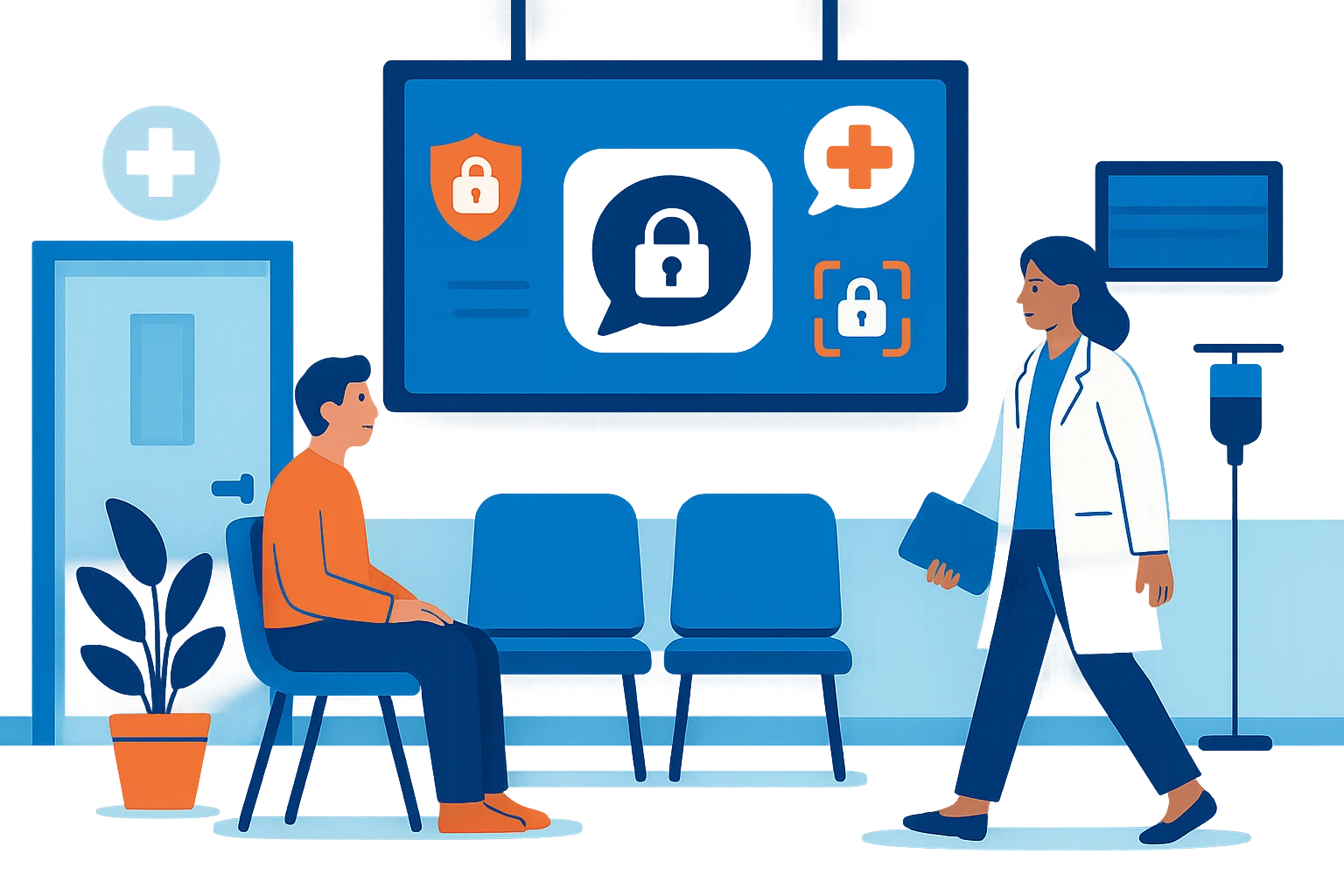
Conclusion: The Future of Secure Medical Chat
The transition to digital communication in healthcare brings forth numerous benefits, but it also raises significant security challenges. A well-implemented secure medical chat system not only safeguards sensitive patient data but also enhances the efficiency of healthcare interactions. As we have explored, encryption, user authentication, and compliance with standards like HIPAA are crucial components of a robust secure medical chat platform.
Leading by example, organizations that leverage secure medical chat systems can streamline their communication processes while ensuring the privacy of their patients. For instance, hospitals and clinics that have adopted such technologies report reduced wait times and improved patient satisfaction. This is primarily because healthcare professionals can quickly exchange information, make timely decisions, and provide comprehensive care without the constraints of legacy communication methods.
Actionable insights for healthcare providers include conducting regular audits of their communication platforms, investing in staff training on data protection best practices, and selecting vendors who offer end-to-end encryption. By proactively addressing these aspects, healthcare organizations not only comply with legal standards but also position themselves as trusted entities in the eyes of their patients.
As you evaluate your options for integrating secure communication into your healthcare practice, consider exploring ChatWithDr, which offers a comprehensive and user-friendly solution tailored to meet these stringent security needs. This platform exemplifies how technology can be harnessed to foster secure, efficient, and patient-centered communication in healthcare settings.
In conclusion, the imperative to maintain secure digital communication in healthcare is more pressing than ever. By prioritizing secure medical chat, healthcare providers not only protect their patients but also enhance their operational efficiencies and patient care outcomes. Embracing these technologies today will undoubtedly pave the way for a more secure and connected future in healthcare.
Article Generated by Soogle