
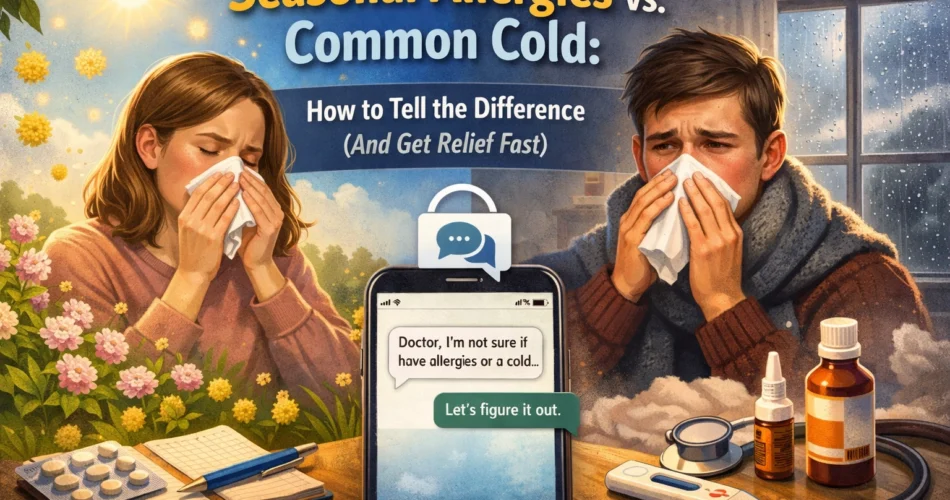
You wake up with a stuffy nose, sneezing fits, and feeling absolutely miserable. But here's the million-dollar question: Is it seasonal allergies or just another common cold?
This confusion sends thousands of people to pharmacies every day, standing confused in the cold and allergy aisle, wondering which medication to grab. The truth is, choosing the wrong treatment can leave you suffering for days or even weeks longer than necessary.
Let's clear up the confusion once and for all and help you get the relief you need: fast.
The One Symptom That Never Lies
Here's your biggest clue: fever.
If you're running a temperature, congratulations (sort of): you've got a cold, not allergies. Seasonal allergies never cause fever. Ever. Your immune system's reaction to pollen, dust, or pet dander doesn't trigger the fever response that viral infections do.
This single distinction can save you a lot of guesswork and get you on the right treatment path immediately.

The Tell-Tale Signs: What Sets Them Apart
Symptoms That Scream "Allergies"
Itchy, watery eyes are the hallmark of seasonal allergies. If you're constantly rubbing your eyes or they feel like they're on fire, allergies are likely the culprit. Colds rarely cause this itching sensation.
Itchy nose and throat are another dead giveaway. That annoying tickle that makes you want to scratch the inside of your throat? That's your immune system overreacting to allergens, not fighting off a virus.
Allergies also tend to cause clear, watery nasal discharge: the kind that won't quit no matter how many tissues you go through.
Symptoms That Point to a Cold
Sore throat is much more common with colds, especially in the first few days. The scratchy, painful feeling when you swallow is typically viral.
Body aches and fatigue signal your body is fighting an infection. While allergies can make you tired from poor sleep, they don't cause the muscle aches and overall malaise that come with the common cold.
Thick, colored mucus (yellow or green) typically develops a few days into a cold as your body fights the virus. Allergy mucus stays clear and thin.
Cough with mucus is more typical of colds, while allergy coughs tend to be dry and less frequent: often triggered by post-nasal drip.
The Overlap Zone (These Can Be Either)
Both conditions can cause:
- Runny or stuffy nose
- Sneezing
- Mild cough
- General fatigue
- Mild headache
This is where things get tricky, which is why the next factor is crucial.
Timing Is Everything: Duration and Onset Patterns
How Allergies Behave
Seasonal allergies hit you suddenly: often within minutes of exposure to the allergen. You walk outside on a high-pollen day and boom: instant sneezing and watery eyes.
The symptoms stick around as long as you're exposed to the allergen. This could mean weeks or even months during pollen season. Many people notice their symptoms follow a predictable calendar pattern year after year: ragweed in fall, tree pollen in spring, grass in summer.

How Colds Develop
Colds creep up on you gradually over 1-3 days. You might feel a little off one day, wake up with a scratchy throat the next, and by day three, you're fully miserable.
The good news? Colds are self-limiting. Most people recover within 7-10 days, though some symptoms like cough can linger for up to two weeks. If you're still feeling awful after 14 days, it's time to chat with a doctor: you might have developed a secondary bacterial infection.
When You Should Talk to a Doctor
While both allergies and colds are typically manageable at home, certain red flags warrant professional medical attention:
For suspected colds:
- Fever above 101.3°F (38.5°C) lasting more than 3 days
- Severe sore throat with white patches
- Difficulty breathing or chest pain
- Ear pain or discharge
- Symptoms lasting beyond 10-14 days
- Symptoms that improve then suddenly worsen
For suspected allergies:
- Symptoms severely impacting your quality of life or sleep
- Over-the-counter medications aren't providing relief
- You're unsure whether it's allergies or something else
- You develop sinus pain or pressure
- Symptoms lasting months without improvement
The convenience of text-based medical consultations means you don't have to drag yourself to an urgent care center while feeling miserable. A quick conversation with a licensed physician can help you determine what you're dealing with and get a prescription sent to your pharmacy if needed.
Fast Relief: Treatment Strategies That Actually Work
Treating the Common Cold
Since colds are viral, antibiotics won't help (despite what many people believe). Your treatment focuses on symptom relief while your immune system does the heavy lifting:
Hydration is critical. Your body produces extra mucus to flush out the virus, so you need to replace those fluids. Aim for at least 8-10 glasses of water daily. Warm liquids like tea or broth can soothe a sore throat and help loosen congestion.
Rest matters more than you think. Your immune system works overtime while you sleep. Don't try to power through: you'll just prolong your recovery.
Nasal decongestants can provide temporary relief from stuffiness, but don't use them for more than 3 days or you risk rebound congestion.
Pain relievers like acetaminophen or ibuprofen can reduce fever and ease body aches.

Treating Seasonal Allergies
The strategy here is different because you're not fighting an infection: you're calming an overactive immune response:
Antihistamines block the histamine release that causes your symptoms. Modern options like cetirizine or loratadine work well without causing drowsiness for most people.
Nasal corticosteroid sprays are actually more effective than antihistamines for nasal symptoms, but they take a few days to reach full effectiveness. Start them at the beginning of allergy season for best results.
Avoid your triggers when possible. Check daily pollen counts and stay indoors on high-pollen days. Keep windows closed and use air conditioning. Shower before bed to remove pollen from hair and skin.
Saline nasal rinses can flush out allergens and provide immediate relief without medication.
For persistent or severe allergies, a doctor can prescribe stronger medications or discuss immunotherapy options. The beauty of online urgent care is that you can get expert guidance and prescriptions without waiting weeks for an allergist appointment.
Why Online Doctors Are Game-Changers for These Conditions
Here's the reality: Most people wait too long to seek help for allergies or colds because scheduling a doctor's appointment seems like too much hassle when you're already miserable.
Text-based consultations solve this problem entirely. You can message a licensed physician from your couch, explain your symptoms, and get professional medical advice: often the same day. For conditions like colds, flu, and related symptoms, this immediate access makes a huge difference in your recovery timeline.
If you need a prescription for stronger antihistamines, nasal sprays, or other medications, it can be sent directly to your pharmacy. No waiting rooms, no exposure to other sick people, no taking time off work.

The Bottom Line
The next time you're wondering whether you're dealing with seasonal allergies or a common cold, remember these key distinctions:
It's probably allergies if:
- Your eyes are itchy and watery
- Your nose and throat itch
- Symptoms appeared suddenly
- You have no fever
- It's lasting for weeks
- It happens the same time every year
It's probably a cold if:
- You have a fever or body aches
- You have a sore throat
- Symptoms developed gradually
- Your mucus is thick and colored
- You're completely better within 2 weeks
When in doubt, don't suffer in silence. Modern telehealth platforms make it easier than ever to get expert medical guidance without leaving home. A quick conversation with a licensed physician can confirm what you're dealing with and get you on the fastest path to relief.
Your misery has an expiration date( let's make it arrive as soon as possible.)
Related posts:
 Seasonal Allergies vs. Cold: How to Tell the Difference (And Get Relief in Under 2 Hours)
  Cold vs Sinus Infection Know the Difference
  7 Mistakes You’re Making with Seasonal Allergies (and How an Online Doctor Can Fix Them in Under 2 Hours)
  Why Do I Have So Much Mucus And How Can I Find Relief
  Tonsillitis vs Strep Throat What’s the Real Difference