
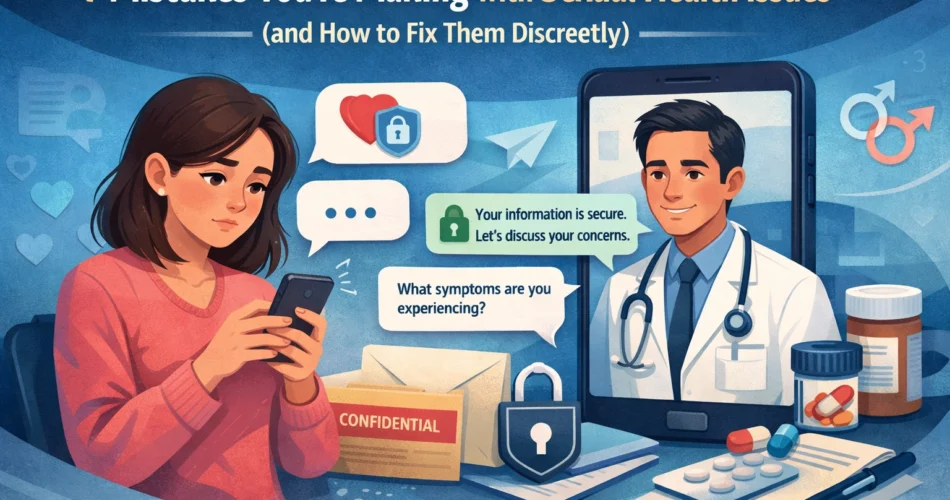
Sexual health issues affect millions of people every year, yet they remain one of the most under-discussed topics in healthcare. Whether you're dealing with erectile dysfunction, recurring UTIs, birth control concerns, or vaginal infections, the embarrassment factor often prevents people from getting the help they need. The good news? Most of these problems are completely treatable: if you avoid the common mistakes that keep you stuck in the cycle of discomfort and confusion.
Let's break down the seven most common mistakes people make when dealing with sexual health issues, and more importantly, how to fix them without the awkward waiting room conversations.
Mistake #1: Delaying Treatment Because You're Too Embarrassed
Here's the reality: Over 30 million men in the United States experience erectile dysfunction, and millions of women deal with recurring yeast infections and UTIs annually. You're not alone, and healthcare providers see these issues every single day.
The fix: Stop letting embarrassment dictate your health decisions. The longer you wait to address sexual health concerns, the worse they can become. Conditions like bacterial vaginosis, untreated UTIs, or persistent ED can lead to more serious complications if left untreated.
Thanks to telehealth platforms, you don't need to sit in a waiting room or have face-to-face conversations about sensitive topics. Text-based consultations with licensed doctors allow you to discuss your symptoms privately, get a proper diagnosis, and receive treatment: all from your phone. No judgment, no awkwardness, just healthcare on your terms.

Mistake #2: Self-Diagnosing and Using Leftover Medications
Google might seem like your best friend when symptoms appear, but self-diagnosis is one of the riskiest things you can do with sexual health issues. What you think is a simple yeast infection could actually be bacterial vaginosis or even an STI. That burning sensation could be a UTI, but it might also be something entirely different.
The fix: Always get a proper medical evaluation before treating yourself. While over-the-counter medications exist for some conditions, using the wrong treatment can make symptoms worse or mask a more serious underlying issue.
For instance, using antifungal medication for what's actually bacterial vaginosis won't help: and might delay the proper treatment you need. Similarly, if you're experiencing erectile dysfunction, randomly trying pills without medical guidance can be dangerous, especially if you have underlying cardiovascular issues.
Online platforms now make it easier than ever to get proper diagnoses for conditions like yeast infections, bacterial vaginosis, and UTIs without the hassle of scheduling in-person appointments.
Mistake #3: Skipping Regular STI Testing
One of the most dangerous myths about sexually transmitted infections is that you'll know if you have one. The truth? Many STIs are completely asymptomatic, meaning you could be infected and spreading infections without ever knowing it.
According to the CDC, chlamydia, gonorrhea, and other common STIs frequently show no symptoms, particularly in women. Even if you're in a committed relationship or only have one partner, regular testing is crucial for maintaining your sexual health.
The fix: Make STI testing a routine part of your healthcare, not something you only do when symptoms appear. Most health experts recommend testing at least once a year for sexually active adults, and more frequently if you have multiple partners.
The old excuse of "I don't have time to go to a clinic" doesn't hold up anymore. Online STI testing services now allow you to order tests discreetly, complete them at home, and receive results through secure messaging. If you test positive, you can immediately consult with a doctor and get prescribed medication: all without ever leaving your house.

Mistake #4: Douching After Sex (Or At All)
If you've been douching to feel "cleaner" after sex or to prevent infections, it's time to stop. Despite what some products claim, douching does not prevent pregnancy or STIs: in fact, it does the exact opposite by disrupting your vagina's natural pH balance and healthy bacteria.
Research consistently shows that douching increases your risk of bacterial vaginosis, yeast infections, and urinary tract infections. Your vagina is a self-cleaning organ with its own ecosystem of beneficial bacteria that keep infections at bay. When you douche, you're essentially washing away the good bacteria your body needs.
The fix: Stop douching entirely. Your body knows how to maintain its own hygiene. Simply washing the external genital area with warm water (and mild, unscented soap if desired) during your regular shower is all you need.
If you're experiencing unusual discharge, odor, or discomfort, these are signs of an infection that needs medical treatment: not a DIY cleaning solution. Conditions like bacterial vaginosis require prescription antibiotics, not over-the-counter douches that will only make things worse.
Mistake #5: Thinking Birth Control Pills Protect Against STIs
Hormonal birth control methods like pills, patches, IUDs, and implants are incredibly effective at preventing pregnancy: with success rates above 99% when used correctly. However, they provide zero protection against sexually transmitted infections.
This misconception puts many people at risk because they assume their birth control method is giving them complete protection during sexual activity.
The fix: Use barrier protection (condoms) alongside your hormonal birth control method. Condoms are the only contraceptive that significantly reduces your risk of STIs while also preventing pregnancy.
If you're looking to start or switch birth control methods, online consultations make the process significantly easier. You can get birth control prescriptions online after a quick consultation with a licensed physician, who can help you choose the method that works best for your lifestyle and health needs: all through secure, text-based messaging.

Mistake #6: Ignoring Persistent or Recurring Symptoms
Are you getting your third UTI this year? Has erectile dysfunction become a regular issue? Do yeast infections keep coming back no matter what you try?
Recurring symptoms are your body's way of telling you something bigger is going on. A single UTI might be bad luck, but repeated infections suggest an underlying issue that needs to be addressed. Similarly, persistent ED in men under 40 can be an early warning sign of cardiovascular disease or diabetes.
The fix: Don't normalize recurring issues or assume they're just "how your body is." Persistent symptoms require medical evaluation to identify root causes.
For women dealing with frequent UTIs or yeast infections, a healthcare provider can investigate potential triggers like antibiotic use, hormonal changes, or anatomical factors. They might recommend preventive strategies or different treatment approaches.
For men experiencing erectile dysfunction, a proper medical evaluation can uncover underlying health conditions while determining the safest and most effective treatment options. Many men are surprised to learn that ED medications are just one piece of the puzzle: lifestyle changes, stress management, and treating underlying conditions often play crucial roles in improvement.
The convenience of text-based telehealth means you can have these ongoing conversations with your doctor without the time commitment and embarrassment of repeated in-person visits.
Mistake #7: Believing That Sexual Health Issues Will Just "Go Away"
Whether it's hoping that burning sensation will resolve itself, assuming erectile difficulties are "just stress," or thinking an unusual discharge is "probably nothing," wishful thinking is not a treatment strategy.
Most sexual health issues don't improve without intervention. In fact, many get progressively worse. An untreated UTI can develop into a kidney infection. Untreated bacterial vaginosis increases your risk of pelvic inflammatory disease and complications during pregnancy. Ignoring ED can mean missing early signs of serious cardiovascular disease.
The fix: Take symptoms seriously from the start. Early intervention almost always means faster resolution and fewer complications.
Modern telehealth platforms have removed nearly every barrier to getting help. You don't need to take time off work, sit in a waiting room, or have uncomfortable face-to-face conversations. You can chat with doctors, get diagnosed, and receive prescriptions through secure medical messaging: often in under an hour.
Whether you need treatment for a UTI, prescription medication for ED, or guidance on birth control options, discreet online healthcare puts you back in control of your sexual health without the stress and embarrassment.
Taking Control of Your Sexual Health: Discreetly
Sexual health is healthcare, period. The stigma and embarrassment surrounding these issues have caused too many people to suffer in silence or delay treatment until problems become severe.
The seven mistakes we've covered: delaying treatment, self-diagnosing, skipping STI testing, douching, misunderstanding birth control, ignoring recurring symptoms, and hoping problems disappear: are all easily avoidable with the right approach and resources.
Today's telehealth technology makes addressing sexual health concerns easier, faster, and more private than ever before. You can text with licensed doctors who specialize in these issues, get accurate diagnoses, receive treatment plans, and have prescriptions sent directly to your pharmacy: all without the awkward conversations or judgment.
Your sexual health matters. Don't let embarrassment or inconvenience keep you from getting the care you deserve. The fix for most of these problems is straightforward once you take that first step toward professional medical guidance.
Disclaimer: This information is not a substitute for professional medical advice, diagnosis, or treatment. Always seek the advice of your physician or qualified health provider with questions regarding medical conditions or treatments.
Related posts:
 Yeast Infection vs BV: How to Tell the Difference
  Yeast Infection Symptoms in Women: How to Spot Signs and Find Relief
  Understanding yeast infection after antibiotics treatment: Quick remedies
  How to Prevent Recurring Yeast Infections for Good
  BV and Yeast Infections Explained in Under 3 Minutes (Plus How to Get Treated Discreetly)