
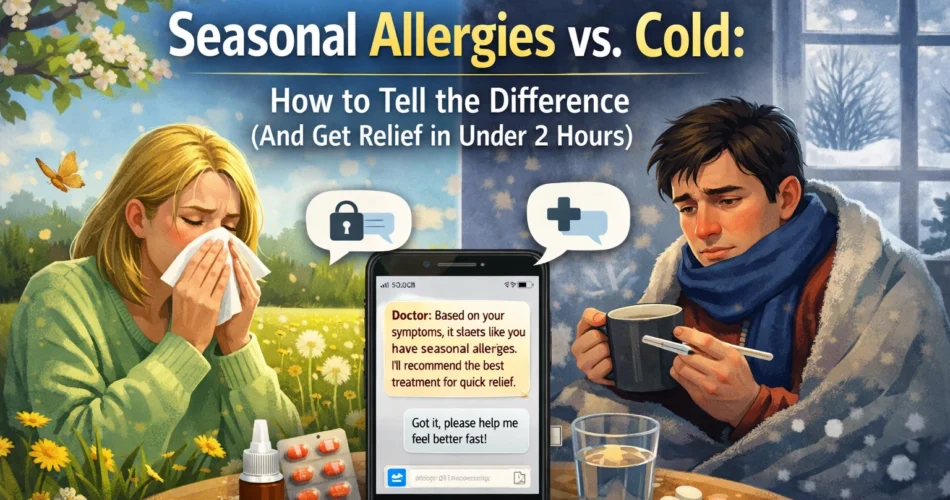
You wake up with a stuffy nose, sneezing fits, and watery eyes. Your first thought: "Am I getting sick, or is this just allergies?" It's a question millions of Americans ask themselves every year, especially during spring and fall when both seasonal allergies and common colds overlap.
The confusion is understandable. Both conditions share similar symptoms like nasal congestion, sneezing, and a runny nose. But getting the wrong diagnosis means wasting time on treatments that won't work: or worse, letting a cold turn into something more serious.
The good news? There are clear tell-tale signs that can help you identify whether you're dealing with allergies or a cold. And once you know what you're facing, relief can come fast: sometimes in under two hours with the right approach.
The One Symptom That Tells You Everything
Let's start with the biggest differentiator: fever.
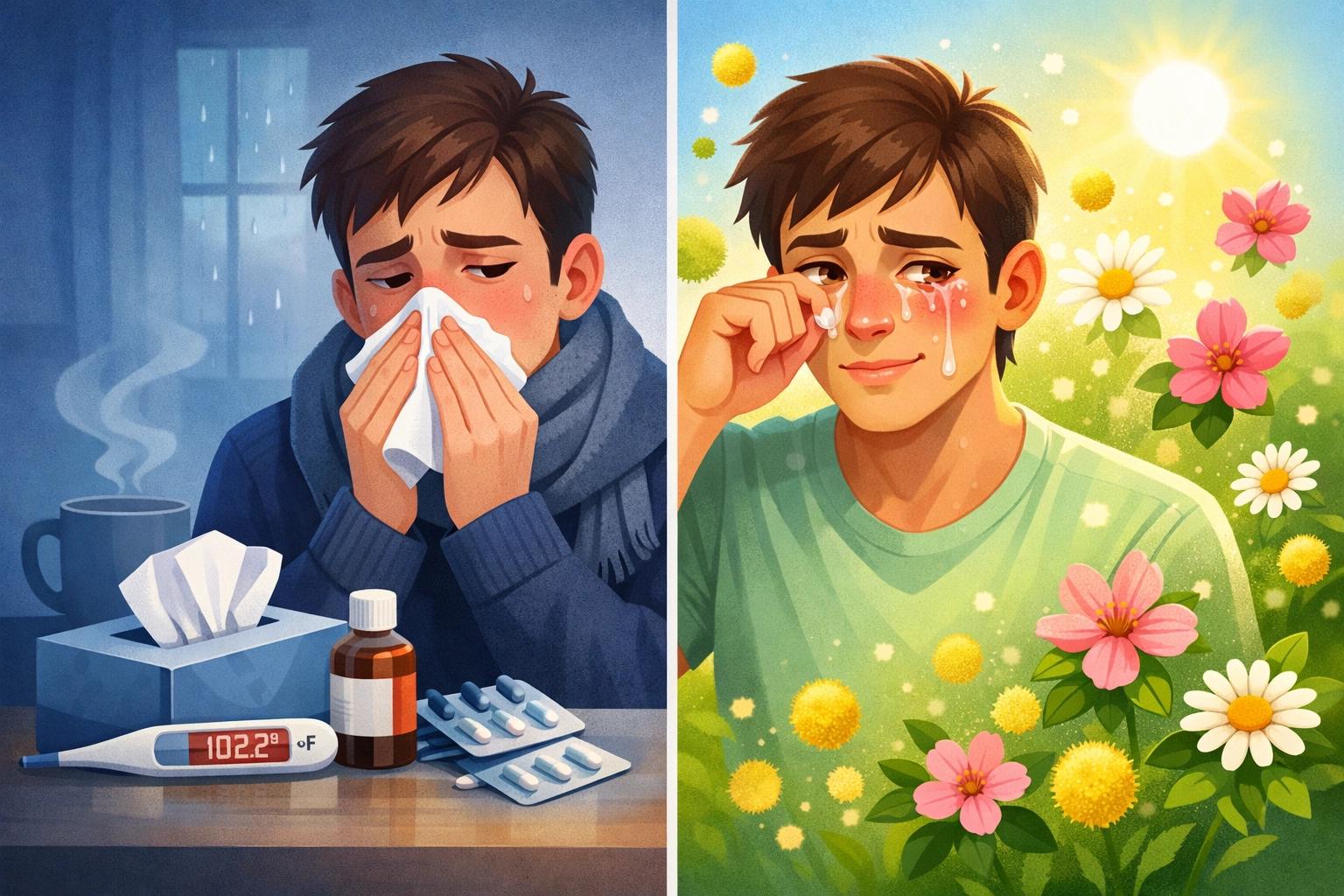
If you have a fever, you can be almost certain you're dealing with a cold, not allergies. According to immunology experts, allergies never cause a fever. Your body temperature remains normal with allergic reactions because you're not fighting off an infection: you're simply overreacting to harmless substances like pollen or dust mites.
Colds, on the other hand, are caused by viruses that trigger your immune system to raise your body temperature as a defense mechanism. If your thermometer reads above 100°F, you're looking at a viral infection, not seasonal allergies.
Key Symptoms: Allergies vs. Cold Side-by-Side
Beyond fever, several other symptoms can help you pinpoint your condition:
Eyes Tell the Story
Itchy, red, watery eyes are a hallmark of allergies. If you find yourself constantly rubbing your eyes or they feel like they're on fire, allergies are the likely culprit. Colds rarely affect your eyes in this way. You might have some mild tearing with a cold, but the intense itchiness is almost exclusively an allergy symptom.
Throat Symptoms
A sore, scratchy throat usually points toward a cold rather than allergies. While allergies can cause some throat irritation from postnasal drip, the painful, inflamed feeling you get with a cold is distinctly different. With allergies, your throat might feel ticklish or slightly irritated, but you won't typically experience the raw pain that comes with viral infections.
Body Aches and Fatigue
Feeling run down with muscle aches and body pain? That's your body fighting off a cold virus. Allergies don't cause systemic symptoms like body aches or the deep fatigue that makes you want to crawl back into bed. You might feel tired from poor sleep due to congestion, but it's not the same bone-deep exhaustion that accompanies a cold.
The Sneezing Pattern
Pay attention to how you're sneezing. With allergies, sneezing tends to come in rapid bursts: five, six, or even ten sneezes in a row. It's your body's aggressive attempt to expel allergens from your nasal passages.
Cold-related sneezing is different. You'll sneeze occasionally with longer pauses between each one. The pattern is less frantic and more sporadic.
Nasal Discharge Quality
The type of mucus your body produces offers another clue. Allergy drainage is typically clear, thin, and watery. It flows freely and might seem never-ending during high pollen days.
Cold mucus, meanwhile, tends to be thicker and may turn yellow or greenish as your immune system battles the virus. The consistency changes throughout the course of the illness, starting clear and becoming more viscous.
Timing and Duration: The Calendar Doesn't Lie
When your symptoms started and how long they last can be just as revealing as the symptoms themselves.
How Quickly Symptoms Appear
Allergies can strike immediately after exposure to a trigger. Walk outside on a high-pollen day, and within minutes, your nose starts running and your eyes begin to water. The reaction is nearly instantaneous.
Colds take time to develop. After exposure to a virus, you typically won't feel symptoms for one to three days. This incubation period is when the virus is multiplying in your system before you feel sick.
How Long Symptoms Last
Colds follow a predictable timeline. Most last between 3 to 14 days, with symptoms peaking around day three to five before gradually improving. If your symptoms appeared suddenly and you're feeling better within two weeks, you likely had a cold.
Seasonal allergies, however, can persist for weeks or even months. As long as your trigger (like tree pollen or ragweed) remains in the environment, your symptoms continue. Many people experience allergies throughout entire seasons: spring, summer, or fall: depending on what they're allergic to.
Seasonal Patterns
Colds are most common during winter months when people spend more time indoors in close contact. While you can catch a cold any time of year, they peak from fall through early spring.
Allergies follow environmental patterns. Tree pollen dominates spring, grass pollen peaks in late spring and summer, and ragweed causes havoc in fall. If your symptoms return like clockwork every year during the same season, allergies are the likely answer.
When to Seek Medical Attention
Sometimes what starts as allergies or a simple cold can develop into something more serious. Certain warning signs mean it's time to chat with a doctor:
- Symptoms lasting beyond two weeks without improvement
- Severe sinus pain or pressure, especially on one side of your face
- Ear pain that could signal an ear infection
- Difficulty breathing or wheezing
- Chest pain or persistent cough
- High fever (over 101°F) lasting more than three days
- Symptoms that improve then suddenly worsen
These red flags could indicate complications like sinus infections, ear infections, bronchitis, or pneumonia that require prescription treatment.

Treatment Approaches: What Actually Works
Once you've identified whether you're dealing with allergies or a cold, you can target your treatment more effectively.
For Seasonal Allergies
The key to allergy relief is a multi-pronged approach:
- Avoid triggers when possible by checking pollen counts before heading outdoors
- Over-the-counter antihistamines like cetirizine, loratadine, or fexofenadine can provide relief
- Nasal corticosteroid sprays reduce inflammation and are highly effective for persistent symptoms
- Eye drops specifically designed for allergies can soothe itchy, watery eyes
For moderate to severe allergies, prescription medications may be necessary. An online doctor consultation for seasonal allergies can get you access to stronger antihistamines, prescription nasal sprays, or other targeted treatments.
For Common Colds
Since colds are viral infections, antibiotics won't help. Treatment focuses on symptom relief and supporting your immune system:
- Rest allows your body to direct energy toward fighting the virus
- Hydration helps thin mucus and prevents dehydration
- Nasal decongestants can provide temporary relief from stuffiness
- Pain relievers like acetaminophen or ibuprofen reduce body aches and fever
- Warm liquids soothe sore throats and help loosen congestion
Most colds resolve on their own with home care. However, if you develop complications or symptoms worsen, medical treatment may be needed. A healthcare provider can evaluate whether you need prescription medications or if a secondary infection has developed.
Getting Relief Fast: The Telehealth Advantage
Here's where modern medicine gets interesting. You don't need to drag yourself to an urgent care clinic or wait days for a doctor's appointment to get help with allergies or cold complications.
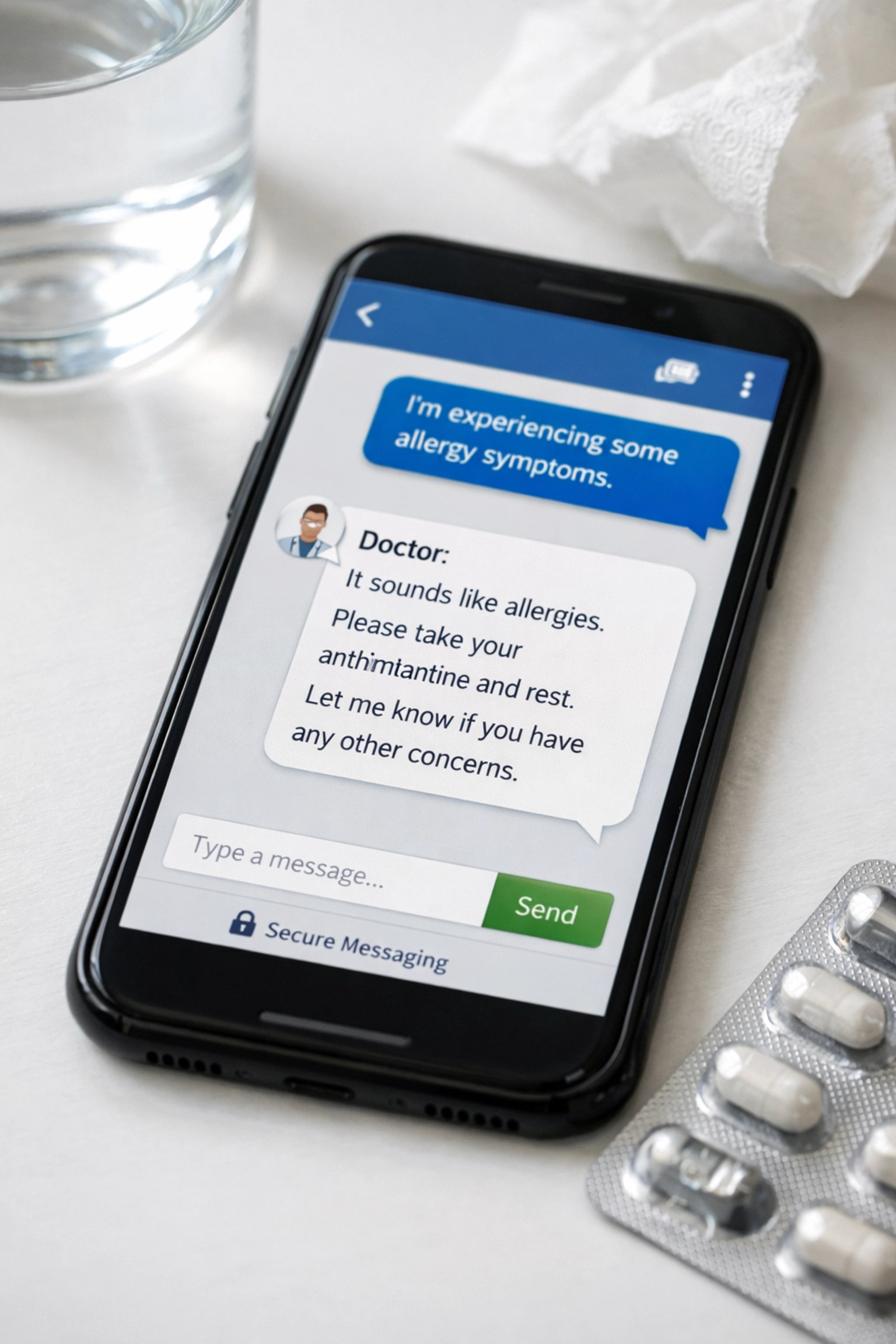
Text-based telehealth platforms allow you to describe your symptoms in detail, receive a professional evaluation, and: when appropriate: get prescriptions sent directly to your pharmacy. The entire process can take under two hours from your first message to picking up medication.
This approach is particularly valuable for allergies. Once a doctor confirms you're dealing with seasonal allergies rather than an infection, they can prescribe prescription-strength antihistamines, nasal sprays, or other medications that provide relief far beyond what you'll find over the counter.
For colds that have developed complications, secure messaging with a licensed physician means you can get evaluated for conditions like sinus infections or sore throat without exposure to other sick patients in waiting rooms.
The convenience factor matters too. When you're feeling miserable, the last thing you want is to sit in a clinic waiting room. Being able to consult with a doctor from your couch: while wearing pajamas and sipping tea: removes barriers to getting the care you need.

The Bottom Line: Know Your Symptoms, Get the Right Treatment
Distinguishing between seasonal allergies and a cold comes down to paying attention to specific symptoms and timing:
- Fever = Cold (allergies never cause fever)
- Itchy eyes = Allergies (colds rarely cause significant eye symptoms)
- Body aches = Cold (allergies don't cause systemic muscle pain)
- Immediate onset = Allergies (colds take days to develop)
- Lasts months = Allergies (colds resolve in 1-2 weeks)
Armed with this knowledge, you can make informed decisions about treatment. For straightforward cases, over-the-counter remedies may be sufficient. When symptoms persist, worsen, or you're unsure about the diagnosis, consulting with a healthcare provider ensures you get appropriate treatment quickly.
The days of suffering unnecessarily or making unnecessary trips to the doctor's office are over. Whether you're dealing with frustrating allergy symptoms or a cold that won't quit, effective relief is more accessible than ever: often in under two hours.
Disclaimer: This information is not a substitute for professional medical advice, diagnosis, or treatment. Always seek the advice of your physician or qualified health provider with questions regarding medical conditions or treatments.
Related posts:
 Seasonal Allergies vs. Common Cold: How to Tell the Difference (And Get Relief Fast)
  7 Mistakes You’re Making with Seasonal Allergies (and How an Online Doctor Can Fix Them in Under 2 Hours)
  Cold vs Sinus Infection Know the Difference
  Seasonal Allergy Relief Online: Breathe Easier with Fast Care
  Struggling with Spring Allergies? Here Are 10 Things Your Online Doctor Can Do Today