
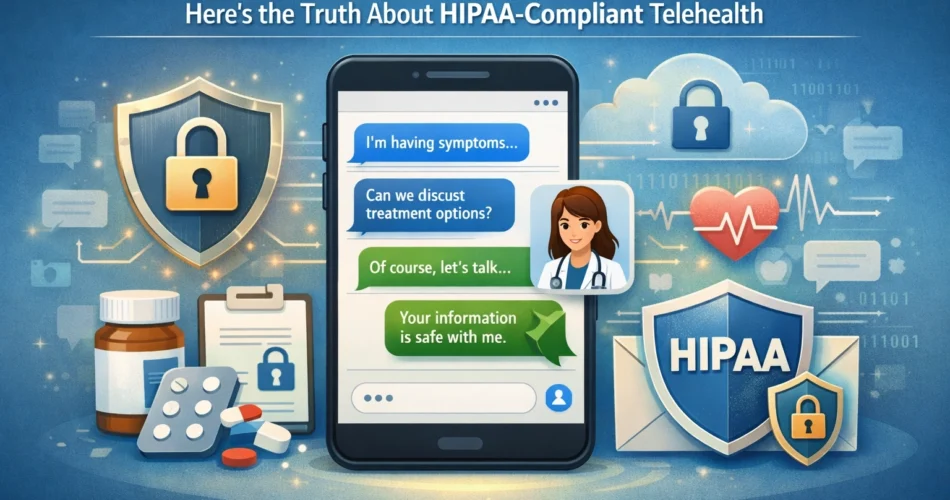
Let's be honest: searching for "bacterial vaginosis treatment online" or "emergency contraception online prescription" at 11 PM feels awkward enough without worrying whether your neighbors, employer, or insurance company might somehow find out.
The good news? Online treatment for sensitive health issues can be completely private: but only when the platform you're using actually follows HIPAA regulations. The bad news? Not all telehealth services are created equal, and "private" doesn't automatically mean "HIPAA-compliant."
Here's what you need to know about getting same-day treatment for sensitive health concerns without sacrificing your privacy.
What HIPAA Actually Means for Your Online Doctor Visit
HIPAA (the Health Insurance Portability and Accountability Act) isn't just legal jargon: it's the federal law that creates strict rules about how healthcare providers handle your Protected Health Information (PHI). This includes everything from your medical history to the reason you're seeking treatment to the prescription you receive.
When you chat with doctors through a HIPAA-compliant telehealth platform, your information is protected by both the Privacy Rule and Security Rule. These regulations guarantee that your health information won't be released without your explicit consent and will only be used for legitimate healthcare purposes.
But here's the catch: HIPAA compliance isn't automatic. Generic communication tools like standard email, regular text messages, or basic video chat apps do not provide adequate privacy protections for sensitive health information. A truly secure platform requires deliberate implementation of multiple security layers.
The Security Measures That Actually Matter
When you're seeking online treatment for conditions like bacterial vaginosis, erectile dysfunction, hair loss, or emergency contraception, you need more than a promise of privacy: you need proven security infrastructure.
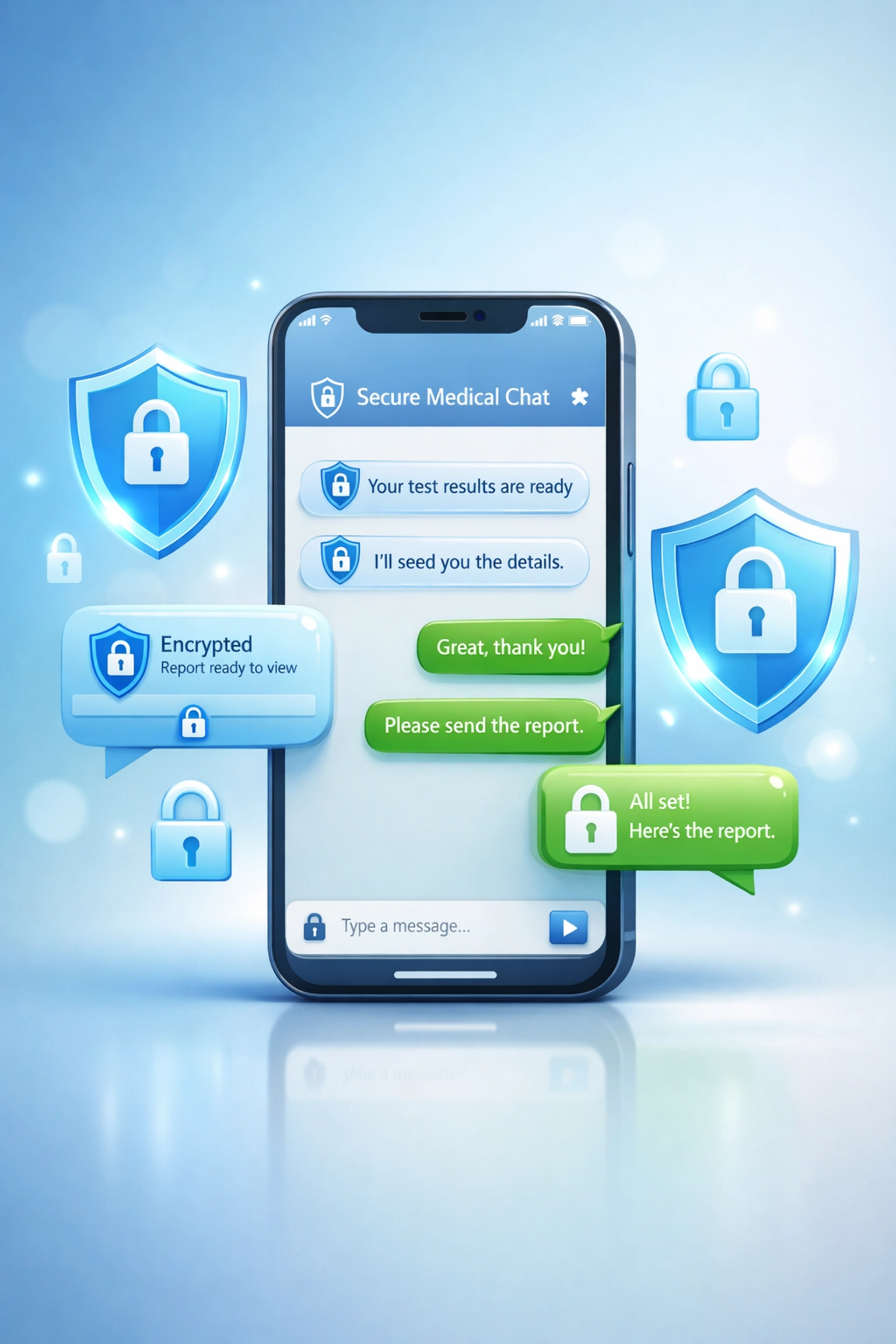
End-to-End Encryption: Every message, photo, and piece of medical information you send should be encrypted during transmission. This means even if someone intercepted the data (they can't, but hypothetically), they couldn't read it. Think of it as sending your medical information in a locked safe rather than a postcard.
Access Controls: Your health information should only be visible to the licensed healthcare provider treating you: not customer service representatives, IT staff, or anyone else who doesn't need it for your care. Role-based access restrictions ensure PHI exposure remains minimal.
Multi-Factor Authentication: Before any provider accesses your information, they should verify their identity through multiple methods. This drastically reduces the risk of unauthorized access to patient records.
Secure Data Storage: Whether information is stored in the cloud or on physical servers, HIPAA-compliant storage solutions require strong encryption, regular backups, and strict vendor agreements known as Business Associate Agreements (BAAs).
How Same-Day Treatment Works Securely
One of the biggest advantages of text-based telehealth platforms is that you can get same-day treatment for sensitive health issues without the exposure of waiting rooms or pharmacy conversations.
Here's how it works with a properly secured platform:
You chat with licensed doctors through encrypted messaging about your symptoms. For conditions like bacterial vaginosis, urinary tract infections, or the need for emergency contraception, providers can often diagnose and prescribe treatment the same day: sometimes within hours. Your prescription gets sent electronically to your preferred pharmacy, and you can pick it up discreetly or have it delivered.
The entire process happens through secure medical messaging, not video calls that might require you to find a private space or worry about being overheard. You can text with doctors from your bedroom at midnight or your office during lunch without anyone knowing what you're discussing.

Sensitive Health Issues That Benefit From Private Online Treatment
Let's talk specifics. Some health concerns are particularly well-suited to secure, text-based telehealth:
Bacterial Vaginosis Treatment Online: BV is incredibly common (affecting about one in three women at some point), but many people avoid seeking treatment due to embarrassment. A HIPAA-compliant platform lets you describe symptoms, send photos if needed, and receive a prescription: all without an in-person exam for straightforward cases.
Emergency Contraception Online Prescription: Time matters with emergency contraception. Being able to chat with a doctor immediately and get a prescription sent to a nearby pharmacy within hours can make the difference in effectiveness.
Men's Health Concerns: Conditions like premature ejaculation or erectile dysfunction often go untreated because men feel uncomfortable discussing them face-to-face. Secure online consultations remove that barrier while maintaining medical professionalism.
STD Testing and Treatment: Getting tested and treated for sexually transmitted infections requires absolute privacy. Online platforms can facilitate STD testing orders and follow-up treatment with complete confidentiality.
Hair Loss Treatment: Whether it's male pattern baldness or other hair loss conditions, many people prefer discussing treatment options through secure messaging rather than video calls or in-person visits.

What to Look For in a Private Telehealth Platform
Not all online doctor services are equally private. Before you share sensitive health information, verify these factors:
Explicit HIPAA Compliance: The platform should clearly state they're HIPAA-compliant and willing to sign Business Associate Agreements. If they're vague about security, that's a red flag.
Licensed Healthcare Providers: Verify that you're consulting with actual licensed physicians, nurse practitioners, or physician assistants: not health coaches or unlicensed advisors.
Secure Messaging Infrastructure: The platform should use encryption specifically designed for healthcare communication, not just generic secure messaging.
Clear Privacy Policies: Read how they handle your data. Who has access? How long is information stored? What happens if you delete your account?
Payment Privacy: Using HSA (Health Savings Account) or FSA (Flexible Spending Account) funds for online consultations adds another layer of privacy, as these payments are separate from regular insurance claims that might appear on explanation of benefits statements sent to policyholders or dependents.
The HSA/FSA Advantage for Privacy
Here's something many people don't realize: paying for online urgent care or telehealth consultations with HSA or FSA funds can actually enhance your privacy.
When you use insurance for sensitive health issues, an Explanation of Benefits (EOB) gets sent to the primary policyholder. If you're on a parent's or spouse's insurance plan, they'll see what you were treated for. HSA and FSA payments bypass this entirely: the transaction appears as a healthcare expense without specific details about the consultation or condition.
Most HIPAA-compliant telehealth platforms accept HSA and FSA cards, making it easy to pay for same-day treatment privately while still using pre-tax healthcare dollars.

Business Associate Agreements: The Behind-the-Scenes Protection
Here's a technical detail that matters more than you might think: any third-party service that handles your health information on behalf of a provider must sign a Business Associate Agreement (BAA).
This includes payment processors, cloud storage providers, messaging infrastructure companies, and anyone else in the digital chain. These agreements legally bind all parties to HIPAA compliance standards and must be retained for at least six years.
If a telehealth platform can't provide documentation of their BAAs with all relevant vendors, your information isn't as protected as it should be.
Text-Based Telehealth: An Unexpected Privacy Advantage
While many people assume video calls are the pinnacle of telehealth, text-based medical messaging actually offers unique privacy benefits for sensitive health issues.
You don't need to find a private space with good lighting and no background noise. You can chat with doctors during a work break, from a shared living space, or while traveling without anyone knowing what you're discussing. There's no risk of being overheard or interrupted.
For conditions that primarily require symptom description rather than physical examination: like many infections, skin conditions, or medication consultations: secure messaging provides the same quality of care with significantly more convenience and discretion.
The Bottom Line on Privacy
Online treatment for sensitive health issues is genuinely private when you use a platform that properly implements HIPAA safeguards. The technology exists to protect your information completely: but you need to choose a service that actually uses it.
Look for explicit HIPAA compliance, end-to-end encryption, licensed providers, and clear privacy policies. Consider using HSA or FSA funds for additional payment privacy. And remember that text-based consultations often provide better privacy than video calls for sensitive health concerns.
Getting same-day treatment for bacterial vaginosis, emergency contraception, or other personal health issues should be convenient, professional, and completely confidential. With the right platform, it absolutely can be.
Disclaimer: This information is not a substitute for professional medical advice, diagnosis, or treatment. Always seek the advice of your physician or qualified health provider with questions regarding medical conditions or treatments.
Related posts:
 Is Online Healthcare Really Private? The Truth About Confidential Telehealth for Sensitive Conditions
  Same-Day Treatment for Sensitive Health Issues: The Complete Guide to Secure Online Care
  Why Everyone Is Switching to Confidential Telehealth for Sensitive Health Issues (And You Should Too)
  How to Safely Discuss Sensitive Health Topics Online with Professionals
  Why Same-Day Confidential Care Will Change the Way You Handle Sensitive Health Issues (No Waiting Room Required)