
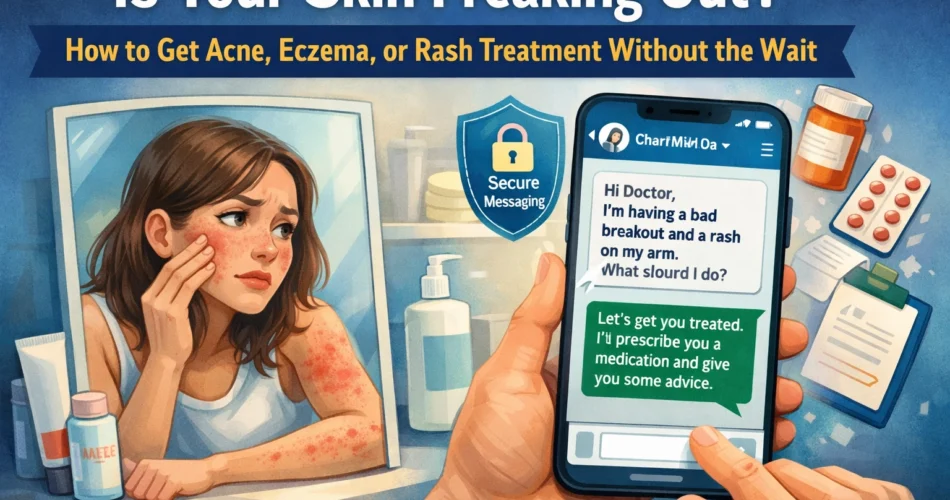
It's 9 PM on a Tuesday. You wake up with a face full of painful cystic acne, or your eczema has flared up so badly you can't sleep, or there's a mysterious rash spreading across your arms. You google "dermatologist near me" and discover the earliest appointment is three weeks away. Sound familiar?
Skin problems don't follow a 9-to-5 schedule, and they definitely don't wait for convenient appointment slots. The good news? You don't need to suffer through weeks of discomfort or spend hours in a waiting room to get professional help anymore.
Why Skin Issues Need Fast Attention
When your skin is acting up, waiting isn't just inconvenient: it can make things worse. Acne left untreated can lead to scarring, eczema flares can become infected if you're constantly scratching, and some rashes can signal allergic reactions or infections that need immediate attention.
The traditional dermatology path looks something like this: call for an appointment, wait 2-4 weeks, take time off work, sit in a waiting room for 30-45 minutes past your appointment time, get a 10-minute consultation, then head to the pharmacy. Total time investment? Hours. Total frustration? Off the charts.
The Three Most Common Skin Complaints (And Why They're So Annoying)
Acne breakouts aren't just a teenage problem. Adult acne affects millions of people, often appearing suddenly due to stress, hormonal changes, or new skincare products. The psychological impact is real: studies show that acne significantly affects self-esteem and mental health, making quick access to treatment crucial.
Eczema flares can turn from a minor annoyance to a major problem overnight. The intense itching disrupts sleep, the visible patches affect confidence, and the broken skin barrier makes you vulnerable to infections. According to the National Eczema Association, nearly one in ten Americans experiences some form of eczema during their lifetime.
Mysterious rashes are perhaps the most anxiety-inducing because you don't know what you're dealing with. Is it contact dermatitis from that new laundry detergent? An allergic reaction? A fungal infection? Heat rash? The uncertainty alone is enough to send anyone into a Google spiral at 2 AM.
How Online Dermatology Actually Works
Here's where telehealth changes everything. Instead of waiting weeks and rearranging your schedule, you can chat with doctors online who specialize in skin conditions: often within minutes.
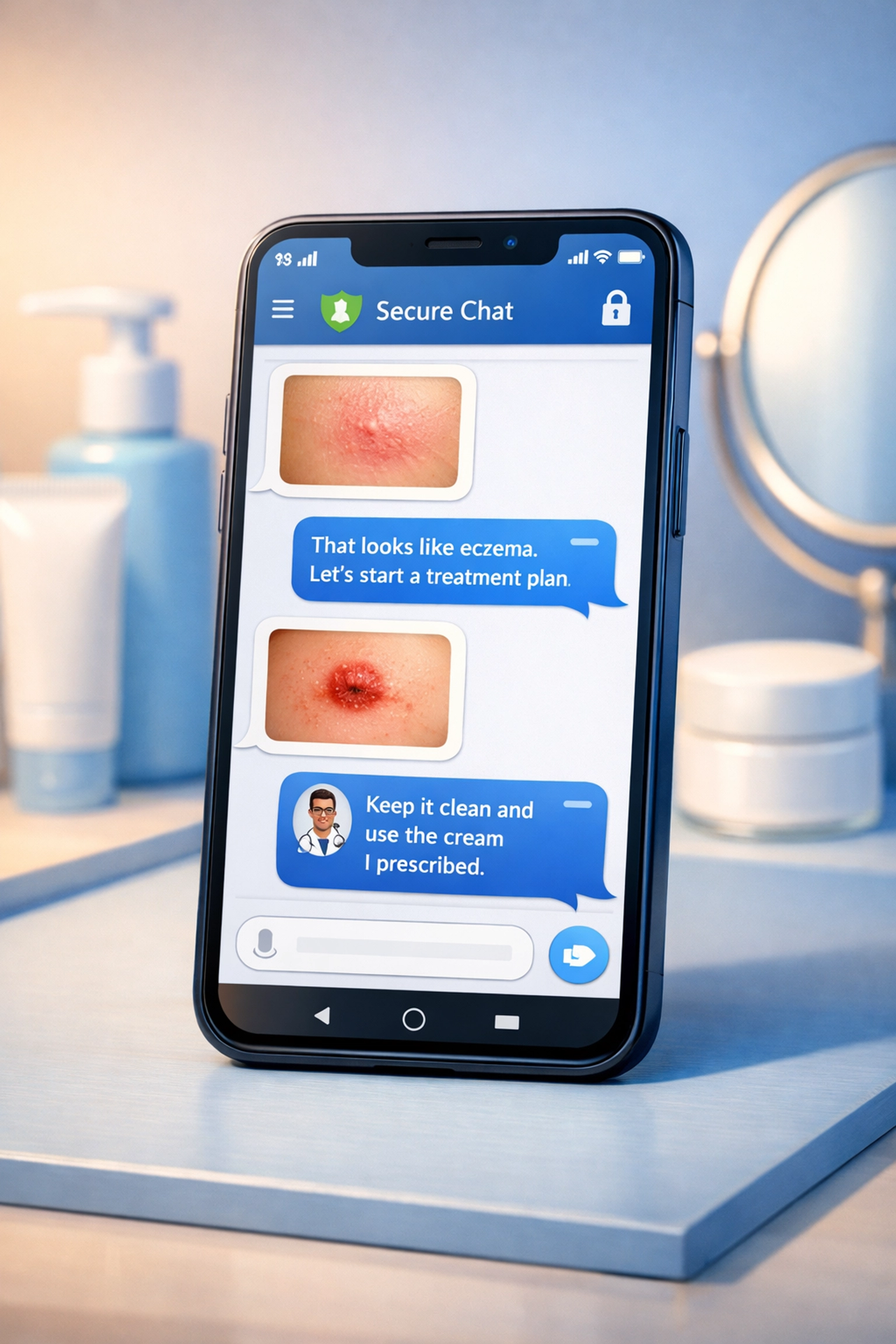
The process is straightforward: you describe your symptoms through secure medical messaging, upload clear photos of the affected area, answer a few health questions, and a licensed physician reviews your case. No video calls required, no getting dressed up for an appointment, no commute.
This text-based approach actually has advantages for skin conditions. Photos provide better detail than trying to show your skin through a video call, and doctors can review your case thoroughly on their own time rather than in a rushed 10-minute slot.

What Can Actually Be Treated Online?
Many people assume you need an in-person visit for any skin issue, but that's not true. Licensed physicians can diagnose and prescribe treatment for a wide range of common skin conditions through online consultations:
Acne treatment online covers mild to moderate cases. Doctors can prescribe topical retinoids, benzoyl peroxide formulations, topical antibiotics, or oral antibiotics depending on severity. They can also recommend specific skincare routines and identify triggers that might be making your acne worse.
Eczema treatment online includes topical corticosteroids, non-steroid alternatives like tacrolimus ointment or newer options like crisaborole, and recommendations for proper moisturizing routines. Research shows that applying creams or ointments immediately after bathing: while skin is still damp: helps lock in moisture and reduce flares.
Common rashes like contact dermatitis, heat rash, fungal infections, and mild allergic reactions can all be assessed and treated remotely. Sometimes the treatment is as simple as identifying the trigger and prescribing an antihistamine or topical steroid.
Doctors can also prescribe medications for conditions like rosacea, seborrheic dermatitis, and mild psoriasis through text-based consultations.
Treatment Options You Can Start Tonight
One of the biggest advantages of online prescription services is immediate access to treatment. Once your consultation is complete, prescriptions are sent directly to your preferred pharmacy: often within hours, not weeks.
For eczema specifically, treatment typically starts with a good moisturizing routine. Clinical studies recommend daily bathing in lukewarm water for 5-10 minutes with gentle, fragrance-free cleansers, followed immediately by application of thick creams or petroleum jelly on damp skin. This simple routine can significantly reduce flare frequency.
Adding colloidal oatmeal to baths provides antioxidant and anti-inflammatory benefits that soothe irritated skin. Some research even suggests that diluted bleach baths (following medical guidance) may ease symptoms due to antibacterial effects.
For acne, salicylic acid is a versatile ingredient that helps remove dead skin cells and unclog pores. Combined with prescription treatments like topical retinoids or antibiotics, most people see improvement within 6-8 weeks.

When You Should Still See Someone In Person
Online dermatology is powerful, but it's not appropriate for everything. You should seek in-person care if:
- You have a suspicious mole or lesion that might be skin cancer
- Your skin condition is severe, widespread, or not responding to treatment
- You have signs of a serious infection (fever, spreading redness, pus, severe pain)
- You're experiencing symptoms of a systemic reaction (difficulty breathing, swelling of face or throat)
- You need procedures like biopsies, injections, or laser treatments
Think of online dermatology as your first line of defense for common, non-emergency skin issues. It's perfect for those frustrating problems that are affecting your quality of life but don't require specialized procedures.
The Real Cost Comparison
Traditional dermatology visit: $150-300 for the appointment, plus time off work, transportation costs, and the mental stress of waiting weeks while your skin gets worse.
Online urgent care consultation: Typically $30-60, completed in minutes from your couch, with prescriptions sent to your pharmacy the same day.
For many people, the cost savings alone justify trying online treatment first. And if your condition does require in-person follow-up, you haven't lost anything: you've simply gotten expert guidance on whether you need to see someone urgently or can schedule a routine appointment.
How to Get Started Right Now
If your skin is freaking out and you're tired of waiting, here's what to do:
Take clear, well-lit photos of the affected area from multiple angles. Natural daylight works best. Include close-ups and wider shots that show the location on your body.
Write down when the problem started, what makes it better or worse, what products you've tried, and any other symptoms you're experiencing. This information helps doctors make accurate diagnoses quickly.
Check if you're currently taking any medications or have known allergies: this affects what can be safely prescribed.
Then simply connect with an online doctor through secure messaging. Describe your issue, upload your photos, and answer the health questionnaire. A licensed physician will review your case and provide treatment recommendations, often within the same day.
Your Skin Doesn't Need to Suffer While You Wait
The dermatology wait time crisis isn't going away: in fact, it's getting worse as demand continues to outpace supply. But you don't have to be stuck in that system for common skin issues that can be effectively diagnosed and treated online.
Text-based telehealth gives you access to professional medical care on your schedule, without the weeks of waiting and hours of inconvenience. For acne, eczema, rashes, and dozens of other skin conditions, you can get prescription treatment without ever leaving your home.
Your skin is freaking out right now. You don't have to wait weeks to do something about it.
Disclaimer: This information is not a substitute for professional medical advice, diagnosis, or treatment. Always seek the advice of your physician or qualified health provider with questions regarding medical conditions or treatments.
Related posts:
 Your Guide to Getting Acne Treatment Online
  Struggling For Quick Skin Relief? 50+ Conditions We Treat Online (Acne, Eczema, Rashes & More)
  Acne, Eczema, Allergies, and Rosacea Treatment Online: Get Same-Day Prescriptions Without the Wait
  Acne, Eczema, Rosacea, and Allergies: The Text-Based Treatment Guide for Busy People
  Stop Wasting Time on Skin Conditions: Get Diagnosed and Treated in Under 2 Hours