
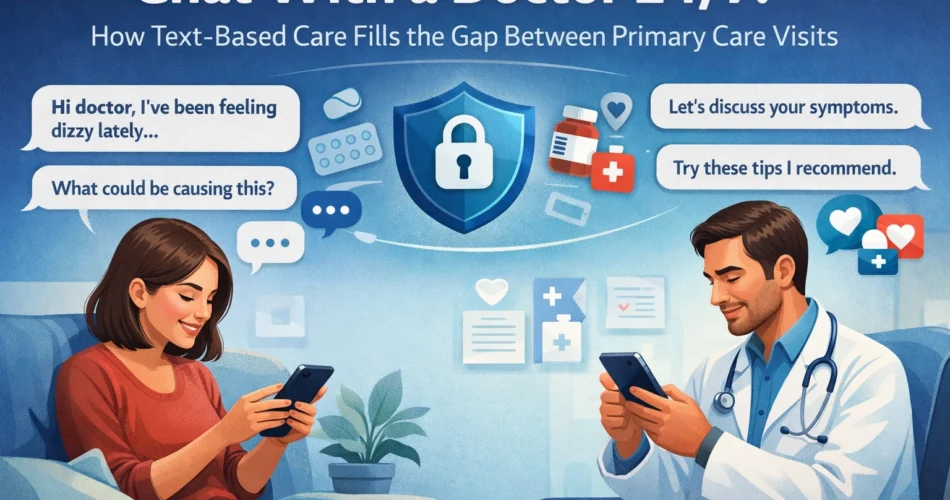
You wake up at 2 AM with a splitting headache and nausea. It's been three days, and your prescription is out of refills. Your primary care doctor's next available appointment? Two weeks away. Sound familiar?
The American healthcare system has a timing problem. Primary care appointments are scheduled weeks in advance, urgent care clinics have three-hour waits, and emergency rooms are reserved for true emergencies. But health concerns don't operate on a 9-to-5 schedule, and most issues fall into an awkward middle ground: too urgent to wait two weeks, but not severe enough for the ER.
This is where text-based medical care is changing the game. The ability to chat with a doctor 24/7 through secure messaging platforms is filling a critical gap that traditional healthcare models have left wide open.
The Primary Care Gap: Why Waiting Doesn't Work
According to recent data, the average wait time for a primary care appointment in major U.S. cities has increased to 26 days. For established patients needing follow-up care or prescription refills, this creates a frustrating cycle of delays.
Meanwhile, studies show that 80% of health concerns don't require in-person examination and can be effectively managed through virtual consultations. Conditions like UTIs, sinus infections, allergies, skin rashes, and medication management are perfectly suited for remote care: yet patients often wait weeks or resort to expensive urgent care visits for issues that could be resolved in minutes through online medical chat.

What Text-Based Care Actually Means
Text-based telehealth differs significantly from traditional video call platforms. Instead of scheduling a video appointment and waiting in a virtual lobby, patients can message licensed physicians directly through a secure platform: similar to texting, but HIPAA-compliant and designed specifically for medical consultations.
This asynchronous format offers several advantages. You can describe your symptoms in detail without feeling rushed. You can send photos of rashes or injuries. You can respond when convenient rather than blocking out appointment windows. And crucially, there's no waiting room: virtual or physical.
Services like ChatWithDr's 24/7 telehealth platform exemplify this model. No account setup required, no insurance verification delays, and no appointment scheduling. You start chatting with a doctor immediately, describe your concern, and receive medical guidance within minutes.
The Real-World Scenarios Where Text-Based Care Shines
Consider these common situations where traditional primary care falls short:
Late-night symptoms: Your child develops a fever and rash at 11 PM. Rather than rushing to urgent care or anxiously waiting until morning, you can chat with a doctor immediately, get a diagnosis, and have a prescription sent to your 24-hour pharmacy if needed.
Prescription refills: You're on your last dose of blood pressure medication, but your primary care doctor's office requires a two-week appointment for refills. Text-based care allows doctors to review your medication history and authorize refills without the appointment hassle.
Follow-up questions: You saw your doctor last week, started a new medication, and have questions about side effects. Instead of playing phone tag with the office or waiting for a callback, you can message a doctor directly for guidance.
Travel emergencies: You're on a business trip and develop a sinus infection or UTI. Text-based care means you can receive diagnosis and treatment regardless of your location.

What Conditions Can Be Treated Through Online Medical Chat?
Text-based platforms successfully handle over 90% of non-emergency health concerns. Licensed physicians can diagnose and treat:
- Acute infections: Sore throats, pink eye, ear infections, and cold/flu/COVID symptoms
- Skin conditions: Rashes, acne, eczema flare-ups, and suspected infections
- Digestive issues: Nausea and vomiting, acid reflux, and food poisoning symptoms
- Urinary concerns: UTI symptoms in both men and women
- Reproductive health: Birth control, emergency contraception, and menstrual concerns
- Chronic condition management: Medication adjustments, refills, and ongoing monitoring
- Preventive care: Lab order reviews, routine medication management, and specialist referral coordination
For issues requiring physical examination: like suspected fractures, severe chest pain, or symptoms of stroke: doctors will guide patients to appropriate in-person care rather than attempting virtual management.
The "No Waiting Room" Advantage
The elimination of waiting rooms provides benefits beyond mere convenience. During cold and flu season, traditional clinics become breeding grounds for illness transmission. Immunocompromised patients, pregnant women, and elderly individuals face genuine health risks simply by sitting in a crowded urgent care lobby.
Text-based care removes this exposure entirely. You consult with doctors from your home, your office, or anywhere with cell service. For parents managing multiple children's appointments, this means no coordination of babysitters or taking time off work. For individuals with mobility challenges, it eliminates transportation barriers entirely.

Research supports this model: patients using text-based care platforms report 7 times higher engagement rates compared to traditional telehealth. The accessibility and convenience make it more likely that people seek timely care rather than delaying treatment or resorting to expensive emergency services.
How It Compares Cost-Wise
The financial impact is significant. Data shows that engaged users of text-based care platforms avoid an average of $1,142 annually in unnecessary in-person care costs. When you consider that urgent care visits typically cost $150-$200 and emergency room visits average $2,200, the savings add up quickly.
More importantly, 80% of users report avoiding an emergency or urgent care visit altogether because they were able to chat with a doctor 24/7 and resolve their concern remotely. This doesn't just save money: it saves time, reduces stress, and often leads to faster treatment since there's no delay in seeking care.
The No-Account-Required Philosophy
Traditional healthcare: even virtual healthcare: tends to create barriers through lengthy onboarding processes. Insurance verification, account creation, medical history forms, and portal navigation can take 20-30 minutes before you even connect with a provider.
Platforms designed around immediate access recognize that health concerns require urgent attention. The ability to start chatting with a doctor without creating an account, uploading insurance cards, or navigating complex portals means you can describe symptoms and receive guidance within minutes of deciding you need care.
This frictionless approach particularly benefits individuals dealing with sensitive health concerns. Someone seeking STD testing guidance, treatment for premature ejaculation, or consultation about hair loss may prefer the immediate, private nature of text-based consultation over scheduling appointments that appear on insurance statements or require phone conversations with schedulers.

Integration With Your Existing Care Team
Text-based care isn't designed to replace your primary care doctor: it's designed to support you between those visits. Think of it as a safety net that catches concerns before they escalate into emergencies or go untreated for weeks while you wait for appointments.
After receiving care through an online medical chat platform, you'll typically receive documentation of your consultation, diagnoses, and treatment plans. This information can be shared with your primary care provider to maintain continuity of care. For chronic condition management, text-based doctors can coordinate with your existing care team to ensure treatment plans align.
The model works particularly well for patients with conditions requiring ongoing monitoring and occasional medication adjustments. Rather than scheduling quarterly appointments just to review blood pressure medication or thyroid levels, you can maintain regular check-ins through secure messaging and reserve in-person visits for comprehensive physical exams or issues requiring examination.
When to Use Text-Based Care vs. Primary Care Appointments
Understanding when to leverage online medical chat versus scheduling traditional appointments helps maximize both convenience and quality of care.
Best for text-based care:
- New symptoms requiring prompt evaluation
- Medication refills and dosage adjustments
- Follow-up questions after recent appointments
- Minor injuries and acute illnesses
- Lab result reviews and interpretation
- Travel-related medical needs
Better for in-person primary care:
- Annual physical examinations
- Complex multi-system health concerns
- Initial evaluations requiring physical examination
- Procedures like biopsies or joint injections
- Establishing care with a new long-term provider
The key is recognizing that these models complement rather than compete with each other. Having 24/7 access to medical guidance means you're more likely to seek timely care, which often prevents minor issues from becoming major problems requiring intensive in-person treatment.
Getting Started Is Actually Simple
The barrier to entry for text-based care has become remarkably low. Most platforms allow you to begin consultations immediately: describe your symptoms, answer a few relevant medical history questions, and connect with a licensed physician typically within minutes.
For those concerned about prescription capabilities, text-based doctors have the same prescribing authority as in-person physicians. After evaluation, prescriptions can be sent directly to your pharmacy of choice, often arriving before you could drive there yourself. This includes online prescriptions for antibiotics, maintenance medications, and condition-specific treatments.
The 24/7 availability means you're never waiting for office hours. Weekend emergency? Covered. Holiday concern? No problem. Middle-of-the-night symptoms causing anxiety? You can get professional medical guidance immediately rather than spending hours on health forums getting questionable advice.
The Future of Primary Care Access
As healthcare continues evolving, the gap between scheduled appointments and immediate health needs will likely be filled increasingly by text-based platforms. The model simply makes sense: it reduces costs, improves access, maintains quality of care, and meets patients where they already are: on their smartphones.
For anyone frustrated with healthcare delays, struggling to coordinate appointments around work schedules, or simply wanting the peace of mind that comes from immediate access to medical guidance, text-based care represents a practical solution to a longstanding problem.
The ability to chat with a doctor 24/7 doesn't replace traditional medicine: it enhances it by ensuring you have medical support whenever you need it, not just when the schedule allows.
Disclaimer: This information is not a substitute for professional medical advice, diagnosis, or treatment. Always seek the advice of your physician or qualified health provider with questions regarding medical conditions or treatments.
Related posts:
 Chat With a Doctor 24/7: How Text-Based Primary Care Fills the Gap When Your Doctor Is Unavailable
  Chat With a Doctor 24/7: Why Text-Based Primary Care Is Replacing Waiting Rooms
  Why Everyone Is Switching to 24/7 Text-Based Primary Care (And You Should Too)
  Can’t Get a Primary Care Appointment? Chat With a Doctor 24/7 Instead
 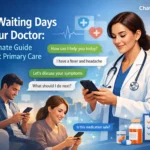 Stop Waiting Days for Your Doctor: The Ultimate Guide to Instant Primary Care via Text