
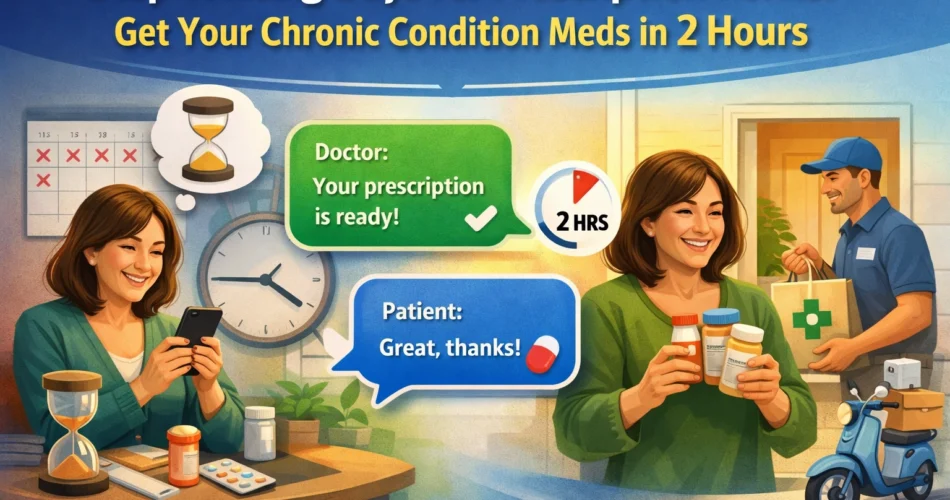
You know the drill. You're down to your last blood pressure pill, or your asthma inhaler is nearly empty. You call your doctor's office, and they tell you to leave a voicemail. Then you wait. And wait. Three days later, you're still checking your pharmacy app, wondering if anyone remembered you exist.
Sound familiar? You're not alone. According to the American Heart Association, nearly half of Americans with chronic conditions like hypertension struggle with medication adherence: and delayed prescription refills are a major culprit.
Here's the good news: getting prescription refills for chronic conditions doesn't have to take days anymore. With modern telehealth platforms, you can connect with a licensed physician and get your medications sent to your pharmacy in as little as 2 hours. No phone tag. No waiting rooms. Just fast, legitimate medical care when you need it.
Why Traditional Prescription Refills Take Forever
The traditional healthcare system wasn't built for convenience. When you need a routine refill for a chronic condition you've been managing for years, you still have to jump through hoops:
Your doctor's office becomes a bottleneck. Most primary care physicians are overbooked, managing dozens of patients daily. A simple refill request sits in a queue behind urgent appointments, prescription reviews, and insurance paperwork. What should take 5 minutes ends up taking 3-5 business days.
Pharmacy communication breakdowns happen constantly. Your doctor's office says they sent it. The pharmacy says they never received it. Meanwhile, you're the one calling both places trying to track down your lisinopril or atorvastatin like you're a detective.
Insurance prior authorizations add another layer of delay. Even for medications you've been taking for months, insurance companies sometimes require new authorization. That's another 48-72 hours: or longer.
The result? You end up rationing medications, skipping doses, or making emergency ER visits because your blood pressure spiked after going three days without your meds. It's frustrating, expensive, and completely avoidable.
How Online Prescription Refills Actually Work
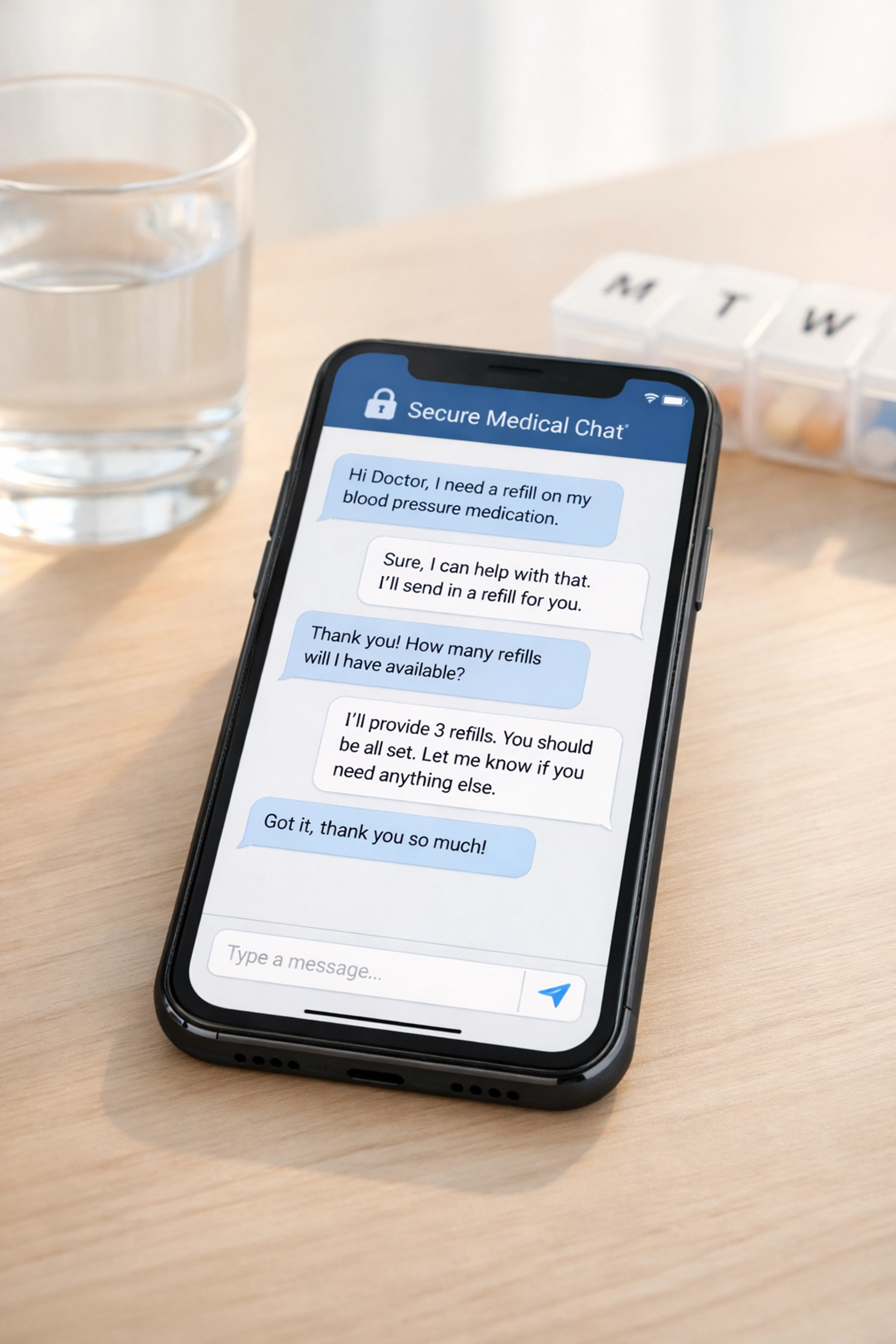
Telehealth platforms have fundamentally changed how people manage chronic conditions. Instead of waiting for office hours and playing phone tag, you can now text with licensed doctors 24/7 and get refills approved in a fraction of the time.
Here's what the process looks like with a legitimate online prescription service:
You start a secure medical consultation. Through HIPAA-compliant text messaging, you explain which medication you need refilled, your current dosage, and how long you've been taking it. You can do this from your couch at 10 PM or during your lunch break at work.
A licensed physician reviews your medical history. The doctor evaluates whether continuing your current medication is appropriate. They'll ask about any side effects, recent symptoms, or changes in your condition. This isn't just a rubber stamp: it's real medical oversight.
Your prescription is sent electronically to your preferred pharmacy. Once approved, the doctor sends your prescription directly to the pharmacy you choose. Most pharmacies receive electronic prescriptions within minutes, not days.
You pick up your medication or have it delivered. Many pharmacies offer same-day pickup or delivery options. Some services like Walgreens and Capsule provide same-day delivery if you order by early afternoon.
The entire process: from starting your consultation to prescription approval: typically takes 1-2 hours. Compare that to the 3-5 days (or longer) you'd wait through traditional channels.
Which Chronic Conditions Qualify for Fast Refills?
Not every medication can be prescribed or refilled online. Controlled substances (like opioids or benzodiazepines) and certain high-risk medications require in-person visits. However, most common chronic condition medications are eligible for online refills.
High Blood Pressure Medications
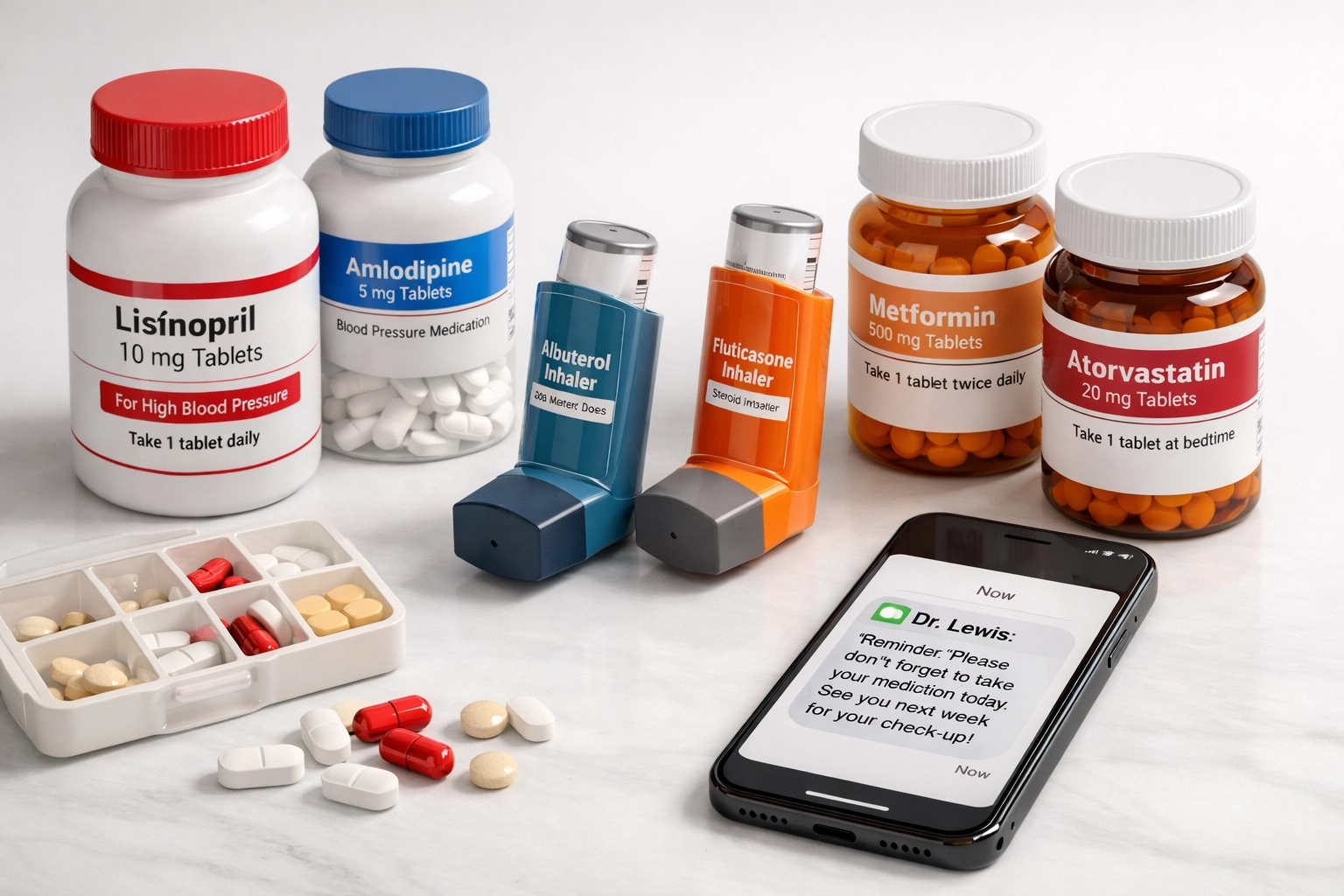
Hypertension affects nearly half of American adults, according to the CDC, making it one of the most common reasons people seek prescription refills. A high blood pressure online doctor can refill medications including:
- ACE inhibitors (lisinopril, enalapril)
- ARBs (losartan, valsartan)
- Beta-blockers (metoprolol, atenolol)
- Calcium channel blockers (amlodipine, diltiazem)
- Diuretics (hydrochlorothiazide, furosemide)
Doctors will typically ask about your home blood pressure readings, any recent symptoms like dizziness or chest pain, and medication side effects before approving refills.
Asthma Medications
Asthma management telehealth has become increasingly sophisticated. Online doctors can refill:
- Maintenance inhalers (Flovent, Advair, Symbicort)
- Rescue inhalers (albuterol)
- Oral medications (montelukast/Singulair)
- Nebulizer solutions
During the consultation, expect questions about how often you're using your rescue inhaler, whether you've had recent asthma attacks, and if you're experiencing any breathing difficulties. This helps the doctor assess whether your current treatment plan is working or needs adjustment.
Cholesterol Medications
Statins and other cholesterol-lowering medications are routinely refilled through telehealth platforms. Common medications include:
- Statins (atorvastatin/Lipitor, simvastatin, rosuvastatin/Crestor)
- Ezetimibe (Zetia)
- Fibrates (fenofibrate)
Doctors may ask about any muscle pain or weakness (potential statin side effects) and when you last had your cholesterol levels checked. They might recommend lab work if it's been over a year since your last lipid panel.
Other Chronic Conditions
Many other routine maintenance medications qualify for fast online refills, including:
- Thyroid medications (levothyroxine)
- Diabetes medications (metformin, but not insulin)
- Acid reflux medications (omeprazole, pantoprazole)
- Allergy medications (prescription antihistamines, nasal sprays)
The Step-by-Step Process for Getting Your Refills in Hours
Let's walk through exactly how to get your prescription refilled quickly through an online platform like ChatWithDr:
Step 1: Create your account (5 minutes). You'll provide basic information including your medical history, current medications, allergies, and pharmacy preference. This information stays securely stored for future visits.
Step 2: Start a consultation (2 minutes). Select what you need: in this case, a prescription refill: and specify which medication and dosage. You can upload photos of your current medication bottle to ensure accuracy.
Step 3: Chat with a licensed doctor (15-30 minutes). Through secure text messaging, the doctor will review your medical history and ask relevant questions about your condition. This isn't a bot: it's a real physician having a real conversation about your health.
Step 4: Get your prescription approved (immediate to 1 hour). Once the doctor determines that continuing your medication is safe and appropriate, they'll electronically send the prescription to your pharmacy.
Step 5: Pick up or receive delivery (same day). Most major pharmacies process electronic prescriptions within minutes. You'll receive a text when your medication is ready for pickup, or you can arrange same-day delivery through participating pharmacies.
The entire timeline from login to prescription sent: typically 1-2 hours, depending on how quickly you respond to the doctor's questions.

Is This Actually Safe and Legitimate?
It's natural to be skeptical about getting prescription refills online. With so many questionable websites and pill mills out there, how do you know you're dealing with legitimate healthcare?
Here's what to look for in a trustworthy telehealth platform:
Real doctors with active licenses. Every consultation should be with a physician or nurse practitioner licensed to practice medicine in your state. Legitimate platforms will clearly display their providers' credentials.
Proper medical evaluation. Any doctor who refills your prescription without asking questions is a red flag. Real physicians take a complete medical history, ask about symptoms and side effects, and make informed clinical decisions.
HIPAA-compliant technology. Your medical information should be protected by the same privacy standards as any traditional doctor's office. Look for platforms that use encrypted messaging and secure data storage.
No prescription guarantees. Legitimate telehealth services don't promise to prescribe whatever you want. Doctors retain the right to refuse prescriptions if they determine it's not medically appropriate.
Transparent pricing. You should know exactly what the consultation costs before you start. Hidden fees or suspicious pricing are warning signs.
For chronic condition refills specifically, online doctors are following established treatment protocols. They're not making risky decisions: they're helping you maintain medications that another physician already prescribed and that you've been safely taking.
When You Still Need an In-Person Visit
Online prescription refills work great for stable chronic conditions, but they're not appropriate for every situation. You should see a doctor in person if:
- Your symptoms have changed significantly or worsened
- You're experiencing side effects from your medication
- It's been over a year since you've had relevant lab work or a physical exam
- You need to adjust your dosage due to poor disease control
- You're starting a new medication for the first time
- Your condition requires imaging or physical examination
Think of online prescription refills as a convenient tool for maintaining chronic conditions that are already well-controlled, not for diagnosing new problems or managing complicated medical situations.
Stop Letting Refill Delays Derail Your Health
Missing doses of your chronic condition medications isn't just inconvenient: it's dangerous. Blood pressure spikes, asthma exacerbations, and poorly controlled cholesterol all increase your risk of serious complications like heart attacks, strokes, and hospitalizations.
The healthcare system shouldn't make it this hard to get the medications you need to stay healthy. Thanks to modern telehealth platforms, it doesn't have to.
Whether you need your blood pressure medication refilled at 11 PM on a Sunday or your asthma inhaler is running low during a busy work week, 24/7 telehealth access means you're never more than a few hours away from getting your prescription sent to your pharmacy.
No more phone tag. No more three-day waits. Just fast, legitimate medical care that fits into your actual life: not the other way around.
Disclaimer: This information is not a substitute for professional medical advice, diagnosis, or treatment. Always seek the advice of your physician or qualified health provider with questions regarding medical conditions or treatments.
Related posts:
 Stop Wasting Time on Prescription Refills: Get Your Chronic Condition Meds in 2 Hours
  Chronic Condition Management Made Simple: Get Blood Pressure, Asthma & Cholesterol Refills 24/7
  Stop Waiting Days for Prescription Refills: Try These 3 Quick Telehealth Hacks
  Stop Wasting Hours at the Pharmacy: Get Chronic Medication Refills in 3 Simple Steps
  Your Quick-Start Guide to Managing Cholesterol, Blood Pressure, and Asthma Online: Do This First