
Medically reviewed by ChatWithDr Medical Team
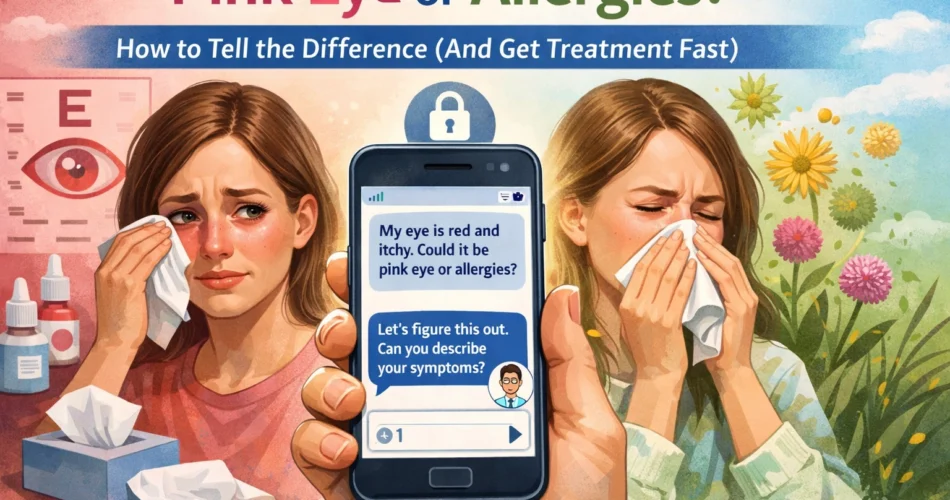
Waking up with red, watery eyes can be alarming. Is it pink eye that might spread to others, or just seasonal allergies acting up? While both conditions cause eye redness and discomfort, they require completely different treatments. Getting the diagnosis wrong could mean days of unnecessary symptoms or potentially spreading a contagious infection to family members and coworkers.
Understanding the key differences between pink eye (conjunctivitis) and eye allergies is crucial for getting fast, effective treatment. This guide will help you identify which condition you're experiencing and connect you with the right care quickly.
The Key Differences Between Pink Eye and Allergies
Pink eye is typically caused by a bacterial or viral infection, while allergic conjunctivitis results from your immune system overreacting to triggers like pollen, dust, or pet dander. According to the American Academy of Ophthalmology, knowing which type you have determines whether you need antibiotics, allergy medication, or simply supportive care.
Which Eyes Are Affected
Pink eye often starts in one eye and may spread to the other within a day or two through hand-to-eye contact or contaminated surfaces. Allergies, on the other hand, typically affect both eyes simultaneously since you're exposed to allergens through the air.
Discharge Type and Appearance
The type of discharge is one of the most telling signs:
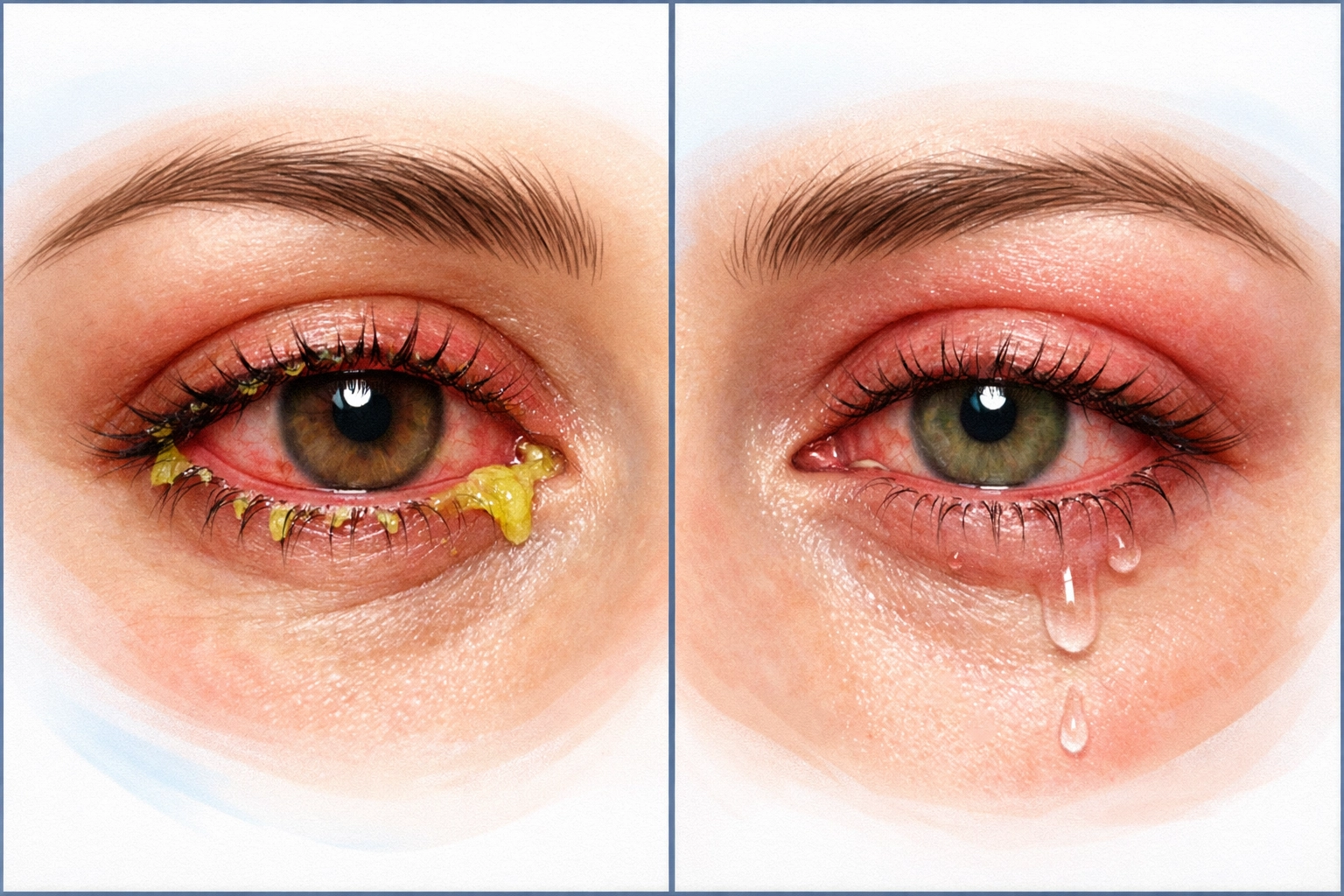
- Pink eye discharge: Thick, yellow, or green discharge that causes your eyelids to stick together, especially after sleeping. You may wake up with crusty, matted eyelashes that require a warm washcloth to open your eyes.
- Allergy discharge: Clear, watery discharge with no pus. Your eyes may tear excessively, but there's no thick, colored mucus.
Itching Intensity
While both conditions can cause itching, the intensity differs significantly:
- Allergies: Severe, constant itching that makes you want to rub your eyes continuously. The itching is often the most bothersome symptom.
- Pink eye: Mild to moderate irritation with a gritty, sandy sensation, as if something is stuck in your eye. Itching is present but not the dominant symptom.
Associated Symptoms
Allergic conjunctivitis rarely occurs in isolation. You'll typically experience:
- Sneezing and runny nose
- Nasal congestion
- Puffy, swollen eyelids
- Symptoms that worsen during high pollen counts or exposure to specific triggers
Viral pink eye may come with cold-like symptoms:
- Fever
- Sore throat
- Cough
- Body aches
Bacterial pink eye usually presents with eye symptoms alone, though it can occur alongside ear infections in children.
How to Tell What You Have: A Self-Assessment Guide

Ask yourself these diagnostic questions:
Question 1: How intense is the itching?
If your eyes feel intensely itchy and you can barely resist rubbing them, allergies are more likely. Bacterial conjunctivitis produces more of a burning or gritty sensation than severe itching.
Question 2: Are both eyes affected equally?
If both eyes became red and irritated at the same time, think allergies. If one eye was affected first, followed by the other a day or two later, suspect pink eye.
Question 3: What does the discharge look like?
Clear and watery suggests allergies. Thick, yellow, or green discharge that causes crusting points to bacterial pink eye. Viral pink eye typically has minimal discharge or clear, watery discharge.
Question 4: Do you have other allergy symptoms?
A runny nose, sneezing, and nasal congestion alongside eye symptoms strongly indicate allergies. These conditions often occur together during allergy season.
Question 5: What's your recent exposure history?
Have you been around someone with pink eye? Did your symptoms start during high pollen season? Have you been using eye makeup that might be contaminated? Context matters for diagnosis.
When to Seek Medical Care: Red Flags You Shouldn't Ignore
While many cases of pink eye and allergies can be managed at home initially, certain symptoms require prompt medical evaluation:
Emergency Warning Signs
Seek immediate medical attention if you experience:
- Severe eye pain that doesn't improve with over-the-counter pain relievers
- Sudden vision changes including blurriness, double vision, or vision loss
- Extreme light sensitivity (photophobia) that makes it difficult to open your eyes in normal lighting
- Green or yellow discharge combined with significant swelling and pain
- Eye symptoms following an injury or exposure to chemicals
- Symptoms in a newborn (any eye discharge in babies under 3 months requires immediate evaluation)
When to Contact a Healthcare Provider Within 24-48 Hours
You should consult a doctor if:
- Symptoms last longer than 3-4 days without improvement
- You wear contact lenses and develop new eye redness or discomfort
- Eye discharge is increasing rather than decreasing
- You develop a fever alongside eye symptoms
- Eyelid swelling is severe or getting worse
- You have a weakened immune system
- Over-the-counter treatments aren't providing relief
For children with pink eye symptoms who also have fever or known strep throat exposure, evaluation within 24 hours is recommended, as bacterial infections may require antibiotic treatment.
Treatment Options: Getting Relief Fast

For Allergic Conjunctivitis
Immediate relief measures:
- Use cold compresses on closed eyes for 10-15 minutes several times daily
- Flush eyes with preservative-free artificial tears to wash away allergens
- Avoid rubbing your eyes, which worsens inflammation
Medication options:
- Over-the-counter antihistamine eye drops (ketotifen, olopatadine)
- Oral antihistamines for systemic allergy symptoms
- Prescription mast cell stabilizers for severe or chronic allergies
Prevention strategies:
- Keep windows closed during high pollen days
- Use air purifiers with HEPA filters
- Wash hands and face after being outdoors
- Consider daily oral antihistamines during allergy season
For Viral Pink Eye
Most cases resolve within 7-14 days without specific treatment. Supportive care includes:
- Warm or cool compresses to reduce discomfort
- Artificial tears to soothe irritation
- Gentle cleaning of discharge with warm water
- Avoiding contact lenses until symptoms completely resolve
For Bacterial Pink Eye
Bacterial cases benefit from antibiotic eye drops or ointment, which can:
- Reduce contagiousness within 24 hours of starting treatment
- Speed recovery by several days
- Prevent spread to the other eye or other people
A healthcare provider can determine if antibiotics are necessary based on your symptoms and examination.
Should You Use Telehealth or Visit Urgent Care?

The decision depends on your specific symptoms and circumstances.
When Telehealth Is Appropriate
Telehealth evaluation works well for:
- Mild to moderate eye redness with typical pink eye or allergy symptoms
- No vision changes or severe pain
- Adults and children over 3 months with straightforward symptoms
- Need for antibiotic prescription after assessment
- Follow-up on previously diagnosed conditions
Advantages of telehealth:
- No exposure to other illnesses in waiting rooms (important when you might be contagious)
- Fast access to licensed providers, often with response times under 2 hours
- Convenient evaluation from home using your smartphone
- Affordable flat-rate pricing at $39.99 with no subscription or account required
ChatWithDr connects you with licensed healthcare providers through secure medical messaging. Simply describe your symptoms, share photos of your affected eye(s), and receive professional medical advice and prescriptions when appropriate.
When to Choose Urgent Care or Emergency Care
In-person evaluation is necessary for:
- Severe eye pain or significant vision changes
- Eye injury or foreign object concerns
- Newborns or infants with eye discharge
- Symptoms suggesting complications (extreme swelling, light sensitivity)
- Unclear diagnosis requiring physical examination
How ChatWithDr Can Help You Get Treatment Fast
If you're experiencing pink eye or allergy symptoms and want fast, professional medical evaluation without the hassle of scheduling an appointment or sitting in a waiting room, ChatWithDr offers a convenient solution.
Here's how it works:
- No account needed – Start chatting with a licensed provider immediately
- Text-based consultation – Describe your symptoms and share photos through secure messaging
- Fast response – Receive medical advice typically within 2 hours
- Prescription if needed – Get antibiotics sent directly to your preferred pharmacy
- Flat-rate pricing – Just $39.99 per consultation, no hidden fees or subscriptions
Whether you need antibiotic drops for bacterial pink eye, guidance on managing viral conjunctivitis, or recommendations for allergy relief, our licensed providers can evaluate your symptoms and provide appropriate treatment plans through our online urgent care platform.
The Bottom Line
Red, irritated eyes can result from either pink eye or allergies, and distinguishing between them is essential for effective treatment. Remember these key points:
- Allergies cause severe itching, clear watery discharge, affect both eyes simultaneously, and often include nasal symptoms
- Pink eye produces thick colored discharge, starts in one eye, causes gritty sensation, and may be contagious
- Seek immediate medical care for severe pain, vision changes, or extreme light sensitivity
- Telehealth consultations provide fast, convenient access to licensed providers who can diagnose your condition and prescribe treatment when appropriate
Don't let uncomfortable eye symptoms disrupt your daily life. Whether you need antibiotic treatment for bacterial pink eye or guidance on managing allergies, professional medical advice is available quickly and affordably through secure text-based consultations.
Disclaimer: This information is not a substitute for professional medical advice, diagnosis, or treatment. Always seek the advice of your physician or qualified health provider with questions regarding medical conditions or treatments.
Related posts:
 How to Get Treatment for Pink Eye Online: Fast & Professional Care
  Your Guide to Fast Pink Eye Treatment Online
  Pink Eye vs. Allergies vs. Infection: Which Is It and When to See a Doctor Online
  Pink Eye Treatment Online: Fast Relief Through Medical Chat
  Pink Eye Treatment Online: How to Tell If It's Viral or Bacterial + When You Need Drops