
Medically reviewed by licensed healthcare professionals
Let's be honest: trying to schedule a video call with a doctor when you're feeling sick is about as fun as waiting in a crowded urgent care lobby. You're dealing with finding good lighting, making sure you look presentable, and hoping your Wi-Fi doesn't crash mid-consultation.
There's a better way. Text-based telehealth is quietly revolutionizing how we access urgent care, and it's time we talked about why typing to a doctor might actually be superior to staring at them through a screen.
What Is Text-Based Telehealth?
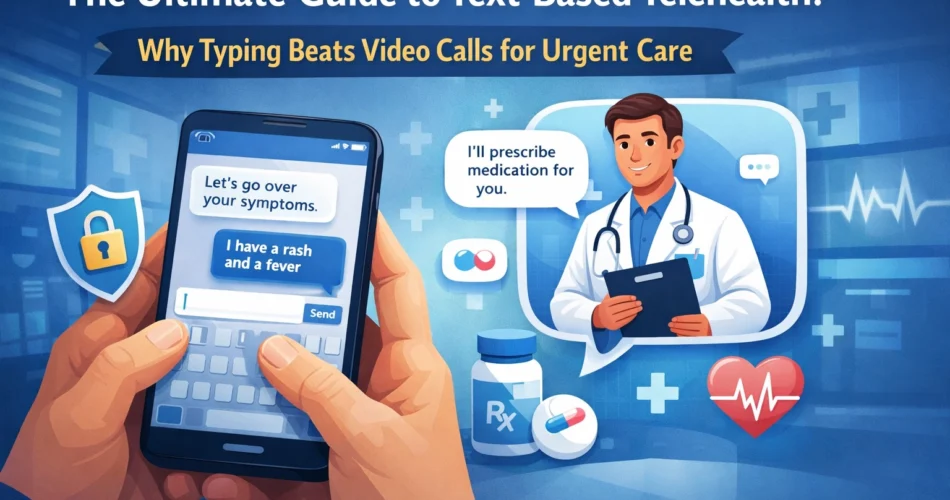
Text-based telehealth (also called asynchronous telehealth or secure medical messaging) allows you to communicate with licensed physicians through written messages: think of it as texting your doctor, but with HIPAA-compliant security protecting your privacy.
Unlike video calls that require scheduled appointments and live interactions, text-based platforms let you describe your symptoms, send photos if needed, and receive medical guidance on your own timeline. No appointment booking. No waiting rooms. No awkward video angles.

The Convenience Factor: Healthcare on Your Schedule
The biggest advantage of text-based telehealth? You can reach out at 2 AM when that UTI symptoms hit, or during your lunch break without stepping away from your desk.
With 24/7 online doctor access, you're not constrained by office hours or appointment availability. Send your message when it's convenient for you, and receive a response typically within two hours: faster than scheduling a video appointment and certainly faster than booking an in-person visit.
This asynchronous approach is particularly valuable for busy parents who can't easily schedule daytime appointments, shift workers whose hours don't align with traditional medical office schedules, or anyone who simply values flexibility in their healthcare access.
Privacy and Discretion Matter
Let's talk about something people don't discuss enough: the comfort factor. Not everyone wants to appear on camera when discussing sensitive health issues like STD concerns, erectile dysfunction, or bacterial vaginosis.
Text-based consultations offer a level of discretion that video calls can't match. You can discuss uncomfortable symptoms without worrying about being overheard by family members or roommates. You can take your time articulating your concerns without the pressure of real-time conversation.
According to research from the American Telemedicine Association, patients report higher satisfaction rates when discussing sensitive health topics through secure messaging versus video consultations, primarily due to reduced embarrassment and increased perceived privacy.
The Cost-Effectiveness You Can't Ignore
Video telehealth platforms often operate on subscription models or insurance-dependent pricing. Text-based urgent care typically costs significantly less: and the pricing is transparent.
At ChatWithDr, consultations cost a flat $39.99 with no hidden fees, no account creation required, and no insurance hassles. Research shows that patients using text-based telehealth services save an average of $1,142 annually by avoiding unnecessary emergency room or urgent care visits.

When you factor in the time saved (no commute, no waiting room), the cost savings become even more substantial. Your time has value, and text-based telehealth respects that.
Better Documentation and Follow-Up
Here's something video calls can't compete with: automatic documentation. Every text-based consultation creates a written record of your symptoms, the doctor's recommendations, and treatment plans.
Need to remember what the doctor said about your medication? Just scroll back through your messages. Want to share your diagnosis with another healthcare provider? Forward the conversation. This built-in documentation improves continuity of care and reduces miscommunication.
Plus, follow-up is seamless. If you have questions after reviewing your treatment plan, you can send another message without scheduling an entirely new appointment: something that's particularly valuable for online prescription management and medication questions.
Real-World Use Cases for Text-Based Urgent Care
Text-based telehealth excels for a wide range of common urgent care needs:
Infections and Common Illnesses
- UTI treatment and antibiotic prescriptions
- Strep throat diagnosis and treatment
- Cold, flu, and COVID-19 management
- Sinus infections and ear infections
Dermatological Issues
Photo-based consultations work exceptionally well for skin conditions. Online dermatology consultations via text allow you to send clear photos of rashes, acne, suspicious moles, or other skin concerns without the need for real-time video.
Reproductive Health
- Emergency contraception prescriptions
- Birth control consultations
- STD testing guidance
Chronic Condition Management
- Migraine and headache treatment
- Prescription refills
- Hair loss treatment for men

When Text-Based Beats Video (And When It Doesn't)
Text-based telehealth is ideal when:
- You have a straightforward medical concern
- Photos can adequately show your symptoms
- You need a prescription or refill
- Time flexibility matters more than immediate interaction
- You prefer discretion and privacy
However, emergency situations always require immediate in-person care. Chest pain, severe bleeding, difficulty breathing, signs of stroke, or life-threatening allergic reactions need emergency room treatment, not telehealth of any kind.
For complex conditions requiring physical examination, in-person visits remain necessary. Text-based telehealth should complement, not completely replace, your traditional healthcare relationships.
How ChatWithDr Makes Text-Based Telehealth Simple
Getting started with text-based telehealth shouldn't be complicated. Here's how it works with ChatWithDr:
No Account Needed: Visit ChatWithDr and start describing your symptoms immediately: no lengthy registration process.
Flat-Rate Pricing: Pay $39.99 per consultation. No subscriptions, no surprise bills, no insurance requirements.
Fast Response Times: Receive medical guidance typically within 2 hours, often faster.
Licensed Physicians: Chat with U.S.-licensed doctors who can diagnose conditions and prescribe medications when appropriate.
HIPAA-Compliant Security: All communications are encrypted and protected under healthcare privacy laws.
The platform is designed for urgent care needs: when you need medical attention today, not next week. Whether you're dealing with online urgent care needs or managing ongoing conditions through online primary care, text-based consultations provide accessible, affordable healthcare.

The Future of Urgent Care Is Asynchronous
The healthcare industry is slowly recognizing what patients already know: not every medical consultation requires synchronous, face-to-face interaction. Text-based telehealth represents a more efficient, accessible, and patient-centered approach to urgent care.
As telehealth technology continues to evolve, we're seeing increased adoption of asynchronous care models that prioritize convenience without sacrificing quality. Insurance companies are beginning to cover text-based consultations at the same rate as video visits, and regulatory frameworks are adapting to support these services.
For patients, this means more options, better access, and healthcare that fits into your life: not the other way around.
Getting Started With Text-Based Telehealth
If you're dealing with an urgent health concern and want to try text-based telehealth, the process is straightforward:
- Identify your symptoms and when they started
- Take clear photos if you have visible symptoms
- Note any medications you're currently taking
- Describe your symptoms in detail when messaging with your doctor
- Ask questions about treatment options and follow-up care
Connect with an online doctor today to experience the convenience of text-based urgent care for yourself. Whether you're dealing with a UTI at midnight, need refills on routine medications, or have concerns about a skin rash, text-based telehealth provides fast, affordable access to licensed physicians.
The future of urgent care isn't about fancy video technology: it's about making healthcare accessible when and how you need it. Sometimes the best medical consultation is the one that happens via text while you're still in your pajamas.
Disclaimer: This information is not a substitute for professional medical advice, diagnosis, or treatment. Always seek the advice of your physician or qualified health provider with questions regarding medical conditions or treatments.
Related posts:
 The Ultimate Guide to Text-Based Telehealth: Why 2-Hour Doctor Responses Beat Video Calls
  7 Reasons Text-Based Telehealth Beats Video Calls (And Saves You Time)
  The 7 Best Online Doctor Services of 2025: A Detailed Review
  The Ultimate Guide to Text-Based Telehealth: Fast, Secure, and No Appointments Needed
  Online Doctor Consultation in Under 2 Hours: Why Text-Based Telehealth Beats Traditional Urgent Care