
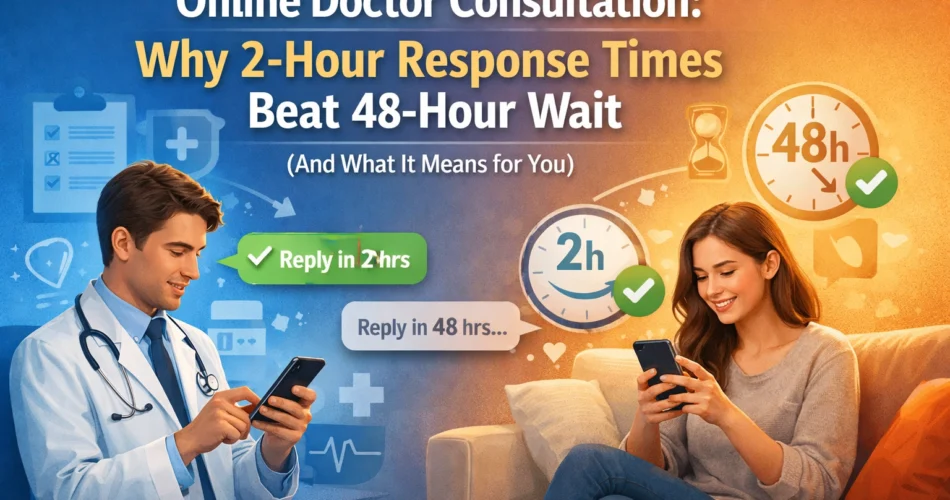
You wake up at 3 AM with a burning UTI. Your throat's been getting worse all day. That suspicious rash isn't going away. In these moments, two days feels like an eternity, and it shouldn't take that long to get medical help.
The telehealth industry has exploded in recent years, but not all online doctor consultation services are created equal. While some platforms make you wait 24-48 hours for a response, others, like text-based urgent care services, are responding in under two hours. That difference isn't just about convenience. It's about getting the care you need when you actually need it.
The Real Cost of Waiting 48 Hours
When you're dealing with a UTI, strep throat, or another acute condition, 48 hours can mean:
- Two additional days of pain and discomfort
- Missing work or important commitments
- Symptoms potentially worsening
- The frustration of not knowing what's happening with your body
- Increased anxiety about whether you should just go to an ER instead
Research on asynchronous telehealth consultations shows that 99.8% of responses can be delivered within 24 hours, with a significant portion arriving within 0-5 hours. If the technology enables faster response times, why should patients settle for waiting days?

How Sub-2-Hour Response Times Change Everything
Platforms offering responses in under two hours aren't just faster, they're fundamentally changing what telehealth urgent care means for patients. Here's what happens when you can text with a doctor and get answers quickly:
Immediate Peace of Mind: You submit your symptoms, medical history, and photos if needed. Within hours, not days, a licensed physician reviews your case and responds with a diagnosis, treatment plan, or next steps.
Same-Day Treatment: With quick response times, you can often receive a same day prescription online and start treatment before the day ends. That UTI doesn't have to ruin your entire week. That strep throat can be treated before it impacts your Monday presentation.
Real Urgent Care: When response times shrink to under two hours, text-based platforms become true urgent care alternatives, not just conveniences for non-urgent questions.
Better Decision Making: Fast responses help you avoid unnecessary ER visits. You get professional medical guidance quickly enough to make informed decisions about your care without panic.
Why Text-Based Care Is Winning the Speed Race
Video telehealth has its place, but text-based medical messaging offers unique advantages that enable faster, more efficient care:
No Scheduling Required: Unlike video appointments that require coordination between your schedule and a doctor's availability, secure medical messaging allows you to submit your consultation request any time. Doctors can review and respond between appointments, during breaks, or whenever they have availability.
Asynchronous Efficiency: Research indicates that online consultations are delivered sooner after a patient's request compared to in-person services. Text-based platforms take this further, doctors can respond thoughtfully without the scheduling constraints of synchronous video calls.
Better Documentation: Everything is in writing. Your symptoms, the doctor's recommendations, your treatment plan, it's all documented and accessible. No trying to remember what the doctor said or worrying about mishearing instructions.
Photos and Details: You can include photos of rashes, injuries, or concerning symptoms. You can take time to accurately describe your symptoms without the pressure of a ticking video appointment clock.
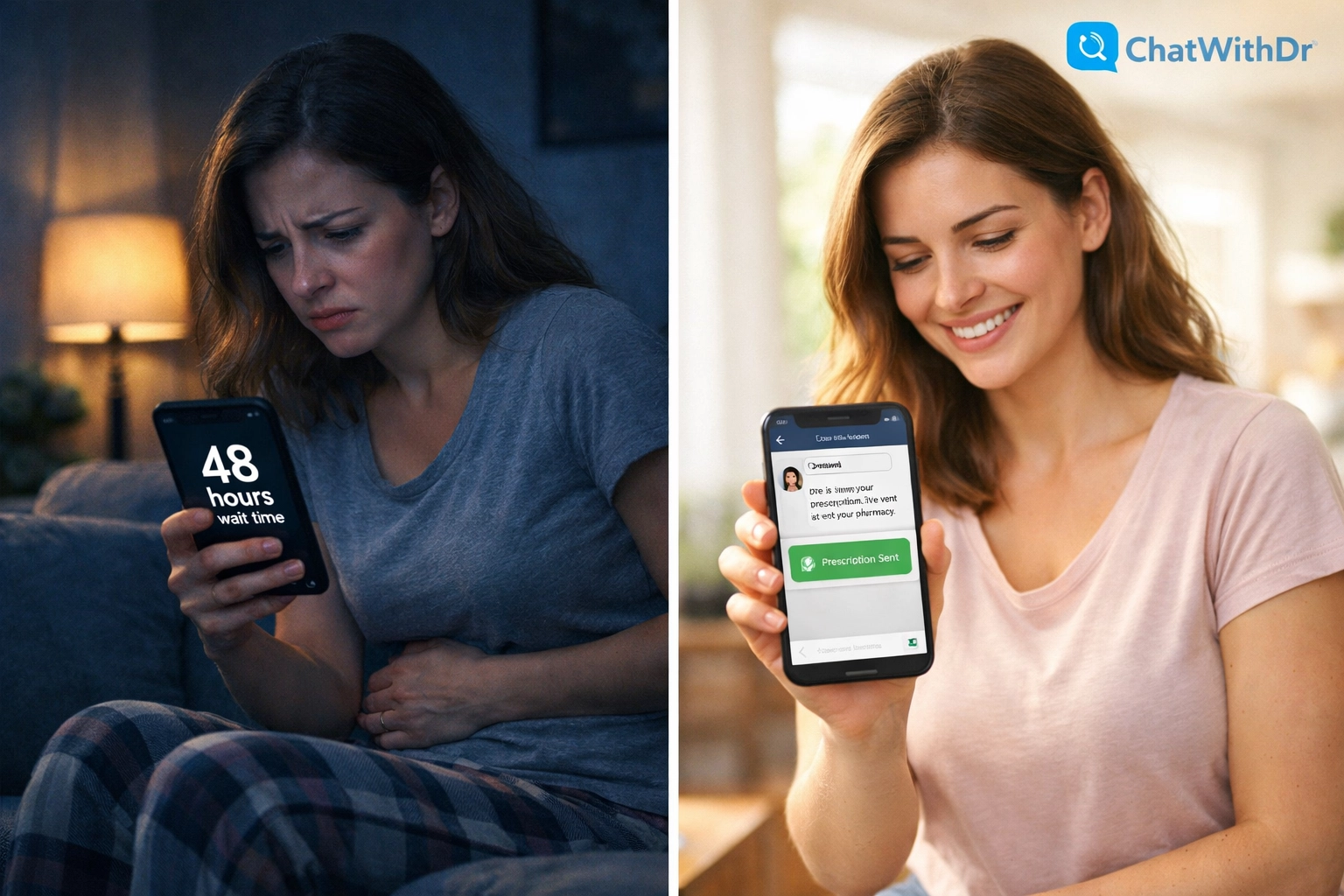
24/7 Accessibility: Text-based platforms can operate around the clock more efficiently than video services. Whether it's 2 PM or 2 AM, you can reach out for help. A doctor will respond: often within two hours, even at odd times.
The $39.99 Question: Is Fast Care Affordable Care?
Speed means nothing if it's unaffordable. Here's where the economics of text-based urgent care get interesting.
Traditional urgent care visits average $150-200. Video telehealth typically runs $50-100 per visit, sometimes more. But text-based platforms like ChatWithDr are offering comprehensive consultations for a flat fee of $39.99: with no hidden costs, no subscription requirements, and no insurance headaches.
Think about what that means:
- Predictable Costs: You know exactly what you'll pay before you start. No surprise bills weeks later.
- No Insurance Required: This is often cheaper than many insurance copays, and you don't need to deal with pre-authorizations or network restrictions.
- Inclusive Pricing: That $39.99 typically includes the consultation, diagnosis, and prescription (if medically appropriate): not just access to a doctor.
For many Americans, especially those with high-deductible health plans or no insurance, this model makes urgent care actually accessible. You don't have to decide between treating a UTI and paying for groceries.
What Medical Conditions Benefit Most from Fast Response Times?
Not every health concern requires immediate attention, but many common conditions significantly benefit from quick medical response:
Urinary Tract Infections: UTIs are painful and can worsen quickly. Getting online UTI treatment within hours rather than days means faster relief and lower risk of complications.
Strep Throat and Bacterial Infections: The sooner you start antibiotics for bacterial infections like strep throat, the faster you recover and the less likely you are to spread it to others.
Skin Conditions: Rashes, suspected infections, or concerning moles can be evaluated via photos. An online dermatologist can often diagnose and treat many conditions without an in-person visit.
Common Acute Illnesses: Cold, flu, and COVID symptoms often need quick evaluation to determine if prescription medication could help or if you should seek additional care.
Birth Control and Refills: Running out of birth control doesn't require a 48-hour wait. Quick consultation can get you back on track immediately.

The Science Behind Response Time Expectations
Interestingly, research suggests that while ultra-fast response times are appreciated, what matters most is setting clear expectations. A study analyzing thousands of asynchronous online consultations found that response time wasn't associated with whether patients visited hospitals or their satisfaction levels: as long as they knew what to expect.
But here's the catch: those studies examined systems where "fast" meant within 24 hours. The healthcare landscape is evolving. As text-based platforms prove they can consistently respond in under two hours, patient expectations naturally rise. Why wait 24 hours when 2-hour responses are available?
The same research also found that online consultations yield similar outcomes to in-person visits regarding diagnosis rates, prescriptions, referrals, and patient satisfaction. The difference? Online consultations happen sooner and take less total time.
What This Means for Your Healthcare Decisions
When you're choosing between telehealth options, response time should be a major consideration. Here's what to look for:
Ask About Average Response Times: Don't just accept vague promises of "within 24-48 hours." What's the actual average? What percentage of consultations get responses within 2 hours? Within 6 hours?
Consider Your Needs: For routine prescription refills or non-urgent questions, 24-48 hours might be fine. But if you're using telehealth as urgent care, you need urgent care response times.
Evaluate the Complete Package: Response time + cost + quality of care. The fastest service isn't worth it if it's unaffordable or provides poor medical care. The cheapest service isn't worth it if you wait days in pain.
Check Prescription Capabilities: Can the platform actually send same day prescriptions online to your preferred pharmacy? Some telehealth services have limitations on what they can prescribe or where they can send prescriptions.
The Future of Urgent Care Is Already Here
The healthcare system has trained us to accept waiting. Waiting rooms. Waiting for appointments. Waiting for callbacks. Waiting for results. But technology has made those waits unnecessary for many common conditions.
Text-based platforms offering sub-2-hour response times aren't some future innovation: they're operational right now. Services like ChatWithDr's online urgent care are proving that you can chat with licensed doctors, get diagnosed, and receive prescriptions all within hours, not days.
This isn't about replacing all healthcare with text messages. Emergency conditions still require emergency care. Complex conditions still need comprehensive in-person evaluation. But for the everyday health issues that affect millions of Americans: the UTIs, sore throats, rashes, and minor infections: fast, affordable, text-based care is changing what's possible.

Your Health Shouldn't Wait
When you need medical care, you shouldn't have to choose between fast, affordable, and quality. The evolution of text-based telehealth means you don't have to compromise anymore.
Whether it's 3 AM on a Sunday or 3 PM on a Tuesday, online doctor consultation platforms with sub-2-hour response times give you access to licensed physicians who can evaluate your symptoms, provide diagnoses, and prescribe appropriate treatment: all at a flat, affordable rate.
The question isn't whether faster care is better. Of course it is. The question is whether you'll keep settling for 48-hour waits when 2-hour responses are available.
Your health is too important to wait. Next time you need urgent care, consider trying a text-based platform that actually prioritizes "urgent" in urgent care. You might be surprised how much difference a few hours can make.
Disclaimer: This information is not a substitute for professional medical advice, diagnosis, or treatment. Always seek the advice of your physician or qualified health provider with questions regarding medical conditions or treatments.
Related posts:
 Online Doctor Consultation: Why 2-Hour Response Time Will Change the Way You Get Healthcare
  Best Telemedicine Platforms: best telemedicine platforms for 2025
  Online Doctor Consultation in Under 2 Hours: How ChatWithDr Beats 48-Hour Wait Times
  The 7 Best Online Doctor Services of 2025: A Detailed Review
  The Ultimate Guide to Text-Based Telehealth: Why 2-Hour Doctor Responses Beat Video Calls