
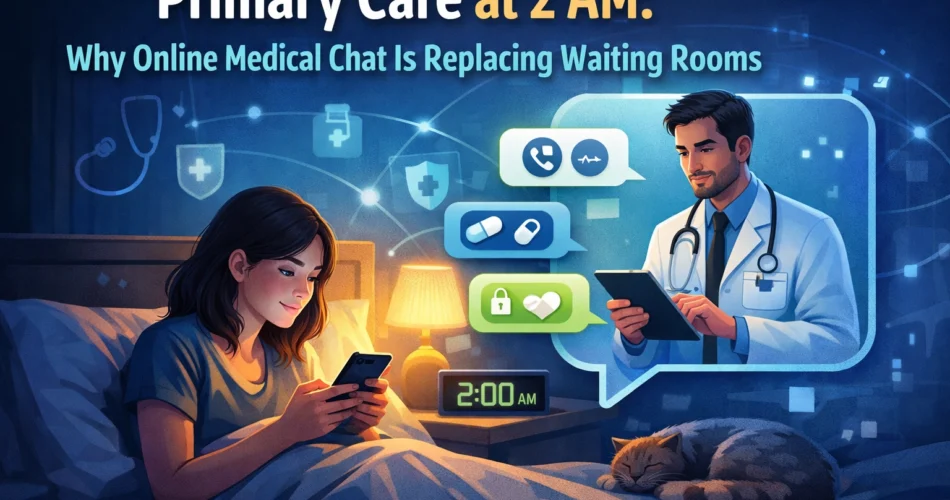
It's 2:37 AM, and you're wide awake with a burning urinary tract infection. Or maybe your kid spiked a fever at midnight. Perhaps you just realized you're down to your last few days of blood pressure medication. The old playbook would have you waiting until morning, hoping to get through to your doctor's office, then sitting in a waiting room full of sick people for an hour. But there's a reason why more Americans are reaching for their phones instead.
The Traditional Primary Care Problem
The typical primary care experience hasn't evolved much in decades. You call during business hours (if you can remember to do it between meetings). You wait on hold. You take the first available appointment: usually next week. You rearrange your work schedule. You drive across town. You sit in a waiting room flipping through outdated magazines. You wait some more in an exam room. Then you finally get your five minutes with the doctor.
For straightforward medical needs: prescription refills, common infections, minor skin conditions, or basic health questions: this process feels absurdly inefficient. According to research from the American Medical Association, patients increasingly recognize that not every medical concern requires a physical examination.
The waiting room model also assumes you have the luxury of flexibility. What about shift workers? Parents juggling childcare? People in rural areas who live 45 minutes from the nearest clinic? The system wasn't built for real life.

The Shift to Online Medical Chat
Enter online medical chat: a fundamental reimagining of how primary care access works. Instead of conforming your health needs to a doctor's schedule, you get medical care when you actually need it. No appointments. No waiting rooms. No accounts or lengthy signup processes standing between you and care.
This isn't telemedicine as a convenience feature anymore. For millions of Americans, chat with a doctor 24/7 has become their primary gateway to medical care, particularly for those needs that fall into the frustrating gap between "can wait for my annual checkup" and "requires an emergency room."
The model is straightforward: you describe your symptoms through secure medical messaging, a licensed physician reviews your case, asks follow-up questions, and provides diagnosis and treatment: including prescriptions when appropriate. The entire interaction happens via text, which means you can seek care while lying in bed with the flu, during your lunch break, or yes, at 2 AM when your body doesn't care about office hours.
Why Text-Based Medical Care Works
There's something inherently practical about text-based healthcare that makes it ideal for primary care needs. Unlike video calls that require you to find a quiet, private space and look presentable, secure medical messaging lets you communicate on your terms. You can take your time explaining symptoms, refer back to previous messages, and respond when convenient: all while maintaining the kind of detailed documentation that's actually useful for medical records.
For common conditions like UTIs, sore throats, cold and flu symptoms, or skin issues, physicians don't always need a physical exam. A detailed conversation about symptoms, medical history, and current medications often provides everything necessary for accurate diagnosis and treatment.
The "No Waiting Room" Revolution
The phrase "no waiting room" might sound like a simple convenience upgrade, but it represents something more significant: the elimination of unnecessary friction in healthcare access.
Traditional waiting rooms serve as bottlenecks by design. They batch patients into time slots, create idle time, expose healthy people to sick ones, and force everyone to conform to the same physical schedule. For the healthcare system, waiting rooms make logistical sense. For patients, they're often just obstacles.
Online medical chat removes this constraint entirely. When you chat with a doctor online, you're not waiting behind six other people. You're not exposed to whatever's circulating in the waiting room that week. You're not taking time off work or scrambling for childcare. You're simply describing your medical need and getting professional help: often within minutes.
This model proves particularly valuable for medication refills. If you're managing a chronic condition and need your prescription renewed, the traditional system forces you into an unnecessary office visit. Through online primary care, a licensed physician can review your history, confirm the medication is still appropriate, and send a new prescription to your pharmacy: all without you leaving home.
No Account Required: Lowering the Barrier to Care
Here's where many telehealth platforms get it wrong: they create elaborate account systems, apps to download, insurance verifications, and profile setups that feel more complex than booking a flight. By the time you've finished creating an account, you could have driven to urgent care.
The "no account required" approach recognizes a fundamental truth: when you're sick or in pain, the last thing you want is administrative hurdles. You should be able to describe your symptoms and connect with a doctor immediately. No apps to download. No lengthy forms to fill out. No passwords to remember at 3 AM when you can barely think straight.
This frictionless access proves especially critical for people who don't use healthcare services regularly. If you're generally healthy and just need occasional medical support, you shouldn't have to maintain yet another account and remember yet another password for those rare moments when you need care.

Real Scenarios Where Online Medical Chat Replaces Waiting Rooms
Consider these increasingly common situations:
The Weekend Refill Crisis: It's Saturday morning, and you realize you're out of your daily medication. Your doctor's office is closed until Monday. Traditional options: ER (absurdly expensive for a refill) or wait until Monday and risk missing doses. With 24/7 medical chat, a doctor can review your medication history and authorize a refill in minutes.
The Middle-of-the-Night UTI: Urinary tract infections don't follow business hours. Rather than suffering until morning or heading to a 2 AM emergency room, you can securely message with a physician, receive diagnosis based on symptoms, and get treatment prescribed to your pharmacy: often before you'd even finish the ER waiting room check-in.
The "Is This Serious?" Question: Your kid has a rash, or you've had a persistent cough, or that mole looks different. These concerns nag at you, but they don't feel emergency-room-worthy. They're perfect for online urgent care via text, where a doctor can evaluate whether you need in-person follow-up or can treat the issue remotely.
The Dermatology Second Opinion: Skin conditions are particularly well-suited to photo-based medical chat. You can describe symptoms and share images with an online dermatologist who can diagnose common conditions and prescribe treatment without requiring an in-person visit.
What Online Medical Chat Can (and Can't) Handle
Text-based primary care excels at managing straightforward medical needs: common infections, minor injuries, medication refills, routine health questions, and conditions where visual assessment (via photos) provides sufficient diagnostic information.
It's not meant to replace all healthcare. Complex conditions requiring physical examination, surgical interventions, or specialized diagnostic testing still need traditional medical settings. The goal isn't to eliminate in-person care: it's to make sure you're only going to a physical medical facility when you actually need to be there.
This distinction matters. By handling routine primary care needs remotely, online medical chat helps reduce unnecessary ER visits, frees up in-person appointment slots for patients who truly need them, and gives you back hours of your life that you'd otherwise spend in waiting rooms.

The Future of Primary Care Access
The shift toward online medical chat isn't just about technology adoption: it's about healthcare finally matching the convenience and accessibility we expect from every other service in our lives. You can order groceries at midnight, deposit checks from your couch, and attend meetings from anywhere. Why should primary care be limited to Tuesday mornings at 9 AM?
As more patients discover that they can get prescriptions online for common conditions without the waiting room hassle, the traditional model will continue adapting. Some needs will always require hands-on medical care. But for the countless situations where they don't, the waiting room is becoming optional.
The ability to chat with a doctor 24/7 isn't a luxury feature anymore: it's becoming baseline healthcare access. When you need medical help at 2 AM, you shouldn't have to wait until morning, drive across town, and sit in a waiting room. You should be able to reach for your phone and get care immediately.
That's not the future of healthcare. That's healthcare right now.
Disclaimer: This information is not a substitute for professional medical advice, diagnosis, or treatment. Always seek the advice of your physician or qualified health provider with questions regarding medical conditions or treatments.
Related posts:
 Chat With a Doctor 24/7: Why Text-Based Primary Care Is Replacing Waiting Rooms
  Chat With a Doctor 24/7: Why Text-Based Primary Care Is Replacing Waiting Rooms
  The 7 Best Online Doctor Services of 2025: A Detailed Review
  Best Telemedicine Platforms: best telemedicine platforms for 2025
 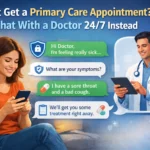 Can’t Get a Primary Care Appointment? Chat With a Doctor 24/7 Instead