
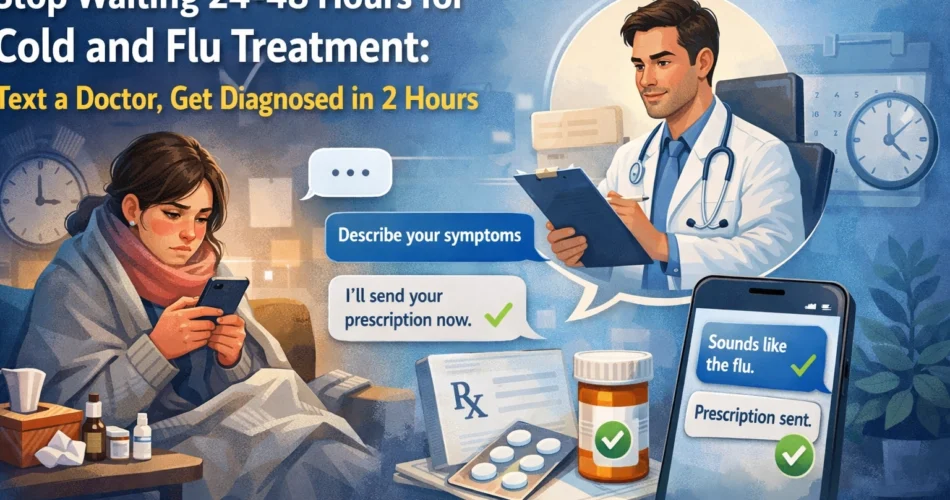
You wake up at 2 AM with a pounding headache, your throat feels like sandpaper, and you're pretty sure you have a fever. Sound familiar? The next step in traditional healthcare means waiting hours in an urgent care waiting room or trying to schedule a same-day appointment that doesn't exist. By the time you actually see a doctor, you've suffered through another 24-48 hours of miserable symptoms.
There's a better way. Text-based telehealth has fundamentally changed how quickly you can get diagnosed and treated for common conditions like cold, flu, sinus infections, and strep throat. Instead of waiting days, you can receive a professional diagnosis and treatment plan in under two hours: all from your phone.
Why Traditional Cold and Flu Care Takes So Long
The traditional healthcare system wasn't designed for speed. When you develop cold or flu symptoms, your options are limited and time-consuming:
Urgent care clinics often have 2-3 hour wait times, especially during peak flu season. You sit in a waiting room full of other sick people, potentially exposing yourself to additional illnesses.
Primary care appointments typically require scheduling 24-48 hours in advance: if your doctor even has availability. Many practices are booked weeks out.
Emergency rooms should be reserved for true emergencies, but many people resort to the ER for flu-like symptoms when they can't access other care. The wait can exceed 4-5 hours, and the bill will reflect emergency-level pricing.
The irony? Most cold and flu diagnoses don't require extensive physical examination. Doctors primarily rely on your symptom description, medical history, and timeline to make an accurate diagnosis.

How Text-Based Urgent Care Works
Online urgent care through secure medical messaging eliminates the traditional bottlenecks. Here's how the process actually works:
Step 1: Submit Your Symptoms (5-10 minutes)
You text your symptoms, medical history, and any relevant details to a licensed doctor through a HIPAA-compliant platform. This includes information about when symptoms started, their severity, your temperature if you've measured it, and any medications you're currently taking.
Step 2: Doctor Review (Under 2 hours)
A board-certified physician reviews your case and typically responds within two hours. The doctor may ask follow-up questions via text to clarify symptoms or gather additional information needed for diagnosis.
Step 3: Diagnosis and Treatment Plan
Once the doctor has sufficient information, you'll receive a diagnosis and treatment plan via secure text. If appropriate, the doctor can prescribe medication and send the prescription directly to your preferred pharmacy.
Step 4: Follow-up Care
If your symptoms worsen or don't improve, you can continue texting with your doctor for ongoing care: no need to start the process over with a new provider.
Research shows that telemedicine can diagnose cold and flu significantly faster than in-person visits, with providers available to assess symptoms within minutes in many cases. The diagnostic process focuses on detailed symptom reporting rather than physical examination, which makes text-based care particularly effective for respiratory illnesses.
Common Conditions Diagnosed Through Text-Based Care
Text-based urgent care isn't limited to just cold and flu. Doctors can diagnose and treat a range of conditions through secure medical messaging:
Cold, Flu, and COVID
Upper respiratory infections share similar symptoms: fever, cough, congestion, body aches. Doctors can differentiate between these conditions based on symptom patterns and may recommend testing when appropriate.
Sinus Infections
Prolonged congestion, facial pressure, and discolored nasal discharge indicate sinusitis. If bacterial infection is suspected, doctors can prescribe antibiotics online without an in-person visit.
Strep Throat
Severe sore throat, difficulty swallowing, and swollen lymph nodes are hallmark strep symptoms. While strep typically requires a rapid test for confirmation, doctors can assess symptoms and recommend testing locations or provide presumptive treatment in certain situations.
Pink Eye (Conjunctivitis)
Redness, discharge, and irritation in one or both eyes can indicate bacterial or viral conjunctivitis. Photos sent via text help doctors assess the condition and prescribe appropriate treatment.

The Advantages of Text-Based Treatment vs. Video Calls
Many telehealth platforms rely on video consultations, but text-based care offers distinct advantages for urgent care conditions:
No scheduling required – You don't need to coordinate a specific time when both you and the doctor are available for a video call. Text your symptoms whenever symptoms appear, and the doctor responds when available.
Better for feeling miserable – When you're sick, the last thing you want to do is shower, make yourself presentable, and appear on video. Text-based care means you can seek treatment from bed in your pajamas.
Asynchronous communication – You can provide thorough, detailed information about your symptoms without feeling rushed. Doctors can review your case carefully and respond with comprehensive guidance.
Documentation built-in – Your entire conversation is documented and searchable, making it easy to reference instructions or follow-up guidance later.
Privacy – Not everyone has a private space available for a video consultation. Text-based care works anywhere you can use your phone.
When to Text a Doctor for Cold and Flu Symptoms
Not every sniffle requires medical attention, but certain symptoms warrant prompt evaluation:
Seek treatment within 48 hours if you experience:
- Fever above 100.4°F lasting more than 2 days
- Severe sore throat with difficulty swallowing
- Persistent cough producing colored mucus
- Facial pain or pressure suggesting sinus infection
- Symptoms that worsen after initial improvement
- Difficulty breathing or chest pain
Text a doctor immediately if you notice:
- High fever (103°F or higher) that doesn't respond to medication
- Severe headache with stiff neck
- Confusion or altered mental state
- Signs of dehydration (dark urine, dizziness, rapid heartbeat)
Getting early treatment matters. Studies show that antiviral medications for flu work best when started within 48 hours of symptom onset. Strep throat treatment with antibiotics can prevent complications and reduce contagious period. Bacterial sinus infections respond better to treatment when addressed early rather than allowed to progress.

The Real Cost of Waiting vs. Immediate Text-Based Care
Time is money, especially when you're sick. Consider the true cost of traditional urgent care:
Traditional Urgent Care:
- Average wait time: 2-3 hours
- Travel time: 30-60 minutes round trip
- Co-pay: $50-$150 (depending on insurance)
- Time off work: 3-4 hours minimum
- Risk of exposure to other illnesses: High
Text-Based Urgent Care:
- Wait time for response: Under 2 hours
- Travel time: Zero
- Flat rate cost: $39.99
- Time commitment: 10-15 minutes to submit symptoms
- Exposure risk: None
For many people, the convenience factor alone justifies text-based urgent care. Add the cost savings and faster treatment, and it becomes the clear choice for non-emergency conditions.
24/7 Availability When You Need It Most
Cold and flu don't respect business hours. Symptoms often worsen at night or over weekends when traditional medical offices are closed. 24/7 telehealth access means you can get care when you actually need it:
Night and weekend care – Text your symptoms at 2 AM on a Saturday and receive a response within two hours, not Monday morning.
Holiday coverage – Medical issues don't take holidays off, and neither do telehealth doctors.
Travel support – Sick while traveling? Text a doctor for treatment without searching for an urgent care clinic in an unfamiliar city.
What Happens After Your Text Consultation
Once you receive your diagnosis and treatment plan, the process is straightforward:
Prescriptions go directly to your chosen pharmacy, typically ready for pickup within hours. Many pharmacies offer delivery services, so you don't even need to leave home.
Follow-up care is included. If symptoms don't improve or you have questions about your treatment, you can text the doctor again without additional charges for follow-up within the care window.
Medical records are maintained securely in your account, making it easy to track your health history and share information with your primary care provider if needed.

Getting Started with Text-Based Urgent Care
The process is simpler than you might think. No complicated registration, no appointment scheduling, and no insurance requirements. You text your symptoms, a licensed doctor reviews your case, and you receive a diagnosis and treatment plan: all within two hours.
Platforms like ChatWithDr specialize in text-based urgent care for common conditions including cold, flu, sinus infections, strep throat, UTIs, and more. The flat-rate pricing model ($39.99) means you know exactly what you'll pay before starting your consultation.
The Bottom Line
The 24-48 hour wait for cold and flu treatment is outdated. Text-based telehealth provides faster, more convenient, and often more affordable care for common urgent care conditions. When you're feeling miserable with flu symptoms, the last thing you want to do is sit in a waiting room for hours. Text a doctor, receive your diagnosis and treatment plan within two hours, and start feeling better sooner.
Ready to skip the waiting room? Get started with online urgent care and text a doctor about your symptoms today.
Disclaimer: This information is not a substitute for professional medical advice, diagnosis, or treatment. Always seek the advice of your physician or qualified health provider with questions regarding medical conditions or treatments.
Related posts:
 Tonsillitis vs Strep Throat What’s the Real Difference
  Strep Throat vs Sore Throat: How to Tell the Difference
  Strep Throat Symptoms? Get Fast Treatment with Text-Only Medical Chat
  Strep Throat Treatment Online: 7 Symptoms That Need a Doctor (Not the ER)
  How long does strep last: Timeline, Causes, and Quick Relief