
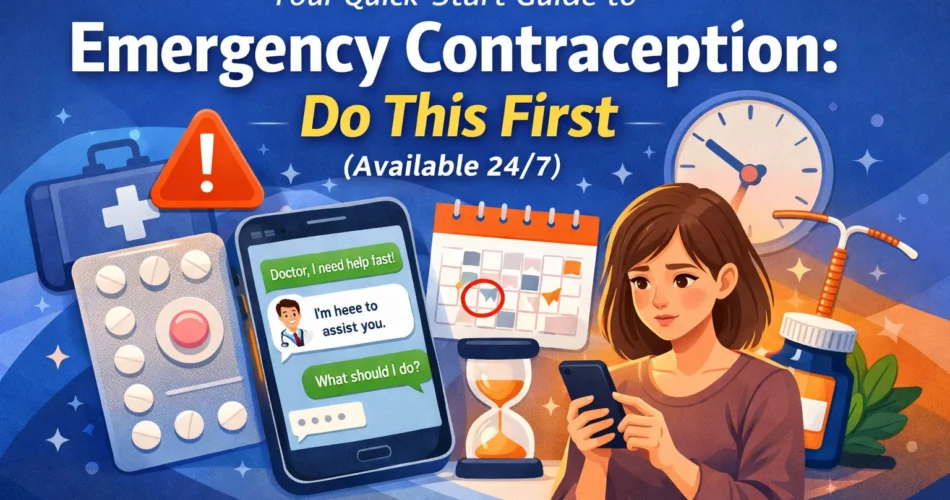
When you need emergency contraception, time matters. Whether the condom broke, you missed birth control pills, or you had unprotected sex, knowing exactly what to do in the first few hours can make all the difference. This guide walks you through your immediate next steps and all available options so you can make informed decisions quickly.
Your First Move: Get Emergency Contraception ASAP
Start emergency contraception as soon as possible: ideally within the first 24 hours after unprotected sex, but no later than 5 days. The sooner you take it, the more effective it will be at preventing pregnancy.
The most accessible option available right now is levonorgestrel, commonly known as Plan B One-Step. You can walk into any pharmacy: CVS, Walgreens, Target, or your local drugstore: and buy it over the counter without a prescription, ID, or age restriction. No appointment needed. No questions asked.
Here's what makes Plan B your go-to first choice:
- Available 24/7 at most pharmacies
- No prescription required
- Works for up to 72 hours after unprotected sex
- Single-dose pill (just one pill to take)
- Generally costs between $40-$50
Take it as soon as you can get your hands on it. Don't wait until morning if it's the middle of the night. Most 24-hour pharmacies stock emergency contraception in the family planning aisle or behind the pharmacy counter.

Understanding Your Emergency Contraception Options
While Plan B is the most accessible option, it's not your only one. Knowing all your choices helps you pick the most effective solution for your situation.
Levonorgestrel Pills (Plan B, AfterPill, Take Action)
Effectiveness: About 89% effective when taken within 72 hours, but effectiveness decreases over time
How it works: Levonorgestrel prevents or delays ovulation. If you've already ovulated, it won't work. It does not terminate an existing pregnancy.
Timing: Most effective within the first 24 hours; can be taken up to 3 days (72 hours) after unprotected sex
Availability: Over-the-counter at pharmacies, no age restrictions
Important note: If you weigh over 165 pounds, levonorgestrel may be less effective. Consider Ella or a copper IUD instead.
Ulipristal Acetate (Ella)
Effectiveness: More effective than levonorgestrel, especially between 72-120 hours after unprotected sex
How it works: Delays ovulation more effectively than levonorgestrel and maintains effectiveness longer
Timing: Can be taken up to 5 days (120 hours) after unprotected sex with consistent effectiveness
Availability: Requires a prescription from a healthcare provider
Why choose Ella: If you're beyond the 72-hour window or if you weigh over 165 pounds, Ella is your better bet. You can get a prescription through text-based consultations with services like ChatWithDr's online birth control platform, available 24/7 without waiting rooms or appointments.

Copper Intrauterine Device (Paragard)
Effectiveness: Over 99% effective: the most effective emergency contraception available
How it works: The copper creates an environment toxic to sperm and eggs, preventing fertilization. It also prevents implantation if fertilization has already occurred.
Timing: Must be inserted by a healthcare provider within 5 days (120 hours) of unprotected sex
Bonus: After preventing pregnancy, it provides ongoing birth control for up to 10-12 years
Consider the copper IUD if:
- You want the most effective emergency contraception
- You're also looking for long-term birth control
- You can get an appointment with a healthcare provider within 5 days
The copper IUD is the only IUD approved for emergency contraception. Hormonal IUDs like Mirena or Kyleena don't work for this purpose.
How Emergency Contraception Actually Works
Emergency contraception pills primarily work by delaying or preventing ovulation. If you haven't ovulated yet, these medications stop your ovary from releasing an egg. No egg means no chance of fertilization.
Emergency contraception does not cause an abortion. If you're already pregnant, these medications won't affect the pregnancy. They prevent pregnancy from happening in the first place: they don't terminate existing pregnancies.
The copper IUD works differently. It creates an inhospitable environment that prevents sperm from fertilizing an egg and also prevents a fertilized egg from implanting in the uterus.
What to Do After Taking Emergency Contraception
Taking emergency contraception is just the first step. Here's what comes next:
Resume or Start Regular Birth Control
You can start or continue using your regular birth control method the same day you take the emergency contraceptive pill. Don't wait.
For the next 7 days:
- Use condoms or other barrier methods during sex
- Consider your regular birth control as backup only during this week
- Or abstain from sexual intercourse to be extra cautious
If you're not currently on birth control and want ongoing protection, now is a perfect time to start. You can chat with doctors online about birth control options through secure text messaging: no video calls required.

Expect Some Side Effects
Emergency contraception can cause temporary side effects:
- Nausea or vomiting (take with food to minimize this)
- Irregular bleeding or spotting
- Breast tenderness
- Headache
- Fatigue or dizziness
- Changes to your next period (it might be earlier, later, heavier, or lighter)
If you vomit within 2 hours of taking the pill, contact a healthcare provider. You may need to take another dose.
Take a Pregnancy Test
Your next period should arrive within 3 weeks of taking emergency contraception. If it doesn't:
Take a pregnancy test if:
- Your period is more than a week late
- Your period is significantly lighter than normal
- You have pregnancy symptoms (nausea, breast tenderness, fatigue)
You can take a home pregnancy test about 3 weeks after unprotected sex for accurate results. If you have questions about test results or need guidance, text-based consultations with doctors are available 24/7.
Common Questions About Emergency Contraception
Can I take emergency contraception if I'm on birth control?
Yes. If you missed pills, had vomiting or diarrhea, or took medications that interfere with birth control, emergency contraception adds extra protection.
How often can I use emergency contraception?
While it's safe to use more than once, it's not designed as regular birth control. It's less effective than consistent contraceptive methods and causes more side effects. If you find yourself needing emergency contraception frequently, consider speaking with a healthcare provider about more reliable ongoing birth control options.
Does emergency contraception protect against STIs?
No. Emergency contraception only prevents pregnancy. It does not protect against sexually transmitted infections. Only condoms provide STI protection. If you're concerned about STI exposure, consider getting tested through online STD testing services.
Will emergency contraception affect my fertility?
No. Emergency contraception does not cause long-term fertility problems. Your ability to get pregnant returns immediately: which is why starting regular birth control right away is important.

When You Need Help Right Now
Emergency contraception situations rarely happen during business hours. When you need medical guidance at 2 AM on a Saturday or have questions about which option is right for you, waiting until Monday isn't realistic.
Text-based telehealth platforms provide immediate access to licensed healthcare providers who can:
- Prescribe Ella (ulipristal acetate) if you're beyond the 72-hour window
- Answer questions about interactions with other medications
- Discuss ongoing birth control options
- Provide guidance if you're experiencing side effects
Through ChatWithDr's 24/7 telehealth platform, you can chat with licensed doctors through secure medical messaging anytime: no video calls, no waiting rooms, just straightforward answers when you need them.
The Bottom Line on Emergency Contraception
If you've had unprotected sex or experienced contraceptive failure, don't panic: but do act quickly:
- Within 24 hours: Get Plan B (levonorgestrel) from any pharmacy: it's over-the-counter and works best immediately
- Within 72 hours: Plan B is still an option, but consider getting a prescription for Ella for better effectiveness
- Within 5 days: Ella or a copper IUD are your options; the copper IUD is the most effective choice
- After taking emergency contraception: Resume regular birth control immediately and use backup protection for 7 days
- Three weeks later: Take a pregnancy test if your period hasn't arrived
Emergency contraception is extremely effective when used correctly and promptly. The key is knowing your options and acting fast. Whether you grab Plan B from your local pharmacy at midnight or text with a doctor to get an Ella prescription delivered to your door, you have multiple paths to protecting yourself from unintended pregnancy.
Remember: Emergency contraception is for emergencies. For ongoing protection, explore regular birth control methods that fit your lifestyle, health needs, and preferences.
Disclaimer: This information is not a substitute for professional medical advice, diagnosis, or treatment. Always seek the advice of your physician or qualified health provider with questions regarding medical conditions or treatments.
Related posts:
 Birth Control Options and Side Effects: Your Complete, Click-Worthy Guide
  How to Get Emergency Contraception Online in Under 2 Hours (Fast & Private)
  How to Get Emergency Contraception Online, Fast, Private, and Affordable (2026 Guide)
  Emergency Contraception Online: Private and Fast Care via Text
  Period vs Pregnancy Symptoms A Clear Comparison Guide