
Feeling sick and needing a doctor right now isn't a future fantasy—it's today's reality. The great news is that getting a same day virtual doctor appointment has never been easier. What used to be a niche service is now a mainstream way to handle common, non-emergency health problems right from your phone or computer.
Why Instant Healthcare Is the New Normal
Remember the days of waiting a week for a doctor's appointment just to deal with a sudden sore throat or a cough that won't quit? Those days are fading fast. We expect everything else in our lives to be instant—from ordering groceries to managing our finances—so why should seeing a doctor be any different?
This demand for immediate care isn't just about cool technology; it's about making healthcare fit into our chaotic lives. A same day virtual doctor appointment tears down the old barriers.
- It's Just More Convenient: You don't have to take time off work, find a babysitter, or drive to a clinic. You can talk to a doctor from your couch, your office, or even while you're traveling.
- It's Incredibly Fast: For straightforward issues like a sinus infection or a urinary tract infection (UTI), you can often get a diagnosis and a prescription sent to your pharmacy in hours, not days.
- It's Accessible to More People: Telehealth is a lifeline for people in rural areas, those with mobility challenges, or anyone who simply can't get to an in-person appointment quickly.
This isn't just a trend; a massive infrastructure is growing to support it. Experts predict telehealth could soon handle 25–30% of all medical visits in the U.S. That makes sense when you realize nearly 79% of U.S. hospitals already have telehealth systems running. If you're curious, you can explore more about these healthcare trends and what they mean for the future.
The bottom line is simple: when you feel sick, you deserve to be heard quickly. The healthcare system is finally catching up, making fast, reliable medical advice a reality for millions.
This shift means you no longer have to decide between suffering through it or losing half your day at an urgent care clinic. Now, you can get the professional medical help you need, right when you need it.
How to Find and Book Your Appointment Today
When you’re not feeling well, the last thing you want is a scavenger hunt to find a doctor. Getting a same day virtual doctor appointment should be simple, and thankfully, it is—if you know where to look and what to have ready.
Most people instinctively turn to a search engine, but there’s a smarter way to start. Your health insurance provider is often the best first stop. Check their website or app for telehealth services or partners. This is usually the most affordable route because your copay is already set, and there are no surprise bills later.
Your Go-To Options for Quick Booking
If your insurance portal isn’t an option or you need another path, several top-notch services specialize in immediate virtual care. Think of them as digital urgent care clinics, open for business whenever you need them.
- Dedicated Telehealth Platforms: Services like Teladoc, Amwell, or Doctor on Demand are built from the ground up for quick, convenient virtual visits. They have huge networks of doctors available 24/7.
- Direct Provider Services: Many hospital systems and major clinic networks now have their own virtual care portals. This is a fantastic option if you want to keep your care within a system you already know and trust.
It really is a streamlined process. You go from feeling sick to getting professional medical advice in just a few quick steps.
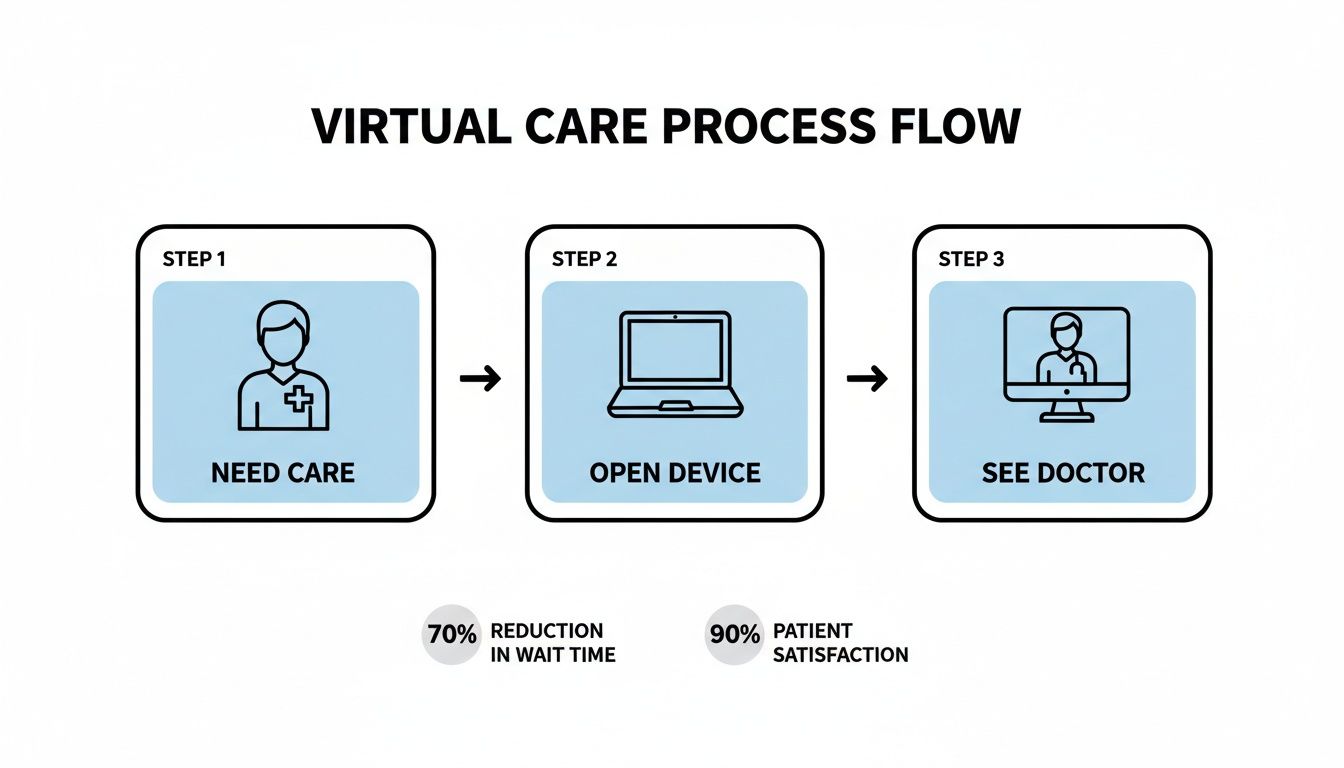
As the chart shows, the traditional hurdles of scheduling and travel are gone. It’s as simple as grabbing your device and connecting with a doctor.
Prepare for a Smooth Appointment
A little bit of prep work goes a long way. Before you even click "book," take a few minutes to gather your key details. This ensures your doctor gets the full picture and can give you an accurate diagnosis and treatment plan right away.
I’ve learned to keep a simple checklist for every virtual visit. It’s the best way to avoid that frustrating moment after the call ends when you realize, "Oh, I forgot to ask about…"
Pro Tip: Keep a running note on your phone with your current medications, any allergies you have, and your pharmacy’s phone number. It’s a lifesaver when you’re trying to book an appointment quickly and don't want to hunt down information.
The Essential Pre-Appointment Checklist
Having this information ready will make booking and the actual consultation so much smoother.
- Symptom Summary: Jot down what you’re feeling, when the symptoms started, and anything that makes them better or worse. Instead of just saying "sore throat," try something more specific like, "Sore throat started yesterday, much worse when I swallow, but no fever."
- Medication and Allergy List: Don’t forget anything! Include all prescriptions, over-the-counter drugs, and even vitamins or supplements you take regularly.
- Pharmacy Details: Have the name, address, and phone number of your go-to pharmacy on hand. This is non-negotiable if you think you’ll need an e-prescription.
- Insurance Information: Keep your insurance card nearby. You’ll definitely need your member ID to process the visit and handle payment.
With these details in hand, you're all set to schedule your visit. Many platforms, including our service at ChatWithDr, let you book a consultation and enter this information into a secure, HIPAA-compliant form in just a few minutes. A little prep turns a stressful task into a simple one.
What Really Happens During a Virtual Consultation
If you’ve never had a same day virtual doctor appointment, the whole idea might feel a bit strange. What actually goes on behind the screen? Let's pull back the curtain so you know exactly what to expect from the moment you log in.

After joining the session, you'll usually land in a "virtual waiting room." Think of it as a secure, private digital space where you hang out for a moment before the doctor connects. It’s the perfect time to give your notes one last look.
The Consultation and Virtual Exam
Once the doctor appears, the conversation will feel surprisingly similar to an office visit. They’ll ask about what’s bothering you, your medical history, and any medications you’re taking. The main difference, of course, is the "virtual physical exam"—and it’s more effective than you might think.
A doctor might ask you to:
- Show a Physical Symptom: Use your camera to give them a clear view of a skin rash, a swollen ankle, or the back of your throat.
- Demonstrate Mobility: You could be asked to move an arm or leg to show your range of motion or walk a few steps so they can check your balance.
- Describe Sensations: Getting specific about what you feel is crucial. Is it a sharp, stabbing pain or more of a dull ache? Clear descriptions help them narrow things down.
For mental health concerns, the process is similar, focusing on targeted questions and observation. Understanding the structure of an online mental health assessment can give you a good idea of what that conversation looks like.
The secret to a successful virtual visit is communication. Be specific. Instead of just saying "I feel sick," try something like, "I have a pounding headache right above my eyes and my temperature is 101°F." That level of detail is exactly what a physician needs to make an informed decision.
Telehealth isn't just a niche service anymore; it's gone global. Across OECD countries, the average number of teleconsultations shot up from 0.6 per patient in 2019 to 1.4 by 2021. By that year, virtual visits made up about 19% of all doctor consultations. This massive shift shows just how much patients and doctors have come to trust virtual care.
Outcomes and Next Steps
After you’ve discussed your symptoms and gone through the virtual exam, the doctor will give you a diagnosis and a clear treatment plan. For most common issues, this whole process wraps up in about 10-15 minutes.
Here’s what usually happens next:
- E-Prescription: If you need medication, they’ll send a prescription electronically straight to your pharmacy of choice.
- Actionable Advice: You’ll get straightforward instructions for at-home care, like getting more rest, staying hydrated, or using specific over-the-counter remedies.
- Referral or Follow-Up: In some cases, the doctor might suggest you see a specialist or schedule another virtual visit if your symptoms don’t improve.
These platforms are built for efficiency. To see a detailed example of how a text-based consultation flows from start to finish, you can learn more about how it works. The whole point is to get you a solid plan and the treatment you need, all without leaving your couch.
Figuring Out the Cost: Insurance and Payment Options
Let's talk money. Navigating the financial side of a same day virtual doctor appointment can feel like a headache, but it’s usually more straightforward than you think. The biggest question is always about cost, and knowing your options upfront means you get the care you need without any surprise bills later on.
A lot of people think telehealth is expensive if they're not using insurance, but that's a common misconception. The final price really comes down to two things: whether you're using your insurance plan or just paying directly.
Using Your Health Insurance
If you have health insurance, your first move should always be to check your plan. These days, most major insurers cover telehealth visits just like they would a regular in-person appointment. That usually means you'll only be on the hook for your standard copay.
Still, coverage isn't always identical from one plan to the next, so it’s smart to confirm the details before you book. A quick call to your insurance company or a peek at their online portal can clear things up.
You’ll want to know:
- Your Copay: This is typically a flat fee, often somewhere between $25 to $75, depending on your plan.
- Deductible Rules: Some plans might require you to meet your annual deductible before they start covering the visit's cost.
- In-Network Platforms: Make sure the telehealth service you choose is "in-network" with your insurer, otherwise, you could be stuck with the full bill.
Paying Out of Pocket
What if you don't have insurance, or just prefer not to use it? No problem. Many virtual care platforms offer simple, flat-rate pricing, which is honestly one of the biggest perks of paying directly. You know exactly what you’ll pay before the consultation even starts.
For instance, a service like ChatWithDr keeps it simple with a single flat fee for a consultation, making it predictable and affordable. When you're choosing a platform, you also want to be sure they take your privacy seriously. Secure platforms rely on things like HIPAA compliant chatbot solutions to keep your information safe.
What to Expect Without Insurance:
For a standard consultation—think sinus infection, UTI, or a nasty cold—you can expect to pay anywhere from $30 to $150. This fee almost always includes the doctor's diagnosis, a full treatment plan, and an e-prescription if it’s needed.
Just remember, that one-time fee covers the doctor's time and expertise. The actual cost of any medicine they prescribe is a separate charge you'll handle directly with your pharmacy.
How You Can Pay
Flexible payment options make everything easier. The best telehealth services accept a few different payment methods to make sure you're covered.
Most platforms will accept:
- Major Credit and Debit Cards: This is the most common and easiest way to pay.
- Health Savings Accounts (HSA): Perfect for using pre-tax funds set aside for medical expenses.
- Flexible Spending Accounts (FSA): Another great option for using pre-tax money from an employer-offered account.
Using your HSA or FSA card is a savvy way to pay for your same day virtual doctor appointment. You're essentially using tax-advantaged money that you’ve already earmarked for your health.
When to Choose Virtual Care and When to Go In–Person
When you're feeling under the weather, figuring out whether to book a same day virtual doctor appointment or head to a clinic can be a tough call. Telehealth is a fantastic tool for a lot of common problems, but it definitely has its limits. Knowing when to use it is the key to getting the right care, right when you need it.
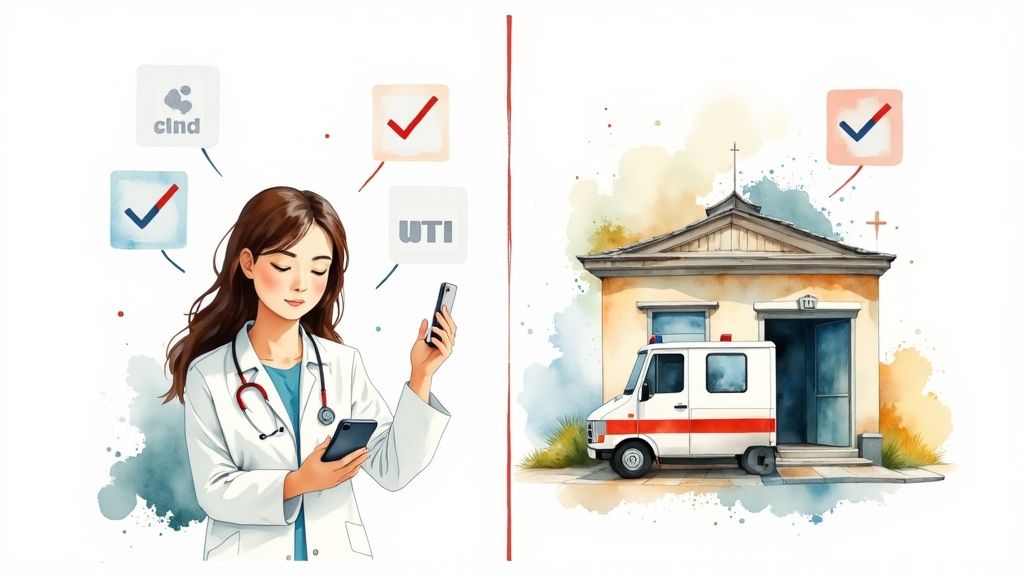
The rule of thumb is pretty simple: if your issue doesn't need a hands-on physical exam or immediate, complex tests, virtual care is probably a great fit. Think of it as your first stop for straightforward, non-life-threatening health concerns.
Conditions Perfect for a Virtual Visit
A virtual appointment really shines when you're dealing with symptoms a doctor can confidently assess just by talking to you and looking at you through your camera. This is where telehealth is at its most effective.
You should feel confident booking a virtual visit for things like:
- Cold and Flu Symptoms: That nagging cough, sore throat, congestion, or a mild fever can almost always be handled remotely.
- Sinus Infections: The classic facial pressure, headache, and stuffy nose are tell-tale signs a doctor can easily diagnose online.
- Urinary Tract Infections (UTIs): Just describing the unmistakable symptoms of a UTI is usually all a doctor needs to prescribe the right antibiotic.
- Mild Skin Conditions: Rashes, acne flare-ups, eczema, or bug bites are perfect for a visual diagnosis—just point your camera at the problem area.
- Allergies: If seasonal allergies have you miserable, a virtual doctor can help you manage your symptoms or refill your prescriptions in minutes.
These are just a handful of examples. Many telehealth platforms offer comprehensive online urgent care for dozens of common ailments, making it an incredibly powerful way to get fast relief.
The desire for this kind of convenience is skyrocketing. Recent research shows that roughly 24% of patients would actually switch doctors just to have virtual care options. People clearly want immediate, accessible healthcare.
When You Absolutely Need In-Person Care
As much of a game-changer as virtual care is, it's not a substitute for the emergency room or situations that demand a physical examination. Certain red-flag symptoms mean you should head straight to an urgent care clinic or ER, no questions asked.
Don’t even think about a virtual appointment if you’re experiencing:
- Chest pain or difficulty breathing: These can be signs of a heart attack or another serious heart or lung issue.
- Signs of a stroke: This includes sudden numbness on one side of your body, slurred speech, or confusion.
- Serious injuries: Broken bones, deep cuts that might need stitches, or severe burns all require hands-on medical care.
- High fever: A fever over 103°F in an adult or any fever in a newborn needs an in-person evaluation.
- Severe abdominal pain: Intense, localized pain could signal something serious like appendicitis.
To make it even clearer, here’s a quick guide to help you decide on the spot.
Virtual Care vs. In-Person Emergency Visit
| Symptom/Condition | Best for Same-Day Virtual Appointment | Requires In-Person Emergency Care |
|---|---|---|
| Breathing Issues | Mild congestion from a cold or allergies. | Shortness of breath, wheezing, or chest tightness. |
| Pain | Headaches (without other warning signs), sore throat, muscle aches. | Severe, sudden pain (chest, abdomen), headache with confusion or stiff neck. |
| Injuries | Minor scrapes or bruises that can be shown on camera. | Broken bones, deep cuts, head injuries, severe burns. |
| Fever | Low-grade fever (below 103°F) with cold/flu symptoms in an adult. | High fever (over 103°F), any fever in an infant, fever with a rash. |
| Neurological Symptoms | Dizziness that is mild and brief. | Sudden numbness, weakness on one side, slurred speech, confusion, loss of consciousness. |
| Stomach Issues | Mild nausea, diarrhea, or constipation. | Severe abdominal pain, vomiting blood, signs of dehydration. |
This table should give you a solid starting point, but always trust your gut.
When telehealth is used correctly, patient satisfaction goes through the roof. Some studies have found 55% greater patient satisfaction with virtual visits, and recent 2024 research from Deloitte shows a staggering 94% willingness to reuse virtual care. Patients are happiest when they get the right care, for the right problem, right away. You can dig deeper into the consumer demand for virtual health to see just how big this trend is.
Ultimately, your judgment is the most important factor. If it feels like a real emergency, it probably is. Don't hesitate to seek in-person care. For almost everything else, a same-day virtual visit is an incredibly smart and effective way to get a diagnosis and start feeling better fast.
Common Questions About Same Day Virtual Appointments
Even when you're ready to book a same day virtual doctor appointment, it’s natural to have a few last-minute questions. Knowing the answers ahead of time can make the whole experience feel smoother and give you the confidence that you're making the right choice. Let’s tackle some of the most common ones I hear from patients.
One of the biggest questions is about documentation. Can a virtual doctor actually provide a sick note for work or school? The answer is a simple yes. A telehealth doctor can evaluate your condition just like an in-person physician and, if it’s medically necessary, issue a legitimate doctor's note for your employer or school.
Prescriptions and Technical Glitches
Another frequent concern is how prescriptions work. It's surprisingly seamless. If your doctor decides you need medication, they will electronically send an e-prescription straight to your local pharmacy of choice. You can usually pick it up within a couple of hours, just as you would after a traditional appointment.
But what if the dreaded happens—your internet cuts out mid-consultation? Don't panic. It's a common hiccup, and every reputable telehealth platform has a plan for it.
- Try to Reconnect: Your first move should be to rejoin the session as quickly as you can.
- Expect a Call: If you can't get back online, the doctor will almost always call the phone number you registered with to finish the consultation.
- Contact Support: In the rare case that you and the doctor can't connect, the platform's customer support team will help you reschedule at no extra charge.
You won't be left hanging without a diagnosis. The priority is always continuity of care, even when technology throws a curveball.
One of the most important things for patients to understand is privacy. Legitimate telehealth services use HIPAA-compliant technology. This means your private health information is guarded by the same strict federal laws that protect you in a physical doctor's office. Your consultation is completely private and secure.
How Safe Is Your Data?
It's smart to ask about data security. Any trustworthy telehealth provider invests heavily in top-tier security to protect your sensitive information. This includes things like encrypted messaging and secure video streams, ensuring your conversation is just as private as it would be behind a closed exam room door.
The technology is built to be as secure as it is convenient, giving you the peace of mind that your same day virtual doctor appointment is a safe, protected interaction from start to finish.
Ready for fast, convenient medical care without leaving home? ChatWithDr offers 24/7 text-based consultations with board-certified U.S. doctors for just $39.99. Get a diagnosis, treatment plan, and prescriptions sent to your pharmacy in hours. Start your consultation now at https://chatwithdr.com.