
Introduction
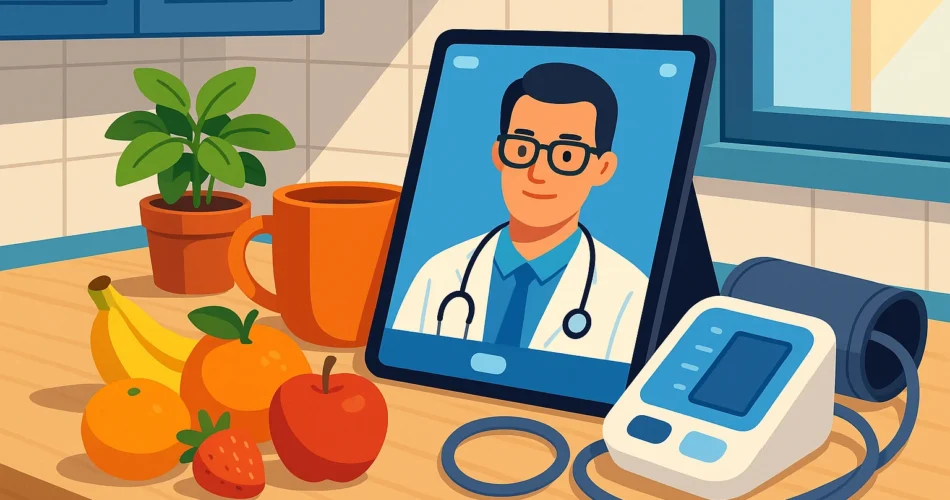
Imagine needing medical advice in the middle of the night, but instead of pacing hospital corridors or navigating traffic, you simply tap on your phone and connect with a professional. That’s the reality unfolding as the healthcare industry evolves — where convenience meets quality through digital means. This introduction dives into how a virtual doctor visit has transformed patient access, efficiency, and outcomes.
To understand why these virtual consultations are gaining momentum, consider that in 2024 approximately 54% of Americans experienced telehealth services, with 116 million users preferring virtual consultations that year Accretive Edge. With projections showing that 25–30% of all U.S. medical visits could be conducted remotely by 2026, the shift from occasional use to mainstream care is unmistakable Accretive Edge. These statistics underscore not only growing demand but the infrastructure and adoption ready to support it.
Healthcare providers are also embracing telemedicine systems broadly. As of 2024, nearly 79% of U.S. hospitals offered telehealth services, while 80% of consumers had used telemedicine at least once Ottehr analysis. Such widespread availability highlights how digital tools are becoming integral to care delivery, streamlining patient flow and expanding reach.
Beyond access, the clinical advantages are equally compelling. A rural health care study in California demonstrated measurable outcomes: managing hypertension and diabetes via remote monitoring and digital coordination led to a reduction of systolic blood pressure by over 20 points and a drop in blood glucose by nearly 4 points within six months Kim et al., 2025. These findings illuminate what’s possible when technology, clinical expertise, and care models align.
Starting from increased patient convenience and reaching into verifiable improvements in chronic disease management, the evolution from traditional appointments to a virtual doctor visit is reshaping how and where care happens. This introduction sets the stage for a deeper dive into the benefits, challenges, and actionable strategies that lie ahead.
Enhancing Accessibility and Efficiency in Care Delivery
Building on the shift toward remote healthcare models and the growing momentum of a virtual doctor visit, this section explores how telehealth is redefining accessibility and streamlining care. In rural or underserved regions, digital platforms enable patients to connect with specialists who would otherwise be unavailable locally. As noted in a recent report, 76% of U.S. hospitals now offer telehealth services, up dramatically from 35% just a decade ago, underscoring a systemic embrace of remote care health.harvard.edu.
Closing Geographic and Socioeconomic Gaps
Patients living in remote areas or facing mobility challenges benefit immensely. Telemedicine eliminates the need for long commutes, parking struggles, or coordinating childcare—elements that traditionally posed barriers to care. One study highlights patients saving substantial time and money: virtual primary care visits can cost as little as $30–50 with insurance, compared to $150–300 in person, with similar time reductions from 60–90 minutes down to 15–20 minutes healthcareplus24.com. This shift not only expands access, but also mitigates hidden costs such as travel and lost wages, estimated at $80–150 per in-person visit healthcareplus24.com.
Improving Chronic Disease Management Through Remote Monitoring
Long-term patient outcomes are bolstered when telehealth incorporates remote patient monitoring (RPM) tools. In a rural California study, participants with hypertension using connected blood pressure devices saw an average systolic reduction of 20 points, while those with diabetes improved by nearly 4 points over six months arxiv.org. This level of responsiveness—combined with the ability to share real-time data, adjust care plans rapidly, and reinforce medication adherence—demonstrates how continuity of care dramatically improves with virtual check-ins drtelx.com.
Streamlining Workflow and Reducing No-Shows
Virtual visits also relieve logistical pressures on both patients and providers. Analytics show that no-show rates for virtual follow-ups can be about 50% lower than in-person appointments drtelx.com. For medical practices, telehealth reduces administrative burdens, lowers operating costs, and optimizes scheduling—boosting productivity while preserving high-quality interactions sermo.com. Providers report being able to see more patients with fewer disruptions, easing strain on busy clinics and enabling better continuity of care sermo.com.
Through improved access, cost savings, and operational efficiencies—especially for managing chronic illnesses—a shift toward remote consultations and real-time monitoring is redefining how and where care happens, setting the stage for further innovation in patient-centered healthcare delivery.
Enhancing Accessibility to Healthcare
The advent of virtual doctor visits has significantly enhanced accessibility to healthcare, particularly for individuals residing in remote or underserved areas. This innovative approach breaks down traditional barriers, offering patients a chance to consult with healthcare professionals from the comfort of their homes. According to a 2022 study by the American Medical Association, nearly 75% of patients appreciated the convenience and accessibility provided by telemedicine platforms [source].
For many, virtual consultations reduce the need for long-distance travel, which can be costly and time-consuming. Consider rural communities that often face a shortage of medical specialists. With virtual doctor visit platforms, these individuals can access expert opinions and ongoing healthcare previously beyond reach. For example, a farmer in a remote area can consult with a cardiologist for routine check-ups without leaving their hometown, thanks to the advancing technology of telemedicine.
Real-World Applications
Real-world applications of virtual doctor visits extend beyond individual convenience. During the COVID-19 pandemic, these services proved indispensable, enabling healthcare continuity as physical clinics decreased in-person appointments. Telehealth platforms saw a dramatic usage increase, with some reporting growth of over 150% in patient traffic [source]. The platforms adapted quickly to provide not only regular consultations but also mental health support, showcasing their versatility and responsiveness to emerging healthcare demands.
One noteworthy platform, ChatWithDr, has made significant strides in improving healthcare access. By offering an intuitive interface that connects patients with a network of licensed professionals, it empowers users with swift and reliable medical advice. This accessibility is critical, especially for those who might be juggling health issues alongside demanding work schedules or family responsibilities.
The integration of virtual doctor visits in healthcare systems has also led to better health outcomes, such as improved chronic disease management. Regular remote monitoring enables doctors to track patient progress, adjust medications as needed, and reduce complications. As a result, patients experience fewer hospital admissions and better overall health.
Quality and Continuity of Care Through Digital Engagement
Building on the evolving landscape of healthcare delivery, this section delves into how clinicians and patients alike benefit from virtual doctor visit models through enhanced care quality and continuity. A notable Deloitte report indicates that about 90% of physicians recognize virtual care’s value in improving patient experience, particularly by increasing access, satisfaction, and communication with care teams. Remote patient monitoring, portals, and wearable integration all play vital roles in managing chronic conditions effectively Deloitte Insights.
Outcomes in Chronic Disease Management
Emerging research supports that virtual care can match or surpass traditional in-person care for chronic disease outcomes. A systematic review spanning studies through mid‑2024 found that outpatient virtual care often corresponds with fewer hospital admissions, emergency department visits, and mortality compared to conventional encounters, though it may generate increased outpatient follow-ups PubMed. Complementing these findings, a retrospective cohort analysis of over 32,000 patients demonstrated that telemedicine use did not raise emergency referrals or hospitalizations. Moreover, providers with higher telemedicine adoption experienced lower referral and hospitalization rates (IRR 0.85 and 0.78, respectively) PubMed.
Technology-Supported Behavior and Education
Patient education delivered virtually has proven to be effective, especially for conditions like diabetes, heart failure, COPD, and IBS. In 11 out of 16 reviewed studies, virtual education interventions achieved significantly better outcomes than usual care, while in the remainder they performed comparably PubMed. These digital approaches enhance self-management and long-term health adherence.
Telemonitoring in Underserved Populations
Recent real-world data underscore the promise of combining virtual visits with remote monitoring for underserved communities. In a rural California program, participants managing hypertension and diabetes experienced substantial health improvements: a mean systolic blood pressure decrease of 20.24 mm Hg and average HbA1c reduction of 3.85 points at six months arXiv. This demonstrates how digitally-enabled care can boost outcomes even where in-person resources are limited.
Fostering Engagement and Satisfaction
More than offering convenience, digital care frameworks foster meaningful engagement. A large survey revealed over 92% of patients felt their virtual clinician was genuinely interested in them, while 91% felt the visit made accessing necessary care easier. Overall satisfaction held firm: 82% agreed their virtual care was as good as an in-person session, suggesting that empathy and connection remain strong in digital formats PubMed. Crucially, technical usability significantly influenced satisfaction—difficulty with platforms reduced patient satisfaction odds by over half PubMed.
Together, these findings highlight how a well-executed virtual doctor visit model, paired with robust technology and ongoing engagement strategies, provides not just an alternative but a powerful complement to traditional care. Implementation should prioritize clarity, empathy, and seamless user experience to ensure outcomes consistent with in‑person visits.
Embracing the Future of Healthcare
As the landscape of healthcare continues to evolve, the option of a virtual doctor visit has emerged as a convenient and effective solution for many patients. With the increasing availability of these digital consultations, individuals can access medical advice without the constraints of geographical barriers or lengthy wait times. This shift not only enhances convenience but also promotes a more proactive approach to personal health management.
Key Takeaways
The rise of virtual doctor visits marks a significant advancement in healthcare, offering numerous benefits such as reduced travel and waiting periods, lower costs, and increased accessibility for remote or marginalized communities. According to a recent study by Harvard Medical School, virtual consultations can reduce healthcare expenditure and improve treatment adherence [source].
Actionable Insights
To maximize the benefits of a virtual doctor visit, patients should ensure they have reliable internet connectivity and a quiet, private space for their consultation. Additionally, it is important to prepare a list of questions or symptoms to discuss with your physician. This proactive approach can lead to more efficient and productive appointments, ultimately enhancing the quality of care received.
A Strong Call to Action
Virtual healthcare is here to stay, and embracing this technology can significantly benefit your health management. To explore more about integrating virtual consultations into your health routine, consider connecting with reliable platforms. For comprehensive support and to experience seamless digital consultations, we highly recommend visiting ChatWithDr. By choosing a trusted service, you can ensure that your healthcare needs are met with care and professionalism.
In conclusion, the benefits of virtual doctor visits are vast and varied, promising a future where healthcare is more accessible, efficient, and personalized. Embrace this new era of healthcare to stay proactive and informed about your health. The future is digital, and with resources like ChatWithDr, you can take the first step towards a healthier tomorrow.