

Quick Snapshot Of TRT Out-Of-Pocket Costs
Kicking off testosterone therapy is a lot like getting a new car road-ready: you schedule a tune-up, run diagnostics, then budget for regular fill-ups. Most patients spend about $100–$250 out of pocket on that first consultation and blood work.
Here’s how it typically breaks down:
- Initial Doctor Consultation: $100–$150
- Comprehensive Lab Panel: $50–$100
- First Prescription Fill: $20–$1,200
Combine those, and month one usually runs around $150–$1,450, plus a follow-up scheduling fee of $0–$50. For instance, a 35-year-old choosing generic injections might see a first-month bill near $350–$450 without insurance.
Next, let’s turn to what your monthly costs look like once you’re up and running.
Average Monthly TRT Cost By Formulation
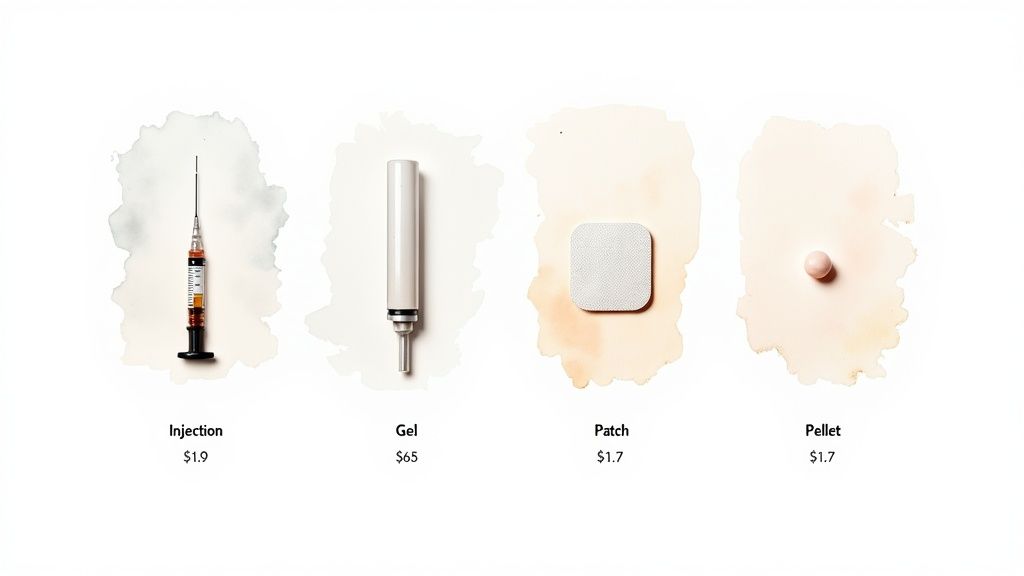
Below is a comparison of common testosterone replacement therapy formulations and their typical out-of-pocket monthly costs in the U.S. without insurance.
| Formulation | Average Monthly Cost |
|---|---|
| Injections | $20–$100 |
| Gels | $200–$500 |
| Patches | $400–$800 |
| Pellets | $800–$1,200 |
This snapshot highlights the spectrum—from budget-friendly shots to premium pellet insertions—so you can plan your wallet accordingly.
Factors That Influence TRT Cost
- Dosage and treatment frequency drive how quickly you go through medication
- Opting for generics instead of brand-name can slash costs by up to 50%
- Local pharmacy dispensing fees typically add $5–$15 per fill
- Market shifts and inventory levels may nudge prices up or down month to month
Even within the same ZIP code, a brand-name gel might top $500 per month, while its generic counterpart could be closer to $250. These figures assume you’re paying entirely out of pocket—using an HSA, FSA, or insurance coverage for TRT often brings that number down.
Armed with these estimates, you’ll have a clear baseline for exploring insurance benefits and cost-saving strategies in the next section.
Understanding Key Concepts
Mapping the costs of TRT feels a lot like eyeing two cars in a showroom. You have your budget-friendly sedan (injectable testosterone) and that sleek luxury model (quick-absorbing gel). Both will get you down the highway, but one comes with more bells and whistles—and a higher price tag.
In reality, your out-of-pocket expenses break down into four main pillars:
- Initial Doctor Visit
- Lab Panels
- Medication Choice
- Ongoing Monitoring
Initial Evaluation And Lab Testing
Your journey usually begins with a visit to a healthcare provider. That first consultation can run anywhere from $100–$250, depending on who you see and where you live.
Next, you’ll need blood work. Labs test hormone levels, liver function, red blood cell counts, and more. Expect a standard panel to cost about $50–$200.
- Initial Consultation: Fees vary by specialist and ZIP code
- Lab Panel: Hormone, lipid, and metabolic tests included
Comparing Treatment Formulations
Here’s where costs can jump. Depending on the form you choose, monthly fees look very different:
- Injectable Testosterone (cypionate or enanthate): $20–$100
- Topical Gels: $200–$500 for the convenience of daily application
- Subdermal Pellets: $800–$1,200 every three to six months, plus a minor procedure fee
By 2024 the U.S. TRT market reached USD 736.1 million and is set for a 3.5% CAGR by 2034. North America drives 57% of growth into 2029, adding USD 461 million at 3.3% CAGR. Learn more about TRT market findings on IntelMarketResearch.
That data puts into perspective why a gel or pellet often costs more. You’re paying for steady absorption and fewer dosing interruptions.
Ongoing Monitoring And Adjustments
Once you start TRT, it’s not a set-and-forget deal. Regular check-ins and lab work are crucial to stay in the safe zone.
- Follow-up Visits: $50–$150 per appointment
- Repeat Labs: $50–$200 each round
Tweak doses? You might add another $100–$200 every cycle for extra blood work or specialist consults. This keeps you on track and avoids guesswork.
For those who prefer remote care, there’s a streamlined, cash-pay option. Learn more about virtual TRT support on ChatWithDr telehealth services.
Factors Driving Pricing
Beyond the basics, a few variables can sway your bottom line:
- Brand vs. Generic: Generics often save you up to 50%
- Dosing Frequency: Daily gels versus weekly injections
- Convenience: Inject at home versus clinic appointments
- Formulation Complexity: Blended gels or compounded lotions
Picture it this way: a single monthly injection is like filling a compact hatchback once. Daily gels? Think topping up a high-performance car every morning.
Putting It All Together
Let’s frame your TRT budget as a simple, four-step roadmap:
- Initial Doctor Visit: $100–$250
- Lab Testing: $50–$200
- Medication: $20–$1,200 (injection, gel, or pellet)
- Follow-up Monitoring: $50–$200 per session
With these line items in hand, you can forecast both your monthly costs and your long-term budget.
Key Takeaways
- Injectables: Lowest upfront cost, but more frequent refills.
- Gels/Patches: Consistent daily dosing, easier routine, higher price.
- Pellets: One procedure every few months—higher initial outlay, fewer touchpoints.
Why Conceptual Clarity Matters
If you understand each piece of the puzzle, you can negotiate smarter, choose the right option, and dodge unwelcome surprises. That knowledge alone can save you hundreds—maybe even thousands—down the road.
Breakdown Of Cost Components
When you track every charge—from your first visit to refill fees—you start to see where your TRT dollars go. This section peels back each line item, so you can plan with confidence.
Initial Consultation And Lab Testing
Your TRT journey kicks off with a thorough evaluation. Expect an in-person consult to run $100–$250, depending on the clinic’s location and the provider’s experience.
Some men choose a telehealth option—platforms like ChatWithDr.com bill a flat $39.99 for the same discussion, minus the drive time.
After the talk comes the blood work. A standard panel runs about $50–$200, covering testosterone, liver function, and blood counts. If you add hormone checks for estrogen or thyroid, tack on $20–$100 per test.
- Initial Consultation: Exam, symptom review, treatment plan
- Standard Lab Panel: Core hormone and safety markers
- Specialized Tests: Estrogen, thyroid, or other targeted panels
Telehealth can save $50–$150 per visit in travel and facility fees. Some clinics even bundle your first consult and follow-ups into a single package, lowering the per-visit price.
Medication Formats And Their Costs
Different TRT methods feel and cost differently. Think of injectables like a no-nonsense sedan—reliable and affordable. Gels are the luxury coupe: smooth ride but pricier. Pellets work like a programmable thermostat, releasing hormone over months.
As costs vary by delivery method, here’s a quick look at typical month-to-month out-of-pocket prices without insurance:
Detailed Monthly Cost by TRT Formulation
| Formulation | Typical Monthly Cost |
|---|---|
| Injection | $20–$105 |
| Gel/Cream | $400–$1,000 |
| Patch | $800 |
| Pellet | $800–$1,200 |
| Oral Tablet | $900–$1,200 |
Keep these figures in mind when selecting your TRT plan.
Additional Monitoring And Follow-Up Fees
Staying on top of your levels is non-negotiable.
- Follow-Up Visits: $50–$150 per appointment
- Repeat Lab Panels: $50–$200 each
- Dose Adjustment Sessions: $100–$200
- Extra Markers: $20–$100 for tests beyond the standard panel
- Specialist Consults: $150–$300 with an endocrinologist
Expert Insight
Monitoring can add up to 20% of your total TRT budget—so factor it in right away.
Understanding Dispensing Fees
Every pharmacy tacks on a dispensing charge. Major chains generally bill $5–$10 per fill, while smaller outlets may ask for as much as $20.
Dispensing fees often represent 5%–10% of your overall cost, especially if you dose daily.
Case Study Of Unexpected Fees
When John switched to weekly injections, he penciled in $245 per month. But after two dose-increase visits and extra thyroid tests, his bill jumped by $180 that quarter.
He now bundles his TRT labs with his annual physical—avoiding surprise line items and keeping his budget on track.
Comparing Injection And Gel Routines
Seeing real numbers side by side can clarify your choice:
Weekly Injection Routine
- Medication: $105
- Lab: $60
- Consult: $80
- Total: $245/month
Daily Gel Routine
- Medication: $700
- Lab: $150
- Consult: $60
- Total: $910/month
The gel plan runs almost four times higher each month, thanks to daily dosing and premium pricing.
Strategies To Optimize Your Budget
Smart planning can shave hundreds off your TRT spend:
- Opt for generic formulations to save up to 50%
- Combine TRT labs with your annual physical
- Tap manufacturer coupons or patient assistance programs
- Explore telehealth options for lower consultation fees
- Negotiate a cash-pay rate on multi-month prescriptions
- Time refills around pharmacy discount days
For an efficient online prescription process, check out our guide to online prescriptions and affordable consultations. Bundling services and planning refill cycles strategically can yield significant savings.
Insurance Coverage And Financial Accounts
Ever been stunned when your pharmacy bill shrank from $1,000 to $50? That’s what smart planning with insurance and financial accounts can deliver.
When I first looked into TRT costs, lab fees, medications, and visits quickly added up. But by leveraging private insurance, Medicare, HSAs, and FSAs, you can turn steep bills into manageable expenses.
Before we dive deeper, let’s unpack the core terms:
- Deductible: The amount you cover before insurance kicks in—typically $500–$1,500 per year.
- Copayment: A flat fee for each office visit or prescription—often $10–$50.
- Coinsurance: Your share of the cost after meeting the deductible—commonly 20% of a lab bill.
- Out-of-Pocket Maximum: Your yearly spending cap—usually $3,000–$6,000.
Most plans have you clear your deductible first. After that, coinsurance applies, and then copays for drugs and office visits drop to a fraction of the sticker price.
Private Insurance Plans
Employer-sponsored plans often split TRT coverage between medical and pharmacy benefits. Checking your formulary reveals tier levels—and the copays tied to each.
Brand-name gels typically live in a higher tier with heftier copays. Opting for a generic can cut your share by up to 50%. And don’t forget: pellets sometimes sit in a separate tier, so double-check before you commit.
| Scenario | Cost Before Insurance | Cost After Insurance |
|---|---|---|
| Monthly Gel Prescription ($1,000) | $1,000 | $50 |
| Injection Regimen ($150) | $150 | $30 |
| Lab Panels ($200) | $200 | $40 |
That table illustrates how coverage can chop your out-of-pocket by 90% or more. Filing claims promptly helps you avoid reimbursement delays.
Deciding between medical and pharmacy benefits is a bit like choosing gas stations—you want the best price, the right pump code.
- Medical benefits handle injectable treatments under codes J3120 or J3145.
- Pharmacy benefits often cover gels and patches.
- Ask your provider for an itemized invoice listing CPT and J codes.
- Submit claims via your insurer’s portal or by mail.
- If you don’t see reimbursement after 30 days, follow up.
- Funnel reimbursement back into your HSA or FSA to drive costs toward zero.
Sarah tapped her HSA to cover $300 in lab work—and walked away with a $0 bill.
With a little foresight, you’ll swap financial stress for health focus.
HSAs And FSAs
Think of your HSA like a no-expiry gift card for medical expenses. FSAs function similarly, though funds generally expire annually. Both let you use pre-tax dollars for TRT costs—labs, visits, and medications included.
- You save 25%–30% when you pay with HSA or FSA funds.
- Upload receipts for quick reimbursement via your plan portal.
- Use your HSA debit card at the pharmacy to bypass out-of-pocket spending.
- Track contributions so you don’t exceed annual limits ($3,850 individual, $7,750 family).
Since HSAs roll over year to year, they’re perfect for covering ongoing monitoring labs without the “use-it-or-lose-it” pressure.
Medicare Coverage
If your TRT is deemed medically necessary, Medicare Part B may cover lab work and doctor visits. You’ll owe 20% coinsurance after meeting the Part B deductible of $233.
Medicare patients often save hundreds on lab testing each year.
Adding a Medigap (Supplemental) plan can soften copays and coinsurance bites—keeping surprises off your bill.
Questions To Ask
You don’t have to guess—get clarity by asking your HR rep or insurer:
- What are my deductible and coinsurance for TRT?
- Which TRT medications are on my preferred pharmacy tier?
- Is step therapy or prior authorization required?
- How many doctor visits and labs are covered each year?
- Can I pay directly at the pharmacy with my HSA or FSA card?
Armed with these answers, you’ll unlock every benefit and keep out-of-pocket costs as low as possible.
Next, we’ll explore even more strategies to trim your TRT spending.
Cost Saving Strategies
If you’re watching every dollar on your testosterone replacement therapy (TRT) journey, these tactics can help you cut costs without sacrificing care.
For instance, a telemedicine subscription like ChatWithDr at $39.99 per visit can replace in-clinic fees of $100–$250, plus you’ll skip gas, parking, and time in traffic. Traditional office visits often come with facility charges and copays that quickly add up.
Telemedicine Versus In-Clinic Visits
Video visits offer a clear, flat fee and no commute. They tend to wrap up faster, too. But if you need pellet insertion or a hands-on exam, an in-person appointment is still the way to go.
No travel time and a $39.99 flat fee
Faster turnaround on labs and prescriptions
Perfect for routine follow-ups and dosage tweaks
Direct physical assessments and immediate procedural support
On-site equipment for pellet insertion or complex cases
Another easy win: choosing a generic testosterone formula. That switch can cut your medication bill by up to 50%. Generics often start around $20 per month versus over $100 for brand-name versions.
Generics deliver the same results at a fraction of the price.
Using Manufacturer Coupons
Most drugmakers offer coupons or discount cards that shave 10%–20% off your out-of-pocket cost. You’ll often find single-use codes on the brand’s website or by signing up for their newsletters.
- Visit the medication brand’s savings portal for coupons.
- Clip the digital code and apply it at checkout.
- Present the discount card to your pharmacist when you pick up.
Timing your refills around pharmacy discount days can lower dispensing fees. Buying a three- or six-month supply usually unlocks deeper per-unit savings—just double-check storage guidelines so your meds stay potent.
| Strategy | Potential Savings |
|---|---|
| Telemedicine Subscription | Up to $200 per visit |
| Generic Formulation | 50% Off Medication |
| Manufacturer Coupons | 10%–20% Per Fill |
| Bulk Ordering | 15% Per Unit Drop |
Negotiating a cash-pay rate for a multi-month script can lock in even lower prices. Many pharmacies tier their discounts at three months or more.
Timing Refills And Cash Pay Negotiation
Every pharmacy runs its own discount cycles. Align refill dates with those sale days—or ask about price-matching programs—and you’ll see extra savings.
Strategic timing and bundling could cut over $500 from your yearly TRT bill.
Mixing telemedicine, generics, and coupons really compounds your savings. Reviewing your quarterly TRT statements helps you spot where to tweak your approach. Even adopting just two strategies can shave off $600 or more in annual out-of-pocket costs.
Key Takeaways
Building a layered approach drives the biggest TRT savings:
- Choose telehealth to dodge hidden facility fees
- Compare generic options before grabbing a brand-name drug
- Subscribe to coupon mailers and loyalty programs
- Bulk order to reduce per-unit prices
Track your out-of-pocket totals each month and adjust before costs spike.
By mixing these tactics, you can save hundreds annually and focus on health, not bills.
Start by adding one new strategy—say, a virtual consult—and layer in the rest over time. Targeting a 30% cut in TRT costs is realistic with smart planning. Experiment, track your results, and refine your personal savings roadmap.
Over a year, combining these methods can save you more than $1,000 in out-of-pocket fees.
Case Study: Save With Combined Methods
Jason’s journey shows how this plays out in real life. He switched to generic injections, clipped manufacturer coupons, and refilled every quarter. His monthly cost dropped from $300 to $90, netting $2,520 in annual savings.
- Switched to generics for the main medication cost cut
- Stacked coupon codes for a 15% discount on each fill
- Bulk quarterly refills to lower dispensing fees
- Overall, Jason slashed over 80% off his yearly TRT expense
Identify which tactics fit your routine and budget. Make small changes, measure the impact, and adjust accordingly. Don’t forget to revisit insurance options every year—coverage and rates can shift. Pairing HSA or FSA funds with these strategies adds yet another layer of savings.
Patient Roadmap To Out Of Pocket Spending
Uncertainty can drain your energy. A well-defined roadmap changes that. It breaks down each step—consultation, labs, treatment—into clear financial signposts.
The graphic below brings those signposts to life.
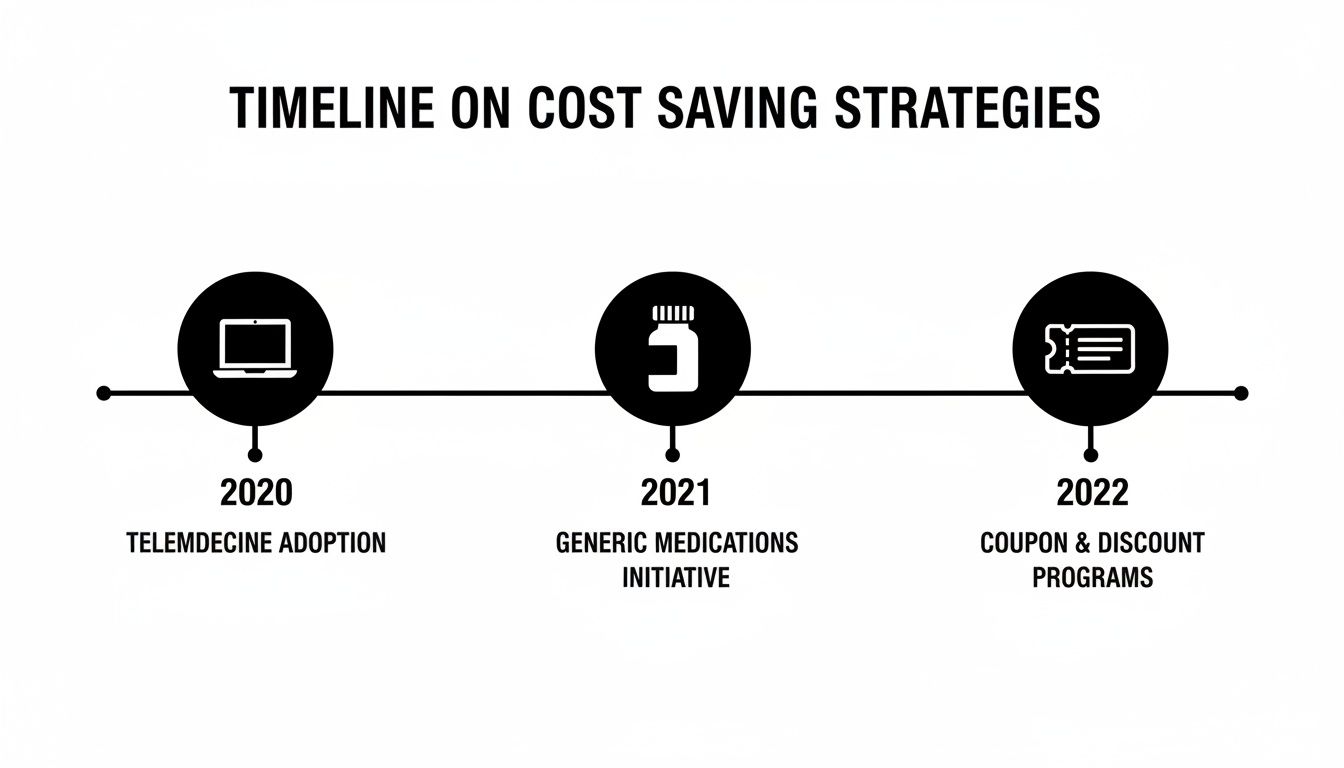
It shows how telemedicine, generics, and coupons can cut your total TRT bill by up to 60%.
Mapping Your Cost Timeline
Think of paying for TRT like riding a rail network. Each stop—your doctor’s consult, your first dose, that three-month lab panel—has a fare you can plan for. Here’s how it lines up:
| Stage | Action | Estimated Cost |
|---|---|---|
| Initial Consultation | Doctor visit and planning | $100–$250 |
| First Dose | Medication purchase | $20–$1,200 |
| Three-Month Lab Check | Follow-up blood panels | $50–$200 |
| Dose Adjustment | Extra consult and testing | $100–$200 |
| Ongoing Monitoring | Regular visits and labs | $50–$150 per visit |
This table helps you predict your out-of-pocket expenses and dodge any unexpected fees.
Planning Your Budget
To get started, jot down your anticipated monthly costs for each milestone. Then, factor in your insurance, plus any HSA or FSA offsets. Before you know it, you’ll have a clear snapshot of what hits your wallet and when.
You can also swing by our patient journey page to see how it works. Doing a quick check here before each step keeps you steady on track.
Practical tip: tack on a 20% cushion for surprise expenses—maybe an extra blood draw or a quick follow-up. Over time, you’ll refine your estimates by comparing actual bills to your plan.
Monitoring And Adjustments
Regular check-ins are non-negotiable. Plan for a lab panel every three months—usually $50–$200, plus a consult fee of $50–$150. If your levels swing out of range, an extra visit might pop your bill by about $100.
As you settle into your routine, costs often taper. Many folks see a monthly spend drop by up to 30% after six months because visits become more predictable and labs move to lower-priced panels.
A few things to remember:
- Pellet therapy often involves bigger one-time charges but fewer appointments.
- Gels and patches may wrap daily costs into a single sticker price.
- Injectable treatments usually mean lower drug costs but more frequent pharmacy trips.
At least once a year, revisit this timeline. Insurance plans shift and market prices change, so adjusting keeps surprises at bay.
Final Takeaways
Breaking down your TRT costs into bite-sized steps turns confusion into confidence. With each appointment and lab draw plotted out, budgeting feels less like guesswork and more like a well-oiled machine.
Kick off your plan by listing upcoming visits and tests, assigning each a price tag, and layering in a safety margin. Then track everything—spreadsheets or budgeting apps both work.
Pair this roadmap with savvy saving moves:
- Review invoices monthly to spot billing errors.
- Shop around pharmacy prices for the best deals.
- Update your budget after every lab or consult.
Now, you have a roadmap to guide your TRT journey—and a clear view of what your pocket will handle next. A solid cost plan puts you firmly on the road to wellness.
Frequently Asked Questions
What Factors Influence TRT Cost?
Think of TRT like caring for a classic car: each service adds a little to the final tab. Your outlay typically includes:
- Initial Evaluation: $100–$250
- Lab Testing: $50–$200
- Medication: $20–$1,200
- Follow-Up Visits: $50–$150
These items stack up much like parts in an engine rebuild.
Does Insurance Typically Cover TRT Treatments?
Insurance can feel like a maze. Injectable testosterone often falls under medical benefits, while gels and patches are billed through pharmacy benefits. Copays, deductibles and tier levels all come into play.
After you hit your deductible, insurance can pick up 70%–90% of costs.
Insurance Coverage Details
Most plans ask for prior authorization on brand-name gels. Generics usually sit in lower tiers, meaning smaller copays. Remember, labs and office visits might still count toward your deductible or out-of-pocket maximum.
- Verify your coverage for relevant CPT and J codes
- Ask if there’s a separate cap for hormone therapies
- Use your HSA or FSA card to cover eligible expenses
How Can I Reduce My Out-Of-Pocket Expenses?
Cutting TRT costs is like trimming a grocery bill—small swaps add up fast. Try these strategies:
- Opt for generic testosterone to save up to 50%
- Schedule telemedicine visits for around $39.99 instead of in-clinic fees
- Clip manufacturer coupons for an extra 10%–20% off
- Bulk-order meds every three to six months to lower per-dose prices
Affordable TRT Formulations
Injectable testosterone usually runs $20–$100 per month. Gels and creams cost $200–$500, while pellets can be $800–$1,200 every few months.
By understanding these ranges, you’ll spot where to negotiate, when to switch, and how to save—without sacrificing quality care.
These FAQ answers offer practical steps to control TRT expenses and avoid surprise charges. With this insight, you can plan your budget and have informed conversations with providers.
Visit ChatWithDr for flat-fee consultations.
Related posts:
 How much does urgent care cost? A Practical Guide to Bills and Savings
  Decoding the Virtual Doctor Visit Cost for Smart Healthcare
  Explore do you need insurance for urgent care and what it means for your visit
  How to Get Medical Care Without Insurance Your Practical Guide
  The 7 Best Online Doctor Services of 2025: A Detailed Review