
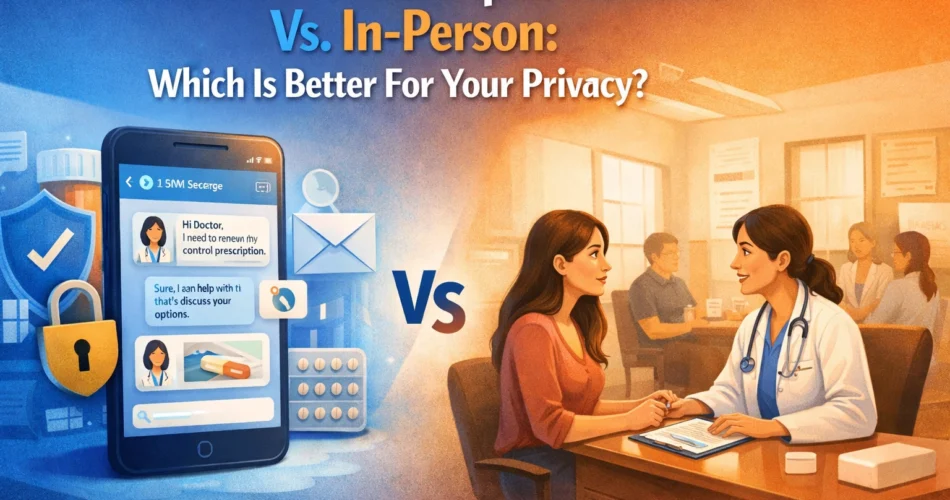
Let's talk about something nobody really wants to discuss but everyone thinks about: privacy when getting birth control. Whether you're 19 and don't want your parents knowing, 35 and prefer to keep your reproductive choices off your insurance statements, or just value discretion in your healthcare decisions, the question of online versus in-person birth control prescriptions isn't just about convenience: it's about control over your personal information.
The telehealth boom has fundamentally changed how we access reproductive healthcare. But with that convenience comes new privacy questions. Is texting with a doctor online actually more private than visiting a clinic? What about those packages arriving at your doorstep? Let's break down the real privacy implications of both options.
The Privacy Advantages of Getting Birth Control Online
Discreet Packaging That Actually Works
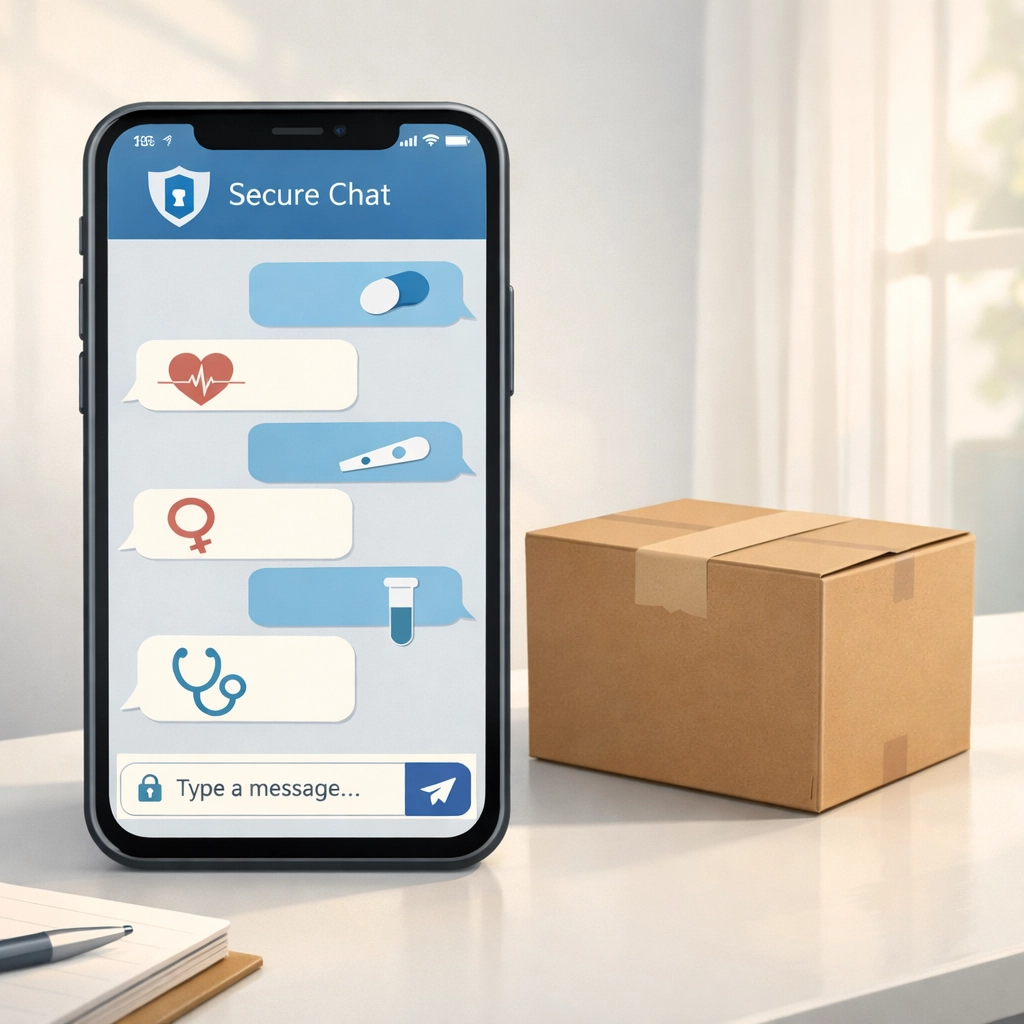
One of the biggest privacy wins with online birth control prescriptions is unmarked, discreet packaging. Most reputable telehealth companies: including services focused on reproductive health: ship medication in plain boxes or envelopes with no indication of what's inside. According to research on telehealth privacy practices, leading services explicitly design packaging to protect patient confidentiality at the household level.
This means no pharmacy labels visible through the bag, no company names that give away the contents, and delivery via standard USPS mail that blends in with everything else arriving at your home. For many people, this is significantly more private than walking out of a pharmacy with a branded bag or picking up a prescription at the counter within earshot of other customers.
No Waiting Room, No Familiar Faces
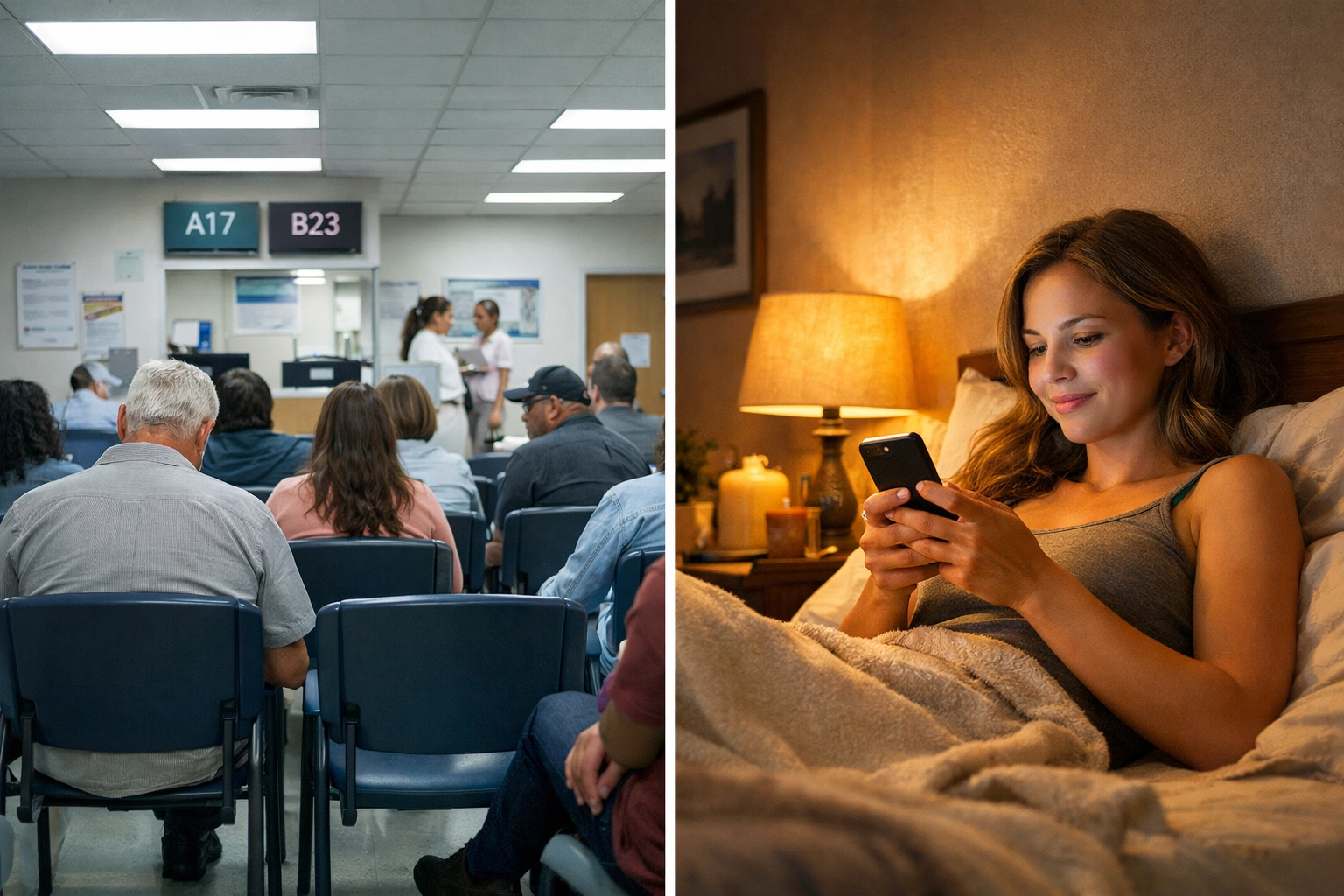
Here's something that doesn't get talked about enough: in-person clinic visits create unavoidable privacy exposures. You might run into your neighbor in the waiting room. Your car might be recognized in the parking lot of a women's health clinic. The receptionist might be your kid's friend's mom. These aren't hypothetical scenarios: they're real privacy concerns, especially in smaller communities.
Text-based consultations eliminate these risks entirely. When you chat with doctors online for birth control, there's no physical location to visit, no waiting room interactions, and no chance encounters. You're consulting with a licensed provider from wherever you feel most comfortable: your bedroom, your car during lunch break, or your living room at midnight.
Keeping Birth Control Off Insurance Records
This is a major privacy factor that often goes unnoticed until it becomes a problem. When you use insurance to cover birth control at an in-person appointment, every detail appears on insurance Explanation of Benefits (EOB) statements. These statements often go to the policyholder: which might be your spouse, your parent, or your employer in some cases.
According to the National Women's Law Center, this is one of the most common ways birth control use is unintentionally disclosed to family members. If you're on your parents' insurance plan, they'll see the claim. If your spouse is the primary on your shared plan, the statement goes to them.
Many online services offer affordable out-of-pocket pricing that makes skipping insurance viable. Some telehealth platforms provide birth control pills for as low as $15-25 per month without insurance. When you pay directly, there's no insurance paper trail: no EOB, no claims record, no potential for unwanted disclosure.
Privacy Considerations for In-Person Birth Control Visits
The Advantage of No Home Delivery
Let's be honest about the one clear privacy advantage in-person visits have: no packages arriving at your home. If you live with roommates who don't respect mail privacy, family members who open packages, or in a situation where mail security is genuinely concerning, picking up your prescription directly eliminates that vulnerability.
Walk-in clinics and traditional doctor visits let you leave with your prescription in hand (or pick it up at the pharmacy immediately). There's no waiting period where a package sits on your porch or in a mailbox accessible to others.
HIPAA Protection at Established Clinics
In-person healthcare facilities have well-established privacy protocols governed by HIPAA regulations. Staff are trained on confidentiality, medical records are secured, and there are decades of privacy frameworks in place. For many people, this established infrastructure feels more trustworthy than newer telehealth platforms.
Organizations like Planned Parenthood and local health departments also offer confidential services with specific protections for minors and young adults seeking birth control without parental notification in states where that's legally permitted.
The Privacy Risks Nobody Mentions
But in-person visits aren't privacy perfect. Waiting rooms and check-in areas often lack real privacy. You're handing your ID and insurance card to front desk staff. In some medical practices, nurses or medical assistants discuss your visit reason in semi-public spaces or over phones where others can hear.
Pharmacy pickups add another layer of exposure. Even if the pharmacist is professional, you're standing at a counter in public, potentially answering questions about your prescription where other customers can hear. And if you use a local pharmacy, repeated pickups create a pattern that pharmacy staff will recognize.
What to Look for in an Online Birth Control Service
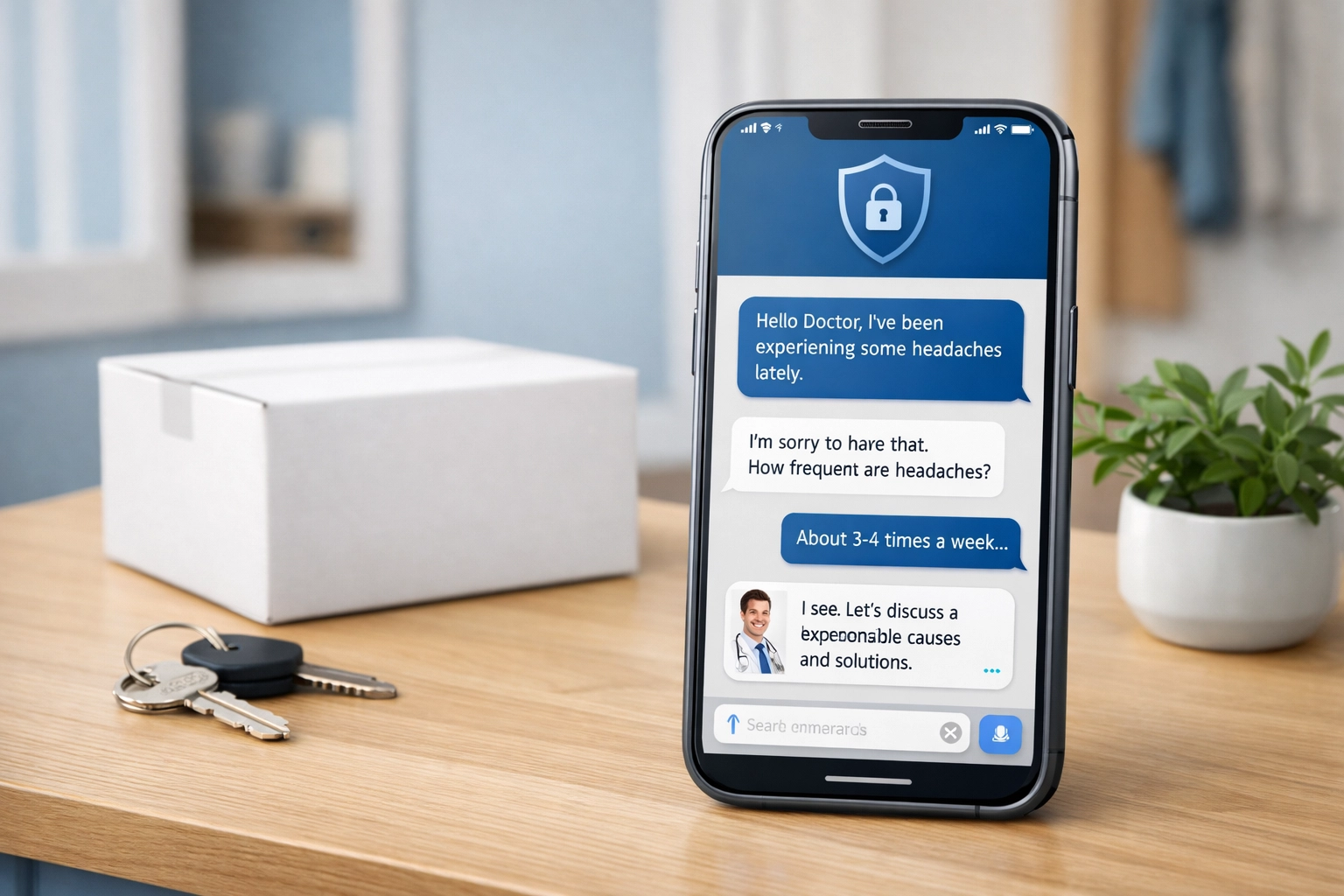
If you're considering the online route for privacy reasons, not all telehealth platforms are created equal. Here's what actually matters:
Text-Based vs. Video Consultations
Platforms offering secure text-based consultations generally offer better privacy than video calls. You don't need to worry about finding a private space for a video appointment, soundproofing concerns, or who might walk into frame. Text consultations can happen anywhere, anytime, with complete control over your environment.
Real Medical Licensing
Privacy means nothing if you're not getting legitimate medical care. Verify that any online service connects you with licensed healthcare providers legally authorized to practice in your state. Services like ChatWithDr use board-certified physicians and nurse practitioners who review your medical history and can prescribe appropriate birth control options.
No Account Creation Requirements
Here's a privacy feature most people don't think about: whether the platform requires extensive account setup. Some services let you start consultations without creating detailed profiles, which means less of your personal information stored in their systems. The less data a platform collects, the less data potentially at risk.
Transparent Pricing
Privacy-conscious services should offer clear out-of-pocket pricing so you can make an informed choice about using insurance versus self-pay. Hidden fees or surprise insurance involvement defeats the purpose of choosing online care for privacy reasons.
How ChatWithDr Approaches Birth Control Privacy
When we designed our approach to reproductive healthcare, privacy was non-negotiable. Our online birth control prescription service is structured around a few core privacy principles:
Text-only consultations: You chat with licensed doctors through secure messaging: no video, no phone calls unless you want them, no awkward conversations in semi-public spaces.
No account required to start: Begin a consultation without extensive profile creation. You provide the medical information necessary for safe prescribing, but we don't collect unnecessary data.
Fast response times: Most consultations get responses in under 2 hours, meaning you're not waiting days with pending consultations floating in a system. Quick care means less time your information sits in digital waiting rooms.
Transparent $39.99 pricing: You know the consultation cost upfront. Prescriptions are sent to your preferred pharmacy, where you can use insurance or pay out-of-pocket based on your privacy preferences. The consultation fee is consistent and can be paid with HSA/FSA cards if you prefer not to use insurance.
Discreet communication: All medical messaging happens through HIPAA-compliant, encrypted platforms. No phone calls to your number that show up on phone bills, no mail to your address except the prescription itself.
Making the Right Privacy Choice for Your Situation
The "better" option depends entirely on your specific privacy concerns and living situation. Consider these questions:
Is your main concern about household members? If parents, partners, or roommates are your privacy worry, online prescriptions with discreet delivery and self-pay options usually offer stronger protection than in-person visits that generate insurance statements.
Do you have a genuinely secure mailing address? If mail security is questionable: whether from nosy housemates or actual mail theft in your area: in-person pickup might be more secure regardless of other factors.
Are you on someone else's insurance plan? This is huge. If privacy from the policyholder matters, out-of-pocket online services eliminate the insurance paper trail that in-person visits create.
How small is your community? In smaller towns where "everyone knows everyone," the anonymity of online consultations can be significantly more private than visiting the only local clinic.
The Bottom Line on Birth Control Privacy
Neither online nor in-person birth control access is perfectly private in every dimension: but for most people concerned about privacy, online prescriptions offer more control over who knows about your reproductive healthcare choices.
The combination of text-based consultations, discreet delivery, no insurance involvement requirement, and elimination of public-space interactions gives you more privacy touchpoints than traditional care. The one legitimate privacy advantage of in-person visits: no home delivery: only matters if you genuinely can't secure your mail.
Reproductive healthcare privacy isn't just about convenience or personal preference: for many people, it's about safety, autonomy, and the fundamental right to make healthcare decisions without unwanted disclosure or interference. Whether you choose online or in-person birth control access, understanding the real privacy implications of each option helps you make informed decisions about your care.
If privacy is a priority in your birth control access, platforms offering text-based consultations, transparent pricing, and legitimate medical licensing provide the strongest combination of convenience and confidentiality. Your reproductive healthcare decisions should be exactly that: yours.
Disclaimer: This information is not a substitute for professional medical advice, diagnosis, or treatment. Always seek the advice of your physician or qualified health provider with questions regarding medical conditions or treatments.
Related posts:
 Can You Get Birth Control Online? Your Guide to Telehealth
  Your Guide to a Birth Control Prescription Without Insurance
  Birth Control Online Doctor (birth control online doctor): Safe Prescriptions
  Birth Control Options and Side Effects: Your Complete, Click-Worthy Guide
  Need Birth Control After Hours? Why 24/7 Online Doctors Are Your Best Option