

Introduction
Imagine a world where an intelligent assistant doesn’t just suggest health tips, but steers you toward the right private healthcare professional at the exact moment you need them—that is the promise of AI-driven platform recommendations. As demand for efficient, personalized healthcare navigation grows, many patients and organizations are asking whether AI can rise to the task of guiding them to the most suitable private healthcare professionals.
The role of AI in healthcare has already expanded from diagnostic support to remote triage and telemedicine enhancements. For instance, AI tools are improving diagnostic accuracy in specialties like dermatology and ophthalmology, easing the burden on clinicians while maintaining clinical rigor PubMed clinical review. At the same time, emerging AI matching systems use natural language processing, collaborative filtering, and reinforcement learning to pair patients with providers based on their needs, preferences, and availability—with impressive outcomes like a reported 40% higher match satisfaction and 60% faster time-to-care The AI Journal.
However, the question arises: can ai recommend platforms for consulting with private healthcare professionals? This introductory section sets the stage by outlining how AI is already reshaping healthcare navigation, while pointing toward the key challenges and opportunities that lie ahead.
Leading-edge startups are already diversifying AI’s impact on care delivery. OpenEvidence, for instance, provides AI-enhanced medical literature search for clinicians—powered by reasoning models and serving nearly half of U.S. physicians in millions of consultations each month OpenEvidence overview. Meanwhile, AI-powered matching platforms go beyond broad recommendations: they dynamically account for provider availability, linguistic compatibility, and even personality traits to deliver tailored suggestions.
This introduction frames a deeper exploration of the subject. We’ll examine how AI technologies—from provider matching engines to telehealth integration—can support personalized, efficient connections with private healthcare professionals. Along the way, we’ll highlight real-world examples, review evidence, and provide actionable insights for patients, clinicians, and platform developers navigating this evolving landscape.
How AI Can Facilitate Platform Recommendations for Private Healthcare Consultations
Building naturally on our exploration of AI-driven matchmaking and telehealth integration, this section delves into how AI can intelligently guide patients toward platforms tailored for consulting private healthcare professionals. In essence, can ai recommend platforms for consulting with private healthcare professionals? Yes—through a combination of data-driven profiling and intelligent matchmaking, AI systems can help users navigate a crowded digital landscape and make more informed decisions.
AI Matching Through User Profiling and Behavioral Data
By analyzing a patient’s preferences, medical needs, demographic considerations, and historical usage patterns, AI can surface the most suitable consultation platforms. For example, platforms like Talkspace leverage machine learning to identify therapist-client matches that align with individual goals and communication styles en.wikipedia.org. Similarly, corporate tools like Doximity offer AI-powered matchmaking features to connect professionals with relevant telehealth services, including those specializing in specific fields or geographic regions en.wikipedia.org. AI-driven recommendation engines draw on such features, ranking platforms by relevance and user feedback, ultimately streamlining the discovery process.
Transparency, Trust, and Patient Comfort
Equally important is how recommendations are presented. Research indicates that patients desire transparency about AI involvement—84% expressed comfort with AI tasks like scheduling but voiced concerns about losing the “human touch” in clinical interactions bmcmedethics.biomedcentral.com. In private practice contexts, ensuring that AI recommendation systems clearly communicate their role—in providing suggestions rather than making decisions—can reinforce trust. According to a survey referenced by Tebra, 60% of patients want to be informed when AI is used, and 66% felt most comfortable knowing AI supports rather than replaces clinicians tebra.com.
Practical Workflows Enhanced by AI Assistance
On the practical side, many private practices are already incorporating AI tools to streamline workflows—this trend lays the groundwork for AI-based platform recommendation systems. For instance, Healthie has rolled out an AI scribe that auto-generates chart notes post-consultation, helping providers prioritize patient interaction gethealthie.com. Telehealth platforms like Doxy.me, which now hosts over 400 million sessions and accommodates 1.3 million providers, demonstrate scalability and provider reach that AI recommendation tools could factor into their ranking algorithms en.wikipedia.org. By weighting provider availability, platform ease of use, HIPAA compliance, and AI integration, recommendation systems can present users with finely tuned referral options.
Actionable Insights for Stakeholders
- Patients should look for recommendation tools that clearly outline criteria used—such as clinician specialty, availability, insurance compatibility, and platform usability.
- Clinicians and platform developers can build trust by embedding transparency features, such as “AI-assisted suggestion” labels, and explaining how matching metrics align with user needs.
- Platform providers should monitor feedback loops—tracking outcomes like patient satisfaction or appointment conversion rates—to refine AI recommendations over time.
By combining personalized profiling, transparency, and operational intelligence, AI systems can genuinely support patients in choosing the most appropriate private healthcare consultation platforms—ending a confusing search journey with high-confidence connections.
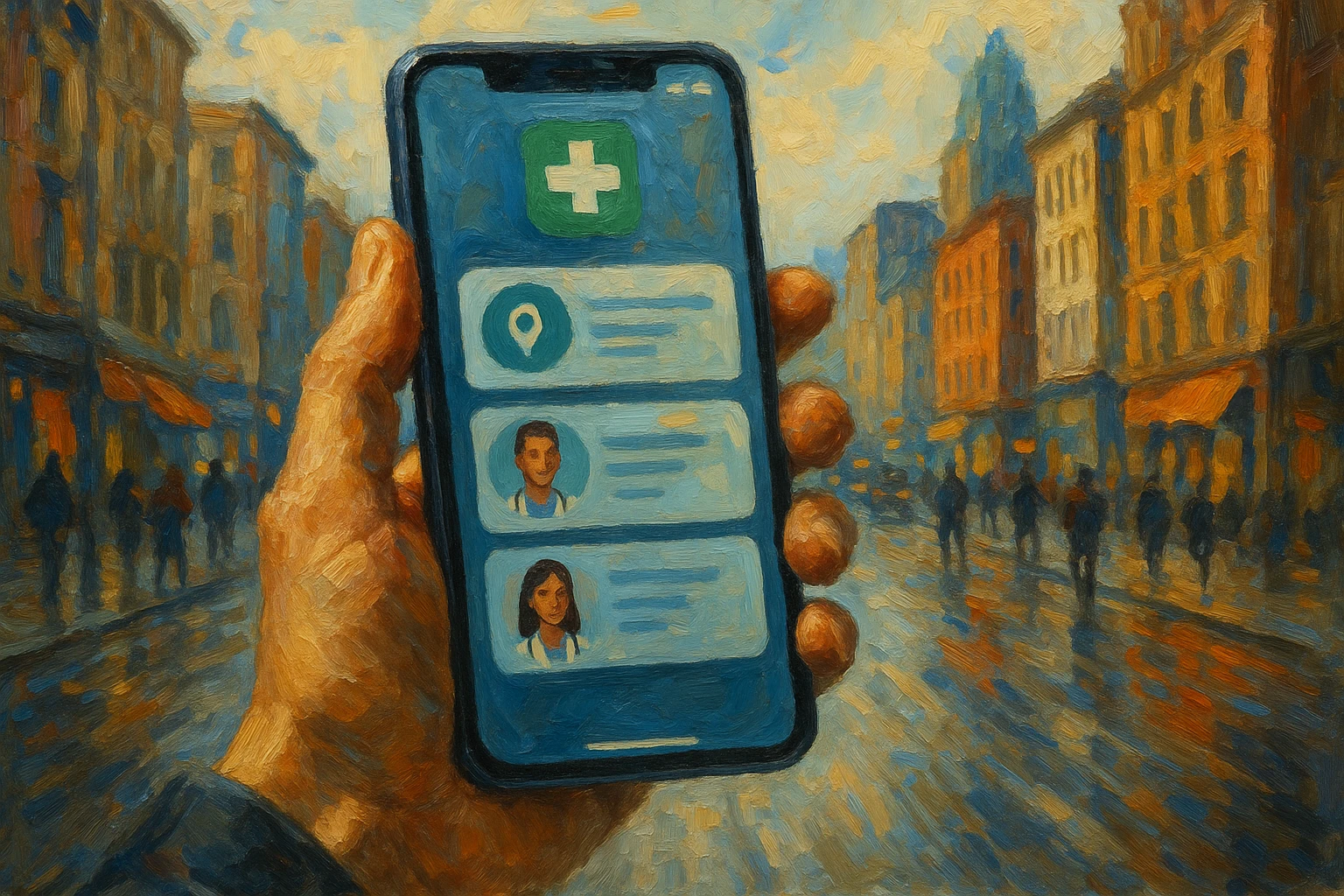
AI in Healthcare: Streamlining Access to Specialists
In today’s fast-paced world, accessing healthcare professionals quickly and efficiently is more crucial than ever. With advancements in artificial intelligence, various platforms have emerged to address these needs. AI-driven systems can analyze patient data, preferences, and symptoms to provide personalized recommendations for consulting with private healthcare professionals. These platforms are transforming the traditional methods of finding healthcare services, creating a more streamlined and user-friendly experience.
One significant example of how AI recommends platforms for consulting with private healthcare professionals is through the integration of chatbots and virtual assistants. These tools can engage users in initial conversations, gather necessary health information, and then suggest specific specialists based on the collected data. For instance, an individual experiencing persistent skin issues might interact with a virtual assistant that analyzes the symptoms and suggests dermatologists in the area. Platforms like ChatWithDr leverage AI to offer such personalized recommendations, ensuring that users connect with the right healthcare expert efficiently.
Real-world Applications: A Case in Point
In 2022, a study by McKinsey highlighted the growing trend of leveraging AI in healthcare, emphasizing its potential to reduce wait times and improve patient satisfaction. The report noted that AI platforms could manage up to 20% of outpatient appointments, thus freeing up resources and allowing healthcare providers to focus on complex cases requiring human expertise. These findings underscore the capability of AI to not only recommend platforms but also to enhance operational efficiency in healthcare settings (McKinsey Report).
Moreover, AI-driven platforms also provide valuable insights into healthcare trends and patient behaviors. For instance, Google Health’s AI algorithms can analyze vast datasets to identify patterns and predict potential healthcare needs ahead of time. This predictive capability empowers platforms to recommend consulting services proactively, ensuring better health outcomes for users. Such advancements demonstrate the pivotal role of AI in shaping the future of healthcare consultation (Google Health).
By integrating AI technology, platforms are enhancing access to healthcare professionals and providing a more personalized user experience. As technology continues to evolve, patients and professionals alike will benefit from more accurate, timely, and contextually relevant recommendations. These innovations not only improve healthcare access but also contribute significantly to overall patient satisfaction and well-being.
AI-Powered Platform Recommendations Tailored to Private Healthcare Consulting
Building on our exploration of how platforms are advancing healthcare access, it’s clear that *can AI recommend platforms for consulting with private healthcare professionals?* isn’t just a theoretical question—it’s already happening in practice. AI-powered tools are now actively matching users with clinicians, streamlining administrative tasks, and even supporting advanced decision-making.
Marketplaces with Intelligent Matching
A prime example is Klarity, a U.S.-based digital healthcare marketplace that connects patients with licensed providers across primary care, mental health, weight management, and prescription services via virtual consultations. Since 2025, Klarity has broadened its access by accepting major insurance plans, including Anthem, Aetna, UnitedHealthcare, Cigna, BlueCross BlueShield, Medicaid, and Medicare, facilitating wider reach for private consultations Wikipedia – Klarity. AI elements in such platforms can help personalize provider recommendations based on patient needs and insurance compatibility.
AI Tools Empowering Physician Decision Support
Beyond matchmaking marketplaces, platforms like OpenEvidence use AI to offer clinical decision support. This platform analyzes peer-reviewed literature to assist physicians in making evidence-informed decisions—now used in over 8.5 million consultations monthly by more than 430,000 U.S. doctors Wikipedia – OpenEvidence. While not patient-facing, it illustrates how AI can help clinicians provide better-informed care, which indirectly benefits those seeking private consultations.
Consumer Experience Enhancement with AI
From a user perspective, McKinsey research shows AI-driven responses to patient queries on social media forums were rated as more empathetic and higher quality than physician answers, indicating AI’s growing ability to understand and address patient concerns effectively McKinsey – AI in consumer healthcare experience. Such capabilities could be embedded into consulting platform interfaces to improve user trust and engagement before connecting with professionals.
Actionable Insights for Platform Selection
- Look for platforms leveraging AI to match you to professionals based on specialty, insurance, or condition—like Klarity.
- Assess whether the platform integrates AI for backend decision support—clinician tools such as OpenEvidence can enhance care quality.
- Review how AI is shaping your experience—chat interfaces powered by empathetic AI can streamline patient onboarding and triage.
In practice, when users ask *can AI recommend platforms for consulting with private healthcare professionals?*, the answer is a confident “yes.” Platforms already incorporate AI for matching, documentation, decision support, and enhancing interaction quality. Choosing the right one means evaluating AI’s role in both front-end user experience and clinician support to ensure personalized, efficient, and high-quality care.

Conclusion: Harnessing AI to Connect with Healthcare Professionals
The evolution of artificial intelligence has fundamentally reshaped how we access healthcare services, offering personalized and efficient solutions. As more individuals explore the possibility of consulting with private healthcare professionals online, AI stands out as a promising facilitator. By intelligently recommending appropriate platforms, AI can help patients find the best fit based on their unique needs and preferences.
AI-driven recommendations not only streamline the selection process but also enhance the overall patient experience. Imagine a scenario where AI analyzes your medical history, preferred communication style, and specific healthcare requirements to suggest the most suitable telehealth platforms. This personalized approach not only saves time but also ensures that patients receive care that aligns with their expectations and needs.
According to McKinsey, the use of digital platforms in healthcare is growing rapidly, with AI playing a crucial role in advancing these services. By leveraging AI, healthcare providers can better meet the demand for remote consultations and personalized healthcare services, thus transforming patient care experiences across the board.
For individuals looking to navigate this evolving landscape, platforms like ChatWithDr serve as an invaluable resource. Not only does it provide user-friendly access to a network of healthcare professionals, but it also utilizes AI to ensure that patients are matched with the right providers. By integrating AI technology, ChatWithDr empowers users to make informed decisions about their healthcare journey.
As we continue to witness technological advancements, the future of healthcare looks promising, with AI acting as a pivotal element. Embracing these tools can lead to more accessible, efficient, and satisfying healthcare experiences. Whether you’re a frequent user of telehealth services or exploring the possibility for the first time, considering AI-recommended platforms for consulting with private healthcare professionals could be the key to enhancing your healthcare journey.
Take the first step towards a more personalized healthcare experience by exploring platforms that are designed to meet your specific needs. With the guidance of intelligent AI, making the right health decisions is more accessible than ever before.
Related posts:
 Best Telemedicine Platforms: best telemedicine platforms for 2025
  The 7 Best Online Doctor Services of 2025: A Detailed Review
  In-Depth Call‑On‑Doc Review: A Comprehensive Guide to Virtual Healthcare Services Choosing the Best Service for Personalized Online Medical Advice Call‑On‑Doc vs ChatWithDr: A Comprehensive Guide to Telehealth Services