
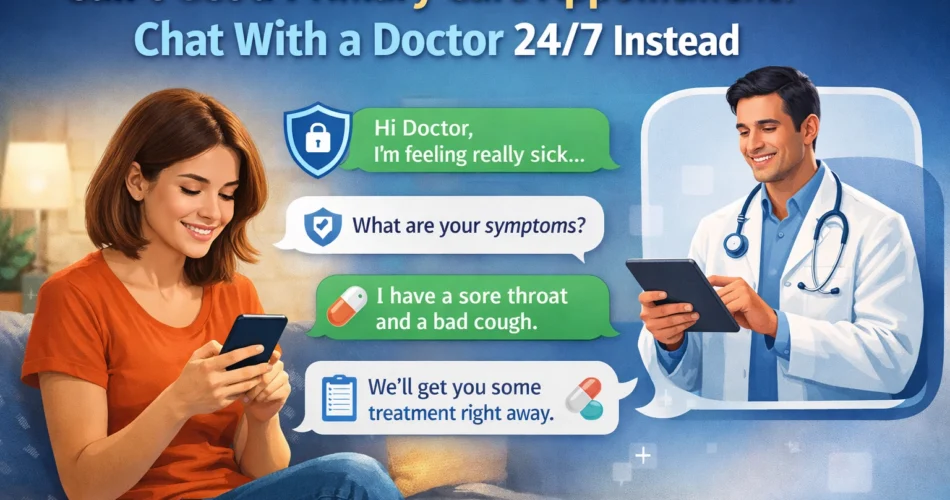
You're not imagining it: getting a primary care appointment has become increasingly difficult. Whether you're dealing with a persistent cough, need a prescription refill, or just want medical advice for an urgent concern, the reality is sobering: the average wait time for a primary care appointment in the United States now exceeds 26 days in major cities, with some areas reporting waits of 50 days or longer.
For many Americans, this access crisis means postponing necessary care, letting minor conditions worsen, or ending up in the emergency room for problems that could have been addressed earlier. But there's a solution that's transforming how people access healthcare: the ability to chat with a doctor 24/7 through secure online medical chat platforms.
The Primary Care Access Crisis: By the Numbers
The shortage of primary care physicians in the United States has reached critical levels. According to the Association of American Medical Colleges, the country could face a shortage of up to 86,000 physicians by 2036, with primary care particularly hard-hit.

This shortage creates a domino effect:
- Limited availability: Many primary care practices aren't accepting new patients
- Extended wait times: Even established patients wait weeks for routine appointments
- Rushed visits: Physicians spend an average of just 15-20 minutes per patient
- After-hours gaps: Most primary care offices close evenings and weekends
- Geographic barriers: Rural areas face even more severe shortages
The consequences aren't just inconvenient: they're potentially dangerous. When people can't access timely primary care, minor infections become serious complications, chronic conditions go unmanaged, and preventable health issues escalate into emergency situations.
When You Need Care But Can't Wait Weeks
Life doesn't schedule health concerns around your doctor's availability. Consider these common scenarios:
Monday morning: You wake up with symptoms of a urinary tract infection. Your primary care doctor can't see you until next Thursday. Do you suffer through the discomfort and risk a kidney infection, or do you have another option?
Wednesday evening: Your seasonal allergy medication ran out, but you need a refill before your symptoms return. Your doctor's office is closed, and you're traveling this weekend.
Saturday night: Your child develops a sore throat with fever. Is it strep throat? Do you really need to spend hours in an urgent care waiting room?
Sunday afternoon: You're dealing with cold and flu symptoms and aren't sure if you need medication or if you should wait it out.
These situations represent the gap that online medical chat services fill: the space between non-urgent concerns and true emergencies, and the time between regular primary care visits when issues arise.
How 24/7 Online Medical Chat Changes Healthcare Access
The concept is straightforward but revolutionary: chat with a doctor 24/7 through secure medical messaging, receive professional medical advice, get prescriptions when appropriate, and never sit in a waiting room.
Here's what makes this approach fundamentally different from traditional healthcare access:
No Account Required
Unlike many telehealth platforms that require lengthy registration processes, creating profiles, uploading insurance cards, and navigating complex portals, text-based medical consultations can begin immediately. When you're sick or in discomfort, the last thing you want is administrative barriers between you and medical care.
This streamlined approach means:
- Start chatting with a doctor in minutes, not hours
- No need to remember login credentials when you're not feeling well
- Less friction equals faster access to care
- Privacy-focused interactions without extensive data collection upfront
No Waiting Room
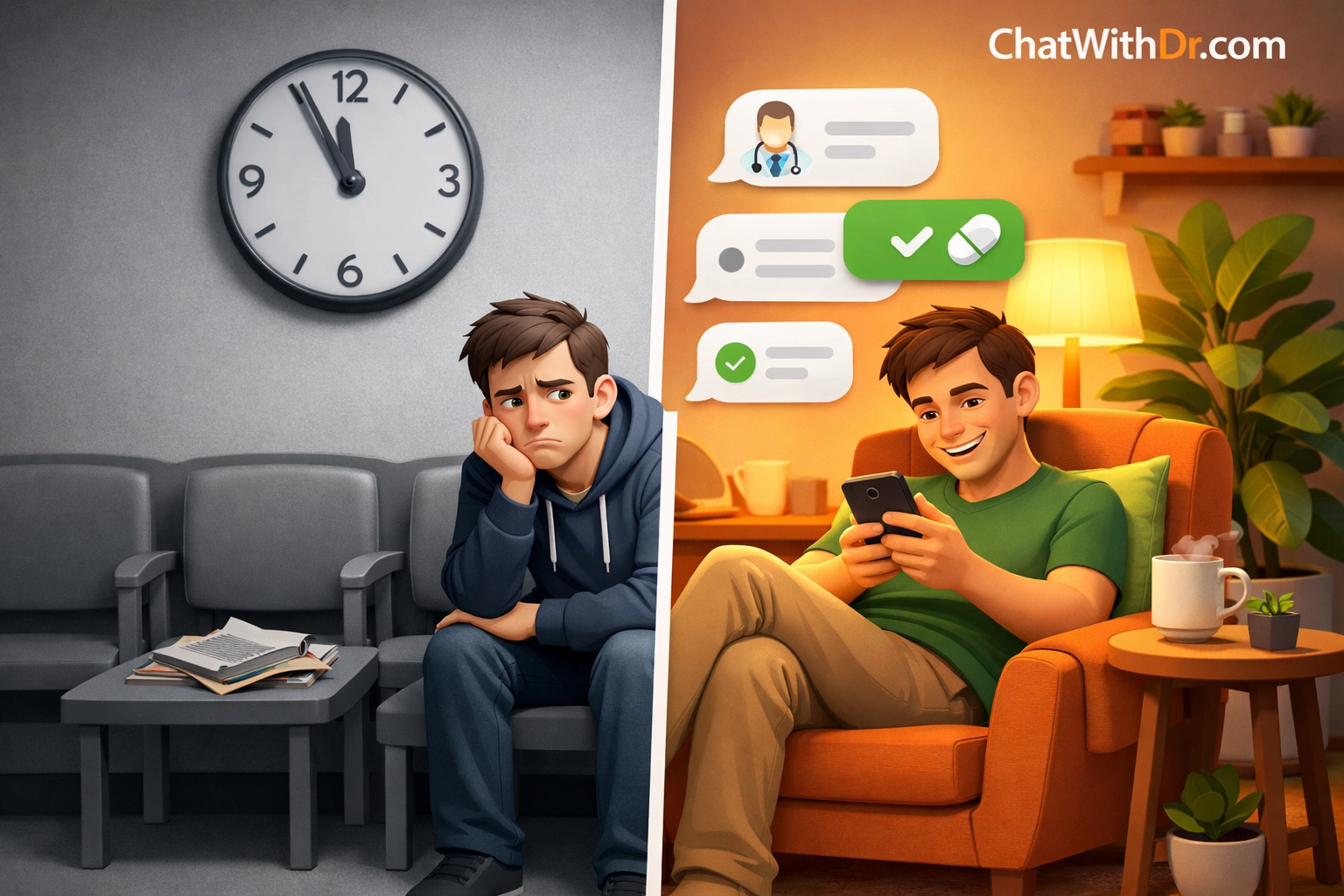
Traditional healthcare: whether primary care or urgent care: involves waiting. Waiting for an appointment slot days or weeks away, waiting in the reception area, waiting in the exam room. Online urgent care through secure medical messaging eliminates this entirely.
The benefits extend beyond convenience:
- Reduced exposure: No contact with other sick patients in waiting rooms
- Time savings: Care from home, work, or wherever you are
- Flexibility: Chat while commuting, during lunch break, or after kids are in bed
- Comfort: Discuss sensitive health concerns from a private, comfortable setting
Around-the-Clock Availability
Healthcare needs don't follow business hours. A 24/7 telehealth doctor means licensed physicians are available:
- Late nights when symptoms worsen
- Weekends when your regular doctor's office is closed
- Holidays when accessing care becomes challenging
- Early mornings before work when you need quick answers
What Can Be Treated Through Online Medical Chat?
While online medical chat isn't appropriate for every situation, it effectively addresses a wide range of common health concerns that account for the majority of primary care and urgent care visits:
Acute conditions:
- Upper respiratory infections
- Urinary tract infections
- Pink eye and minor eye infections
- Skin rashes and allergic reactions
- Minor injuries and wound care guidance
- Digestive issues
Prescription needs:
- Medication refills for maintenance medications
- New prescriptions for acute conditions
- Treatment for common infections
Chronic disease support:
- Medication adjustments between regular appointments
- Symptom management guidance
- Questions about treatment plans
Specialized consultations:
- Dermatology concerns
- Birth control consultations
- Weight loss medication discussions
- Sexual health concerns

It's important to note that controlled substances and certain narcotic medications cannot be prescribed through virtual platforms, and serious emergency conditions always require in-person emergency care.
Bridging the Gap: Online Chat as Primary Care Support
One of the most valuable aspects of online medical chat is how it complements, rather than replaces, your existing primary care relationship. Think of it as filling the gaps between your regular check-ups and handling issues that arise when your doctor isn't available.
This approach works particularly well for:
Prescription refills: When you're between appointments and need medication refills, waiting weeks isn't practical. Online doctors can review your medication history and provide refills to keep your treatment uninterrupted.
Follow-up questions: After a primary care visit, new questions often arise. Rather than waiting for another appointment or playing phone tag, you can get quick clarification through secure medical messaging.
New acute symptoms: When something comes up suddenly: an infection, injury, or acute illness: online medical chat provides immediate assessment and treatment without disrupting your schedule or waiting weeks for availability.
After-hours concerns: When symptoms develop outside business hours, you don't have to choose between suffering until morning or visiting an expensive emergency room.
Many online primary care platforms can coordinate with your existing physician, ensuring continuity of care while providing the access you need when you need it.
When to Choose Online Medical Chat vs. In-Person Care
Understanding when online medical chat is appropriate helps you make informed healthcare decisions:
Choose online medical chat for:
- Non-emergency conditions that need prompt attention
- Prescription refills for existing medications
- Follow-up questions about recent diagnoses
- Minor acute illnesses and infections
- Health concerns that develop after hours or weekends
- Conditions requiring quick assessment but not physical examination
Seek in-person care for:
- Chest pain or difficulty breathing
- Severe injuries or trauma
- Sudden severe headache or neurological symptoms
- Conditions requiring physical examination or diagnostic tests
- Mental health crises
- Any situation where you feel you need emergency care
When in doubt, licensed doctors available through online medical chat can help assess whether your condition requires in-person evaluation, making them a valuable triage resource even when further care is needed.
Getting Started: Your Path to Immediate Care
Accessing an online doctor through secure medical messaging is designed to be simple:
- Describe your concern: Explain your symptoms, medical history, and what you need
- Connect with a licensed physician: Board-certified doctors review your information
- Receive professional medical advice: Get diagnosis, treatment recommendations, and prescriptions when appropriate
- Follow treatment guidance: Implement the medical advice with ongoing support available
The entire process typically takes minutes rather than days or weeks, and you maintain a record of your consultation for future reference.
For specific telehealth services, including treatment for various conditions, licensed physicians provide the same quality care you'd receive in a traditional office setting: just without the waiting and with the convenience of accessing care whenever and wherever you need it.
The Future of Primary Care Access
As the primary care shortage continues and patient expectations for convenient, responsive healthcare grow, online medical chat represents more than a temporary solution: it's a fundamental shift in how we access medical care. The ability to chat with a doctor 24/7 doesn't replace the value of in-person primary care relationships, but it provides essential access when traditional appointments aren't available or practical.
Whether you need urgent care for acute symptoms, prescription refills to stay on track with your medications, or simply medical guidance when concerns arise, secure medical messaging platforms ensure that distance from care never has to mean delay in care.
The next time you face a health concern and can't get a primary care appointment for weeks, remember: you have options. Quality medical care is available 24/7, no waiting room required, no lengthy registration needed: just secure, professional medical guidance when you need it most.
Visit ChatWithDr to learn more about accessing licensed doctors through secure medical messaging, day or night, weekends and holidays included.
Disclaimer: This information is not a substitute for professional medical advice, diagnosis, or treatment. Always seek the advice of your physician or qualified health provider with questions regarding medical conditions or treatments.
Related posts:
 Difference Between Urgent Care and Emergency Explained
  Your Guide to an Online Primary Care Consultation
  The 7 Best Online Doctor Services of 2025: A Detailed Review
  Chat With a Doctor 24/7: How Text-Based Primary Care Fills the Gap When Your Doctor Is Unavailable
  Chat With a Doctor 24/7: How Text-Based Care Fills the Gap Between Primary Care Visits