

When you're feeling unwell at 11 PM on a Tuesday or dealing with a minor health concern during your lunch break, you face a common dilemma: should you chat with a doctor 24/7 online or head to urgent care? The answer isn't always straightforward, but understanding when each option works best can save you time, money, and unnecessary stress.
Both live medical chat and urgent care serve important roles in modern healthcare, but they excel in different situations. While neither is universally "better," choosing the right option depends on your specific condition, urgency level, and what type of care you actually need.
What Is Chat With a Doctor 24/7?
Online medical chat connects you with licensed physicians through secure text-based conversations on your phone or computer. Unlike traditional telehealth video calls, these platforms allow you to describe your symptoms, receive medical advice, and get prescriptions sent directly to your pharmacy: all without scheduling an appointment or leaving your home.
Modern telehealth platforms like ChatWithDr operate around the clock with licensed US physicians available in all 50 states. These services are HIPAA-compliant, accept HSA/FSA payments, and typically respond within 2 hours with transparent flat-rate pricing around $39.99 per consultation.

What Is Urgent Care?
Urgent care centers provide immediate medical attention for non-life-threatening conditions that can't wait for a regular doctor's appointment. These facilities bridge the gap between your primary care physician and the emergency room, offering same-day treatment with extended hours including evenings and weekends.
Urgent care centers are staffed with physicians, nurse practitioners, and physician assistants who can perform physical examinations, order diagnostic tests, and provide hands-on treatments. They typically cost between $100-$200 without insurance, or $35-$75 with insurance copays.
Live Medical Chat: When It's the Better Choice
Speed and Convenience
When you need medical advice quickly without the hassle of traveling, online medical chat wins hands down. There's no driving to a facility, sitting in a waiting room, or taking time off work. Most platforms provide responses within 2 hours, making them faster than both urgent care and primary care appointments.
Cost-Effectiveness
At $39.99 per consultation, live medical chat costs significantly less than urgent care visits. Since prescriptions can be sent to your local pharmacy where insurance may apply, you're only paying the flat consultation fee upfront.
Privacy and Discretion
Sensitive health concerns like sexual health, mental health symptoms, or embarrassing conditions are often easier to discuss through confidential text messaging than face-to-face conversations.
Follow-Up Care
Medical chat online excels for monitoring existing conditions, medication adjustments, or checking in after an urgent care or primary care visit. You can easily share updates about your recovery without another expensive office visit.

Urgent Care: When You Need In-Person Care
Physical Examinations Required
Some conditions simply can't be properly diagnosed without a hands-on examination. Suspected infections, concerning rashes, abdominal pain, or fever often require physical assessment that only urgent care can provide.
Diagnostic Services
When you need immediate lab work, X-rays, EKGs, or other diagnostic tests, urgent care becomes necessary. These facilities have on-site equipment that online consultations cannot access.
Procedures and Treatments
Urgent care handles situations requiring physical intervention: wound cleaning and stitching, minor fracture care, IV fluids for dehydration, vaccinations, and removal of foreign objects.
Quick Decision Checklist: Chat With a Doctor 24/7 (Live Medical Chat) vs Urgent Care Online vs ER
Use this step-by-step guide to decide quickly and safely. When unsure, choose in‑person care.
- Rule out emergencies first — go to the ER or call 911 now if any:
- Chest pain/pressure, pain spreading to arm/jaw/back, or sudden shortness of breath
- Severe breathing trouble, bluish lips/face, or noisy breathing at rest
- Stroke signs: face drooping, arm weakness, speech difficulty, sudden confusion
- Sudden, severe “worst headache of your life” or headache with stiff neck/fever
- Fainting, new severe confusion, seizures, or inability to stay awake
- Uncontrolled bleeding, deep/large wounds, major burns, serious head/neck injury
- Severe abdominal pain, rigid belly, vomiting blood, black/tarry stools
- Severe allergic reaction: swelling of tongue/lips/face, trouble breathing, hives with dizziness
- High fever with rash or confusion; fever in infants under 3 months
- Pregnancy red flags: heavy vaginal bleeding, severe abdominal pain, severe headache/vision changes, decreased fetal movement
- Sudden severe testicular pain or swollen, painful scrotum
- Suicidal thoughts, self-harm, poisoning/overdose, or carbon monoxide exposure
- If no red flags, consider personal risk factors:
- Choose urgent care (in person) if you are pregnant, immunocompromised, on chemotherapy/biologics, post‑surgery, have organ transplant, sickle cell disease, severe asthma/COPD, advanced heart/kidney/liver disease, or are very young (especially under 2) or over 65 with moderate symptoms.
- Pick your scenario
Respiratory (colds, COVID‑19, flu, sinus):
- Good fit for online medical chat (live text) when:
✓ Mild to moderate cough, congestion, sore throat, low‑grade fever
✓ COVID/flu symptoms within treatment window; may be eligible for antivirals (e.g., Paxlovid for COVID within 5 days; oseltamivir for flu within 48 hours) when appropriate
✓ Sinus symptoms >10 days or improving then worsening, without severe facial swelling - Choose urgent care when:
✓ You need a same‑day strep test, flu test, chest X‑ray, or oxygen check
✓ Persistent high fever, worsening cough with chest pain, or suspected pneumonia - Go to ER now if:
✓ Severe shortness of breath, chest pain, confusion, blue lips/face
Urinary and reproductive:
- Good fit for medical chat online:
✓ Classic UTI symptoms (burning, frequency, urgency) without flank pain/fever
✓ Vaginal yeast/bacterial vaginosis symptoms without severe pelvic pain
✓ ED medication questions, birth control starts/refills, emergency contraception guidance - Choose urgent care when:
✓ UTI symptoms with fever, back/flank pain, or vomiting (possible kidney infection)
✓ Male with UTI symptoms, or pregnant with UTI/pelvic symptoms
✓ New pelvic pain, new testicular pain/swelling - Go to ER now if:
✓ Severe pelvic/abdominal pain in pregnancy, heavy vaginal bleeding, or sudden severe testicular pain
Skin and minor injuries:
- Good fit for online medical chat:
✓ Acne flares, eczema/psoriasis flares, mild cellulitis without fever, minor burns
✓ Shingles suspected on body (not face/eye), ideally within 72 hours for antivirals - Choose urgent care when:
✓ Wounds needing stitches, animal/human bites, or infected cuts needing drainage
✓ Possible fracture/sprain requiring X‑ray or a splint; moderate burns; facial lacerations - Go to ER now if:
✓ Uncontrolled bleeding, large/deep wounds, major burns, signs of spreading infection with fever
Gastrointestinal:
- Good fit for live medical chat:
✓ Mild vomiting/diarrhea without blood, able to hydrate; mild reflux/heartburn - Choose urgent care when:
✓ Dehydration concerns (dry mouth, minimal urine), persistent vomiting, or need IV fluids
✓ Possible gallbladder/kidney stone pain but tolerable and stable - Go to ER now if:
✓ Severe abdominal pain, vomiting blood, black/tarry stools, or rigid abdomen
Eye, ear, nose, throat:
- Good fit for online medical chat:
✓ Pink eye without contact lens use, mild ear pain, sinus pressure, sore throat without severe symptoms - Choose urgent care when:
✓ Possible strep (needs a swab), ear infection requiring ear exam, severe sinus pain with facial swelling
✓ Eye pain/redness in contact lens users, or suspected foreign body - Go to ER now if:
✓ Sudden vision loss, chemical eye injury, severe eye pain with vision changes
Pain and musculoskeletal:
- Good fit for online medical chat:
✓ Known migraine pattern; mild back/neck strain without numbness/weakness - Choose urgent care when:
✓ New moderate to severe back pain after injury, suspected fracture/sprain, need for X‑ray - Go to ER now if:
✓ New weakness, numbness, trouble walking, loss of bladder/bowel control, or “first/worst” severe headache
Medications, refills, and chronic conditions:
- Good fit for online medical chat:
✓ Refills and adjustments for stable conditions (blood pressure, diabetes, asthma)
✓ Common prescriptions when appropriate: UTI antibiotics (e.g., nitrofurantoin), acne meds (topical clindamycin/benzoyl peroxide), eczema steroids, migraine triptans, inhaler refills, birth control, ED meds
✓ Work/school notes and return‑to‑work guidance - Choose urgent care when:
✓ Controlled substances, meds requiring in‑office monitoring, or new significant side effects
- Do you need a test or procedure today?
- Choose urgent care for: stitches, splints/X‑rays, EKG, ear irrigation, rapid strep/flu tests, IV fluids, wound care, abscess drainage, or vaccines.
- Timing and access considerations
- If you need quick guidance or a prescription and no exam/procedure, chat with a doctor 24/7 is fastest (typical response under 2 hours).
- If your symptoms are escalating or you think you’ll need imaging, go straight to urgent care in person (walk‑in availability varies even if “urgent care online” shows a waitlist).
- Night, weekends, holidays: online medical chat can start care now and redirect you if in‑person is safer.
- Safety net — escalate if things change
- If new red flags appear, pain worsens, fever spikes, or you can’t keep fluids down, switch to in‑person urgent care or the ER.
- Keep medications, allergies, and a symptom timeline handy to speed care in any setting.
Examples at a glance
- Likely online medical chat:
✓ Mild UTI, sinus symptoms >10 days, pink eye (no contacts), eczema flare, known migraine, mild cold/flu, birth control or ED med questions - Likely urgent care:
✓ Cut that might need stitches, painful ear with fever, sprained ankle can’t bear weight, possible strep, persistent high fever, dehydration - ER now:
✓ Chest pain, severe shortness of breath, stroke signs, severe abdominal pain, heavy bleeding, severe allergic reaction, infant <3 months with fever

What Conditions Are Right for Online Medical Chat?
Text-based telehealth works exceptionally well for conditions where symptoms can be clearly described and treatment follows established protocols. Common conditions appropriate for online doctor consultations include:
Infections: UTIs, yeast infections, bacterial vaginosis, and some respiratory infections can often be diagnosed based on symptoms alone, especially if you've had similar issues before.
Skin Conditions: Many dermatological issues like acne, eczema flares, or medication adjustments can be managed through detailed symptom descriptions and photo sharing where appropriate.
Chronic Condition Management: Ongoing conditions like high blood pressure, diabetes, or anxiety often require medication adjustments and monitoring that work well through online consultations.
Preventive Care: Birth control consultations, prescription refills, and routine health maintenance are perfectly suited for virtual visits.
Mental Health: Depression, anxiety, and stress management can be effectively addressed through secure messaging platforms.
Conditions That Require In-Person Care
Certain medical situations simply cannot be safely managed through online consultation alone:
Complex Symptoms: When multiple body systems are involved or symptoms are vague and hard to describe, physical examination becomes crucial for proper diagnosis.
Pediatric Care: Children often can't articulate symptoms clearly, making physical examination and observation essential for accurate diagnosis.
Acute Pain: Severe or sudden onset pain typically requires hands-on assessment to rule out serious conditions.
Medication Requiring Monitoring: Some medications need lab work or physical assessment before prescribing, particularly controlled substances or drugs with serious side effects.
Red Flag Symptoms: When to Go to the ER Immediately
Neither online medical chat nor urgent care is appropriate for true medical emergencies. Seek immediate emergency care for:
- Chest pain, pressure, or tightness
- Difficulty breathing or shortness of breath
- Severe allergic reactions with swelling or breathing problems
- Loss of consciousness or fainting
- Severe bleeding that won't stop with pressure
- Signs of stroke (face drooping, arm weakness, speech difficulty)
- Severe abdominal pain, especially with vomiting
- High fever with confusion or altered mental state
- Severe burns or traumatic injuries
- Thoughts of self-harm
When in doubt about symptom severity, err on the side of caution and seek immediate in-person care.
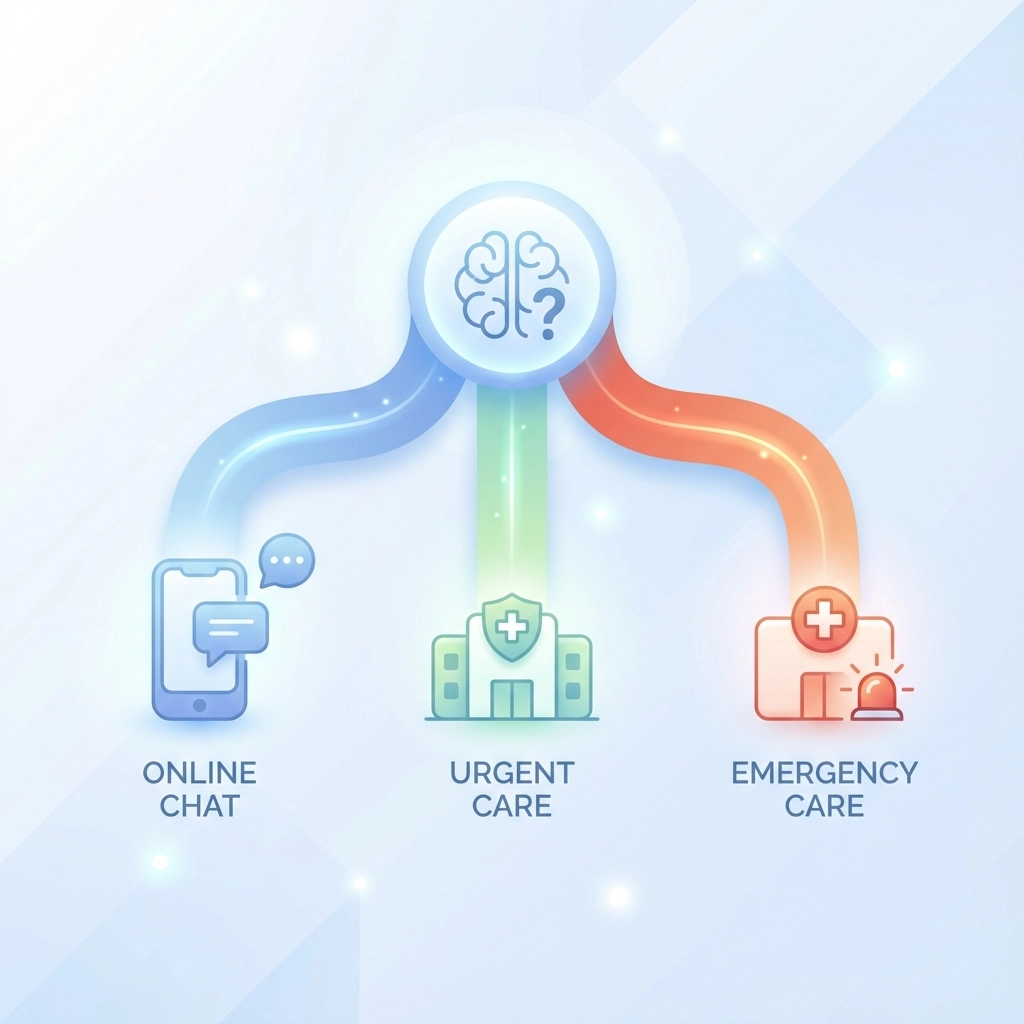
Cost and Convenience Comparison
Online Medical Chat:
- Cost: $39.99 flat rate
- Wait time: Under 2 hours typically
- Travel: None required
- Hours: Available 24/7
- Insurance: HSA/FSA accepted; prescriptions may be covered at pharmacy
Urgent Care:
- Cost: $100-$200 without insurance; $35-$75 copay with insurance
- Wait time: 15 minutes to 2 hours
- Travel: Drive to facility
- Hours: Extended hours, typically 8 AM-8 PM
- Insurance: Most insurance plans accepted
Emergency Room:
- Cost: $1,000-$5,000+ without insurance; $150-$500 copay with insurance
- Wait time: 30 minutes to 8+ hours depending on severity
- Travel: Drive to hospital
- Hours: Available 24/7
- Insurance: Covered but with high deductibles/copays
Making the Right Choice for Your Situation
The key to choosing between online medical chat and urgent care lies in honestly assessing what type of care you need. If you can clearly describe your symptoms and don't require hands-on examination or immediate diagnostic tests, live medical chat offers unmatched convenience and value.
For conditions requiring physical assessment, diagnostic procedures, or hands-on treatment, urgent care provides the necessary in-person services at a fraction of emergency room costs.
Remember that legitimate telehealth providers will refer you to urgent care or emergency services if your condition requires in-person attention. This built-in safety feature ensures you get appropriate care regardless of your initial choice.
Whether you choose to chat with a doctor online or visit urgent care, the most important thing is seeking timely medical attention when you need it. Both options play valuable roles in modern healthcare, and understanding when to use each one helps ensure you get the right care at the right time and cost.
Related posts:
 Live Medical Chat: The Fastest Way to Get Your Prescriptions Online (No Waiting Rooms)
  Chat With a Doctor 24/7: Is Live Medical Chat the New Urgent Care?
  Chat With a Doctor 24/7: Is Live Medical Chat Really Better Than Urgent Care?
  8 Unmistakable Signs You Have a UTI: Your 2026 Guide
  Chat with a Doctor 24/7: Why "Live Medical Chat" is Replacing the Urgent Care Waiting Room