
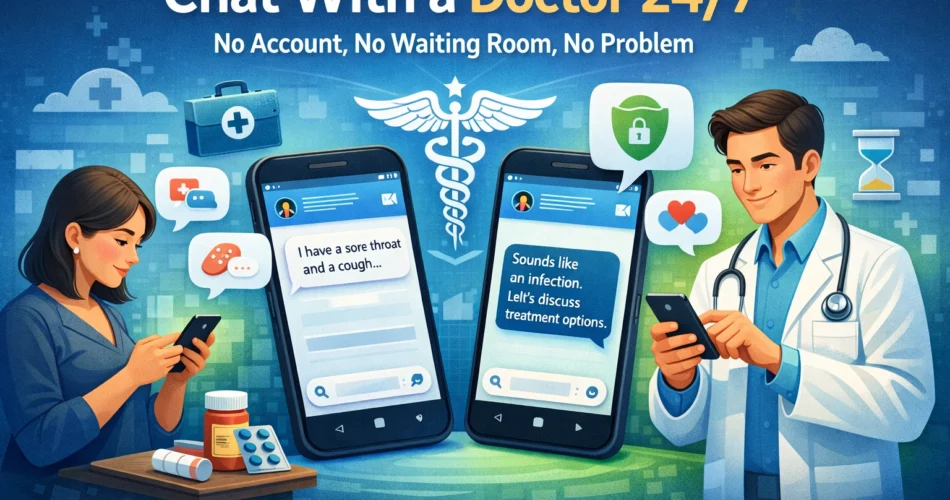
It's 11 PM on a Tuesday. Your child has a fever that won't break, or you've run out of your blood pressure medication, or that UTI you've been ignoring all day is now impossible to ignore. Your primary care doctor's office won't open until tomorrow morning at 8 AM: and good luck getting an appointment that day. The urgent care clinic has a two-hour wait. The ER? That's an expensive last resort.
There's a frustrating gap in healthcare access that affects millions of Americans every week. It's the space between "I need medical help right now" and "I can wait until my doctor's office opens." For years, patients have been forced to choose between suffering through the night or spending hours in a waiting room.
That gap is closing. Welcome to the era of 24/7 online medical chat: where you can text with a licensed doctor any time, any day, without creating an account or sitting in a waiting room.
The Healthcare Access Gap Nobody Talks About
Primary care appointments are typically scheduled weeks in advance. According to data from the Association of American Medical Colleges, the average wait time for a primary care appointment is now 26 days in major metropolitan areas. That's fine for annual checkups and routine care, but it's useless when you need help today.
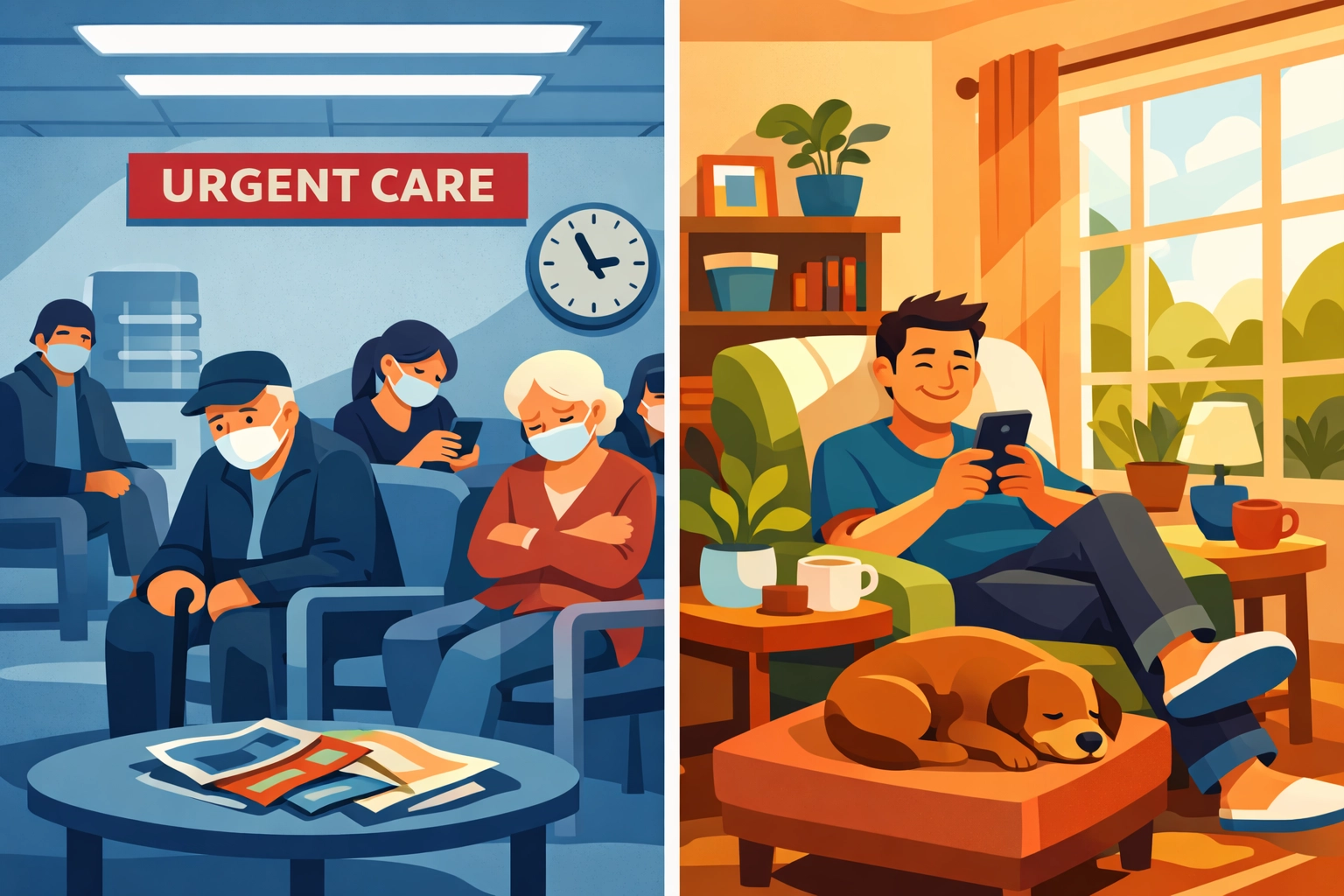
Traditional urgent care clinics try to fill this gap, but they come with their own problems: limited hours, physical locations you have to drive to, crowded waiting rooms where you're likely to catch whatever the person next to you has, and average wait times of 30-60 minutes before you even see a provider.
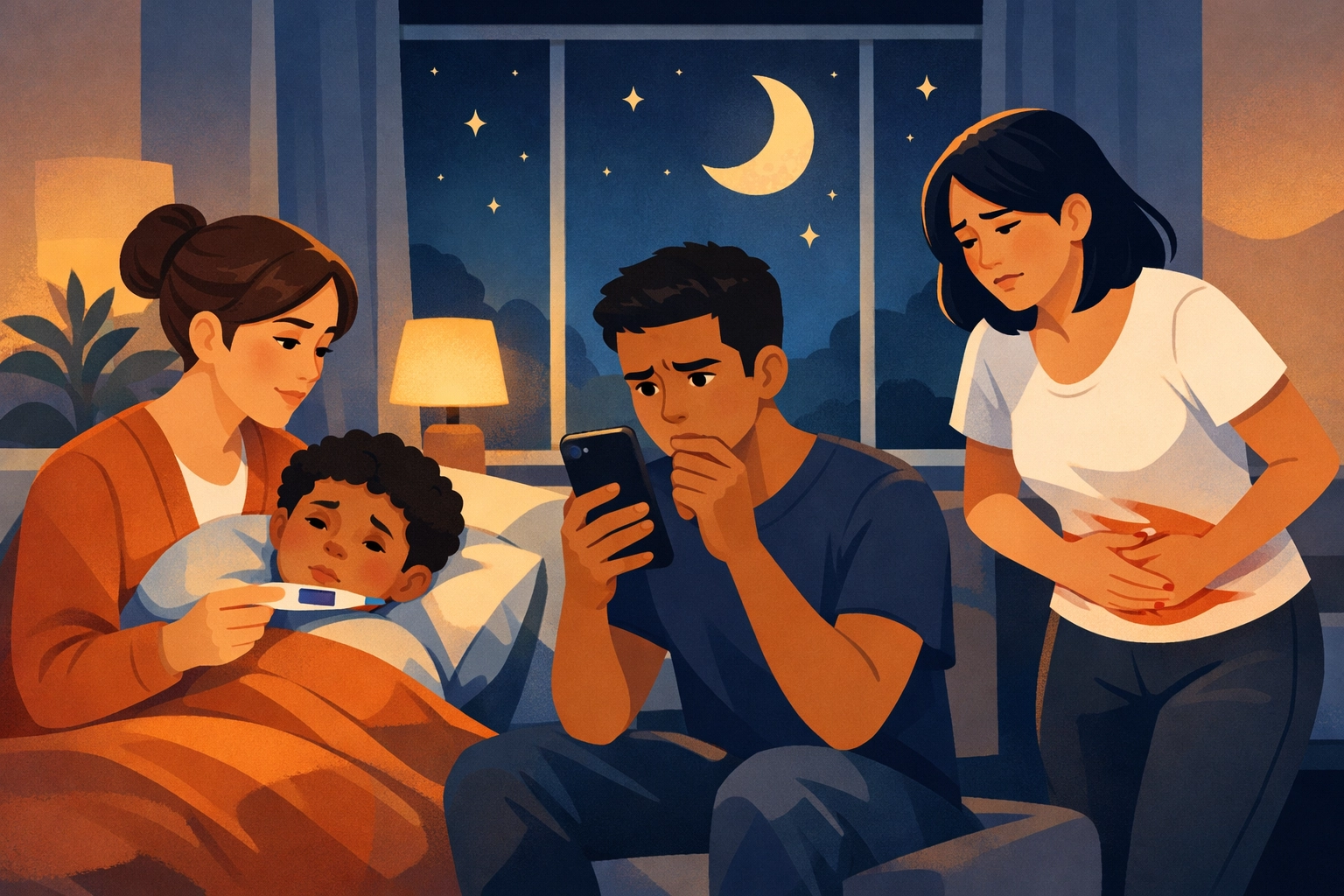
The result? People either tough it out and hope their condition resolves on its own (spoiler: it often doesn't), or they end up in the emergency room for conditions that could have been handled with a simple consultation and prescription.
The missing piece has been immediate access to primary care-level medical advice. Not emergency medicine. Not specialist consultations. Just straightforward medical guidance for common conditions that affect people every single day.
Why "No Account Required" Actually Matters
Let's be honest: we're all drowning in accounts. Every service, every app, every website wants you to create a profile, remember a password, verify your email, and provide your entire medical history before you can even ask a question.
When you're dealing with a medical issue at midnight, the last thing you want to do is fill out forms. You don't want to hunt down your insurance card, create a username, or wait for a verification email. You want to describe your symptoms and get medical help. That's it.
ChatWithDr's approach eliminates this friction entirely. You can chat with a doctor 24/7 by simply starting a secure medical messaging conversation: no account creation, no insurance verification upfront, no jumping through administrative hoops.
This matters especially for:
- Prescription refills when you're traveling and can't access your regular pharmacy or doctor
- Late-night emergencies when you don't have time to fumble with account setup
- Privacy-conscious individuals seeking treatment for sensitive conditions like STD testing or emergency contraception
- Parents dealing with sick children who need immediate guidance, not a registration process
The streamlined approach means you can go from "I need help" to "I'm talking to a doctor" in under two minutes.
What "No Waiting Room" Really Means
Physical waiting rooms aren't just inconvenient: they're often counterproductive to getting better. You walk into an urgent care clinic with a sinus infection and leave with whatever flu variant is currently making the rounds. You spend 45 minutes reading outdated magazines while your condition worsens.

Text-based telehealth eliminates this entirely. There's no physical space to wait in, which means:
- Zero exposure to other illnesses. You're consulting from your couch, your office, or wherever you happen to be.
- No commute time. The average American spends 17 minutes driving to medical appointments, according to CDC data.
- Flexibility to multitask. You can text with a doctor while you're putting kids to bed, waiting for a meeting to start, or sitting in your parked car.
- Immediate access. Connect with licensed medical providers in minutes, not hours.
The secure medical messaging format also creates a written record of your consultation automatically: something you don't get from phone or video calls unless you're taking detailed notes.
Bridging Primary Care and Urgent Care
Here's where online medical chat becomes genuinely useful: it fills the role your primary care doctor would play if they were available 24/7.
Need a prescription refill but your doctor's office is closed? Instead of waiting three days or making an urgent care visit, you can request an online prescription through secure medical messaging.
Dealing with a recurring condition you've had treated before? Whether it's a UTI, sinus infection, or migraine, you likely don't need a full exam: you need a doctor to review your symptoms and prescribe appropriate treatment.
Think you might have pink eye and can't get into your doctor's office until next week? A quick online consultation can confirm the diagnosis and get you treatment today, not seven days from now.
What Can Actually Be Treated Online?
This is the question everyone asks, and it's fair. Not every medical condition can be managed through text-based consultations. You can't get your appendix removed via chat. But a surprising number of common conditions can be effectively diagnosed and treated without an in-person visit.
According to research published in the American Journal of Managed Care, approximately 70% of primary care visits could be handled through telehealth consultations for conditions including:
- Respiratory infections (cold, flu, COVID-19)
- Urinary tract infections
- Sore throats
- Skin conditions and rashes
- Allergies
- Nausea and vomiting
- Prescription refills for chronic conditions
- Birth control consultations
- And many more treatable conditions
Licensed physicians can review your symptoms, medical history, and any photos you provide to make accurate diagnoses for these common issues. When prescriptions are appropriate, they're sent directly to your preferred pharmacy: often within hours.
The Real-World Impact
Consider these actual scenarios where 24/7 medical chat makes a tangible difference:
Scenario 1: The Weekend Warrior
You're camping with friends when you develop symptoms of a UTI on Saturday afternoon. The nearest urgent care is 45 minutes away. Instead of cutting your trip short or suffering through the weekend, you text with a doctor, describe your symptoms, and have a prescription sent to a pharmacy near your campsite within two hours.
Scenario 2: The Business Traveler
You're in a different time zone for work when you realize you forgot to request a refill for your blood pressure medication before leaving. Your doctor's office is closed, and you have three more days of travel. Through secure medical messaging, you can request a refill and have it sent to a pharmacy near your hotel.
Scenario 3: The Exhausted Parent
Your toddler develops a fever and cough at 10 PM. You're not sure if it warrants an ER visit or if it can wait until morning. Instead of either overreacting or potentially ignoring something serious, you chat with a doctor who can assess the symptoms, provide guidance, and prescribe medication if appropriate: all while your child sleeps.
How Text-Based Consultations Actually Work
The process is straightforward: you start a secure medical messaging conversation with a licensed physician. You describe your symptoms, answer relevant medical questions, and if helpful, you can provide photos of visible conditions like rashes or injuries.
The doctor reviews your information and responds with a diagnosis, treatment plan, and prescription if medically appropriate. The entire consultation happens through encrypted text messaging: no downloads, no video calls, no complicated technology.
This text-based approach has advantages beyond convenience. It allows doctors to review information carefully rather than rushing through back-to-back appointments. It creates an automatic written record. And for many patients, especially those dealing with sensitive health concerns, the less confrontational format makes it easier to be honest and thorough about symptoms.
When to Use Online Medical Chat vs. In-Person Care
Understanding when online consultations are appropriate: and when they're not: is crucial. Text with a doctor 24/7 is ideal for:
- New symptoms of common conditions
- Recurring conditions you've had before
- Prescription refills and medication questions
- Follow-up questions after in-person visits
- Preventive care consultations
- Minor injuries that don't require imaging
However, you should seek in-person or emergency care for:
- Severe chest pain or difficulty breathing
- Signs of stroke (facial drooping, arm weakness, speech difficulty)
- Severe injuries or bleeding
- Suicidal thoughts or psychiatric emergencies
- Conditions requiring physical examination like abdominal pain that could indicate appendicitis
Licensed physicians using platforms like ChatWithDr's online urgent care are trained to recognize when conditions require in-person evaluation and will direct you appropriately.
The Future of Primary Care Access
The healthcare system is slowly catching up to what patients have needed for years: immediate access to medical care without bureaucratic barriers. The ability to chat with a doctor 24/7 without creating accounts or sitting in waiting rooms isn't just convenient: it's a fundamental improvement in how healthcare delivery works.
This shift addresses real problems: the primary care physician shortage, the inefficiency of in-person visits for straightforward conditions, the growing demand for healthcare convenience, and the need for accessible medical advice outside traditional business hours.
As telehealth technology continues to improve and acceptance grows among both patients and providers, expect this model to become the standard for primary care access. The question isn't whether you'll use online medical chat: it's when you'll need it next.
Disclaimer: This information is not a substitute for professional medical advice, diagnosis, or treatment. Always seek the advice of your physician or qualified health provider with questions regarding medical conditions or treatments.
Related posts:
 The 7 Best Online Doctor Services of 2025: A Detailed Review
  Best Telemedicine Platforms: best telemedicine platforms for 2025
  Can’t Get a Primary Care Appointment? Chat With a Doctor 24/7 Instead
  Stop Waiting Days for Your Doctor: The Ultimate Guide to Instant Primary Care via Text
  Chat With a Doctor 24/7: Is Live Medical Chat Really Better Than Urgent Care?