
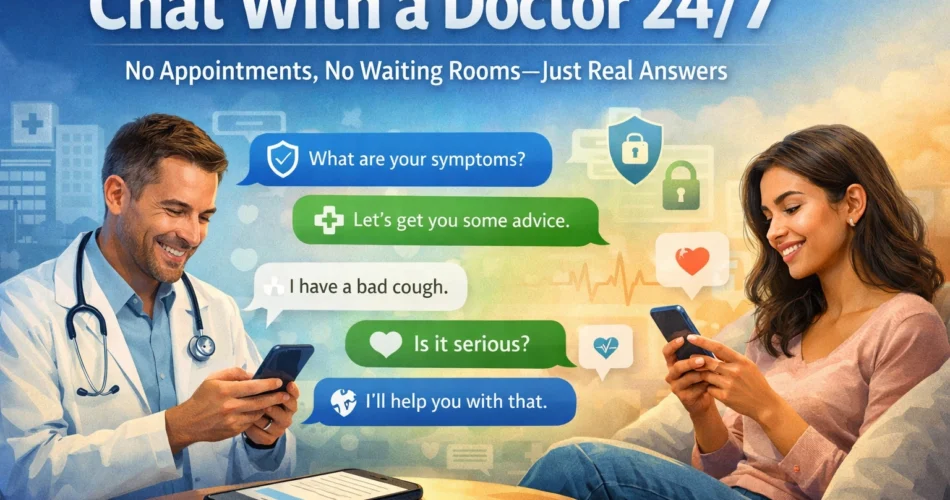
It's 11 PM on a Tuesday. You've developed a persistent cough, your child has a fever that won't break, or you're experiencing symptoms that can't wait until your doctor's office opens in the morning. The thought of sitting in an urgent care waiting room for hours: exposed to other sick patients: is enough to make you want to wait it out. But what if you didn't have to?
The healthcare landscape has fundamentally changed. Today, you can chat with a doctor 24/7 from your phone, tablet, or computer: no appointment scheduling, no commute, and no waiting room required. This isn't futuristic medicine; it's available right now and transforming how millions of Americans access medical care.
The Traditional Healthcare Bottleneck
The current primary care system in the United States faces a significant access problem. According to the Association of American Medical Colleges, the U.S. could see a shortage of up to 86,000 physicians by 2036, with primary care bearing much of this burden. The result? Wait times that stretch from days to weeks for routine appointments, and virtually no access for urgent questions outside business hours.
This creates a frustrating gap: your health concerns don't operate on a 9-to-5 schedule, but traditional healthcare often does. When symptoms strike at midnight or on the weekend, your options become limited: expensive emergency room visits for non-emergencies, walk-in clinics with multi-hour waits, or simply suffering through until Monday morning.

What Is 24/7 Online Medical Chat?
Online medical chat services provide direct, text-based access to licensed physicians around the clock. Unlike traditional video telehealth appointments that still require scheduling, platforms like ChatWithDr allow you to start a secure medical conversation with a board-certified doctor immediately: whether it's 3 PM or 3 AM.
The concept is straightforward: you describe your symptoms or health concerns through secure medical messaging, and a licensed physician reviews your information and responds with medical advice, treatment recommendations, and prescriptions when appropriate. The entire interaction happens via text, making it accessible from any device with an internet connection.
This model of care delivery addresses a critical need in modern healthcare. Research published in the Journal of Medical Internet Research has shown that asynchronous telemedicine (text-based communication) can be as effective as synchronous methods (video calls) for many common conditions while offering greater convenience and accessibility.
The Real Benefits of Eliminating Appointments and Waiting Rooms
Immediate Access When You Need It
The average wait time to see a primary care physician in the United States is now over three weeks in many markets. For urgent but non-emergency concerns: UTIs, skin rashes, cold and flu symptoms, medication refills: this timeline is completely impractical. With 24/7 online medical chat, you can connect with a doctor in minutes, not weeks.
No Account Creation Barriers
Many healthcare platforms require lengthy registration processes, insurance verification, and account setup before you can even request care. This creates friction precisely when patients are feeling their worst. Progressive platforms now offer immediate access without requiring account creation upfront, removing this unnecessary barrier to care.
Healthcare on Your Schedule
Perhaps you work night shifts. Maybe you're a parent who only has quiet moments after the kids are asleep. Or you might travel frequently across time zones. Traditional office hours simply don't accommodate these realities. Text-based medical consultations allow you to seek care during the pockets of time that actually work for your life.
Reduced Exposure Risk
The COVID-19 pandemic highlighted what infectious disease experts have long known: waiting rooms are breeding grounds for contagion. When you're already dealing with one health issue, the last thing you need is exposure to additional illnesses. Online medical chat eliminates this risk entirely.

How Text-Based Doctor Consultations Work
The process is designed for simplicity:
Describe Your Symptoms: Share what you're experiencing, including when symptoms started, severity, and any relevant medical history.
Licensed Physician Review: A board-certified doctor reviews your information. Unlike AI chatbots or symptom checkers, you're communicating with an actual physician.
Receive Medical Guidance: The doctor provides a diagnosis, treatment plan, and answers to your questions through secure messaging.
Prescription if Needed: When medically appropriate, prescriptions can be sent electronically to your preferred pharmacy, often within hours.
Follow-Up Available: Most platforms allow continued communication if your symptoms change or you have additional questions.
This asynchronous model works particularly well for straightforward medical concerns where physical examination isn't necessary. Studies show that approximately 60-70% of primary care visits could be effectively handled through secure medical messaging.
Conditions Commonly Treated Through Online Medical Chat
Text-based consultations with licensed physicians can address a surprisingly wide range of health concerns. Common conditions include:
- Urinary tract infections and bladder concerns (online UTI treatment)
- Cold, flu, and COVID-19 symptoms (cold/flu/COVID care)
- Skin conditions like rashes, acne, and eczema
- Sexual health concerns including STD testing and treatment (online STD testing)
- Women's health issues such as yeast infections and bacterial vaginosis
- Medication refills for ongoing prescriptions
- Digestive issues including nausea and vomiting
- Minor injuries and wound care guidance
- Allergies and sinus problems
- Mental health support and medication management
For a comprehensive list of treatable conditions, you can explore the conditions page to see what's available.

Bridging the Primary Care Gap
One of the most valuable applications of 24/7 online medical chat is filling the gap between scheduled primary care visits and urgent medical needs. Consider these common scenarios:
Medication Refills: Your prescription runs out on a Friday evening, and your regular doctor's office is closed until Monday. Rather than going without necessary medication for three days, you can request a refill through online consultation.
Pre-Visit Triage: You're not sure if your symptoms warrant an in-person visit. Chatting with a doctor can help determine the appropriate level of care, potentially saving you an unnecessary trip or directing you to urgent care when needed.
Post-Visit Questions: You saw your doctor yesterday but forgot to ask a question or don't understand part of your treatment plan. Instead of waiting weeks for another appointment or playing phone tag with the office, you can get immediate clarification.
Chronic Condition Management: For stable chronic conditions, periodic check-ins via secure medical messaging can supplement in-person visits, providing more continuous care without the burden of frequent office appointments.
According to the American Medical Association, this type of asynchronous care delivery can reduce primary care physician workload while improving patient satisfaction and health outcomes.
The "No Account Required" Advantage
In medical emergencies, every minute counts: but even for non-emergencies, ease of access matters. Traditional healthcare platforms often require:
- Creating an account with email verification
- Entering insurance information
- Uploading identification documents
- Completing lengthy medical history forms
- Agreeing to multiple legal documents
While some information is eventually necessary, requiring all of this upfront creates abandonment. When someone needs medical advice, they need it now, not after 15 minutes of administrative tasks.
Platforms that offer immediate access: allowing you to start describing symptoms right away: remove this friction. You can begin your consultation immediately and handle any necessary paperwork afterward if you decide to proceed with treatment.
Cost Transparency and Accessibility
One major advantage of online medical chat services is pricing transparency. Unlike traditional healthcare, where you often don't know the cost until after receiving care, many telehealth platforms offer clear, upfront pricing.
Typical costs for text-based medical consultations range from $0 (if covered by insurance) to $30-80 for out-of-pocket visits. This is significantly less expensive than:
- Urgent care visits ($100-200)
- Emergency room visits ($500-3,000+)
- Traditional office visits with specialists ($150-300)
Many services accept insurance, HSA, and FSA payments, making quality healthcare accessible regardless of your coverage situation. Some platforms also offer subscription models or employer-sponsored access, further reducing per-visit costs.

When to Use 24/7 Online Medical Chat vs. Other Options
While online medical chat is incredibly versatile, understanding when it's the right choice: and when you need different care: is important:
Best for Online Medical Chat:
- Non-emergency symptoms that need prompt attention
- Medication refills for existing prescriptions
- Follow-up questions after an in-person visit
- Minor illnesses like colds, UTIs, or skin conditions
- Sexual health concerns
- Mental health consultations
- Routine prescription management
Requires In-Person Care:
- Chest pain or difficulty breathing
- Severe injuries or bleeding
- Sudden confusion or stroke symptoms
- Suspected broken bones
- Conditions requiring physical examination or diagnostic testing
- Severe abdominal pain
- Pregnancy-related emergencies
Consider Video Telehealth:
- Visual assessment needs (certain rashes, injuries)
- Mental health therapy sessions
- Complex symptom discussions
Most reputable online medical chat platforms, including ChatWithDr's telehealth services, will direct you to appropriate in-person care when necessary. This triage function itself provides value, helping you navigate the healthcare system efficiently.
The Future of Primary Care Access
The healthcare industry is experiencing a fundamental shift in how care is delivered. According to McKinsey & Company, telehealth utilization has stabilized at levels 38 times higher than before the pandemic. This isn't a temporary trend: it represents a permanent evolution in patient expectations and care delivery models.
Text-based medical consultations, specifically, offer unique advantages in our always-on, mobile-first world. They're asynchronous (no need to find a quiet place for a video call), documented (both patient and doctor have a written record), and accessible (work on any device with an internet connection).
As physician shortages continue and patient demand for convenient care grows, 24/7 online medical chat will become increasingly central to how Americans access primary care. It's not about replacing traditional in-person care entirely: it's about providing the right care, through the right channel, at the right time.
Getting Started Is Simple
If you're dealing with a health concern right now: whether it's a UTI keeping you up at night, uncertainty about medication side effects, or symptoms you'd rather not wait days to address: you have options.
Modern healthcare doesn't require sitting in waiting rooms or taking time off work for routine concerns. With online doctor consultations available 24/7, you can get medical guidance when you actually need it, from wherever you are. No appointments, no waiting rooms: just real medical advice from licensed physicians, available around the clock.
The question isn't whether 24/7 online medical chat works: evidence and millions of satisfied patients confirm it does. The question is simply whether you're ready to experience a more convenient way to access healthcare.
Related posts:
 Best Telemedicine Platforms: best telemedicine platforms for 2025
  The 7 Best Online Doctor Services of 2025: A Detailed Review
  Can’t Get a Primary Care Appointment? Chat With a Doctor 24/7 Instead
  Chat With a Doctor 24/7: Why Text-Based Primary Care Is Replacing Waiting Rooms
  Stop Waiting Days for Your Doctor: The Ultimate Guide to Instant Primary Care via Text