
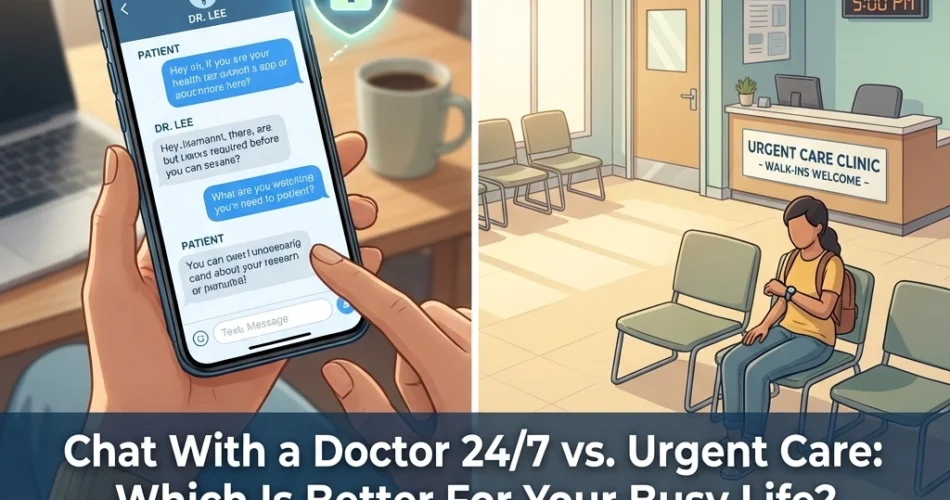
When you're dealing with a sudden illness or minor health concern, you face a common dilemma: should you visit an urgent care center or chat with a doctor 24/7 online? Both options offer alternatives to expensive emergency room visits, but they serve different needs and lifestyles.
The choice between online medical chat and traditional urgent care often comes down to your specific situation, schedule, and the nature of your health concern. Let's break down the key differences to help you make the best decision for your busy life.
What Is 24/7 Online Doctor Consultation?
Online doctor consultations allow you to chat with a doctor 24/7 through secure medical messaging platforms. Unlike traditional telehealth that relies on video calls, modern text-based platforms let you communicate directly with licensed physicians through secure messaging.

Services like ChatWithDr connect you with licensed doctors who can diagnose common conditions, provide treatment plans, and send prescriptions directly to your pharmacy. The entire process happens through secure text messaging, making it convenient for people who prefer written communication or need care during inconvenient hours.
These platforms typically handle non-emergency conditions like UTIs, sore throats, allergies, skin conditions, and prescription refills. You can get your prescriptions online without leaving your home or office, making it an attractive option for busy professionals, parents, and anyone with a packed schedule.
Understanding Urgent Care Centers
Urgent care centers serve as a middle ground between your primary care physician and the emergency room. They're designed for non-life-threatening conditions that need prompt attention but aren't severe enough for an ER visit.
Most urgent care centers operate on extended hours, often including evenings and weekends. They can handle a broader range of services than online consultations, including physical examinations, X-rays, lab tests, and minor procedures like stitches or wound care.
The trade-off is that urgent care requires you to travel to a physical location, potentially wait in line, and follow their operating hours. While more comprehensive than online consultations, they're also more time-consuming and may expose you to other illnesses in waiting rooms.
Cost Comparison: Your Wallet Will Notice the Difference
When comparing costs, online doctor consultations typically offer significant savings over urgent care visits. Many text-based telehealth platforms charge flat rates, making it easy to budget for care.
For example, ChatWithDr charges a flat $39.99 fee for consultations, regardless of your condition or how long the conversation takes. This transparent pricing eliminates surprise bills and makes healthcare more predictable for your budget. The service also accepts HSA and FSA payments, allowing you to use pre-tax dollars for your care.
Urgent care costs vary widely but typically range from $100-$300 for a basic visit, plus additional fees for any tests or procedures. With insurance, your out-of-pocket costs might be lower, but copays for urgent care visits often range from $50-$100 depending on your plan.
The cost advantage of online consultations becomes even more apparent when you factor in indirect costs like gas, parking, time off work, and childcare arrangements needed for urgent care visits.
Convenience: When Time Matters Most

The convenience factor is where 24/7 online doctor consultations truly shine. You can chat with a doctor from anywhere with an internet connection – your office during a lunch break, your home after the kids are in bed, or even while traveling.
Online platforms eliminate several common healthcare frustrations:
- No appointment scheduling required
- No commute or parking hassles
- No sitting in waiting rooms with sick patients
- No need to arrange childcare or time off work
- Available 24/7, including holidays and weekends
Urgent care centers, while more convenient than scheduling with your primary care doctor, still require you to work around their hours and location. Most operate until 8 or 10 PM on weekdays and have limited weekend hours. You'll also need to factor in travel time and potential wait times, especially during flu season or busy periods.
For busy professionals, parents juggling multiple schedules, or anyone living in rural areas with limited healthcare access, the convenience of online medical chat can be life-changing.
Speed: Getting Answers When You Need Them
Response time is crucial when you're feeling unwell or dealing with concerning symptoms. Online doctor consultations often provide faster access to medical care than urgent care centers.
Many platforms, including ChatWithDr, guarantee responses within two hours, often much sooner. You can start a conversation with a licensed physician immediately, describe your symptoms, and receive guidance without any delay beyond the doctor's response time.
Urgent care centers operate on a first-come, first-served basis, meaning wait times can vary dramatically. During peak hours or cold and flu season, you might wait 30 minutes to several hours to see a provider. This unpredictability can be frustrating when you're not feeling well or have a tight schedule.
For conditions like UTI treatment, where quick diagnosis and treatment can prevent complications, the speed of online consultations can be particularly valuable.
When to Choose Online Doctor Consultations
Online medical chat works best for straightforward conditions that don't require physical examination or diagnostic testing. Consider this option when you have:
Common Conditions Perfect for Online Care:
- Urinary tract infections (UTIs)
- Sore throats and cold symptoms
- Allergic reactions and skin rashes
- Pink eye and minor eye irritations
- Prescription refills for maintenance medications
- Birth control consultations
- Minor digestive issues
Lifestyle Factors That Favor Online Care:
- You have a busy schedule with little flexibility
- You're traveling or away from your usual healthcare providers
- You live in a rural area with limited urgent care access
- You prefer to avoid crowded waiting rooms
- You need care outside normal business hours
- You're comfortable communicating through text messaging
When Urgent Care Is the Better Choice
Despite the convenience of online consultations, some situations require in-person medical care. Choose urgent care when you need:

Services Requiring Physical Presence:
- X-rays for suspected fractures or injuries
- Laboratory tests (blood work, urine analysis)
- Physical examinations for abdominal pain
- Wound care requiring stitches or cleaning
- Sprains or injuries needing professional assessment
- Conditions requiring medical equipment or procedures
Symptoms That Need Hands-On Evaluation:
- Severe abdominal pain
- Significant injuries from accidents
- Persistent fever with concerning symptoms
- Breathing difficulties that aren't immediately life-threatening
- Eye injuries or sudden vision changes
Critical Safety Considerations
Both online consultations and urgent care have limitations when it comes to serious medical emergencies. Neither option can handle life-threatening conditions that require immediate emergency intervention.
Always Call 911 or Go to the Emergency Room for:
- Chest pain or heart attack symptoms
- Severe shortness of breath or difficulty breathing
- Signs of stroke (confusion, sudden weakness, speech problems)
- Severe bleeding that won't stop
- Loss of consciousness
- Severe allergic reactions (anaphylaxis)
- Severe burns or major injuries
Reputable online consultation platforms will always include safety protocols and will direct you to emergency care when appropriate. ChatWithDr's licensed physicians are trained to recognize when conditions require immediate in-person medical attention.
Real-World Scenarios: Making the Right Choice
Scenario 1: UTI on a Business Trip
Sarah develops UTI symptoms while traveling for work. An online consultation lets her chat with a doctor from her hotel room, get a same-day prescription online, and pick up antibiotics from a nearby pharmacy – all without missing her important meetings.
Scenario 2: Child's Possible Ear Infection
Mike's toddler is crying and tugging at their ear on a Sunday evening. While online consultation can provide initial guidance, the child's age and need for physical examination make urgent care the better choice for proper diagnosis.
Scenario 3: Prescription Refill Emergency
Lisa realizes her blood pressure medication ran out while her regular doctor is on vacation. Online prescription services can quickly provide a refill, saving her from potentially dangerous gaps in medication.
The Bottom Line: Choose Based on Your Needs
The decision between chatting with a doctor 24/7 and visiting urgent care isn't always clear-cut, but understanding your options helps you make informed choices about your healthcare.
Online medical chat excels in convenience, cost-effectiveness, and speed for straightforward conditions. It's revolutionizing healthcare access for busy individuals who need quick, professional medical guidance without the hassle of traditional healthcare visits.
Urgent care remains essential for conditions requiring physical examination, diagnostic testing, or procedures that can't be handled remotely.
The best approach is often using both options strategically. Keep online consultation platforms like ChatWithDr readily available for quick medical questions and common conditions, while knowing when your symptoms warrant an urgent care visit or emergency room trip.
By understanding the strengths and limitations of each option, you can make healthcare decisions that fit your lifestyle, budget, and medical needs – ensuring you get the right care at the right time, every time.
Related posts:
 Difference Between Urgent Care and Emergency Explained
  Chat With a Doctor 24/7: Is Live Medical Chat Really Better Than Urgent Care?
  Chat With a Doctor 24/7 vs. Urgent Care: Which Is Better For Your Busy Life?
  Chat With a Doctor 24/7 vs. Urgent Care: Which Is Better For Your Busy Life?
  Chat With a Doctor 24/7 vs. Urgent Care: Which Is Better For Your Busy Life?