
Remember the last time you needed to see a doctor for something simple? Maybe a sinus infection, a prescription refill, or just a weird rash that had you Googling symptoms at 2 AM. You probably faced the same frustrating choice: wait three weeks for a primary care appointment, spend hours in an urgent care waiting room, or ignore it and hope it goes away.
That model is broken, and patients know it. The average wait time to see a primary care physician in the United States now exceeds 26 days in many metropolitan areas, according to a 2023 survey by the Medical Group Management Association. For acute issues that need attention today: not next month: this creates a healthcare gap that sends patients to expensive emergency rooms or leaves conditions untreated.
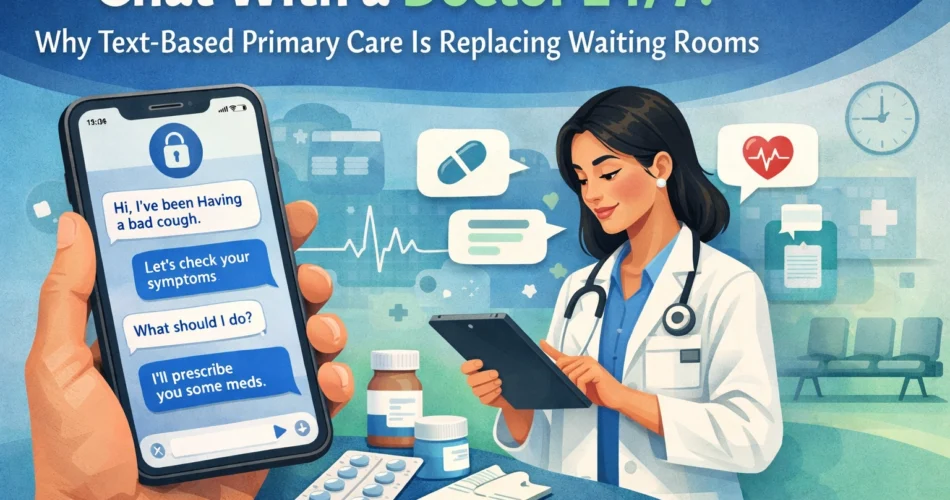
Text-based primary care is fundamentally changing this equation. By allowing you to chat with a doctor 24/7 through secure medical messaging, platforms like ChatWithDr are eliminating waiting rooms entirely while providing the same clinical outcomes at a fraction of the cost and time investment.
The Problem With Traditional Primary Care Access
Traditional primary care operates on a scheduling model designed decades ago. You call during business hours, wait on hold, schedule an appointment weeks away, take time off work, arrange childcare or transportation, sit in a waiting room exposed to other sick patients, and finally see a doctor for what's often a 10-minute conversation.
This system made sense when in-person examination was the only option. Today, research shows that over 70% of primary care visits involve conditions that can be diagnosed and treated virtually without physical examination: things like respiratory infections, urinary tract infections, skin conditions, medication refills, and routine follow-ups.

The gap between what patients need and what traditional systems provide has created massive friction. Parents can't afford to miss work for a child's pink eye. College students don't have time to schedule appointments between classes. Night shift workers can't access care during office hours. And anyone experiencing symptoms at 11 PM on a Saturday faces limited options: all of them expensive or inconvenient.
Why Text-Based Medical Chat Is Different
Text-based primary care platforms operate fundamentally differently than both traditional appointments and video telehealth. Instead of scheduling, you simply message your symptoms whenever you need care. Instead of waiting, you receive responses within minutes. Instead of seeing random providers, you build relationships with a consistent care team.
The convenience factor is obvious, but the clinical advantages run deeper. When you chat with a doctor 24/7 through secure messaging, you create a written record of your health concerns, symptoms, and treatment plans. This documentation improves continuity of care and reduces miscommunication: common problems in rushed office visits where patients forget to mention important details.
Text-based platforms also eliminate the "appointment mindset" where patients wait until multiple issues pile up before seeking care. When access is immediate and free of scheduling friction, people address health concerns early: often preventing complications that require more intensive intervention later.
No Account Required, No Waiting Room: Breaking Down Barriers
One of the biggest obstacles in telehealth adoption has been the registration process. Many platforms require creating accounts, entering insurance information, downloading apps, and navigating complex interfaces before you can even describe your symptoms. When you're feeling terrible, that friction is enough to make people give up.
ChatWithDr eliminates this barrier entirely. No account setup required: you can start chatting with a licensed doctor immediately. This "no waiting room" approach extends beyond physical spaces to digital ones. You're not sitting in a virtual queue or waiting for appointment slots to open. You describe your symptoms now, and medical professionals respond within minutes.

This immediacy matters for both acute and chronic care. If you're experiencing a UTI at 3 AM, you don't need to wait until morning: you can get diagnosed and receive a prescription sent to your pharmacy within an hour. If you're traveling and realize you forgot your blood pressure medication, you can request a refill instantly from anywhere.
Bridging the Primary Care Gap: More Than Just Urgent Care
While many telehealth platforms focus exclusively on urgent care, text-based primary care services fill a broader role. They bridge the gap between routine primary care appointments and urgent needs, handling the full spectrum of common medical issues that don't require in-person examination.
This includes:
Acute conditions like sinus infections, sore throat, pink eye, and cold and flu symptoms. Research shows these conditions are successfully treated virtually over 90% of the time, with clinical outcomes matching in-person visits.
Prescription refills and medication management for chronic conditions. When you run out of routine medications, you shouldn't need to schedule an appointment weeks away. Text-based platforms handle refills quickly while maintaining oversight of your ongoing treatment.
Follow-up care and symptom monitoring. After starting treatment, doctors can check in via secure messaging to ensure you're responding well. This proactive follow-up: rare in traditional urgent care: catches complications early and improves outcomes.
Chronic condition support between regular appointments. If you manage diabetes, hypertension, or another ongoing condition, you can message your care team with questions or concerns without waiting for your next scheduled visit.
Clinical Effectiveness: Does It Actually Work?
The obvious question is whether text-based care delivers real medical value or just convenience. The data is compelling. Platforms using secure medical messaging report clinical outcomes comparable to in-person visits for appropriate conditions, with patient satisfaction rates exceeding 90%.
A key factor is continuity. Unlike traditional urgent care where you see whoever's on duty, or video telehealth platforms that connect you with random available doctors, text-based primary care assigns you to a consistent care team. These providers access your full message history, understand your health background, and build relationships over time.

This continuity drives engagement. Studies show that patients using text-based primary care engage with their healthcare 7 times more frequently than those using traditional telehealth, according to research published in Digital Medicine. More engagement means earlier intervention, better medication adherence, and fewer preventable complications.
When physical examination is necessary, text-based platforms coordinate seamlessly with in-person care. Doctors can order lab work, arrange imaging, or refer you to specialists: all through the same messaging interface. You're not abandoning traditional medicine; you're making it more accessible and efficient.
The Cost Advantage: Saving Money and Time
The financial impact of eliminating waiting rooms extends beyond obvious savings. Employers implementing text-based primary care platforms report average savings exceeding $1,100 per engaged member annually, primarily through avoided emergency room and urgent care visits.
For individuals, the math is straightforward. An emergency room visit for a sinus infection can cost $1,500 or more. Urgent care runs $150-300. A traditional doctor's appointment costs $100-200 after insurance. Text-based consultations through platforms like ChatWithDr are often significantly less expensive and deliver faster results.
Time savings compound these financial benefits. The average doctor's appointment consumes 121 minutes when you account for scheduling, travel, waiting, and the visit itself, according to a Harvard Business School study. Text-based care eliminates all of it: you can message from home, work, or while traveling, fitting healthcare into your schedule instead of rearranging your life around appointments.
Real-World Use Cases: When Text-Based Care Shines
Text-based primary care excels in specific scenarios that represent a huge portion of healthcare needs:
Middle-of-the-night symptoms: When you wake up at 2 AM with severe nausea or a child's fever, you can get medical guidance immediately without dragging everyone to an emergency room. Doctors can assess severity, provide treatment recommendations, and send prescriptions to 24-hour pharmacies.
Work-life balance situations: Parents juggling jobs and childcare can handle routine medical needs during lunch breaks. Remote workers in different time zones can access care outside traditional business hours.
Travel and mobility: Whether you're on vacation, visiting family, or simply stuck at home without transportation, you can receive quality care without location constraints.
Routine but time-sensitive needs: Refilling prescriptions before they run out, treating UTIs before they progress to kidney infections, or addressing minor injuries before they become infected: all benefit from immediate access without appointment scheduling.
Chronic condition management: Between regular in-person checkups, you can monitor symptoms, adjust medications, and address concerns with your care team through secure medical messaging.
How It Actually Works
The process is remarkably simple. You visit a text-based platform, describe your symptoms or health concern, and a licensed physician reviews your message. They may ask follow-up questions to gather more information, then provide a diagnosis and treatment plan. If appropriate, they send prescriptions directly to your preferred pharmacy: often within 30-60 minutes of your initial message.
For ongoing care, your message history remains accessible, creating continuity across multiple interactions. You're not starting from scratch each time you need care. Your care team knows your medical history, current medications, and previous concerns.
The text format offers unexpected advantages. Patients often provide more detailed, thoughtful descriptions of symptoms when typing than when speaking to a doctor in a rushed office visit. You can take time to articulate concerns clearly, review your message before sending, and refer back to previous conversations.
The Future of Primary Care Access
Text-based primary care represents more than just a convenient alternative: it's a fundamental reimagining of how routine healthcare should work. By eliminating waiting rooms, scheduling friction, and access barriers, these platforms make care available exactly when and where patients need it.
This doesn't mean in-person medicine becomes obsolete. Physical examinations, procedures, and complex diagnostic workups will always require office visits. But for the majority of primary care needs: the infections, refills, minor injuries, and routine concerns that make up most medical encounters: immediate access through secure medical messaging delivers better outcomes at lower cost with dramatically improved patient experience.
As healthcare continues evolving, the question isn't whether text-based care will replace waiting rooms for appropriate conditions. The data clearly shows it already is. The question is how quickly traditional systems will adapt to meet patient expectations for immediate, convenient access to quality medical care.
If you're tired of scheduling appointments weeks in advance or spending hours in waiting rooms for simple medical needs, exploring text-based primary care options might change how you think about accessing healthcare.
Disclaimer: This information is not a substitute for professional medical advice, diagnosis, or treatment. Always seek the advice of your physician or qualified health provider with questions regarding medical conditions or treatments.
Related posts:
 Chat With a Doctor 24/7: Why Text-Based Primary Care Is Replacing Waiting Rooms
  Stop Waiting Days for Your Doctor: The Ultimate Guide to Instant Primary Care via Text
  Why Everyone Is Switching to 24/7 Text-Based Primary Care (And You Should Too)
 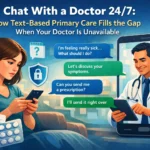 Chat With a Doctor 24/7: How Text-Based Primary Care Fills the Gap When Your Doctor Is Unavailable
 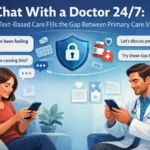 Chat With a Doctor 24/7: How Text-Based Care Fills the Gap Between Primary Care Visits