

It’s easy to get a cold and a sinus infection mixed up. At the heart of it, the real difference comes down to how long it lasts and the specific symptoms you feel. A cold is a viral bug that gives you that general stuffy, runny nose feeling and usually gets better on its own within 7-10 days. A sinus infection, on the other hand, is all about inflammation in your sinus cavities. It often brings distinct facial pain and pressure and can stick around for a lot longer.
Unpacking the Core Differences

When you feel that first scratch in your throat or your nose starts to run, it's natural to assume it's just a common cold. And you're probably right. The average adult catches between 2 to 5 colds a year, and globally, upper respiratory infections hit a staggering 12.8 billion cases in 2021. Colds are just a part of life.
But sometimes, what feels like a simple cold drags on and morphs into something more stubborn and painful: a sinus infection, or what doctors call acute sinusitis. The key to telling them apart is paying close attention to how your symptoms change over time and where you feel them the most.
Key Distinguishing Factors
A cold is a viral infection that camps out in your nose and throat (your upper respiratory tract). A sinus infection is inflammation of the tissue lining your sinuses—those hollow spaces behind your cheeks, forehead, and between your eyes. While a cold can certainly set the stage for a sinus infection, they aren't the same thing.
- The Cause: Colds are always viral. The rhinovirus is the usual suspect. Sinus infections often start out as a viral cold, but if fluid gets trapped in the sinuses, bacteria can move in and start a secondary infection.
- Location of Symptoms: Cold symptoms are pretty widespread. Think runny nose, sneezing, coughing, and a sore throat—it affects your whole upper respiratory system. A sinus infection is much more localized, causing targeted pain, pressure, and a feeling of fullness around your cheeks, eyes, or forehead.
- Symptom Duration: This is probably the most reliable clue. Cold symptoms tend to peak after a few days and clear up within 7 to 10 days. A sinus infection, however, often lasts longer than 10 days without getting better. Sometimes, it even gets worse after you thought you were on the mend.
There's a classic sign called "double sickening." It’s when you start feeling better from a cold, only to suddenly feel worse again with new symptoms like facial pain and fever. That’s a huge red flag that a secondary bacterial sinus infection has taken hold.
It's also worth thinking about other things that can cause similar sniffles and stuffiness. For instance, if allergies are a known issue for you, simple changes like using anti-allergy duvets could make a difference in your symptoms.
To make things even clearer, this quick guide breaks down the main differences at a glance.
Quick Guide Cold vs Sinus Infection at a Glance
This table offers a simple side-by-side look to help you quickly spot the differences between a cold and a sinus infection based on what you're feeling.
| Feature | Common Cold | Sinus Infection (Acute Sinusitis) |
|---|---|---|
| Primary Symptoms | Runny/stuffy nose, sneezing, sore throat, cough | Facial pain/pressure, thick yellow/green nasal discharge, congestion |
| Symptom Duration | Improves and resolves within 7–10 days | Lasts longer than 10 days or worsens after initial improvement |
| Facial Pain | Rare and mild, usually just general stuffiness | Common and localized to cheeks, forehead, or around the eyes |
| Fever | Uncommon in adults; usually low-grade if present | Can be present, especially with a bacterial infection |
| Underlying Cause | Viral | Can be viral, bacterial, or fungal |
Hopefully, this clears things up. The biggest takeaways are to watch your timeline and pay attention to where the discomfort is concentrated.
Mapping Your Symptom Timeline Day by Day
Trying to figure out if you have a cold or a sinus infection can feel like solving a puzzle. At first, the symptoms look almost identical, but how they play out over time tells a completely different story. Paying attention to your day-by-day progression is one of the best ways to get some real clarity.
Think of a common cold like a short story with a clear beginning, middle, and end. A sinus infection, on the other hand, often feels like a story that just won’t wrap up—or worse, takes a nasty turn right when you thought you were getting better.
The First Few Days: The Onset
The first 1-3 days are when both a cold and a potential sinus infection make their debut. It usually starts with that familiar scratchy throat, a wave of fatigue, or a sudden bout of sneezing.
In this early stage, a common cold announces itself loud and clear with classic upper respiratory signs. You’ll probably notice:
- A clear, watery runny nose that has you reaching for tissues constantly.
- Sneezing fits that seem to pop up out of nowhere.
- A mild sore throat that makes swallowing a little uncomfortable.
At this point, it's nearly impossible to tell the two apart because most sinus infections actually start out as a common cold. The virus inflames your nasal passages, basically setting the stage for what might come next. The real test is what happens after these first few days.
The Peak of the Illness
This is where things get interesting. Days 4-7 are the climax of the illness, and it’s here that the paths of a cold and a sinus infection really start to diverge.
For a run-of-the-mill cold, these are the peak days. Your runny nose might thicken up, and you could develop a bit of a cough. But by the end of this period, you should be feeling a slow but steady improvement. Your energy starts to return, and you know the worst is behind you.
But if a sinus infection is brewing, that's not what happens at all. Instead of getting better, your symptoms might just stick around or even get worse. The dead giveaway is the arrival of very specific facial symptoms. While a cold gives you a general feeling of stuffiness, a sinus infection creates targeted pressure and pain. You might feel a dull, nagging ache in certain spots:
- Behind your cheeks: Sometimes this can even feel like a toothache.
- In your forehead: A headache that gets worse when you bend over is a classic sign.
- Around or between your eyes: You might feel a sense of fullness or pressure right there.
This is the moment when listening to your body becomes critical in the cold vs. sinus infection debate.
One of the most telling signs of a bacterial sinus infection is something called "double sickening." This is when you start to feel better from your cold around day 5 or 6, only to suddenly take a nosedive. You might spike a new fever, the facial pain ramps up, and your nasal discharge becomes thicker and more discolored.
The Final Stretch: Resolution or Persistence
Days 7-14+ are the decider. By now, a cold should be well on its way out the door, but a sinus infection digs in its heels and refuses to leave.
If you just had a common cold, by day 10, almost all your symptoms should be gone, though a light cough might hang around for a bit. You feel much better and are getting back into your normal routine. The illness has run its course, usually clearing up completely within 7 to 10 days.
However, if your symptoms are still going strong past the 10-day mark without any improvement, a sinus infection is the prime suspect. The things that truly define acute sinusitis are duration and severity. If you’re well into the second week and still dealing with thick nasal discharge, significant facial pressure, and relentless congestion, that’s a clear signal the inflammation in your sinuses isn't going away on its own. It’s no longer just a cold.
A Head-to-Head Symptom Analysis
While the timeline offers some great clues, a closer look at the symptoms themselves tells the real story of what’s happening inside your body. It's the difference between that generalized, all-over sick feeling and a very specific, localized misery.
Let's break down the key symptoms to help you pinpoint what you're dealing with. This decision tree is a great starting point, showing how symptom duration can guide your next steps, from just resting up to seeking medical advice.
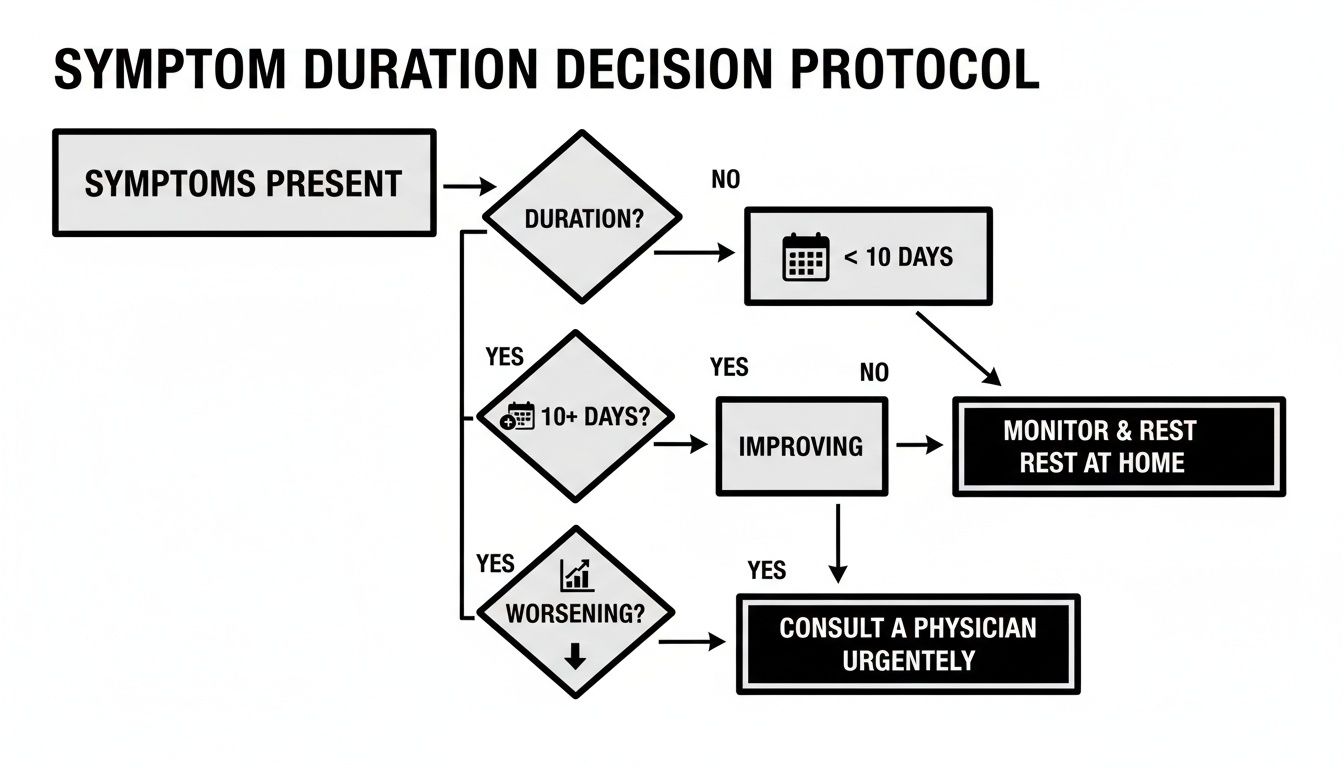
As you can see, symptoms that hang around for less than ten days usually point to a cold. But if they drag on longer or suddenly get worse after you started feeling better, it's a strong signal of a sinus infection that needs a professional look.
Facial Pain and Pressure
This is probably the single most defining difference. A common cold might leave you feeling generally stuffy, but it almost never causes real, focused pain.
- Common Cold: You get that vague, stuffy-head feeling. It’s annoying, for sure, but not truly painful.
- Sinus Infection: The discomfort is targeted. It feels like a dull, throbbing pressure right behind your face. Bending forward almost always makes it noticeably worse. You might feel it right in your forehead, between your eyes, in your cheeks, or even as pain in your upper teeth.
Nasal Discharge Characteristics
Everyone gets hung up on the color of their mucus, but the consistency and how it changes over time are just as revealing.
- Common Cold: It almost always starts clear and watery. It might thicken and turn a bit cloudy or yellowish for a day or two as your immune system gets to work, but then it tends to thin out again as you get better.
- Sinus Infection: We're talking thick, sticky, and persistently yellow or green discharge that lasts for days on end. This happens because the mucus is trapped in your sinuses, creating a breeding ground for immune cells and bacteria to build up.
Head-to-Head Symptom Analysis: Cold vs. Sinus Infection
Sometimes, seeing the nuances side-by-side makes all the difference. This table breaks down the subtle but crucial distinctions between common cold and sinus infection symptoms.
| Symptom | Common Cold Presentation | Sinus Infection Presentation |
|---|---|---|
| Facial Pain/Pressure | General stuffiness, mild head pressure | Localized, throbbing pain in cheeks, forehead, or between eyes; often worse when bending over |
| Nasal Discharge | Starts clear/watery, may briefly turn yellow/cloudy, then clears | Persistently thick, sticky yellow or green discharge for many days |
| Fever | Usually absent or low-grade (below 101°F) | Can be low-grade or higher-grade (102°F+), especially if bacterial |
| Headache | Mild, generalized "stuffy head" feeling | Dull, constant ache localized over the affected sinuses |
| Cough | Often present, can be wet or dry, usually from post-nasal drip | Present, often worse at night, also from post-nasal drip |
| Duration of Symptoms | Peaks around days 3-5 and improves within 7-10 days | Lasts longer than 10 days without improvement, or improves then suddenly worsens |
| Other Key Signs | Sore throat, sneezing, watery eyes are common | Bad breath, reduced sense of smell/taste, pain in upper teeth |
Looking at the full picture—duration, location of pain, and other unique signs—gives you a much clearer idea of whether you're dealing with a simple virus or something more stubborn.
Cough and Other Telltale Signs
While both illnesses can bring on a cough, a sinus infection often comes with a unique set of secondary symptoms you just don't see with a cold. A cold cough is usually from simple post-nasal drip, but a sinus infection cough is often part of a bigger picture.
A sinus infection can also cause:
- Bad Breath (Halitosis): That stagnant, infected mucus hanging out in your sinus passages can create a pretty unpleasant odor.
- Reduced Sense of Smell or Taste: When inflammation and congestion are severe, they can physically block the scent receptors in your nasal cavity.
- Pain in Your Upper Teeth: The roots of your top teeth sit right underneath your maxillary sinuses. When those sinuses are filled with pressure, it can feel exactly like a toothache.
It's so important to know these differences. While most sinus infections are viral, a small fraction—only about 0.5% to 2% of viral cases—become bacterial. Recognizing the signs is key. And these issues are incredibly common; in the United States, roughly 28.9 million adults are diagnosed with chronic sinusitis.
If you're ever on the fence, getting a professional opinion is the smartest move. For a broader look at how these symptoms compare to other bugs, check out our guide on distinguishing between a cold, flu, and COVID.
Finding the Right Treatment Plan
Once you have a better idea of whether you're dealing with a cold or a sinus infection, figuring out how to feel better is the next step. The good news is that both illnesses share a lot of common ground when it comes to the first line of defense. The focus is almost always on supportive care to help your body do its job and fight off the infection.
Whether you have a common cold or you're in the early days of a viral sinus infection, your game plan should look the same. These simple, at-home strategies are surprisingly effective at providing relief and giving your immune system the backup it needs.
Shared Remedies for Colds and Sinus Infections
For both conditions, the goal is to manage your symptoms and keep things from getting worse. Think of this as your foundational care plan, designed to get you through the worst of it.
- Rest and Hydration: This one is non-negotiable. Your body needs energy to fight off an infection, and staying well-hydrated is key to thinning out mucus and making it easier to drain.
- Saline Nasal Sprays or Rinses: Using a simple saline solution helps wash away irritants and thick mucus from your nasal passages, which can do wonders for reducing congestion and inflammation.
- Warm Compresses: Placing a warm, damp cloth over your cheeks, nose, and forehead can provide real, tangible relief from that awful sinus pressure and pain.
- Over-the-Counter (OTC) Pain Relievers: Medications like acetaminophen or ibuprofen are your friends for managing headaches, facial pain, and fever.
- Decongestants: Available as pills or nasal sprays, these can help shrink swollen nasal passages. Just be careful with the sprays—you shouldn't use them for more than a few days to avoid a rebound effect that makes you even more congested.
These remedies work because they directly target the core symptoms—inflammation and congestion—that make both a cold and a sinus infection so miserable.
When Antibiotics Are Necessary for a Sinus Infection
This is where the treatment paths for a cold versus a sinus infection split dramatically. Since colds are always viral, antibiotics are completely ineffective against them. The same goes for the vast majority of sinus infections, which also start out as viral illnesses. Your body’s immune system is usually more than capable of clearing these on its own.
But sometimes, all that trapped fluid in the sinuses becomes a breeding ground for a secondary bacterial infection. It only happens in a small percentage of cases, but this is the moment a doctor might consider prescribing antibiotics. The trick is knowing the specific signs that point to a bacterial cause.
It's a common myth that thick green or yellow mucus automatically means you need antibiotics. Mucus color naturally changes as your immune system fights off a virus. The far more reliable clues of a bacterial infection are the duration and severity of your symptoms.
A healthcare provider will be looking for very specific criteria before writing a prescription:
- Symptoms Lasting Over 10 Days: If your sinus symptoms are still hanging around after more than 10 days without any sign of improvement, it’s a strong hint that bacteria have moved in.
- Severe Onset: A high fever (think 102°F or higher) along with thick nasal discharge and facial pain for at least three consecutive days points toward a more severe, likely bacterial, infection.
- The "Double Sickening" Pattern: This is a classic sign. You start to feel better after a cold, only to have your symptoms come roaring back worse than before, often with a new fever and intense facial pain. That's a huge red flag for a secondary bacterial sinus infection.
Understanding this distinction is so important for using antibiotics responsibly. Overusing them for viral illnesses is a major driver of antibiotic resistance, which is a serious public health problem. If your symptoms don't meet these criteria, a doctor will almost certainly recommend you continue with supportive care and let the viral infection run its course. For more details on your options, you can explore our resources on getting help for a sinus infection. This smart approach ensures you get the right treatment only when you truly need it, without contributing to a bigger problem.
When to Get Same Day Medical Advice
When you're feeling miserable, the last thing you want to do is play guessing games with your health. While you can often manage a common cold or even a mild sinus infection from your couch, some signs are your body’s way of telling you it’s time to call in a professional. Knowing when to switch from self-care to medical care is the key to a faster, safer recovery.

Thankfully, modern healthcare offers solutions like telehealth, which are perfect for situations like a lingering cold or a suspected sinus infection. This approach saves you a trip to a germ-filled waiting room while still giving you access to real medical expertise.
Clear Signs It Is Time for a Consultation
So, when does a nagging illness cross the line from annoying to concerning? If your symptoms are seriously disrupting your life or just refuse to go away, it's time to act. Here are the specific scenarios where getting same-day advice is the smart move.
- Symptoms Last Over 10 Days: If your congestion, cough, and fatigue are still hanging around after the 10-day mark with no improvement, it’s a strong signal you're dealing with more than a simple cold.
- The "Double Sickening" Effect: This one's a classic. You started feeling better from a cold, only to suddenly get hit with a new fever or intense facial pain. It often points to a secondary bacterial infection setting in.
- Severe or Localized Pain: This isn't just a stuffy headache. We're talking about a focused, throbbing pressure in your cheeks, forehead, or behind your eyes that gets noticeably worse when you bend over.
- A High, Persistent Fever: A fever that climbs above 102°F or any fever that sticks around for more than three days is a major red flag that your body is fighting something more serious.
Getting a professional diagnosis isn't just about getting a prescription. It’s about peace of mind—ruling out a bacterial infection, confirming the right treatment, and getting a clear, documented plan to get back on your feet.
Upper respiratory infections are incredibly common. Back in 2019, there were an estimated 17.2 billion cases globally, which made up nearly 43% of all infectious diseases studied. This high prevalence is exactly why accessible, same-day care is so valuable for busy adults who can't afford to be sidelined.
The Simplicity of Online Urgent Care
Services like ChatWithDr are designed for these exact situations, offering a straightforward path to getting the care you need without ever leaving home. The whole process is simple, private, and refreshingly fast.
- Start Your Visit: You just select your condition—like a sinus infection—from a list of common issues.
- Complete a Quick Intake: You'll answer a few questions about your symptoms and medical history on a secure, HIPAA-compliant form. It takes the place of that in-person interview.
- Get Your Treatment Plan: A board-certified physician in your state reviews your case, provides a diagnosis, and creates a personalized treatment plan. If medication is needed, a prescription is sent right to your local pharmacy.
This entire process can take just a few hours. When you're trying to figure out if it's a cold vs sinus infection, that kind of quick expert clarity makes all the difference. If you do end up needing a prescription, it's helpful to understand what a copay is in health insurance so you can anticipate any costs.
For busy people who don't have time to be sick, using online urgent care is a modern solution that fits into your life, making sure you get the right advice right when you need it.
Common Questions, Answered
Even with a clear breakdown, you probably still have a few questions. That's normal. Let's tackle some of the most common things people ask when trying to figure out if they're dealing with a stubborn cold or a full-blown sinus infection.
Can a Cold Turn Into a Sinus Infection?
Absolutely. In fact, that's how most sinus infections get their start. A cold virus triggers inflammation in your nasal passages, which can easily block your sinuses from draining properly.
Think of it like a plumbing problem. Once mucus gets trapped, it creates the perfect warm, damp environment for bacteria to multiply. This is precisely why cold symptoms that drag on for more than 10 days—or suddenly take a nosedive after you thought you were getting better—are such a huge red flag.
Is a Sinus Infection Contagious?
This one is a little tricky, so the answer is "yes and no." The original virus that kicked everything off—the cold—is definitely contagious. You can easily spread it through coughs and sneezes, especially in the first few days.
However, if that initial cold sets the stage for a secondary bacterial infection, the bacterial part itself is not considered contagious. You can’t directly pass the bacteria festering in your sinuses to someone else.
Key Takeaway: It’s best to act like you're contagious for the first week or so. You're likely still shedding the cold virus that started it all. If it develops into a bacterial issue after that, your risk of spreading the illness drops significantly.
When Can I Return to Work or School?
The safest bet is to stay home until you’ve been fever-free for a full 24 hours without needing any fever-reducing medicine. This is a standard public health guideline for a reason—it helps stop the spread of the initial virus.
Beyond that, listen to your body. If you're still coughing up a storm, sneezing constantly, or just feel too wiped out to function, it’s better to rest at home. You'll be doing your coworkers a favor while giving your own body the time it needs to actually recover.
Is Green Mucus Always a Sign of a Bacterial Infection?
Nope. This is probably one of the biggest medical myths out there. The color of your snot is not a reliable clue for a bacterial infection.
When your immune system is fighting any kind of bug, including a simple cold virus, it sends in white blood cells. The enzymes these cells release can turn your mucus yellow or green, regardless of the cause. A much better indicator is the duration and pattern of your symptoms. Thick, discolored mucus that sticks around for over 10 days, paired with facial pain and pressure, is a far more convincing sign of a bacterial sinus infection than color alone.
Feeling stuck and unsure what to do next? Don't guess. ChatWithDr offers same-day medical consultations with board-certified physicians for just $39.99. You can get a clear diagnosis, a personalized treatment plan, and any necessary prescriptions sent right to your pharmacy, often within hours. Start your private, text-based visit now.
Related posts:
 Tonsillitis vs Strep Throat What’s the Real Difference
  Sinus Infection or Just a Cold? Here’s When to See a Doctor Online (And When to Hit the ER)
  Your Guide to Fast Sinus Infection Treatment Online
  Sinus Infection vs Cold: How to Tell the Difference (And Get Treatment in Under 2 Hours)
  Strep Throat vs Sore Throat: How to Tell the Difference