
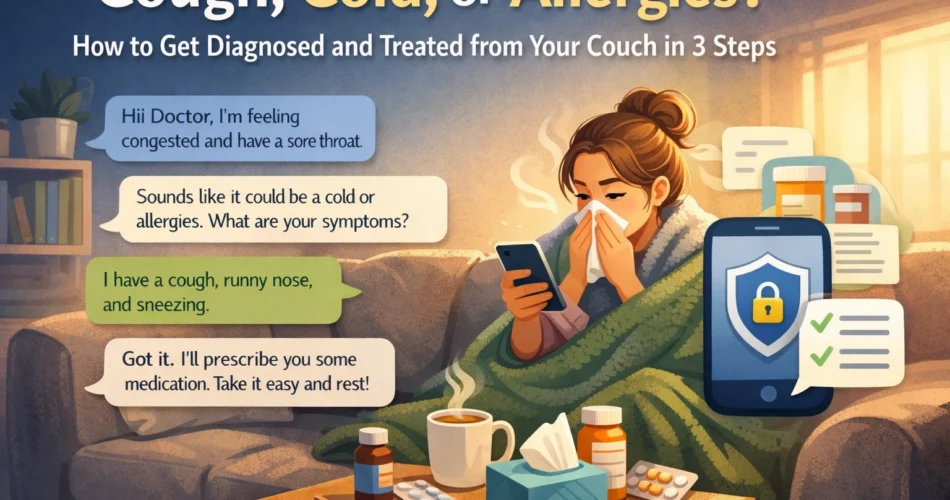
You wake up with a scratchy throat, runny nose, and a persistent cough. Is it a cold? Seasonal allergies? Or something else entirely? The symptoms overlap so much that it's hard to tell: and even harder to know whether you need treatment right away or if it'll pass on its own.
Here's the good news: you don't need to drag yourself to a clinic, sit in a waiting room full of sick people, or take time off work to get answers. With text-based telehealth platforms like ChatWithDr, you can chat with a licensed doctor, get an accurate diagnosis, and receive treatment: all without leaving your couch.
This guide breaks down exactly how to get diagnosed and treated for respiratory symptoms in three straightforward steps.
Why It's So Hard to Tell the Difference Between Colds, Coughs, and Allergies
Before diving into the solution, let's talk about why these conditions are so confusing in the first place.
Common colds are viral infections that typically cause congestion, sore throat, cough, and mild body aches. They usually resolve within 7-10 days without treatment.
Seasonal allergies (allergic rhinitis) occur when your immune system overreacts to environmental triggers like pollen, dust mites, or pet dander. Symptoms include sneezing, itchy eyes, runny nose, and sometimes a dry cough: but no fever or body aches.
Chronic cough can stem from numerous causes including post-nasal drip, asthma, acid reflux, or lingering effects from a previous respiratory infection.
The symptom overlap is significant, which is why a thorough medical evaluation: even a remote one: is essential for proper diagnosis and treatment.

Step 1: Start an Online Consultation with a Licensed Doctor
The first step in getting diagnosed is connecting with a healthcare provider who can take a detailed medical history. With ChatWithDr's text-based platform, you can message a licensed physician 24/7 without scheduling an appointment or waiting in a physical office.
During your secure messaging consultation, your doctor will ask comprehensive questions to identify the root cause of your symptoms:
- Duration and type of cough: How long have you had it? Is it dry or productive (bringing up mucus)?
- Symptom patterns: Do symptoms worsen at certain times of day or in specific environments?
- Associated symptoms: Are you experiencing fever, chest tightness, wheezing, nasal congestion, or post-nasal drip?
- Medical and medication history: Current medications, known allergies, and pre-existing conditions
- Lifestyle factors: Smoking history, occupational exposures, recent travel, or sick contacts
- Environmental triggers: New pets, recent home renovations, seasonal patterns
Even without a traditional in-person physical exam, doctors can gather substantial diagnostic information through detailed questioning. If you're able to share photos (such as throat irritation or rash), that can provide additional visual assessment.
This thorough approach is what separates quality telehealth from symptom-checker apps. A real doctor reviews your complete picture and applies clinical judgment: not just an algorithm.
Step 2: Coordinate Testing If Needed
Based on your symptoms and history, your doctor will determine whether testing is necessary to confirm a diagnosis.
For Suspected Allergies
If your doctor suspects seasonal allergies, several testing options can be coordinated remotely:
At-home allergy testing kits are increasingly popular and convenient. You collect a small blood sample at home using a finger-prick lancet, mail it back to a laboratory in a pre-paid envelope, and receive results within days. These tests measure IgE antibodies to common allergens like pollen, dust mites, mold, and pet dander.
Lab-coordinated testing is another option where your online doctor orders blood work (specific IgE testing) or coordinates skin prick testing at a local laboratory or allergy clinic near you. Results are then reviewed remotely during a follow-up consultation.
It's important to understand that no single test definitively diagnoses allergies on its own. Test results are one piece of evidence that your doctor combines with your symptom history, patterns, and clinical examination to reach an accurate diagnosis.
For Other Respiratory Conditions
If your cough is persistent or symptoms suggest something beyond allergies or a simple cold, your doctor may recommend:
- Spirometry (lung function testing) to rule out asthma or COPD
- Chest X-ray to check for pneumonia or other lung conditions
- COVID-19, flu, or strep testing if your symptoms and exposure history suggest these infections
ChatWithDr's physicians can coordinate these tests at local facilities, and you'll discuss results during secure medical messaging follow-ups: no additional office visits required.
Step 3: Receive Your Diagnosis and Personalized Treatment Plan
After reviewing your symptoms and any test results, your doctor will provide a clear diagnosis and customized treatment plan tailored to your specific condition.
Treatment for Common Colds
For viral upper respiratory infections, treatment focuses on symptom relief since antibiotics don't work on viruses. Your doctor may recommend or prescribe:
- Decongestants to relieve nasal congestion
- Cough suppressants or expectorants depending on cough type
- Pain relievers for sore throat and body aches
- Increased hydration and rest
If your symptoms suggest a bacterial infection like strep throat or a sinus infection, your doctor can send a prescription for antibiotics directly to your preferred pharmacy.
Treatment for Seasonal Allergies
Once allergies are confirmed, your online doctor will create a management strategy that may include:
- Antihistamines (oral or nasal sprays) to block histamine release
- Nasal corticosteroids to reduce inflammation and congestion
- Decongestants for short-term symptom relief
- Allergy immunotherapy referrals if symptoms are severe or persistent
Your doctor will also provide guidance on avoiding identified triggers and when to follow up if symptoms don't improve.
Treatment for Chronic Cough
The treatment approach depends on the underlying cause identified during your consultation:
- Post-nasal drip: Nasal sprays, antihistamines, or decongestants
- Asthma: Inhaled bronchodilators or corticosteroids
- Acid reflux: Proton pump inhibitors or H2 blockers
- Infections: Antibiotics if bacterial, supportive care if viral
Your doctor can send prescriptions electronically to your pharmacy, often within minutes of your consultation. With ChatWithDr's online prescription service, you can pick up your medication the same day or have it delivered.

Why Text-Based Telehealth Works So Well for Respiratory Conditions
You might wonder whether messaging with a doctor is as effective as an in-person visit for conditions like coughs, colds, and allergies. Research and clinical experience show that text-based consultations are highly effective for many common ailments.
Convenience and accessibility: No commute, no waiting room, no taking time off work. You can message your doctor during lunch breaks, late at night, or whenever symptoms hit.
Comprehensive medical history: Text-based consultations often result in more detailed histories because patients have time to think through symptoms, check medication bottles, and provide thorough responses without feeling rushed.
Immediate access to treatment: Once diagnosed, prescriptions can be sent to your pharmacy right away: no separate trip to pick up a paper script.
Follow-up is seamless: If your symptoms change or you have questions about your treatment, you can message your doctor again without scheduling another appointment.
Cost-effective: Telehealth visits typically cost significantly less than urgent care or ER visits, and many insurance plans now cover online consultations.
For conditions that don't require hands-on examination: like differentiating between allergies and viral infections based on symptom patterns: text-based platforms deliver excellent care at a fraction of the hassle.
When to Seek Immediate Medical Attention
While online consultations handle most respiratory symptoms effectively, some situations require emergency care. Seek immediate in-person medical attention if you experience:
- Severe difficulty breathing or shortness of breath at rest
- Chest pain or pressure
- High fever (over 103°F) that doesn't respond to medication
- Coughing up blood
- Confusion or altered mental status
- Blue lips or face
- Symptoms of severe allergic reaction (anaphylaxis)
ChatWithDr's doctors will guide you on when symptoms warrant emergency evaluation versus when they can manage your care remotely.

Beyond Colds and Allergies: What Else Can You Treat Online?
The convenience of text-based telehealth extends far beyond respiratory symptoms. ChatWithDr's licensed physicians can diagnose and treat numerous common conditions from your phone or computer:
- Skin conditions: Acne treatment, eczema, rashes, and more through ChatWithDr's online dermatology consultations
- Infections: UTI treatment, strep throat, and sinus infections
- Women's health: Birth control, UTIs, and other gynecological concerns
- Men's health: Hair loss, ED treatment, and preventive care
- Chronic condition management: Migraine headaches, allergies, and ongoing medication management
The platform offers truly 24/7 access to licensed doctors: not just during business hours: making it ideal for busy schedules, parents juggling kids, or anyone who values convenience without compromising quality care.
Getting Started Is Simple
If you're dealing with a cough, cold, or allergy symptoms right now, here's what to do:
- Visit ChatWithDr.com and create a free account
- Describe your symptoms through secure medical messaging
- A licensed physician will review your case and respond, typically within minutes
- Follow your doctor's guidance for testing if needed
- Receive your diagnosis and treatment plan with prescriptions sent directly to your pharmacy
No appointments. No waiting rooms. No wondering whether your symptoms warrant a doctor visit. Just straightforward, professional medical care from the comfort of your couch.
The next time you can't tell whether you need allergy medication or cold medicine, don't guess: chat with a real doctor who can give you real answers and real treatment.
Disclaimer: This information is not a substitute for professional medical advice, diagnosis, or treatment. Always seek the advice of your physician or qualified health provider with questions regarding medical conditions or treatments.