

Erectile dysfunction (ED) isn't just one thing—it's a complex issue that can come from physical problems like circulation and nerve damage, hormonal shifts, or even psychological factors like stress and anxiety. The good news is that the path to regaining your sexual health is clear, with options ranging from simple lifestyle changes and oral medications to specialized devices and therapies.
What Is Erectile Dysfunction, Really?
Let’s get one thing straight: erectile dysfunction is not a personal failure or a flaw in your masculinity. It's a common and treatable medical condition that affects millions of men. The best way to think of it is as a signal from your body that one of its systems—be it circulatory, neurological, or psychological—needs a little attention.
Getting your head around that perspective is the first and most important step. The stigma around ED is what keeps too many men from getting help, even though the condition is incredibly widespread.
A Common Condition with a Clear Path Forward
The global numbers on ED are staggering and on the rise. Back in 1995, about 152 million men around the world were dealing with some form of ED. Projections show that number could swell to 322 million men by 2025, largely due to aging populations and an increase in related health issues. This makes ED a major public health concern, especially since it's often linked to cardiovascular disease. You can read the full research on ED's projected growth and its health implications.
ED is best understood as a symptom, not a final verdict. It's your body's way of communicating that something is out of balance, whether it's related to blood flow, nerve signals, or emotional well-being. Listening to this signal is the first step toward taking control.
The journey to resolving ED starts with a partnership between you and a doctor to pinpoint the specific cause and map out the most effective treatment. Thankfully, modern medicine offers a wide array of solutions that can be matched to your individual needs.
These options create a hopeful and actionable path forward, allowing you to get to the root of the problem and reclaim your confidence. The key is to move past any embarrassment and start a conversation. You’ll quickly find that not only is the problem common, but it's also highly manageable with the right support and strategy.
How a Healthy Erection Actually Works
To figure out what’s going wrong when an erection doesn't happen, it really helps to first understand the remarkable process behind a healthy one. It’s not a simple on/off switch. An erection is a complex event that demands perfect teamwork between your brain, nerves, hormones, and your entire circulatory system. Think of it less like flipping a light switch and more like a symphony conductor leading multiple sections of an orchestra.
It all kicks off in your brain. When you get sexually aroused—whether from a thought, a sight, or physical touch—your brain sends powerful signals down your spinal cord. These signals travel through a dedicated network of nerves straight to the pelvic region. This is the crucial first step where mental desire starts its journey to becoming a physical response.
The Role of Blood Flow and Muscle Relaxation
Imagine the penis contains two spongy, balloon-like chambers called the corpus cavernosa. Normally, when you're not aroused, the smooth muscles around these chambers are kept tense, and the arteries feeding them are narrow. This keeps blood flow to a minimum.
But when those nerve signals from your brain arrive, they trigger the release of a key chemical messenger: nitric oxide. This molecule is the star of the show. It tells the smooth muscles in the penile arteries and inside the corpus cavernosa to completely relax. This relaxation widens the arteries dramatically, opening the floodgates for blood to rush in and fill up those spongy chambers.
As the chambers swell with blood, they expand and press against the veins that usually drain blood away from the penis. This pressure traps the blood inside, creating the firmness and rigidity we know as an erection.
An erection is fundamentally a cardiovascular event. It relies on healthy, flexible blood vessels and robust blood flow. Any condition that harms your vascular system, from high blood pressure to diabetes, can directly interfere with this delicate hydraulic process.
The visual below breaks down this pathway from a mental signal to a physical action.
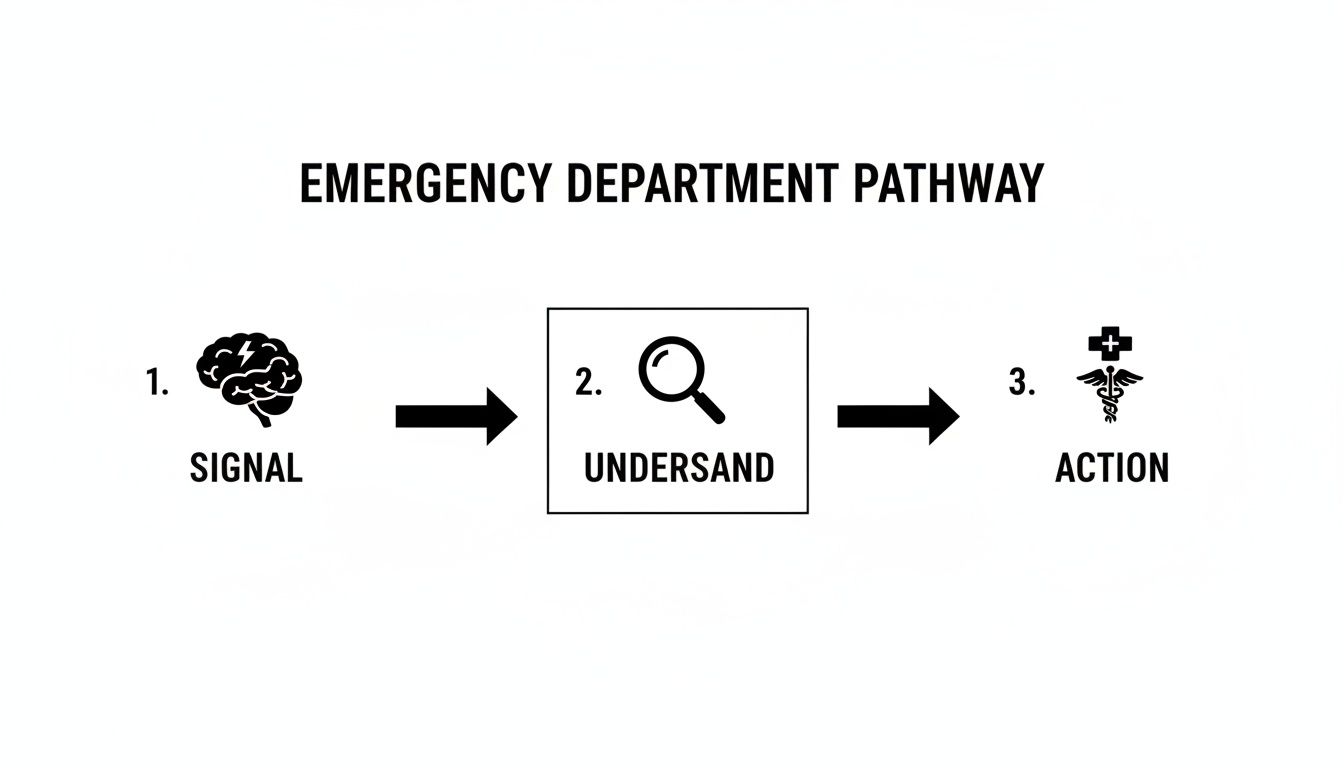
This illustrates the core steps: a signal from the brain, an understanding of the body's needs, and the resulting action or treatment.
Maintaining the Erection and Returning to Normal
To keep the erection going, your brain has to keep sending arousal signals, nitric oxide levels have to stay up, and the blood needs to stay trapped within the corpus cavernosa. After ejaculation, or when sexual stimulation stops, the entire process goes into reverse.
Another enzyme, phosphodiesterase type 5 (PDE5), swoops in to break down the chemicals that were keeping the muscles relaxed. This allows the smooth muscles to tense up again, which reduces blood flow into the penis and opens up the veins for blood to drain out. The penis then returns to its flaccid state. This whole process is key, as many popular ED treatments work by specifically targeting this PDE5 enzyme.
Uncovering the Physical Causes of ED
While the mind plays a powerful role, the reality is that most cases of erectile dysfunction have a physical root cause, especially for men over 50. It helps to think of your circulatory system as a network of highways. For an erection to happen, these highways need to be wide open to allow a surge of traffic—in this case, blood.
If those roads get blocked or damaged, you get traffic jams. The system fails.
Many of the most common causes of ED are directly tied to the health of your blood vessels, nerves, and hormones. These issues don't just pop up overnight. They usually develop slowly as a result of other health conditions or lifestyle habits. Spotting these connections is the first real step toward finding a solution that works.
Vascular and Circulatory Problems
Your vascular health is probably the single most important factor for erectile function. It's simple, really: conditions that harm your heart and arteries are also harming the much smaller, more delicate arteries that supply the penis.
This is why ED is often considered an early warning sign for cardiovascular disease. The arteries in the penis are tiny compared to the ones in your heart, so they're often the first to show signs of trouble.
The main culprits here are:
- Atherosclerosis: This is just a fancy term for the hardening and narrowing of arteries from plaque buildup. Picture a pipe slowly getting clogged with mineral deposits, restricting flow. When this happens in the penile arteries, not enough blood can get through to create a firm erection.
- High Blood Pressure (Hypertension): Over time, high blood pressure damages the sensitive lining of your arteries. This makes them less flexible and speeds up the plaque-building process of atherosclerosis.
- High Cholesterol: Excess cholesterol is a primary ingredient in the plaque that clogs arteries, creating the blockages that lead straight to ED.
Common Physical Causes of Erectile Dysfunction
To make it clearer, here's a breakdown of the most common medical issues that can lead to ED and a simple explanation of how they interfere with the process.
| Cause Category | Specific Condition | How It Contributes to ED |
|---|---|---|
| Vascular & Heart Health | Atherosclerosis (Clogged Arteries) | Narrows the arteries supplying the penis, physically restricting the blood flow needed for a firm erection. |
| Vascular & Heart Health | High Blood Pressure | Damages the lining of blood vessels, making them stiff and less able to expand to accommodate increased blood flow. |
| Metabolic Disorders | Diabetes Mellitus | High blood sugar damages both the small blood vessels and the nerves that control arousal and blood flow. |
| Neurological Issues | Nerve or Spinal Cord Injury | Disrupts the nerve signals sent from the brain to the penis that are necessary to initiate and sustain an erection. |
| Hormonal Imbalances | Low Testosterone ("Low T") | Reduces libido (sex drive) and can interfere with the chemical processes that lead to an erection. |
| Structural Issues | Peyronie's Disease | The formation of scar tissue inside the penis causes painful, curved erections and can make getting an erection difficult. |
| Post-Surgical Complications | Prostate Cancer Treatment | Surgery or radiation can inadvertently damage the delicate nerves and blood vessels surrounding the prostate that are vital for erections. |
Understanding this table helps you see that ED is rarely just a standalone issue. It's often a signal from your body that something else needs attention.
Metabolic and Neurological Disorders
It’s not just about the plumbing. The nerves that carry signals from your brain and the hormones that regulate desire are just as crucial. If these systems are out of whack, you can have a problem even if your blood flow is otherwise perfect.
Diabetes is a classic example because it attacks on two fronts. Chronically high blood sugar is toxic to both small blood vessels and nerve endings, leading to a double-whammy on erectile function.
Other major culprits in this category include:
- Diabetes: Men with diabetes are two to three times more likely to develop ED. The condition messes with blood flow and causes nerve damage (neuropathy) that shorts out arousal signals.
- Nerve or Spinal Cord Injuries: Trauma from an accident or a condition like multiple sclerosis can sever the connection between the brain and the penis, stopping arousal signals dead in their tracks.
- Prostate Cancer Treatments: Surgery and radiation for prostate cancer can sometimes damage the delicate nerves and blood vessels right next to the prostate that are essential for erections.
- Peyronie's Disease: This is a condition where scar tissue develops inside the penis, causing erections to be curved and often painful, which can lead to ED.
Age itself isn't a direct cause, but the risk of developing these underlying conditions goes up as you get older. Landmark data from the Massachusetts Male Aging Study found that about 52% of men aged 40–70 had some degree of ED. More importantly, the rate of severe ED jumped from 5% in the younger guys to 15% in the older ones.
Hormonal Imbalances and Lifestyle Factors
Your body’s chemical messengers—hormones—also have a say. While not as common as vascular problems, hormonal imbalances can drain your libido and make it tough to get an erection.
It’s important to understand the signs of low testosterone levels, as "Low T" can be a big piece of the puzzle. Low testosterone hits your sex drive first, making it harder to even get aroused.
Finally, your daily habits have a massive impact. Your lifestyle choices can either protect your erectile health or actively sabotage it.
Actionable Lifestyle Risk Factors
- Smoking: This is a primary driver of vascular disease. Smoking directly damages your blood vessels and chokes off blood flow everywhere, including the penis.
- Excessive Alcohol: Chronic heavy drinking can lead to nerve damage, mess with your hormones, and lower testosterone levels over time.
- Obesity: Being overweight dramatically increases your risk for diabetes, high blood pressure, and heart disease—all major causes of ED. A man with a 42-inch waist is 50% more likely to have ED than one with a 32-inch waist.
- Lack of Exercise: A sedentary lifestyle leads to poor circulation and obesity. One Harvard study found that just 30 minutes of walking a day was linked to a 41% drop in the risk of ED.
Sometimes, erectile issues can point to other health concerns, which is why a full check-up is always a good idea. To rule out all potential causes, you might consider confidential health screenings, like getting tested online for STDs at https://chatwithdr.com/online-std-testing, to ensure every angle is covered.
The Powerful Link Between Your Mind and Performance
Great sex starts in the brain. It’s a common saying, but it’s also a hard scientific fact. Your mind and body are locked in a constant, intricate conversation, and when it comes to getting an erection, your mental and emotional state is just as critical as your blood flow.
Think of your body as having two main operating modes, controlled by your nervous system: "rest and digest" and "fight or flight." An erection can only happen when you're in that calm, relaxed "rest and digest" state. This is when your parasympathetic nervous system is in charge, allowing blood vessels to open up and do their job.
But when you’re stressed, anxious, or worried, your body slams the brakes and flips into "fight or flight" mode. Your brain thinks there’s a threat—even if it's just a stressful thought about performing—and floods your system with adrenaline and cortisol. These hormones are built for survival. They divert blood away from anything non-essential (like an erection) and pump it to your major muscles so you can run or fight.
In this state, your blood vessels clamp down, physically shutting off the plumbing needed for an erection. It’s your body’s automatic response, saying, "Now is not the time for intimacy; it’s time to deal with a threat." This isn't a personal failure; it's a deeply ingrained biological reflex.
How Your Thoughts Create Physical Roadblocks
The mind’s ability to interfere with physical performance is enormous. Several common psychological factors can trigger this "fight or flight" response and become the root cause of erectile dysfunction.
- Performance Anxiety: This is the big one. Worrying about whether you can get and keep an erection creates a vicious cycle. The more you worry, the more stress hormones you produce, which physically prevents the erection. It's a self-fulfilling prophecy.
- Chronic Stress: Juggling deadlines at work? Dealing with financial pressure or family drama? Constant stress keeps your body simmering in a low-grade state of "fight or flight," making it nearly impossible for your body to switch into the relaxed mode needed for arousal.
- Depression and Low Self-Esteem: Depression is a notorious culprit behind ED. It can kill your libido and drain your energy. On top of that, feelings of hopelessness or low self-worth can directly sabotage the mental and emotional spark needed to even get aroused in the first place.
- Relationship Problems: If you and your partner are arguing, not communicating, or just feel emotionally distant, it creates a massive mental barrier to intimacy. When you don't feel connected, your brain simply might not send the arousal signals to get the physical process started.
The connection is so direct that a single bad experience can create a destructive feedback loop. A guy might have trouble getting an erection one night because he’s tired or had too much to drink. He then gets anxious about it happening again. That anxiety becomes the new primary cause of the problem, turning a one-off event into a recurring issue.
Breaking the Vicious Cycle
The key thing to understand is that the psychological side of ED is real, incredibly common, and absolutely treatable. It’s not "all in your head" in a dismissive sense; it’s that your brain is the powerful command center directing your body’s physical functions. Acknowledging this connection is the first real step toward finding a solution that works.
Effective treatments often focus on tackling these underlying mental and emotional triggers head-on. This can include:
- Counseling or Therapy: Talking to a professional can give you the tools to manage stress, anxiety, and depression in a healthy way.
- Mindfulness and Relaxation: Practices like meditation and deep breathing exercises can actually help you train your nervous system to shift out of "fight or flight" and back into a state of calm.
- Open Communication with Your Partner: Being honest about your feelings and fears can reduce the pressure and help rebuild intimacy. That connection is often a powerful antidote to performance anxiety.
Recognizing the undeniable link between mind and body validates the emotional struggle that so often comes with ED and opens up a much wider range of effective treatments.
A Practical Guide to Effective ED Treatments
Figuring out how to treat erectile dysfunction can feel like a maze, but it’s really more of a clear, step-by-step path. The goal isn’t to find a single “magic bullet,” but to land on the right strategy for your specific body and life. And that journey almost always starts with the things you can control every day: your lifestyle.
Think of it like building a house. Your overall health is the foundation. If that foundation is cracked or weak, anything you try to build on top of it will be unstable. The same goes for erectile function. Before even thinking about medications, strengthening that foundation with better habits can lead to incredible improvements.
Start with Foundational Lifestyle Changes
The link between your daily habits and erectile health is incredibly direct and powerful. Many of the physical culprits behind ED, especially those tied to blood flow, are heavily influenced by how you live. Making positive changes here is often the most effective first step you can take.
One of the best things you can do is get moving. According to a landmark Harvard study, just 30 minutes of walking a day was linked to a 41% drop in the risk for ED. Exercise gets your blood pumping, helps you maintain a healthy weight, and melts away stress—hitting three major ED contributors all at once.
What you eat plays an equally huge role. A diet packed with fruits, vegetables, whole grains, and fish—while cutting way back on red meat and processed junk—has been shown to lower the chances of ED. This kind of eating directly supports the health of your blood vessels, keeping them clear and flexible for the blood flow you need.
Addressing reversible risk factors is not just a suggestion; it’s a clinically proven treatment. The benefits of smoking cessation, weight loss, and regular exercise have quantifiable and meaningful effects on erectile function, often improving outcomes on their own or in combination with other therapies.
Finally, some habits are direct enemies of strong erections. Smoking wrecks your blood vessels, and excessive drinking messes with your hormones and nerve signals. Kicking the smoking habit and reining in alcohol consumption are two of the most powerful moves you can make toward getting your function back.
First-Line Medical Treatments Oral Medications
When lifestyle changes don't get you all the way there, the next logical step is usually an oral medication. These drugs, known as phosphodiesterase type 5 (PDE5) inhibitors, are the most common and well-known medical treatments for ED. You’ve definitely heard of them: Viagra (sildenafil), Cialis (tadalafil), and Levitra (vardenafil).
These pills don’t just create an erection out of nowhere. Instead, they amplify your body's natural response to sexual arousal. Remember that PDE5 enzyme we talked about—the one that breaks down the chemicals needed for an erection? These drugs block that enzyme. This keeps the blood vessels in the penis relaxed for longer, allowing blood to flow in much more easily when you're turned on.
Today, PDE5 inhibitors are the standard first-line medical therapy, with response rates varying from 50–80% depending on the patient group.
Because these are prescription medications, you have to talk to a doctor first. The good news is, you can now get a completely discreet and professional medical evaluation without ever leaving your home. Our guide to getting convenient online ED treatment breaks down how modern telemedicine provides a fast, private path to a diagnosis and, if it's right for you, a prescription.
Comparing Erectile Dysfunction Treatment Options
With several effective paths available, it helps to see how they stack up. This table gives you a side-by-side look at the most common ED treatments, breaking down how they work, how effective they are, and what to keep in mind for each.
| Treatment | How It Works | Typical Effectiveness | Pros & Cons |
|---|---|---|---|
| Oral Medications (PDE5i) | Blocks the PDE5 enzyme, increasing blood flow to the penis in response to sexual stimulation. | 50–80% success rate. | Pros: Easy to use, non-invasive, widely available. Cons: Requires sexual stimulation to work, can have side effects (headache, flushing), may not work for everyone, contraindicated with certain heart medications. |
| Injections (ICI) | Medication is injected directly into the base of the penis, causing blood vessels to relax and creating a firm erection. | Over 85% success rate. | Pros: Very reliable and effective, produces a strong erection quickly, does not require sexual arousal. Cons: Involves a needle, potential for pain or bruising at injection site, risk of priapism (a prolonged erection). |
| Vacuum Devices (VED) | A plastic cylinder and pump create a vacuum to draw blood into the penis. A constriction ring at the base maintains the erection. | Up to 90% of men can achieve an erection. | Pros: Non-invasive, drug-free, can be used on-demand. Cons: Can feel cumbersome or unnatural, may cause a "hinge effect" or coldness at the tip, requires some practice. |
| Penile Implants | A surgical procedure to place malleable or inflatable rods inside the penis, allowing for a controlled, on-demand erection. | Over 90% patient and partner satisfaction rates. | Pros: A permanent, long-term solution; provides a spontaneous and reliable erection whenever desired. Cons: Requires invasive surgery with risks of infection or mechanical failure, irreversible procedure. |
Each option has its place, and the best choice depends entirely on your health, lifestyle, and personal preferences. A thorough discussion with a doctor can help you decide which path is the right fit.
Second-Line and Advanced Treatment Options
For men who don’t get the results they want from pills—or can't take them for other health reasons—there are several other highly effective treatments. These are often called "second-line" therapies, and they provide reliable, on-demand solutions.
Proven Second-Line Therapies Include:
- Intracavernosal Injections (ICI): This involves using a tiny, fine needle to inject medication directly into the base of the penis. While it might sound intimidating, the process is nearly painless. It produces a strong, reliable erection within minutes that isn't dependent on sexual arousal.
- Vacuum Erection Devices (VED): A VED is a simple but effective mechanical solution. It's a plastic cylinder that goes over the penis, and a pump (either manual or battery-powered) creates a vacuum that pulls blood into the penis. A special constriction ring is then slipped onto the base to hold the erection.
- Intraurethral Suppositories (MUSE): This method involves placing a tiny medicated pellet into the urethra. The medication gets absorbed and helps trigger an erection, though it's generally considered less effective than injections.
These options are excellent alternatives when oral medications aren't a good fit.
Surgical Solutions for Long-Term Results
When a permanent, long-term fix is the goal, surgical options are the final step. The most common and effective surgical treatment is the insertion of a penile implant, also known as a prosthesis.
This device is placed entirely inside the body, allowing a man to create an erection whenever he chooses. There are two main types:
- Inflatable Implants: These are the most popular type. They consist of two cylinders placed inside the penis, a fluid reservoir in the abdomen, and a tiny pump in the scrotum. Squeezing the pump moves fluid into the cylinders, creating a firm, natural-feeling erection.
- Malleable (Bendable) Implants: These are simpler devices made of two semi-rigid rods placed in the penis. They keep the penis constantly firm enough for sex, and you just bend it up for intercourse and down to conceal it.
Surgery is usually reserved for men who have already tried other treatments without success, but it offers a very high rate of patient and partner satisfaction. It’s a discreet and permanent solution that effectively restores sexual function, ensuring that with the right medical guidance, a satisfying sex life is well within reach.
How to Get Help and Find a Solution
Taking that first step to address erectile dysfunction is often the hardest part, but it’s also the most powerful. Knowing what to expect can take a lot of the anxiety out of the process and empower you to get the care you deserve. The whole thing is surprisingly straightforward and always starts with a confidential conversation with a doctor.
You’ll be asked about your medical history, any medications you’re on, and your lifestyle. It’s also completely normal to discuss your emotional well-being, since things like stress and anxiety are key pieces of the puzzle. This initial chat gives the doctor a clear picture of what might be causing the issue.
The Modern, Discreet Path to Treatment
For a lot of guys, the biggest things holding them back are embarrassment and inconvenience. This is where modern healthcare options like telemedicine have completely changed the game. Services like ChatWithDr offer a private, efficient way to get professional medical care right from home.
This approach lets you skip the waiting room entirely and have a discreet, text-based conversation with a board-certified physician. The process couldn't be simpler:
- Complete a Secure Intake: You’ll fill out a confidential questionnaire about your symptoms and health history.
- Get a Physician Review: A licensed doctor in your state reviews your information, often in just a couple of hours.
- Receive a Treatment Plan: The doctor provides a diagnosis and a personalized plan. If medication is a good fit, they send an e-prescription straight to your local pharmacy.
This streamlined process removes the psychological hurdles that stop so many men from getting help. It gives you a clear, actionable path to diagnosis and treatment without ever sacrificing quality of care.
If you’re ready to move forward, you can book a discreet online consultation and start the conversation today.
Expanding Your Support System
Finding a solution often goes beyond just medical treatment, especially when ED starts to affect your relationship. If erectile dysfunction is getting in the way of intimacy with your partner, you might also find a lot of value in exploring expert tips on overcoming relationship intimacy issues. Combining medical care with emotional support creates a well-rounded approach to reclaiming both your health and your confidence.
Common Questions Men Have About ED
When you're trying to figure out the causes and treatments for erectile dysfunction, a lot of questions come up. It's completely normal. Let's clear up some of the most common concerns men have and give you the straightforward answers you need to move forward.
Is Erectile Dysfunction Just a Normal Part of Getting Older?
It's true that the risk of ED goes up as you get older, but it is not an unavoidable part of aging. Think of it more as a correlation than a direct cause. As men age, they're more likely to develop other health conditions—like heart disease, high blood pressure, or diabetes—that are the real culprits behind ED.
Plenty of older men stay sexually healthy well into their later years. Age itself isn't the problem; it's the underlying health issues that tend to pop up over time. If you manage those conditions and stick to a healthy lifestyle, you can absolutely prevent or improve ED, no matter your age.
Can Herbal Supplements or "Natural" Remedies Actually Cure ED?
You've probably seen them online—countless "natural" supplements promising a quick and easy fix for ED. It's critical to be extremely cautious here. The vast majority of these products aren't regulated by the FDA, which means you have no idea if they contain the right dosage, undisclosed ingredients, or even things that could be harmful.
Some ingredients, like Panax ginseng or L-arginine, have shown a little bit of promise in very small studies, but they are no substitute for a real medical evaluation and proven treatments. Always talk to a doctor before you try any supplement. They can interfere with other medications you’re taking or make existing health problems worse. Getting professional guidance isn't just a good idea; it's essential for your safety.
How Fast Do ED Treatments Actually Start to Work?
There's no single answer here because the timeline really depends on the treatment you choose. How quickly you see results is tied directly to the method.
- Lifestyle Changes: Improvements from a better diet and regular exercise are gradual. You’ll likely start noticing positive changes in a few weeks or months as your overall cardiovascular health gets better.
- Oral Medications: PDE5 inhibitors like sildenafil work fast. They usually kick in within 30 to 60 minutes after you take a pill, but remember, you still need to be sexually aroused for them to work.
- On-Demand Solutions: Other options, like vacuum pumps or injections, give you an erection almost immediately when you use them, whether you're aroused or not.
The right treatment for you depends entirely on what's causing your ED and your unique health profile. That’s why talking to a doctor is the most important first step you can take. They can help you figure out the best path forward.
Ready to get clear answers and a personalized treatment plan from a U.S.-licensed physician? ChatWithDr offers discreet, text-based consultations for just $39.99, with a diagnosis and prescription (if appropriate) often available the same day. Start your confidential consultation now at https://chatwithdr.com.
Related posts:
 Discover erectile dysfunction treatment online: Safe, private care
  How to Increase Testosterone Naturally: how to increase testosterone naturally
  Erectile Dysfunction Online Secrets Revealed: How to Get Discreet Treatment Without the Waiting Room
  Your Guide to Birth Control Pill Side Effects
  Period vs Pregnancy Symptoms A Clear Comparison Guide