
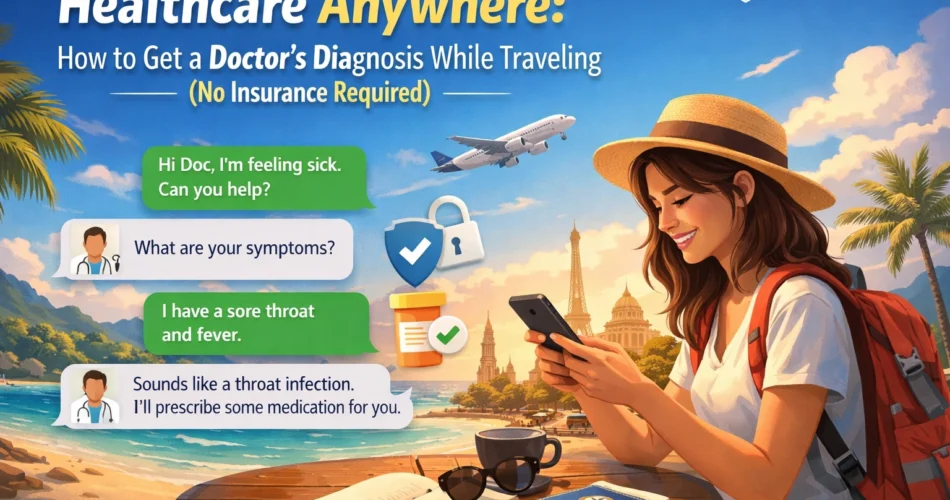
You're halfway through your dream vacation when it hits: a burning UTI symptom, a persistent sore throat, or an unexpected rash. Suddenly, you're faced with a dilemma: suffer through it, hunt for an urgent care clinic in an unfamiliar city, or cut your trip short. According to the Centers for Disease Control and Prevention, millions of Americans seek medical care while traveling each year, often facing language barriers, unfamiliar healthcare systems, and astronomical out-of-pocket costs.
But there's a solution most travelers don't know about: telehealth services that require no insurance, no lengthy appointments, and no account setup. You can chat with a doctor 24/7 from anywhere: whether you're camping in a national park, backpacking through Europe, or stuck in a hotel room at 2 AM.
Why Traditional Healthcare Fails Travelers
When you're away from home, accessing medical care becomes exponentially more complicated. You might be in a different state (where your primary care doctor can't help), in a remote area with limited facilities, or abroad where your insurance doesn't work. Weekend and evening hours? Forget finding an open clinic.

The traditional system assumes you're home, have insurance, and can wait 2-3 weeks for an appointment. Travel health emergencies don't follow that script. You need immediate answers about whether that chest pain is heartburn or something serious, whether you need antibiotics for that infection, or how to manage your chronic condition when you forgot your medication at home.
Even urgent care clinics present challenges. You'll spend hours in waiting rooms (during a vacation you've saved months for), pay $150-300 out of pocket, and possibly encounter providers unfamiliar with your medical history. For international travelers, the situation is worse: navigating foreign healthcare systems, dealing with language barriers, and potentially paying thousands for basic care.
How Text-Based Telehealth Changes Everything for Travelers
Modern telehealth: specifically text-based medical messaging: has revolutionized how travelers access healthcare. Unlike traditional telemedicine that requires scheduled video appointments, online medical chat platforms let you connect with licensed doctors through secure messaging, 24 hours a day, seven days a week.
Here's what makes this approach perfect for travelers:
No Insurance Required: You pay a transparent, flat fee: no surprise bills, no claims to file, no worrying about whether you're "in-network" thousands of miles from home.
No Account Setup: When you're dealing with a medical concern, the last thing you want is to create yet another account, verify your email, and fill out endless forms. Text-based telehealth services like ChatWithDr let you connect immediately.
Asynchronous Communication: You don't need to be on a video call at a specific time. Send your message when you first notice symptoms, then check back for the doctor's response: perfect when you're mid-sightseeing or dealing with time zones.
Works with Any Internet Connection: No need for stable video bandwidth. Whether you're on hotel WiFi, using mobile data, or tethering from a spotty connection, text-based consultations work seamlessly.
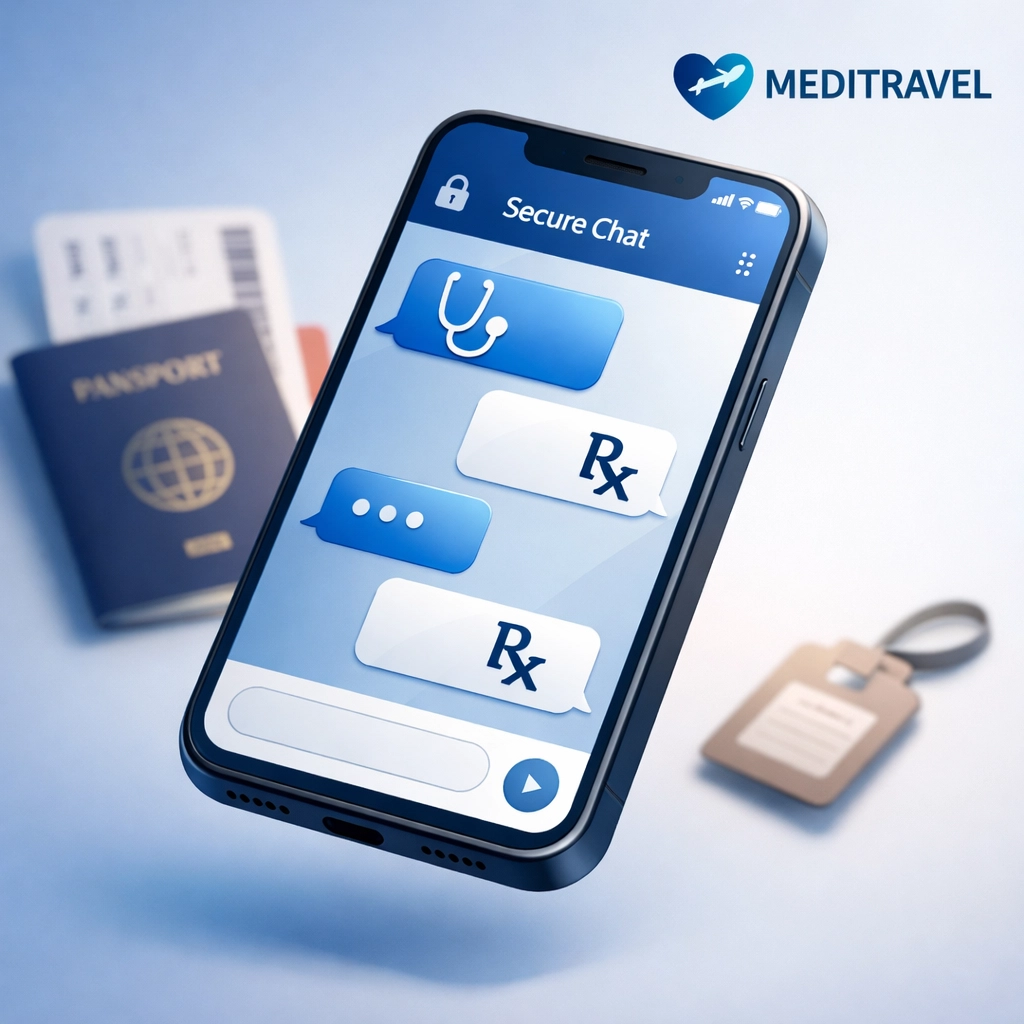
Step-by-Step: Getting a Doctor's Diagnosis While Traveling
The process is remarkably simple. Here's exactly how to get medical help when you're away from home:
1. Access the Platform Immediately
Visit a telehealth platform from any device: your smartphone, tablet, or laptop. With services like ChatWithDr's online urgent care, you don't need to download an app or create an account. Simply open your browser and start.
2. Describe Your Symptoms
Type out what you're experiencing, when symptoms started, and any relevant medical history. Be specific: instead of "I feel sick," say "I've had a fever of 101°F for two days, along with a severe sore throat and difficulty swallowing." The more details you provide, the more accurate the diagnosis.
3. Connect with a Licensed Doctor
Within minutes, a licensed healthcare provider will review your case. These aren't random medical students or overseas consultants: they're U.S.-licensed doctors and nurse practitioners who can legally diagnose and prescribe in your state.
4. Receive Your Diagnosis and Treatment Plan
The doctor will ask follow-up questions through the secure messaging system, review your symptoms, and provide a diagnosis. They'll explain your condition, recommend treatment, and: when medically appropriate: send prescriptions directly to a pharmacy near your current location.
5. Get Prescriptions Sent to Local Pharmacies
If you need medication, the doctor can electronically prescribe it to any pharmacy you specify. Traveling in Florida but live in California? No problem. The prescription goes to a CVS or Walgreens near your hotel, and you can pick it up within hours.
According to the American Telemedicine Association, telehealth consultations are clinically appropriate for approximately 70% of conditions that would typically require an urgent care visit: making this approach suitable for most travel health concerns.

What Conditions Can Be Diagnosed and Treated
Many travelers assume telehealth only works for simple issues like cold symptoms. In reality, licensed doctors can diagnose and treat a wide range of conditions through secure medical messaging:
Infections: Urinary tract infections, strep throat, sinus infections, ear infections, skin infections, and more can all be diagnosed based on symptoms and treated with appropriate antibiotics when necessary.
Respiratory Issues: Cold, flu, and COVID-19 symptoms, bronchitis, asthma flare-ups, and seasonal allergies are commonly managed through telehealth.
Digestive Problems: Food poisoning, traveler's diarrhea, acid reflux, and stomach bugs can be assessed and treated with anti-nausea medication, antibiotics, or other appropriate prescriptions.
Skin Conditions: Rashes, eczema flare-ups, suspected tick bites, sunburn complications, and allergic reactions can be evaluated through photo sharing in secure messaging, with online dermatology consultations providing expert assessment.
Chronic Condition Management: Traveling with diabetes, hypertension, or thyroid conditions? Doctors can help adjust medications, provide refills, and offer guidance when you're managing conditions away from your regular provider.
Sexual Health: STD testing guidance, birth control refills, and treatment for conditions like UTIs or yeast infections are discreetly available through online consultations.
The Hidden Benefits of Text-Based Medical Chat for Travelers
While 24/7 access is the obvious advantage, text-based telehealth offers several less obvious benefits that make it ideal for travelers:
Time Zone Flexibility: Traveling internationally and can't figure out when your doctor's office is open back home? With around-the-clock availability, time zones become irrelevant. Send your message at 3 AM local time if needed.
Language Barriers Eliminated: When you're abroad and don't speak the language, explaining medical symptoms becomes terrifying. Using an English-based telehealth service means you can communicate clearly with a provider who understands you perfectly.
Written Records: Unlike phone calls or in-person visits, you have a complete written record of everything the doctor said: diagnosis, treatment instructions, medication names, and dosages. No more trying to remember what the doctor told you or deciphering handwritten notes.
Privacy in Shared Spaces: Discussing embarrassing symptoms in a crowded hostel or shared hotel room? Text-based consultations offer complete privacy without needing to find a quiet space for a phone call.
Cost Transparency: Before you even connect with a doctor, you know exactly what you'll pay. No surprise bills three months later, no insurance claims to file when you get home.
Practical Tips for Using Telehealth While Traveling
To get the most from your online medical chat experience while traveling:
Save the Platform Link Before You Travel: Bookmark the telehealth service on your phone before your trip. When you're feeling sick, you don't want to be searching for reliable services.
Take Photos: If you have a visible symptom: rash, insect bite, wound, etc.: take clear, well-lit photos to share with the doctor through secure messaging. This helps them make accurate assessments.
Know Your Pharmacy Options: Before reaching out, identify 2-3 pharmacies near your current location. This allows the doctor to send prescriptions immediately to the most convenient location.
Include Your Travel Plans: Tell the doctor you're traveling and where you are. This context helps them understand your situation and provide relevant advice (for example, whether you need specific testing given local disease patterns).
Don't Wait Until It's Serious: One of telehealth's biggest advantages is early intervention. That suspicious sore throat? Chat with a doctor immediately rather than waiting three days until you're miserable. Early treatment often prevents minor issues from becoming trip-ruining problems.
When You Still Need In-Person Care
While telehealth can handle the majority of travel health concerns, certain situations require in-person evaluation:
- Severe injuries (broken bones, deep cuts requiring stitches, head injuries)
- Chest pain that could indicate a heart attack
- Severe abdominal pain, especially if localized
- Signs of stroke (facial drooping, arm weakness, speech difficulties)
- Difficulty breathing or severe asthma attacks
- Anaphylactic allergic reactions
According to the National Institutes of Health, telehealth providers are trained to recognize symptoms that require emergency care and will direct you to seek immediate in-person treatment when necessary.
For everything else: infections, medication needs, chronic condition management, minor injuries, and diagnostic questions: chatting with a doctor 24/7 provides the medical guidance you need without derailing your trip.

The Future of Travel Healthcare
Healthcare access shouldn't depend on your zip code or travel schedule. Text-based telehealth represents a fundamental shift in how we think about medical care: from location-dependent to truly accessible anywhere. For the 97 million Americans who travel domestically each year and the 42 million who travel internationally, this technology eliminates the anxiety of "what if I get sick?"
You no longer need to choose between suffering through illness and spending thousands on foreign urgent care. You don't need to cut trips short or spend precious vacation time in waiting rooms. Online doctor consultations mean healthcare truly goes wherever you go: in your pocket, available 24/7, no insurance required.
The next time you're planning a trip, add "bookmark telehealth service" to your pre-travel checklist, right alongside "pack medications" and "check passport expiration." Because the best travel insurance is knowing you can chat with a doctor anytime, anywhere, about anything.
Disclaimer: This information is not a substitute for professional medical advice, diagnosis, or treatment. Always seek the advice of your physician or qualified health provider with questions regarding medical conditions or treatments.
Related posts:
 Telehealth for Travelers Your Guide to Healthcare Anywhere
  The Ultimate Guide to Healthcare Anywhere: How to Chat With a Doctor 24/7 While Traveling
  Top 5 Urgent Care Consultations USA: Why Text-Based Care is Better for Travelers
  The 7 Best Online Doctor Services of 2025: A Detailed Review
  Sick While Traveling? 7 Things to Know About Using a 24/7 Online Doctor