When you’re dealing with that raw, sandpaper-like feeling in your throat, the first question is always the same: how long is this going to last? With antibiotics, you'll start feeling better and stop being contagious within 24 to 48 hours. If you try to tough it out without treatment, the illness can drag on for one to two weeks, and you’ll be contagious for a lot longer.
Strep Throat Timelines: With and Without Treatment
Think of the timeline for strep throat as two completely different roadmaps to recovery. One is a direct highway, and the other is a slow, winding country road. The path you take really depends on whether or not you get treatment. Antibiotics are the express route—they go straight after the Group A Streptococcus bacteria causing the whole mess.
Choosing to skip treatment means your body has to fight the battle all on its own. It can usually win, but the process is a whole lot longer and more draining.
The Untreated Strep Timeline
If you let strep throat run its course, your symptoms will typically hit their peak within the first 48 to 72 hours. After that intense period, your immune system starts to get the upper hand, and you might notice a very slow improvement over the next week.
Most people feel better within 7 to 10 days, but a full recovery can take up to two weeks. More importantly, without antibiotics, you could stay contagious and spread the bacteria for two to three weeks, even after your symptoms start to fade.
This timeline visualizes just how different the journey is for treated versus untreated strep throat, highlighting the key milestones from when you first feel sick to when you're finally in the clear.
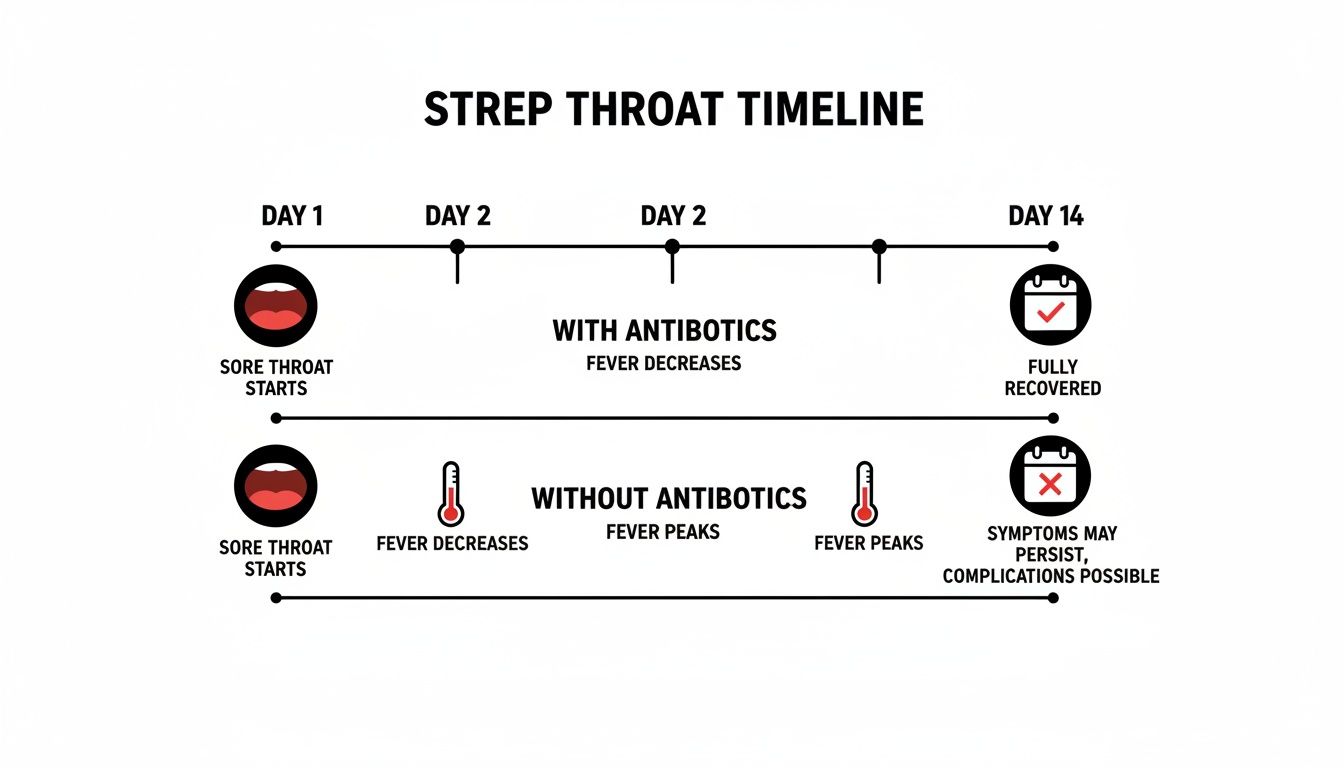
As you can see, antibiotics dramatically shorten both the illness and the time you're contagious, making treatment the safer and faster choice by a long shot.
The Treated Strep Timeline
Once you start a course of antibiotics like amoxicillin, the recovery timeline speeds up dramatically. Most people feel significant relief from the fever and severe throat pain within the first 24 to 48 hours. This rapid turnaround happens because the medicine quickly stops the bacteria from multiplying.
Crucially, you are generally no longer considered contagious after just 24 hours on an effective antibiotic. This is a game-changer for getting back to work, school, and your daily life without putting others at risk. To get a deeper look at the data, you can read the full research about strep throat symptom duration on the National Center for Biotechnology Information's website.
Strep Throat Recovery Timeline at a Glance
To make it even clearer, here’s a quick side-by-side comparison of what to expect.
| Milestone | With Antibiotic Treatment | Without Antibiotic Treatment |
|---|---|---|
| Symptom Improvement | Significant relief within 24–48 hours | Slow improvement after 3–5 days |
| Contagious Period Ends | After 24 hours on antibiotics | Up to 2–3 weeks |
| Full Recovery | Usually within 3–7 days | Can take up to 2 weeks |
| Return to School/Work | 24 hours after starting antibiotics (if fever-free) | After all symptoms have completely resolved |
This table really drives home the point: antibiotics don't just help you feel better faster—they're essential for stopping the spread of the infection.
Why Antibiotics Are Your Fastest Path to Recovery
When you're knocked down by the pure misery of strep throat, feeling better is priority number one. Antibiotics are the go-to treatment not just to ease your symptoms, but because they go straight to the source of the problem—the Group A Streptococcus bacteria.
Think of it this way: your immune system is in a firefight, trying to beat back the infection one soldier at a time. Antibiotics are like calling in the cavalry. Medications like amoxicillin or penicillin hunt down and eliminate the bacteria, stopping them from multiplying and overwhelming your body's defenses. It's this direct, decisive action that helps you feel relief so quickly.
Stopping the Spread in Its Tracks
One of the biggest wins of starting antibiotics is how fast they shut down your ability to spread the infection. If you just ride it out, you could be contagious for weeks. But with treatment, that all changes.
A standard 10-day course of antibiotics dramatically cuts down the time you're infectious. Most people are no longer a risk to others just 24 hours after their first dose. You’ll also likely notice your fever and that awful throat pain starting to improve within 24 to 72 hours. To get a better sense of these timelines, it's helpful to review the worldwide guidelines for sore throat care.
This is a huge deal. It means you can get back to work, school, and family life without worrying about passing the illness on to everyone around you.
Preventing Serious Health Complications
Beyond getting you back on your feet and making you non-contagious, there's a much more serious reason why doctors prescribe antibiotics for strep. They’re a crucial safeguard against some rare but potentially severe complications.
If left untreated, a strep infection can sometimes confuse your immune system, causing it to attack your own body. This can lead to serious issues like:
- Rheumatic fever: A dangerous inflammatory condition that can damage the heart, joints, brain, and skin.
- Kidney inflammation: A condition known as post-streptococcal glomerulonephritis.
- Abscesses: Painful pockets of pus that can form around your tonsils.
By simply taking a course of antibiotics, you wipe out the bacteria before they can trigger these downstream problems. It’s a small, simple step that offers powerful protection for your long-term health.
Getting this treatment started has never been easier. With services like ChatWithDr, you can get an online prescription within hours of your first symptoms. This lets you kickstart your recovery right away, cutting down your sick days and protecting your health without the hassle of an in-person doctor's visit.
What to Expect: A Day-by-Day Timeline of Strep Symptoms
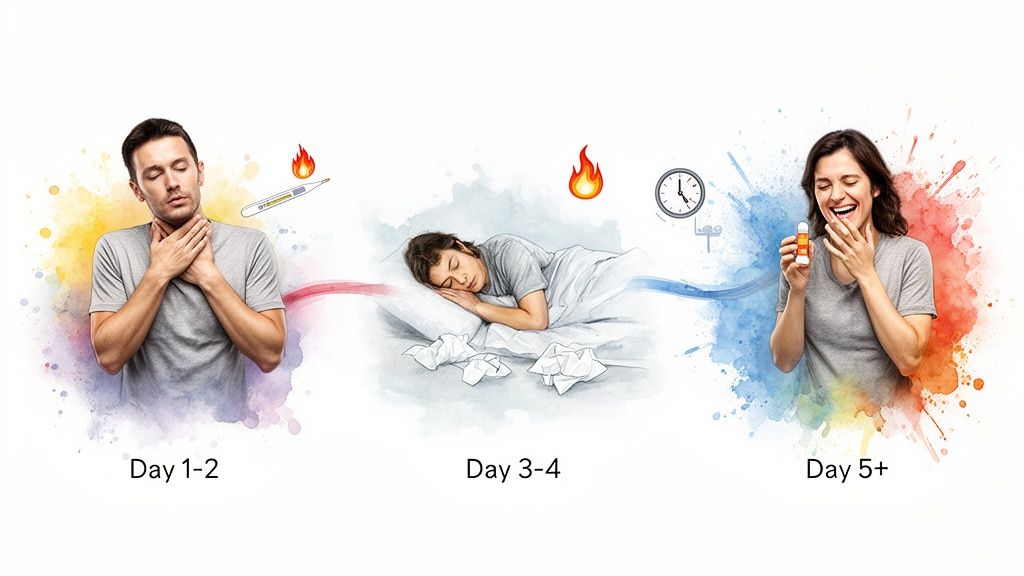
When you're hit with strep throat, knowing what's coming next can make the whole ordeal feel a lot more manageable. It helps you spot the signs of recovery and gives you a clear idea of when you should start feeling better, especially once you've started antibiotics.
Think of this timeline as a practical map for your recovery journey, guiding you from that first awful scratchy feeling all the way back to normal.
Days 1 to 2: The Sudden Onset
Strep throat doesn't tiptoe in; it kicks the door down. Unlike a common cold that might creep up on you over a few days, strep often feels like a switch has been flipped. You can go from feeling perfectly fine one minute to absolutely miserable the next.
The most notorious sign is a severe sore throat that starts out of nowhere. This isn't your average tickle—swallowing can feel like you're gargling with glass. Alongside the throat pain, a few other classic symptoms usually show up to the party:
- A fever that quickly climbs to 101°F (38.3°C) or higher.
- Painfully swollen lymph nodes in your neck.
- Red tonsils dotted with white patches (if you're brave enough to look).
- A pounding headache and all-over body aches.
This is the initial invasion. Your body is just starting to fight back, and getting treatment at this stage can save you a world of hurt in the coming days.
Days 3 to 4: The Peak of the Battle
If you decide to tough it out without antibiotics, days three and four are usually when strep throat is at its absolute worst. Your sore throat will likely feel unbearable, your fever might stay stubbornly high, and you'll feel completely drained as your body pours all its energy into fighting the infection.
But if you've started on antibiotics, this part of the story looks completely different.
For anyone on treatment, symptoms almost always start getting dramatically better within 24 to 48 hours of that first dose. By day three, the fever should break, the throat pain should ease up, and you’ll finally feel like you've turned a corner.
This is where the power of treatment really shines. Instead of suffering through the worst of it, you can already be on the fast track to feeling human again.
Day 5 and Onward: The Road to Recovery
For someone without treatment, day five is usually when things finally start to improve on their own, but it's a slow, grueling process. The fever might begin to fade and swallowing becomes a little less agonizing, but you'll still feel worn out. Plus, you're still contagious.
With antibiotics, day five is a whole new world. You might have a lingering mild sore throat, but the intense pain and fever are typically long gone. Better yet, you’re no longer contagious and can get back to school or work, as long as you’ve been fever-free for a full 24 hours without medication.
Just remember one crucial thing: finish the entire course of antibiotics, even if you feel 100% better. Stopping early is a recipe for a relapse and can open the door to much more serious complications.
Just How Long Is Strep Throat Contagious?
One of the first questions on everyone's mind with strep throat is: "How long can I give this to someone else?" It's a great question because the bacteria behind it, Group A Streptococcus, are experts at spreading through respiratory droplets from coughs, sneezes, or even just talking. If you don't get treatment, you can be a walking source of infection for a surprisingly long time.
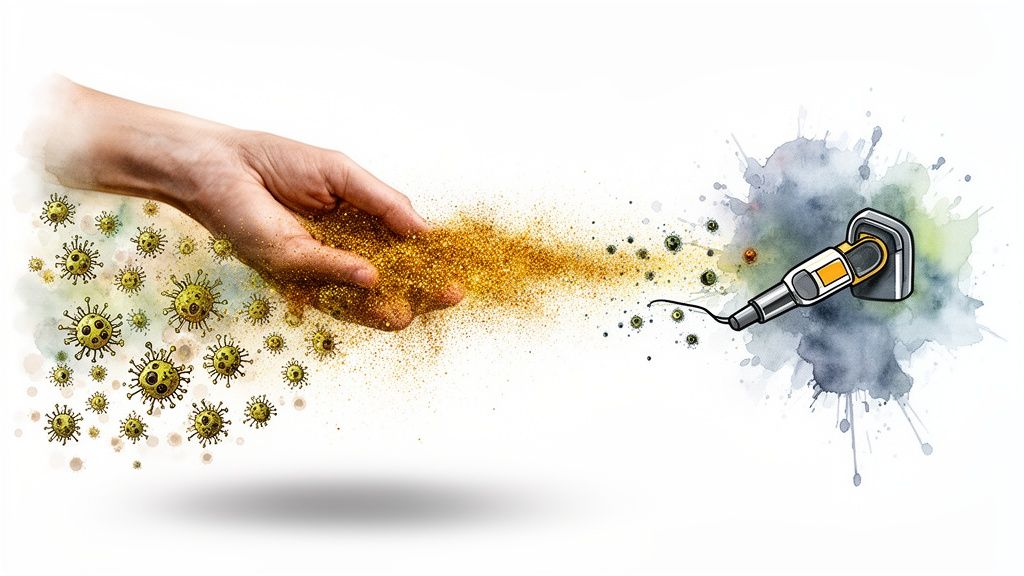
Think of the strep bacteria like glitter after a kids' art project. If you just leave it, that stuff gets everywhere and sticks around for ages. The same goes for untreated strep—you can easily keep spreading the illness for two to three weeks, long after your worst symptoms have calmed down.
How Antibiotics Shut Down the Spread
Starting antibiotics is like finally breaking out a powerful vacuum to clean up all that glitter. The medication gets to work fast, neutralizing the bacteria and dramatically cutting down the time you're a risk to other people.
The big takeaway is this: once you start an effective antibiotic, you're generally no longer contagious after just 24 hours.
This rapid turnaround is a game-changer. It means you can get back to your routine safely without worrying about passing the infection to family, friends, or coworkers. This 24-hour rule is the cornerstone of public health advice for strep and is key to stopping outbreaks in schools and offices.
The Clear Rules for Getting Back to Your Routine
So, when is it officially safe to re-enter the world? It's not a guessing game. To make a confident decision, you just need to meet two simple but critical milestones. You are clear to return to work or school only when both of these conditions are met:
- You have been on an effective antibiotic for at least 24 hours. This gives the medicine enough time to knock down the bacterial load in your system.
- You have been fever-free for a full 24 hours without using any fever-reducing medicine. A fever breaking on its own is a clear sign that your body's immune response is winning the fight and the infection is under control.
Following these two steps doesn't just protect everyone around you; it's also a great sign that you're truly on the path to a full and fast recovery.
How to Get Diagnosed and Treated for Strep Online
When you’re hit with the sudden misery of strep throat, the absolute last thing you want to do is leave the house. Dragging yourself to a clinic, sitting in a germ-filled waiting room, and then making another trip to the pharmacy can feel like a mountain to climb.
This is exactly where modern healthcare offers a much simpler, faster path. Telehealth services have totally changed the game for getting common illnesses treated. Instead of the old routine, you can get the care you need right from your couch, often on the very same day your symptoms start.
The Simple Steps to Online Strep Care
Getting diagnosed and treated for strep throat online is a refreshingly straightforward process, built for speed and convenience. It boils down to a few simple steps that take you from feeling awful to having a prescription in hand, sometimes in just a few hours.
This speed is crucial because the sooner you start antibiotics, the faster your answer to "how long does strep last" gets a whole lot better.
Here’s a typical play-by-play with a service like ChatWithDr:
- Complete a Secure Intake Form: You kick things off by selecting your condition (strep throat) and filling out a secure, HIPAA-compliant online form. You’ll answer specific questions about what you're feeling, your medical history, and any allergies.
- A Doctor Reviews Your Case: A real, board-certified physician licensed in your state takes it from there. They use their clinical expertise to look over your symptoms and figure out if they point to a bacterial infection like strep.
- Receive Your Treatment Plan: The doctor then sends back a diagnosis and a personalized treatment plan. If antibiotics are the right move, they’ll send an e-prescription directly to your local pharmacy.
The best part? This entire process is text-based. That means no video calls are required, giving you total privacy and convenience.
Why Online Treatment Is a Game Changer
The need for quick, accessible care is huge. In the United States, strep throat alone leads to an estimated 5.2 million doctor visits each year for people under 65, which results in millions of antibiotic prescriptions. You can learn more about strep's impact from research available at the National Center for Biotechnology Information. Telehealth is stepping up to meet this demand by knocking down the old barriers to getting care.
With an online platform, you can completely bypass the wait times and logistical headaches of a typical doctor's visit. This means you can get your prescription on day one, which is vital for cutting your contagious period down to just 24 hours and kicking off your recovery immediately.
By connecting with an online doctor, you can take control of your health without the wait. This modern approach ensures you get the right treatment without delay, helping you feel better faster and stop the spread of infection to others.
Supportive Home Care to Help You Feel Better Faster
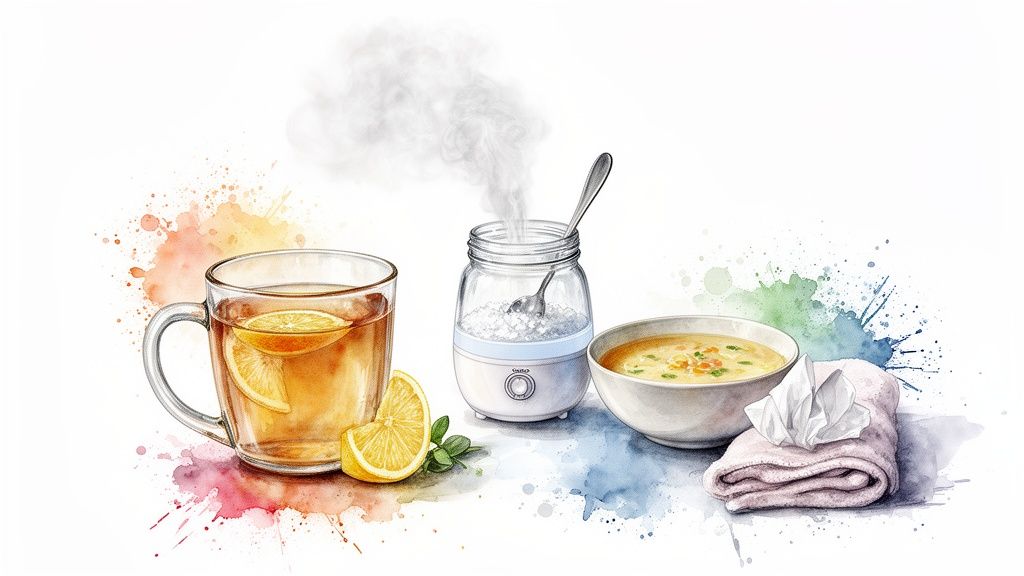
While antibiotics are the heavy hitters that take out the strep bacteria, you don't have to just sit back and wait for them to kick in. A good home care strategy can make a world of difference in managing those miserable symptoms and helping your body feel more comfortable while it recovers.
Think of it this way: the antibiotics are the construction crew rebuilding your health, but the home remedies are the support team bringing water, shade, and first aid. You need both for a smooth and speedy recovery. These simple moves can seriously improve how you feel.
Soothing Your Throat and Staying Hydrated
Your top priority is calming that fire in your throat. Keeping it moist and avoiding anything that irritates it further is the name of the game while the antibiotics do their job.
Simple but incredibly effective remedies include:
- Warm liquids: Sipping on warm tea with a bit of honey or some clear broth can feel amazing on a raw throat.
- Cold relief: For some people, cold works better. Try ice water, popsicles, or chilled soft foods like yogurt to gently numb the pain.
- Salt water gargle: It's an old-school remedy for a reason. Mixing half a teaspoon of salt in a glass of warm water and gargling can help knock down the swelling.
Remember that staying hydrated is absolutely crucial. Dehydration makes a sore throat feel a hundred times worse, so drink plenty of fluids all day to keep everything lubricated and help your body fight off the infection.
Managing Pain and Creating a Healing Environment
Beyond treating your throat directly, managing your overall comfort is just as important. Over-the-counter pain relievers are your best friend here, tackling both the fever and the soreness to give you some much-needed relief.
Products like ibuprofen (Advil) or acetaminophen (Tylenol) can effectively bring down your fever and take the edge off the throat pain. Just be sure to follow the dosage instructions on the package.
One more pro tip: run a cool-mist humidifier in your room. It adds moisture to the air, which prevents the dryness that can make a sore throat feel even worse, especially when you're trying to sleep.
Your Strep Throat Questions, Answered
When you're dealing with the misery of strep throat, a million questions can pop into your head. Getting clear, simple answers is the first step toward feeling in control and confident about your recovery. Let's tackle some of the most common concerns people have when this nasty infection strikes.
We'll cover everything from whether you can just "wait it out" to what to do if your treatment isn't kicking in as fast as you'd like.
Can Strep Throat Go Away on Its Own?
Technically, yes, your body can fight off a strep infection over a week or two. But—and this is a big but—choosing to go that route is a bad idea. If you skip the antibiotics, you could stay contagious for up to three weeks. More importantly, you run a small but very real risk of developing serious complications like rheumatic fever (which can damage the heart) or a painful abscess in your throat.
That’s why doctors almost always recommend antibiotics. They get you better faster, stop you from spreading it to others, and protect your long-term health.
How Soon Will I Feel Better After Starting Antibiotics?
Most people feel a huge difference within just 24 to 48 hours after their first dose of antibiotics. Usually, the fever breaks first, and that raw, sandpaper-like throat pain starts to fade pretty quickly after that.
It is absolutely critical that you finish the entire course of antibiotics your doctor prescribes, even if you feel 100% better. If you stop early, some of the tougher bacteria can survive, leading to a relapse or other complications.
Finishing the full prescription is the only way to be sure you’ve knocked out the infection for good.
Do I Always Need a Strep Test for Treatment?
Getting the diagnosis right is key. After all, antibiotics do absolutely nothing for the viruses that cause most sore throats. A doctor in a clinic will typically use a rapid strep test or a throat culture to confirm you've got Group A Streptococcus bacteria.
However, you don't always need an in-person test to get treated. Experienced online doctors can use established clinical guidelines, combined with a detailed look at your specific symptoms, to make an accurate diagnosis and decide if antibiotics are the right call. This lets you get the correct treatment quickly, without ever having to leave your couch. If you want to learn more about how that works, you can find answers to other common questions in our ChatWithDr FAQ.
What If My Symptoms Do Not Improve on Antibiotics?
You should definitely be feeling some relief after 48 hours on antibiotics. If you're not, it's time to check in with your doctor. A few things could be going on: the infection might be viral after all, it could be a different type of bacteria that needs a different antibiotic, or there might be something else happening. Whatever you do, don't just stop taking your medication—get professional medical advice first.
Feeling that tell-tale scratchiness in your throat? Don't wait around for it to turn into a full-blown infection. With ChatWithDr, you can get a diagnosis and a treatment plan from a board-certified physician in hours, right from home. Get the fast, affordable care you need by visiting https://chatwithdr.com today.