
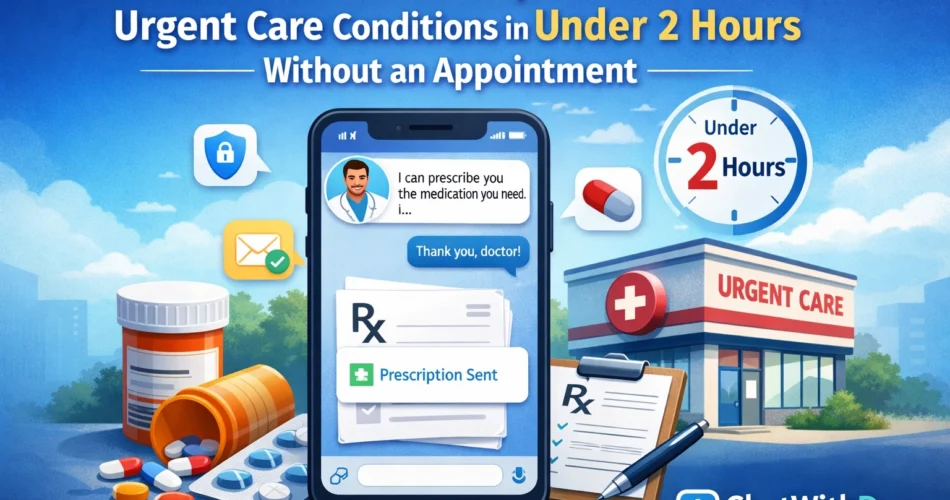
Getting sick doesn’t wait for “business hours,” and neither should your care. If you’re dealing with common urgent care conditions, like a UTI, sinus infection, strep throat, pink eye, or flu symptoms, you can often get evaluated and, when appropriate, receive a prescription quickly without booking an appointment days out.
This guide breaks down how people get urgent care prescriptions in under 2 hours (often much faster), what conditions are usually appropriate for online urgent care, and what to have ready so a clinician can treat you safely through secure medical messaging.
Pillar 1: Choose the Fastest Path to a Prescription (and Know When It Won’t Work)
For many everyday urgent care issues, the fastest route is online urgent care, especially services built around text-based care. Instead of waiting in a lobby, you can message a clinician, answer targeted questions, and get a plan fast if your symptoms fit an online-treatable condition.
Why text-based online urgent care is often faster than in-person care
- No commute, no waiting room, no check-in line
- Clinicians can triage quickly and ask focused follow-ups
- Prescriptions (when appropriate) can be sent to your preferred pharmacy for pickup
When an online prescription may not be appropriate
Some symptoms need an in-person exam, rapid testing, imaging, or urgent evaluation. Seek in-person care (or emergency care) if you have red-flag symptoms like:
- Trouble breathing, chest pain, fainting, or severe weakness
- Severe allergic reaction (swelling of lips/face, wheezing)
- Signs of dehydration or confusion
- Severe abdominal pain, severe headache “worst of life,” neck stiffness
- Eye pain with vision changes
- High fever in infants, or any rapidly worsening symptoms
If you’re unsure, reputable telehealth services can help triage and tell you if you should be seen in person.
For general guidance on when to use urgent vs. emergency care, the CDC’s overview of when to seek emergency help is a helpful reference: https://www.cdc.gov/
Pillar 2: Condition-Based Care, Which Urgent Care Prescriptions Are Commonly Handled Online?
Many people searching for strep throat treatment online or sinus infection antibiotics online are really asking: Can a clinician safely treat this over messaging? Often, yes: if your symptoms are straightforward and you don’t have red flags.
Below are common urgent care conditions that are frequently managed through online urgent care and secure medical messaging.
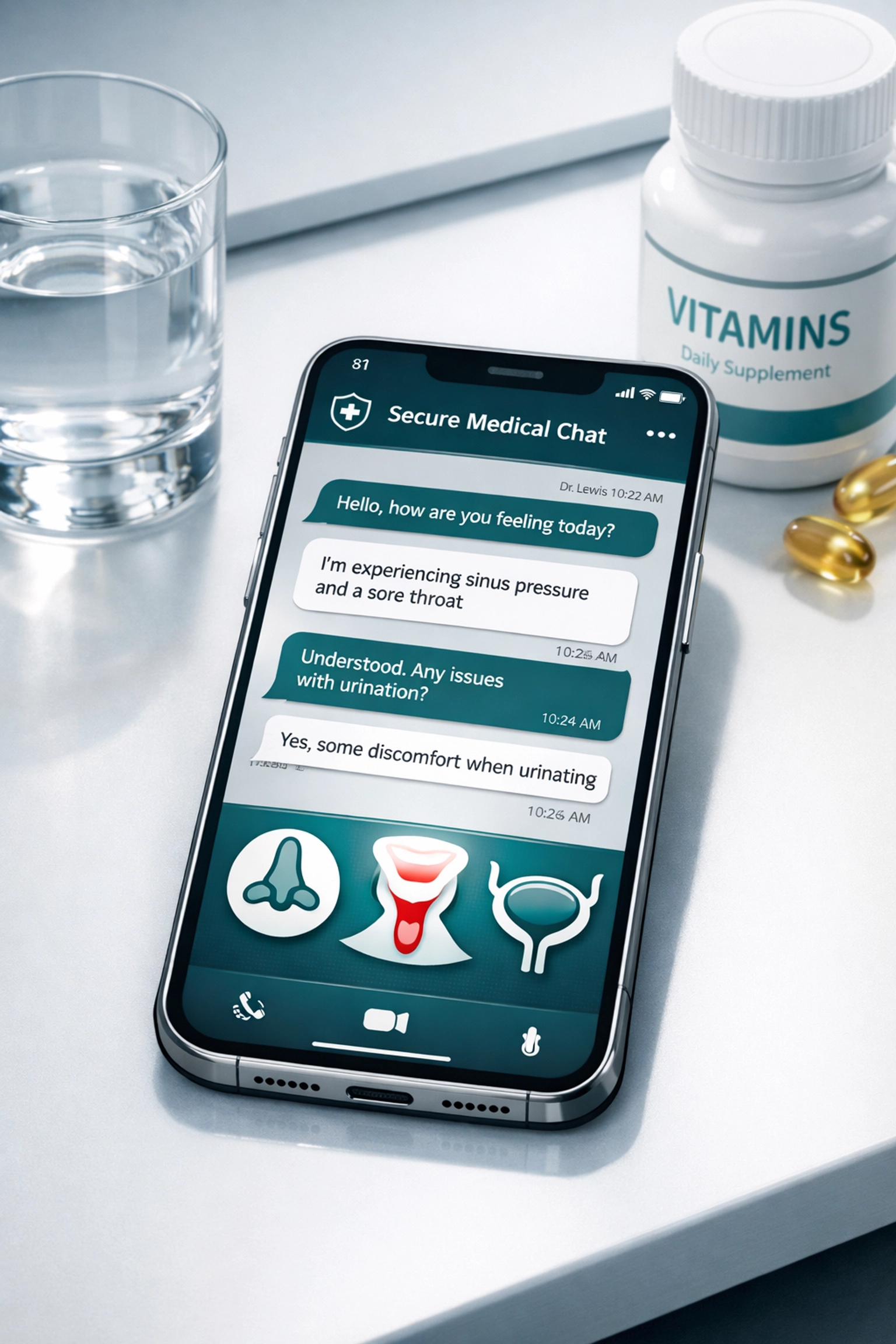
1) UTI (Urinary Tract Infection)
Typical symptoms
- Burning with urination
- Frequent urge to urinate
- Cloudy or strong-smelling urine
- Mild lower abdominal discomfort
Why UTIs can be a good fit for text-based care
Clinicians can often treat uncomplicated UTIs based on symptoms and history. They may also recommend a urine test depending on your situation.
When you may need in-person care
- Fever, chills, flank/back pain (possible kidney infection)
- Pregnancy
- Symptoms in men (often needs more evaluation)
- Recurrent UTIs or symptoms not improving
Learn more: https://chatwithdr.com/conditions/uti-women and https://chatwithdr.com/online-uti-treatment
2) Sinus Infection (Sinusitis)
Common scenario
People frequently look up sinus infection antibiotics online: but not every sinus infection needs antibiotics. Many cases are viral and improve with supportive care.
Symptoms clinicians ask about
- Duration of symptoms (often >10 days suggests bacterial)
- Severe facial pain/pressure, fever
- “Double-worsening” (you got better, then suddenly worse again)
Why messaging works
A clinician can assess the timeline and symptom pattern to decide whether supportive treatment is best or if antibiotics may be appropriate. The CDC explains why antibiotics aren’t always needed for sinus infections and respiratory illnesses: https://www.cdc.gov/antibiotic-use/
3) Sore Throat / Possible Strep Throat
A big limitation: strep throat ideally requires a rapid test or throat culture to confirm (per evidence-based guidelines). That said, online clinicians can still help by:
- Screening your symptoms and exposure risk
- Recommending testing when needed
- Treating when there’s a clear diagnosis pathway or documented test result
Red flags that warrant prompt evaluation
- Trouble swallowing saliva, drooling
- Muffled voice, neck swelling
- Severe one-sided throat pain
- High fever or rash
Resources: https://chatwithdr.com/conditions/sore-throat and https://chatwithdr.com/conditions/strep-throat
4) Pink Eye (Conjunctivitis)
Typical symptoms
- Redness in one or both eyes
- Discharge (watery vs. thick)
- Gritty sensation
- Lids stuck together in the morning (often bacterial)
Why it can be handled via secure messaging
Clinicians can often distinguish allergic vs. viral vs. bacterial conjunctivitis based on symptoms and, when helpful, photos.
Go in person urgently if
- Eye pain, light sensitivity, or vision changes
- Contact lens wear with significant redness (higher risk complications)
- Injury or chemical exposure
Resource: https://chatwithdr.com/conditions/pink-eye
5) Cold, Flu, COVID-19
For viral respiratory illnesses, online urgent care can help with:
- Symptom relief plans (fever, cough, congestion)
- Work/school notes (where appropriate)
- Determining whether you might qualify for antiviral treatment based on risk factors and timing
Resource: https://chatwithdr.com/conditions/cold-flu-covid
Pillar 3: How to Actually Get a Prescription in Under 2 Hours (Step-by-Step)
Speed comes from preparation and choosing the right workflow. Here’s the simple playbook.
Step 1: Start with a text-based online urgent care service
Look for:
- 24/7 availability (so you can start right when symptoms hit)
- Transparent pricing
- Clear expectations on response time
- Secure medical messaging
ChatWithDr is built for secure, text-based care with no appointment needed, a $39.99 flat rate, and a typical response time of under 2 hours for eligible conditions: https://chatwithdr.com/online-urgent-care
Step 2: Share the essentials upfront (this saves the most time)
Include these details in your first message:
- Your main symptoms and when they started
- Severity (mild/moderate/severe) and any fever (include the number)
- What you’ve tried (OTC meds, home remedies) and what helped
- Relevant history (recent infections, pregnancy status, chronic conditions)
- Medication allergies
- Your preferred pharmacy (name + address)
If you’re dealing with eye symptoms or a rash, include a clear photo in good lighting (if your platform supports it). The better the initial info, the fewer back-and-forth messages are needed.
Step 3: Answer clinician follow-up questions quickly
To keep things moving, watch for:
- Questions about red flags (to ensure it’s safe to treat online)
- Timing (very important for sinus, flu antivirals, and strep risk)
- Any risk factors (pregnancy, immune conditions, recent antibiotic use)
Step 4: If appropriate, the clinician sends an e-prescription
When a prescription is clinically appropriate, it can typically be sent electronically to your chosen pharmacy. You’ll then pick it up (or arrange delivery if your pharmacy offers it).
If it’s not appropriate, you should still expect value: a safe plan, supportive care recommendations, and clear guidance on when to escalate care.
Pillar 4: What Clinicians Consider Before Prescribing (and How to Avoid Delays)
Prescribing quickly doesn’t mean prescribing casually. Legit, safe telehealth follows clinical standards: especially around antibiotics and controlled substances.
What a clinician evaluates before prescribing
- Whether your condition can be diagnosed safely without a hands-on exam
- Whether symptoms suggest a viral vs. bacterial infection
- Allergy risks and medication interactions
- Warning signs that require in-person testing (e.g., throat swab, urinalysis, lung exam)
Why antibiotic requests sometimes get a “not needed” answer
Antibiotic stewardship is a real standard of care. Inappropriate antibiotics can cause side effects and contribute to resistance. The CDC’s antibiotic stewardship resources explain why this matters: https://www.cdc.gov/antibiotic-use/
Common reasons online treatment may be redirected
- You need a rapid strep test
- Your UTI symptoms suggest possible kidney involvement
- Your eye symptoms raise concern for corneal involvement or vision risk
- Your symptoms are severe, persistent, or atypical
Pillar 5: Compare Your Options: Text-Based Online Urgent Care vs. Walk-In Clinics
Both can work. The “best” choice depends on how fast you need care, how complex your symptoms are, and whether you likely need testing.
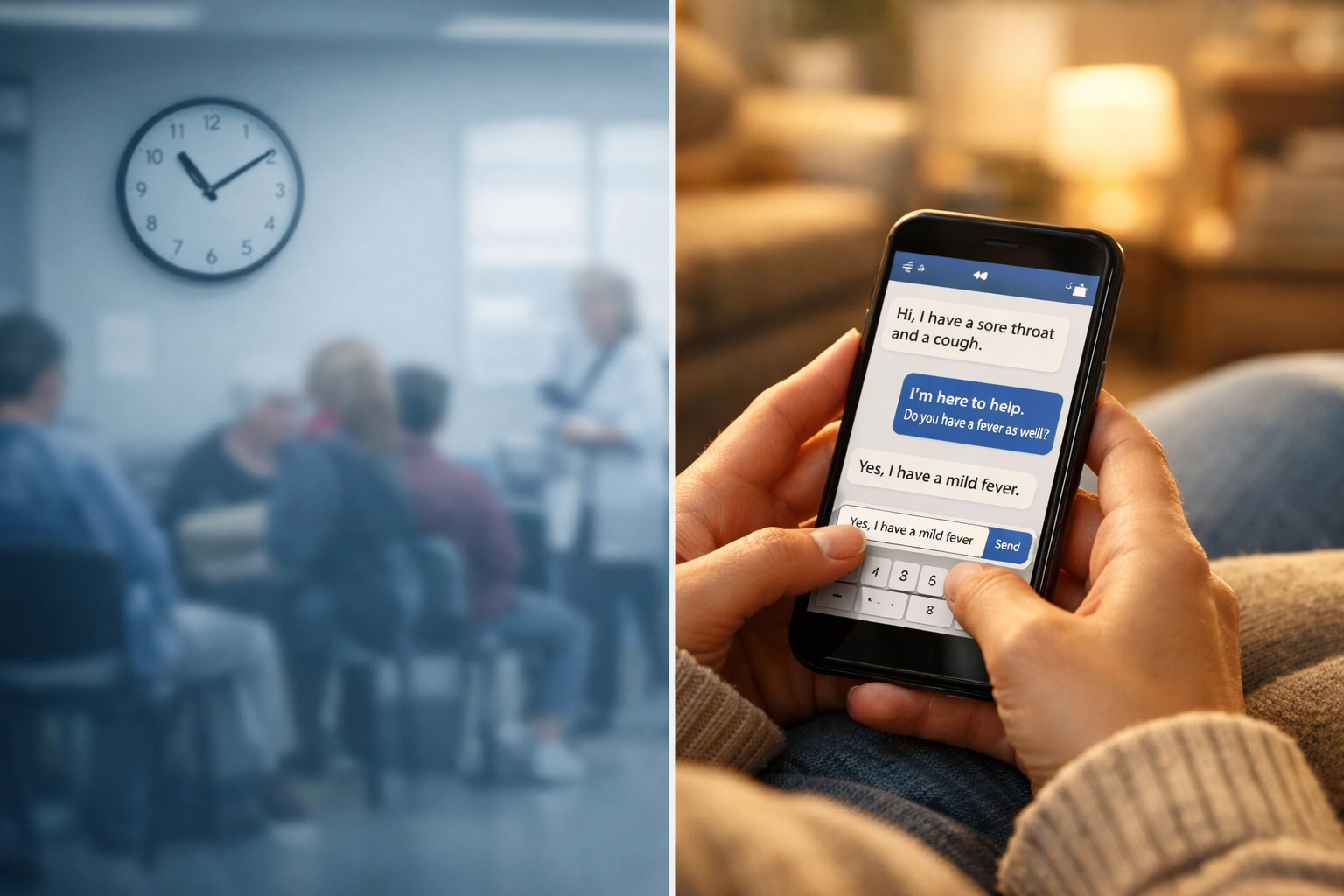
Option A: Text-based online urgent care (often the fastest)
Best for
- Common, straightforward urgent care conditions
- People who want care from home
- Anyone trying to avoid waiting rooms
What to expect
- Secure medical messaging with a licensed clinician
- Treatment plan and prescriptions when appropriate
- Guidance if you need in-person testing
If your goal is online urgent care without appointments, this is usually the most time-efficient route.
Option B: Walk-in urgent care clinics (good for testing/exams)
Best for
- Conditions that often require a swab, urine test, imaging, or physical exam
- More severe symptoms
- When you need immediate hands-on assessment
Reality check on speed
Walk-in clinics can be same-day, but wait times vary by location, staffing, and time of day. Under-2-hour turnaround isn’t always guaranteed when the lobby is full.
Quick “Under 2 Hours” Checklist (Copy/Paste)
Use this to speed up your first message to any online clinician:
- Symptoms:
- Start date/time:
- Fever (highest temp):
- Pain (0–10):
- Relevant history (recent infections, pregnancy, chronic conditions):
- Med allergies:
- Current meds/supplements:
- What you’ve tried so far:
- Preferred pharmacy (name + address):
Getting Started with ChatWithDr (No Appointment Needed)
If you’re dealing with a common urgent care issue and want fast, text-based care, ChatWithDr offers:
- 24/7 access
- $39.99 flat rate
- No appointment needed
- Typical response time under 2 hours
- Secure medical messaging focused on condition-based urgent care
You can start here: https://chatwithdr.com/book-consultation
Or explore online urgent care: https://chatwithdr.com/online-urgent-care
For broader options, see: https://chatwithdr.com/telehealth-services and https://chatwithdr.com/conditions
Disclaimer: This information is not a substitute for professional medical advice, diagnosis, or treatment. Always seek the advice of your physician or qualified health provider with questions regarding medical conditions or treatments.