

If you feel like you're stuck in a never-ending cycle of yeast infections, you are definitely not alone. The first step to breaking free is understanding why they keep happening in the first place. When you have four or more infections in a single year, doctors call it "recurrent." This isn't just a string of bad luck—it's a clear signal that something is disrupting your body's natural balance.
Why Yeast Infections Keep Coming Back
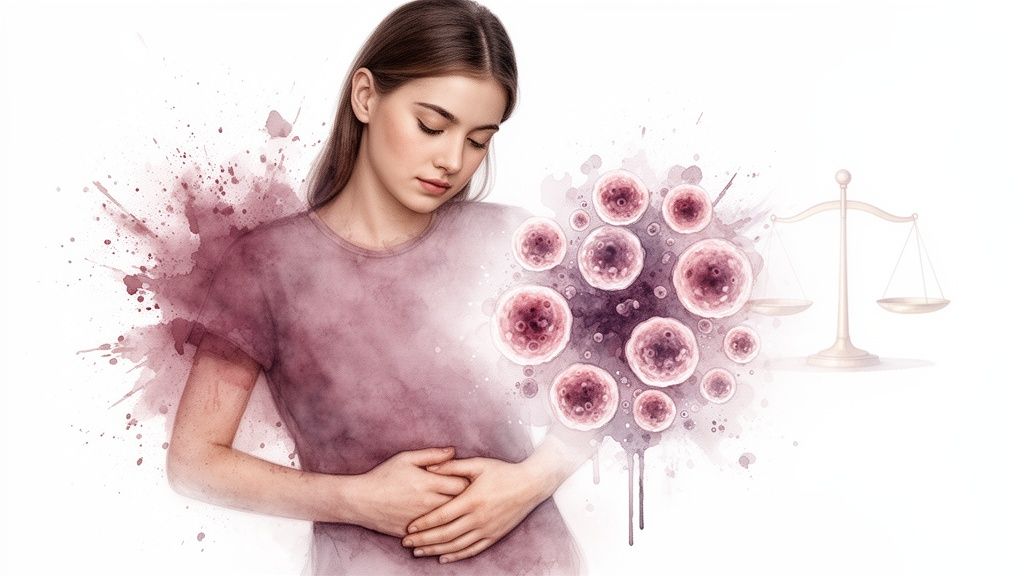
Dealing with a yeast infection once is bad enough. But when it feels like a monthly visitor, the frustration and discomfort can be completely exhausting. This pattern is a sign that the delicate ecosystem inside your vagina is out of sync.
A healthy vaginal environment is home to a balanced mix of bacteria and yeast. The star player is a fungus called Candida albicans, which is normally harmless. But when something throws that balance off, Candida can multiply out of control, leading to that all-too-familiar itching, burning, and discharge.
Figuring out what's triggering this imbalance is the key to finally breaking the cycle.
The Most Common Culprits Behind Recurrence
Several things can repeatedly tip the scales in favor of yeast overgrowth. Think of these as vulnerabilities that can make you more prone to an infection, especially if you're dealing with more than one at a time.
To help you pinpoint potential triggers, here's a quick rundown of the usual suspects.
| Trigger Category | Specific Examples | Why It Contributes |
|---|---|---|
| Medications | Antibiotics (broad-spectrum) | Wipes out the "good" bacteria (Lactobacillus) that naturally keep yeast levels in check. |
| Hormonal Shifts | Menstrual cycle, pregnancy, hormonal birth control | Fluctuations in estrogen can create a more favorable environment for Candida to flourish. |
| Health Conditions | Unmanaged diabetes, weakened immune system | High blood sugar "feeds" yeast, while a compromised immune system struggles to control its growth. |
| Lifestyle Habits | Douching, scented soaps, staying in damp clothes | These habits can disrupt the vagina's natural pH balance, creating an opportunity for yeast to multiply. |
This table isn't meant to be a definitive diagnosis, but it's a great starting point for a conversation with your doctor. Identifying your personal triggers is the first real step toward a solution.
Sometimes, what feels like another yeast infection could actually be something else, like bacterial vaginosis (BV). If you're unsure, you can explore options for convenient online STD testing to rule out other possibilities and get a clear picture of what's going on.
This is a far more widespread issue than people realize. Around 138 million women globally suffer from recurrent yeast infections, with a staggering 9 million cases in the United States alone.
A comprehensive 2018 study projected these numbers could climb to 158 million worldwide by 2030, which just highlights how critical it is to understand and address the root causes.
Managing Your Health and Medical Risk Factors
To really get a handle on recurring yeast infections, we have to look past the usual hygiene tips and see the bigger picture of your overall health. The truth is, certain medical conditions and even some treatments can roll out the welcome mat for Candida overgrowth, trapping you in a cycle that feels impossible to escape.
Think of your vaginal microbiome as a carefully tended garden. When it's in balance, the good bacteria keep the weeds (in this case, yeast) from taking over. But certain medical factors can come through like a storm, disrupting that delicate balance and giving yeast the perfect opportunity to flourish. This isn't about blame; it's about knowing what to look for so you can take control.
The Antibiotic Connection
Does this sound familiar? You take a course of antibiotics for a sinus infection or a UTI, and like clockwork, a yeast infection shows up right after. It's an incredibly common and frustrating scenario. Broad-spectrum antibiotics are great at killing off bad bacteria, but they're not very picky—they take out the good guys, too.
These medications can wipe out the beneficial Lactobacillus bacteria in your vagina, which are your first line of defense against yeast. Without those microbial protectors on duty, Candida albicans has an open invitation to multiply. It’s a classic example of how fixing one problem can accidentally trigger another.
And the link is strong. Studies have shown that women on broad-spectrum antibiotics face three times higher odds of developing a yeast infection. This is where being smart about antibiotic use comes in. Taking proactive steps, like adding a targeted probiotic during and after your antibiotic course, can help repopulate the good bacteria and keep things in balance.
Diabetes and Blood Sugar Control
If you live with diabetes, keeping your blood sugar in check is one of the most powerful things you can do to prevent recurrent yeast infections. It’s simple biology: yeast loves sugar. When your blood glucose levels are consistently high, that excess sugar also ends up in your vaginal secretions, creating an all-you-can-eat buffet for Candida.
This direct biological link is why women with poorly managed diabetes are so much more likely to have recurrent episodes. More sugar in your system literally means more fuel for yeast to thrive.
Effective diabetes control is a powerhouse prevention strategy, potentially preventing 40-50% of related yeast infection cases. Keeping your blood sugar within a healthy range essentially starves the yeast of its favorite food source, making your body a far less welcoming place for it to overgrow.
If you’re dealing with frequent yeast infections and haven't been screened for diabetes, it’s a conversation you should definitely have with your doctor.
Unpacking Hormonal Influences
Hormones, especially estrogen, have a huge say in the vaginal environment. Any time your estrogen levels shift, it can change the chemistry down there, sometimes making it the perfect breeding ground for yeast. This is why so many people notice their infections follow a predictable pattern.
You might see them pop up at specific times, like:
- During Pregnancy: Sky-high estrogen levels create ideal conditions for yeast to thrive.
- Around Your Menstrual Cycle: The hormonal rollercoaster right before your period can be a trigger for some.
- While Using Hormonal Birth Control: Certain types of oral contraceptives can alter your hormone levels in a way that encourages yeast growth.
If you have a hunch your birth control is part of the problem, it doesn't automatically mean you have to give it up. It’s a great reason to talk to your doctor. Sometimes, a simple switch to a lower-dose estrogen pill or exploring a non-hormonal IUD can make all the difference. To get a better sense of what's out there, check out our guide on finding the right online birth control.
When Your Immune System Is Compromised
At the end of the day, your immune system is your body’s security team. When it’s weakened or suppressed for any reason, it struggles to keep naturally occurring fungi like Candida from getting out of hand.
Certain conditions or treatments can compromise your immune response, including:
- Autoimmune disorders like lupus or HIV.
- Chemotherapy for cancer treatment.
- Long-term use of corticosteroid medications.
If you’re managing a condition that affects your immune system, preventing recurrent yeast infections requires a more specialized game plan. It's absolutely essential to work closely with your healthcare team to create a prevention strategy that is both safe and effective for your unique situation.
Simple Hygiene and Clothing Habits That Make a Big Difference

While managing medical risks is a huge piece of the puzzle, some of the most powerful prevention tools are hiding in your closet and your shower. The small, everyday choices you make can either roll out the welcome mat for yeast or make it nearly impossible for it to thrive.
It all comes down to creating a cool, dry, and balanced environment down there. Yeast absolutely loves warm, moist settings. By making a few mindful tweaks to your daily habits, you can take away the exact conditions it needs to overgrow. These aren't huge life changes—just simple, consistent adjustments that add up to a major defense against another infection.
Prioritize Breathable Fabrics
One of the easiest yet most effective changes you can make starts with your underwear drawer. Synthetic fabrics like nylon, spandex, and polyester are notorious for trapping heat and moisture right where you don't want it. This creates the perfect humid microclimate for yeast to multiply.
Your best bet? Make breathable cotton underwear your daily go-to. Cotton allows air to circulate, which helps wick moisture away and keeps the area much drier. Think of it as giving your skin room to breathe.
If you can't part with your synthetic leggings or workout shorts, just be strategic about it. Wear them for your workout, but don't hang out in them for hours after. The goal is to minimize the time your skin is stuck in a non-breathable, damp environment.
Key Takeaway: The fabric directly against your skin is what matters most. Switching to cotton underwear is a simple, non-negotiable first step in making your body a less hospitable place for yeast.
The Post-Workout and Post-Swim Rule
That amazing feeling after a tough workout or a refreshing swim can sour quickly if you stay in your damp clothes. Sweaty gym gear and wet bathing suits are prime breeding grounds for yeast. The combination of moisture, trapped body heat, and zero airflow is a recipe for trouble.
Make it a non-negotiable habit: change out of wet or sweaty clothes immediately. This simple action dramatically shrinks the window of opportunity for yeast to start multiplying.
Here’s how to make it a seamless part of your routine:
- Always Pack a Change: Keep a dry set of clothes and underwear in your gym or beach bag. No exceptions.
- Rinse Off Right Away: A quick shower after exercising or swimming doesn't just clean your skin—it ensures you're completely dry before putting on fresh clothes.
- Pat, Don't Rub: When you're drying off, gently pat the vaginal area with a clean, dry towel. Aggressive rubbing can cause irritation, making things worse.
The right activewear can also make a big difference. For more ideas on fabrics and fits that work with your body, not against it, check out this guide on finding the best gym clothes for women.
Rethink Your Cleansing Routine
The vagina is a self-cleaning wonder with a finely tuned ecosystem. Its naturally acidic pH is one of its best defenses against unwanted microbes, including yeast. Unfortunately, many common personal care products can throw this delicate balance completely out of whack.
The biggest culprits are often products marketed specifically for "feminine hygiene." Douching, for example, is one of the worst things you can do. It flushes out all the bacteria—good and bad—leaving you vulnerable to a yeast overgrowth.
Scented products are also major irritants. Be wary of:
- Fragranced soaps and body washes
- Bubble baths and bath bombs
- Feminine sprays, scented tampons, or pads
Keep it simple. Stick to warm water and a gentle, unscented soap for the external vulvar area only. There is absolutely no need to clean inside the vagina. By ditching the harsh chemicals and fragrances, you let your body’s natural defenses do their job.
How Diet, Probiotics, and Supplements Can Help

It’s an old saying, but it holds true: what happens in your gut doesn't stay in your gut. Your digestive health and your vaginal microbiome are deeply connected. Supporting your body from the inside out can be one of the most powerful strategies in your fight against recurring yeast infections.
Think of your body as a complex ecosystem. When one area gets thrown out of balance, it can easily trigger problems somewhere else. By making smart, mindful choices about what you eat and which supplements you take, you can help restore the internal harmony that keeps yeast growth in check.
This isn't about some miserable, restrictive diet. It's about adding beneficial foods while being aware of the things that might be feeding the problem. These are low-risk, high-reward strategies that put you back in the driver's seat of your own health.
The Role of Sugar and Refined Carbs
Let’s get straight to a simple biological fact: yeast loves sugar. It’s the primary fuel source that allows Candida to go from a harmless resident to an overgrown problem.
When you eat a lot of sugar and refined carbs—think white bread, pastries, and sugary sodas—your blood sugar can spike. This excess sugar doesn't just hang out in your bloodstream; it can also raise glycogen levels in your vaginal tissues, basically rolling out an all-you-can-eat buffet for yeast.
This is exactly why so many people find that cutting back on sugar dramatically reduces how often they get infections. You are, quite literally, starving the yeast of its favorite food.
This doesn’t mean you have to go full no-carb. The real focus should be on cutting back on:
- Added Sugars: The obvious culprits found in sodas, candy, desserts, and countless processed foods.
- Refined Grains: Things like white flour, white rice, and most pastas that your body breaks down into sugar almost instantly.
- Sugary Drinks: Juices, sweetened iced teas, and energy drinks are often massive sources of hidden sugar.
Instead, shift your focus to whole foods. Fill your plate with vegetables, lean proteins, and complex carbohydrates like whole grains and legumes that help keep your blood sugar stable. Making this change can fundamentally alter your body's internal environment, making it a much less welcoming place for yeast.
Harnessing the Power of Probiotics
Probiotics are the "good" bacteria that help maintain a healthy balance all over your body, and that absolutely includes your vagina. The most important family of bacteria for vaginal health is Lactobacillus. These little microbes are amazing—they produce lactic acid, which keeps the vaginal pH acidic. Candida really struggles to survive in that kind of environment.
You can boost your levels of these beneficial bacteria through both the foods you eat and targeted supplements.
Probiotic-Rich Foods
Bringing fermented foods into your diet is a natural and delicious way to support your microbiome. Just look for products that say "live and active cultures" on the label.
- Yogurt: Go for plain, unsweetened yogurt. Greek yogurt is a fantastic choice because it's packed with protein and live cultures.
- Kefir: This is a fermented milk drink that often contains an even wider variety of probiotic strains than yogurt.
- Other Fermented Foods: Things like sauerkraut, kimchi, and kombucha can also contribute to a healthy gut, which in turn supports your vaginal health.
A Pro Tip: If you're on a course of antibiotics—which are notorious for wiping out good bacteria along with the bad—proactively upping your intake of probiotic foods can help your microbiome bounce back faster and potentially head off a post-antibiotic yeast infection.
Choosing the Right Probiotic Supplement
While food is a great place to start, a targeted supplement can deliver a much more concentrated dose of the specific bacterial strains known to support vaginal health. Standing in the supplement aisle can feel completely overwhelming, though.
Here’s what to look for on the label to make a smart choice:
- Specific Strains: Research strongly suggests that certain Lactobacillus strains are particularly good at preventing yeast infections. Look for supplements containing Lactobacillus rhamnosus and Lactobacillus reuteri.
- CFU Count: This stands for Colony-Forming Units, which is just a measure of the number of viable bacteria in each dose. For a daily probiotic, a good starting point is somewhere between 1 and 10 billion CFUs.
- Storage and Expiration: Check if the product needs to be refrigerated to stay potent, and always look at the expiration date to make sure the bacteria are still active.
While the science is always evolving, adding a high-quality probiotic is a safe and very promising strategy for anyone struggling with how to prevent recurring yeast infections. When you combine a mindful diet with targeted probiotic support, you create a powerful internal defense system that helps you finally break the cycle.
Medical Treatments and When to See a Doctor

So, you’ve done everything right. You’ve overhauled your diet, perfected your hygiene routine, and switched to breathable fabrics, but the infections just keep coming back. It’s a frustrating place to be, and it’s a clear signal that it’s time to move beyond self-care and partner with a healthcare professional.
Let me be clear: exploring medical treatments isn’t a sign of failure. It’s the next logical step in reclaiming your comfort and well-being. This is where you gain two massive advantages you just can't get on your own: an accurate diagnosis and access to powerful, targeted therapies. What feels like "just another yeast infection" can sometimes be something else entirely, and only a proper medical evaluation can tell you for sure.
Why a Correct Diagnosis Is a Game-Changer
One of the biggest hurdles in breaking the cycle of recurrence is getting the diagnosis wrong. It’s all too easy to assume that familiar itch and discharge are the same old problem, but several other conditions have symptoms that look almost identical.
Without a professional evaluation, you could be treating the wrong issue entirely. I’ve seen it time and time again. Common conditions often mistaken for a yeast infection include:
- Bacterial Vaginosis (BV): This is caused by an imbalance of your natural vaginal bacteria. It typically produces a thin, grayish discharge and a distinct fishy odor that sets it apart.
- Trichomoniasis: A very common sexually transmitted infection (STI) that can cause intense itching, burning, and changes in discharge.
- Contact Dermatitis: It sounds simple, but an allergic reaction to soaps, detergents, scented pads, or even certain fabrics can cause redness and itching that perfectly mimics an infection.
Using over-the-counter antifungal creams on these conditions is like trying to put out an electrical fire with water—it won't work and can make things worse by delaying the right treatment. A doctor can perform a simple vaginal swab to confirm the presence and type of Candida fungus, rule out other culprits, and get you on the right track. This definitive diagnosis is the foundation of any effective prevention plan.
Understanding Maintenance Antifungal Therapy
For those with confirmed recurrent vulvovaginal candidiasis (RVVC)—which is defined as having four or more episodes a year—a strategy called maintenance antifungal therapy is often the most effective solution. This isn't about just treating an active infection; it’s a proactive, long-term approach designed to stop them before they ever start.
The most common approach involves a low, weekly dose of an oral antifungal medication, usually fluconazole. Instead of waiting for symptoms to flare up, you take the medication on a set schedule for several months. This works by suppressing yeast growth and keeping your vaginal microbiome in a balanced, healthy state.
For those with RVVC, long-term antifungal maintenance therapy has proven incredibly effective. Leading experts note that oral fluconazole regimens, such as 150mg taken weekly for six months, can suppress recurrence in up to 90% of cases during the treatment period, according to clinical trials.
This strategy is so successful because it finally breaks that vicious cycle of inflammation and overgrowth, giving your body a chance to reset. A doctor will look at your infection history and overall health to decide if you're a good candidate for this approach.
When to Choose Self-Care vs Seeing a Doctor
Knowing when to call a professional can save you a ton of time, money, and discomfort. While a first-time, straightforward yeast infection might be manageable with over-the-counter products, recurrence is a different ballgame entirely.
Here’s a simple table to help you decide on the best course of action based on your history and symptoms.
| Symptom or Situation | Recommended Action | Why It Matters |
|---|---|---|
| First-ever yeast infection | See a doctor for diagnosis | Establishes a correct baseline and rules out other issues from the start. |
| You've had 2-3 infections in 6 months | Schedule a doctor's visit | This pattern suggests an underlying trigger that needs professional investigation. |
| OTC treatments aren't working | Stop self-treating and see a doctor | This could signal a resistant yeast strain or a different condition altogether. |
| You are pregnant or have diabetes | Always consult a doctor | These conditions require specific medical guidance to ensure safe and effective treatment. |
If you’re stuck in this frustrating cycle, don't just keep trying the same things and hoping for a different result. It's time for a new plan.
Telemedicine is an incredibly convenient and private way to get the help you need without the hassle of an in-person visit. Services that provide an online prescription can connect you with a board-certified physician who can assess your situation, provide a diagnosis, and send a treatment plan directly to your pharmacy. It’s a crucial step toward finally finding a lasting solution.
Answering Your Top Questions About Yeast Infections
When you're stuck in a frustrating cycle of recurring yeast infections, you start to have very specific questions that go way beyond the general advice. The details really matter when you're trying to stop them for good. Let's tackle some of the most common concerns we hear, with clear, straightforward answers to help you feel more in control.
My goal here is to clear up the confusion. We'll get into everything from the role your partner might play to the truth about those "natural" home remedies you see online, giving you practical, evidence-based info you can actually trust.
Can My Sexual Partner Cause My Yeast Infections?
This is a really common—and totally valid—question. While a yeast infection isn't technically a sexually transmitted infection (STI), sex can absolutely be a trigger for some people. Semen has a different pH than the vagina’s natural acidic state, and that temporary change can sometimes create an environment where yeast has an opportunity to overgrow.
On top of that, a male partner can carry Candida on his skin without a single symptom. In some situations, this can lead to yeast being reintroduced during sex, kicking off that frustrating cycle all over again. If you consistently notice an infection flaring up right after intercourse, it's definitely worth bringing up with your doctor. They might suggest your partner get checked out, especially if your infections just won't quit.
Do I Need to Change My Birth Control?
Hormones, especially estrogen, have a huge say in your vaginal environment. Higher estrogen levels can encourage yeast to grow a little too enthusiastically, which is why some people see a direct link between their birth control and their infections.
If you're on a high-dose estrogen oral contraceptive and struggling with recurring yeast, it could be a contributing factor. But this doesn't automatically mean you have to ditch it. Instead, think of it as the perfect reason to have a chat with your healthcare provider.
They might suggest a few different adjustments:
- Switching to a lower-dose estrogen pill.
- Trying a progestin-only option (like the "mini-pill").
- Exploring non-hormonal methods, like a copper IUD.
Your doctor can walk you through the pros and cons of each, helping you find a birth control method that works for your reproductive goals and your vaginal health.
What About Natural Remedies Like Tea Tree Oil or Garlic?
When you’re desperate for relief, it’s incredibly tempting to try anything you can find, and the internet is overflowing with promises of "natural" cures. Please, approach these with extreme caution. While some things like tea tree oil do have antifungal properties in a lab, applying them directly to sensitive vaginal tissue is a completely different ballgame.
Putting things like garlic cloves, undiluted essential oils, or other food items into your vagina can cause some serious problems:
- Severe chemical burns and intense irritation.
- Disruption of your natural pH, which can make the yeast problem even worse.
- Allergic reactions or painful contact dermatitis.
The bottom line is that the vagina is a delicate, self-regulating ecosystem. Introducing foreign substances, even if they're "natural," can do far more harm than good. Stick to the proven, evidence-based treatments that a medical professional recommends.
How Long Until My Prevention Efforts Start Working?
This is the million-dollar question, isn't it? The honest answer is: it depends. Breaking the cycle of recurring yeast infections is a process, not an overnight fix. The timeline for seeing real results will vary based on what’s causing your infections and the specific changes you make.
For example, if your infections are tied to antibiotic use, you might feel better as soon as your microbiome recovers, especially if you're using probiotics to help it along. If you’re focusing on dietary changes, it could take a solid month of consistently cutting back on sugar before you notice a real difference. For those on a medical maintenance therapy plan prescribed by a doctor, you'll likely see a dramatic drop in infections very quickly.
The key is to be patient with your body and consistent with your new habits. Lasting relief comes from creating a new, sustainable balance.
If you're tired of guessing and ready for professional guidance, ChatWithDr offers a fast, private, and affordable way to get help. Connect with a board-certified physician from home to get a diagnosis and a personalized treatment plan sent to your pharmacy, often within hours. Take the first step toward lasting relief by starting a consultation.
Related posts:
 Yeast Infection Symptoms in Women: How to Spot Signs and Find Relief
  Yeast Infection vs BV: How to Tell the Difference
  Understanding yeast infection after antibiotics treatment: Quick remedies
  Why Does My Discharge Smell Sour? A Guide to Causes and Care
  BV and Yeast Infections Explained in Under 3 Minutes (Plus How to Get Treated Discreetly)