
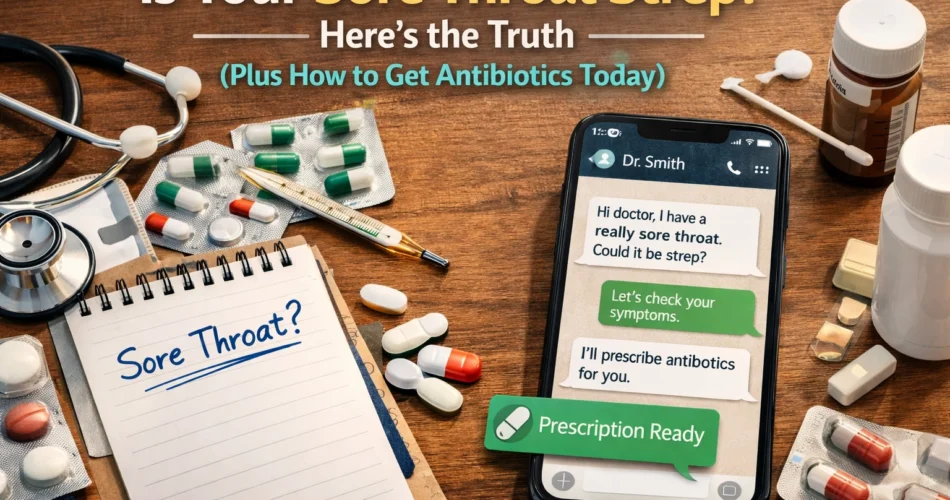
Medically reviewed by a licensed U.S. physician
You wake up with a throat that feels like sandpaper. Every swallow is painful. You check the mirror and see angry red tonsils. Your first thought: "Is this strep throat? Do I need antibiotics?"
Here's what most people don't realize: you cannot diagnose strep throat based on symptoms alone. Even doctors can't tell the difference between viral and bacterial sore throats without testing. And that matters, because taking antibiotics when you don't need them doesn't just waste your time and money, it contributes to antibiotic resistance.
The good news? If you do have strep throat, you can get tested and treated quickly without sitting in a waiting room. Let's break down exactly what you need to know.
What Makes Strep Throat Different From a Regular Sore Throat?
Strep throat is caused by Group A Streptococcus bacteria. Unlike viral sore throats that come with colds, strep has a distinct pattern, though not distinct enough to diagnose without testing.
Classic strep throat symptoms include:
- Sudden onset of severe throat pain (not gradual like a cold)
- Fever above 101°F, typically peaking on the second day
- Difficulty swallowing, even liquids
- Red, swollen tonsils with white patches, streaks, or pus
- Swollen, tender lymph nodes in your neck
- Headache and body aches
- Sometimes a red rash (scarlet fever)
Here's the key differentiator: If you have a cough, runny nose, or congestion alongside your sore throat, it's almost certainly viral, not strep. According to research published in the American Family Physician, a cough makes strep throat significantly less likely.
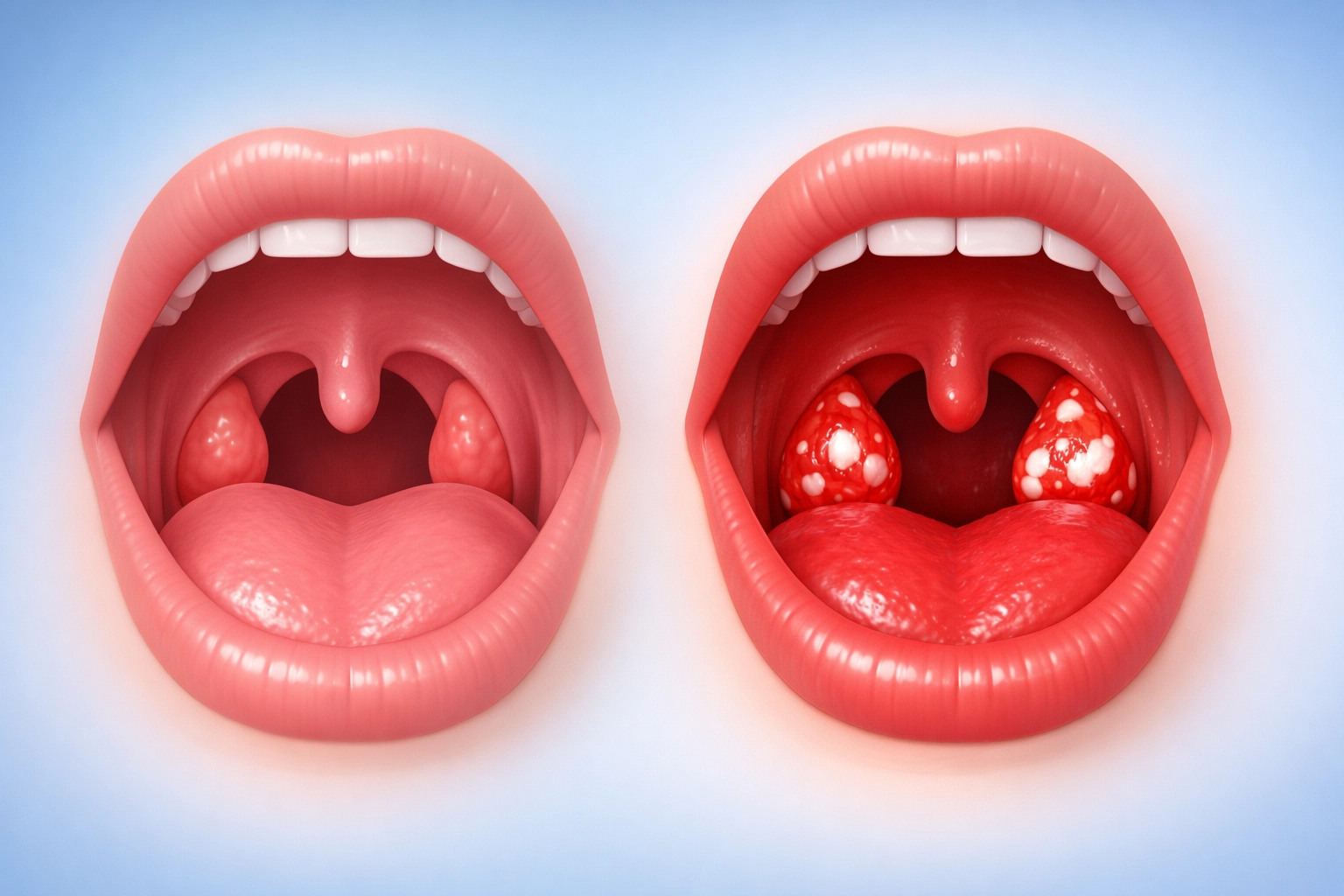
But even with "textbook" strep symptoms, you still need a test. Studies show that even experienced physicians are wrong about 50% of the time when they try to diagnose strep based on symptoms alone.
Why You Can't Skip the Strep Test
Let's say you have all the classic symptoms. Your throat is on fire, you have a fever, and your tonsils look like a medical textbook example. Can you just start antibiotics?
No: and here's why that matters:
- Most sore throats are viral (about 70-85% in adults). Antibiotics don't work against viruses.
- Unnecessary antibiotics have real consequences, including side effects, disrupted gut bacteria, and contributing to antibiotic-resistant infections.
- Other serious conditions can mimic strep throat, including mononucleosis, which actually gets worse with certain antibiotics.
The only way to confirm strep throat is through one of three tests:
Rapid Antigen Test
- Takes 20-30 minutes
- Swabs the back of your throat
- 85-90% accurate for detecting strep
- If positive, you can start treatment immediately
Throat Culture
- Takes 1-2 days for results
- More accurate than rapid tests
- Often ordered if rapid test is negative but symptoms are strong
PCR (Molecular) Test
- Highly sensitive and specific
- Results typically within 24 hours
- Less commonly used but increasingly available
Most providers start with a rapid test. If it's positive, you get antibiotics. If it's negative but your symptoms strongly suggest strep, they may order a throat culture as backup.
🚨 ER Red Flags: When Strep Throat Becomes Dangerous
While most cases of strep throat are straightforward, certain symptoms require immediate emergency care. Go to the ER or call 911 if you experience:
- Difficulty breathing or wheezing
- Severe difficulty swallowing where you're drooling or can't swallow your saliva
- Signs of dehydration (dark urine, dizziness, no urination for 12+ hours)
- Stiff neck with severe headache (could indicate meningitis)
- Rash with high fever and spreading rapidly
- No improvement after 48 hours of antibiotics
Additionally, seek same-day medical attention if you have:
- Fever lasting more than 3 days
- Severe sore throat lasting more than 48 hours without improvement
- Joint swelling or pain (rare complication of untreated strep)
- Difficulty opening your mouth
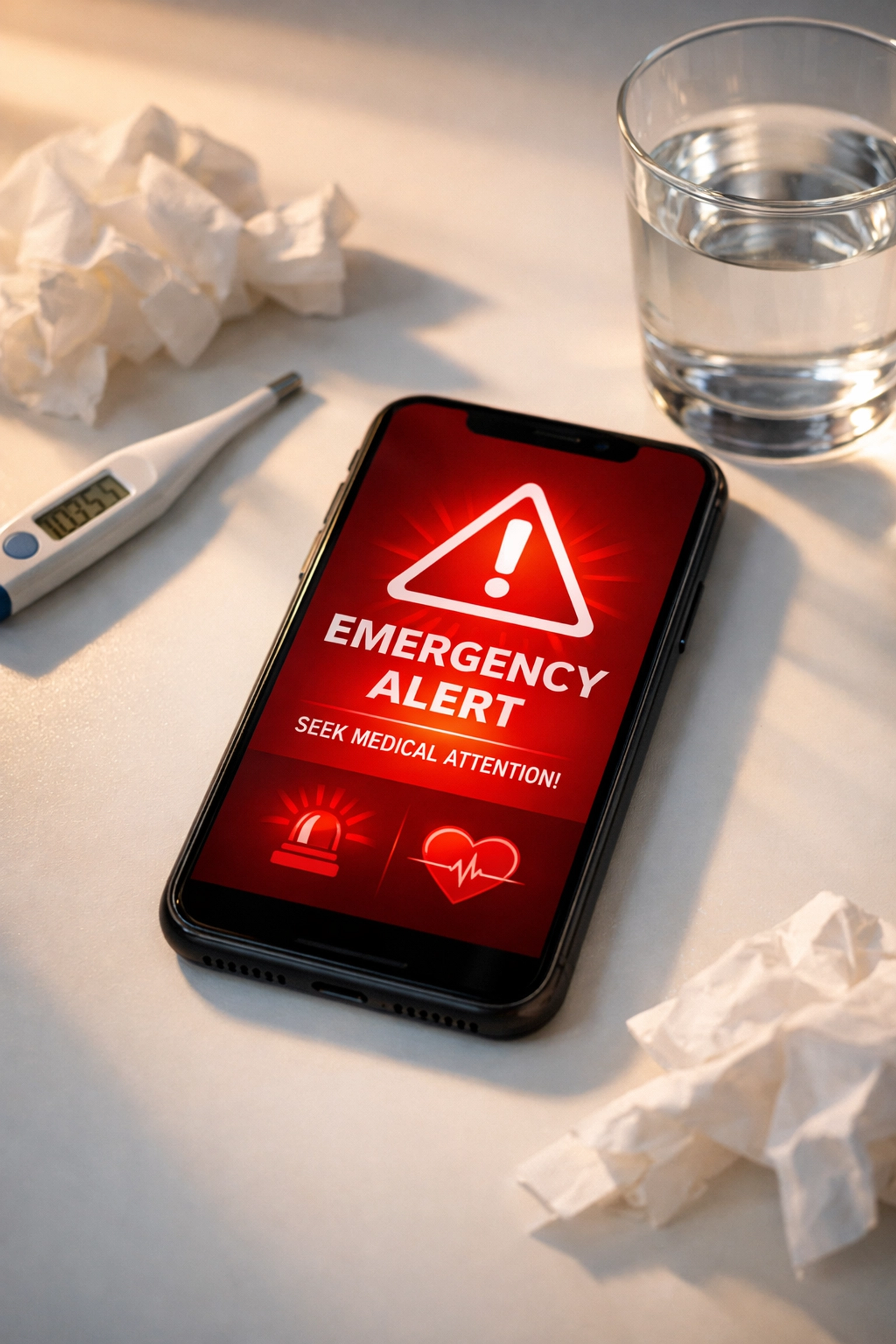
These red flags are rare, but they're important to recognize. Untreated strep throat can lead to serious complications including rheumatic fever, kidney inflammation (post-streptococcal glomerulonephritis), and peritonsillar abscess.
Telehealth vs. Urgent Care: Which Is Right for Strep Throat?
You suspect strep throat. Now what? You have three main options: telehealth, urgent care, or waiting for a primary care appointment. Here's how to decide.
Choose Telehealth If:
- You have classic strep symptoms without red flags
- You need quick access to treatment (same day)
- You want to avoid waiting rooms during cold and flu season
- You prefer the convenience of care from home
- You need a prescription sent directly to your pharmacy
How it works with ChatWithDr:
- Text with a licensed U.S. doctor through our secure platform (no account or app required)
- Describe your symptoms and medical history
- Doctor orders a strep test at a nearby lab or pharmacy (usually CVS, Walgreens, or LabCorp)
- Get your results, typically within hours
- If positive, antibiotics are prescribed and sent to your chosen pharmacy
- Flat rate of $39.99, with responses typically within 2 hours
This works well because strep testing is standardized and widely available. You don't need an in-person exam: just access to testing.
Choose Urgent Care If:
- You have severe difficulty swallowing or breathing
- You need immediate testing without going to a lab separately
- You prefer face-to-face interaction
- You need rapid treatment within the hour
Choose Emergency Care If:
- You have any of the red flag symptoms listed above
- You suspect a throat abscess
- You're experiencing breathing difficulties
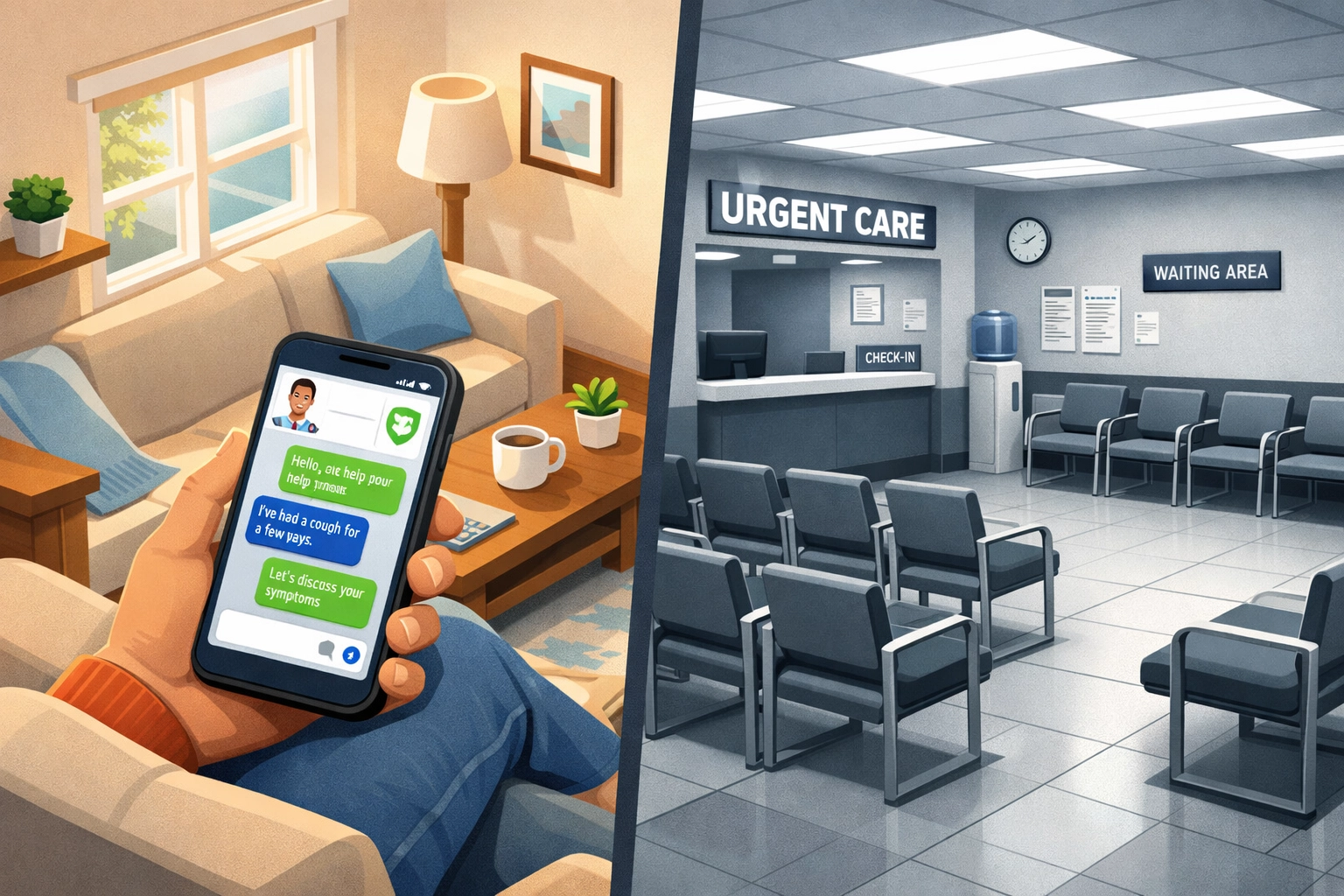
The Bottom Line: For straightforward suspected strep throat, telehealth through ChatWithDr offers the fastest, most convenient path to diagnosis and treatment: without the exposure risk of waiting rooms.
How to Get Strep Antibiotics Today (Step-by-Step)
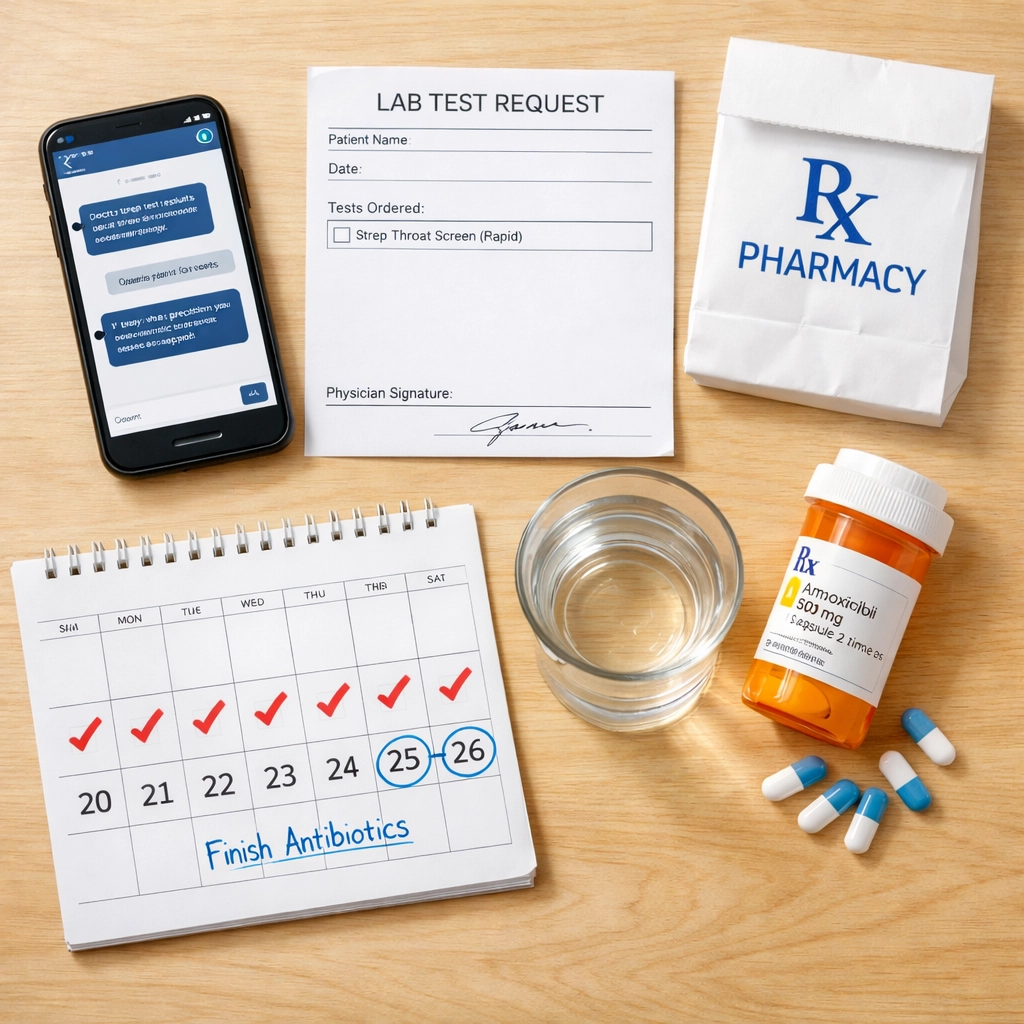
If you test positive for strep throat, the standard treatment is antibiotics. Here's exactly how the process works and what to expect:
Step 1: Get Diagnosed
Text with a doctor through ChatWithDr's secure platform. No video call required: just message back and forth about your symptoms. The doctor will order a strep test if appropriate.
Step 2: Get Tested
Head to a nearby pharmacy or lab (CVS MinuteClinic, Walgreens, LabCorp, etc.) for your rapid strep test. Most locations offer same-day appointments or walk-in testing.
Step 3: Get Results
Rapid strep tests take 20-30 minutes. Your results will be sent to your ChatWithDr physician.
Step 4: Get Your Prescription
If positive, your doctor will prescribe antibiotics electronically to your chosen pharmacy: usually within 1-2 hours of your positive result.
Common antibiotics prescribed for strep throat:
- Penicillin or Amoxicillin (first-line treatment, 10-day course)
- Cephalexin (if you have a mild penicillin allergy)
- Azithromycin (Z-pack) for penicillin-allergic patients, though increasingly avoided due to resistance
Step 5: Start Treatment
Pick up your prescription and start taking it immediately. You should start feeling better within 24-48 hours, though you need to complete the full course.
What to Expect After Starting Antibiotics
- You'll stop being contagious after 24 hours on antibiotics
- Pain should decrease significantly within 48 hours
- Fever typically resolves within 1-2 days
- Complete your full prescription even if you feel better (usually 10 days)
If you're not improving after 48 hours on antibiotics, contact your doctor. You may need a different antibiotic or further evaluation.
Myths About Strep Throat (That Keep Circulating)
Myth #1: "White spots on tonsils always mean strep."
False. Viral infections (especially mono) can also cause white patches. You need a test to confirm.
Myth #2: "If symptoms improve on their own, it wasn't strep."
Not necessarily. Some strep infections resolve without antibiotics, but treatment prevents complications and reduces contagion time.
Myth #3: "You can use leftover antibiotics from a previous infection."
Never do this. You need current testing, and incomplete antibiotic courses contribute to resistance.
Myth #4: "Kids get strep, but adults rarely do."
While more common in children ages 5-15, adults definitely get strep throat. About 5-15% of adult sore throats are strep.
When to Follow Up After Strep Treatment
Most people don't need a follow-up visit after successful strep treatment. However, contact a doctor if:
- Symptoms aren't improving after 48 hours of antibiotics
- Fever returns after initially going away
- You develop new symptoms (rash, joint pain, chest pain)
- You have recurrent strep infections (3+ in 6 months or 4+ in 12 months)
Recurrent strep throat may require evaluation for chronic carrier status or consideration of tonsillectomy in severe cases.
The Fastest Way to Get Treatment Today
If you're dealing with suspected strep throat right now, you don't need to wait for an appointment or sit in an urgent care waiting room.
With ChatWithDr, you can:
- Text with a licensed U.S. doctor within 2 hours
- Get a strep test ordered to a nearby location
- Receive antibiotics the same day if positive
- Pay one flat rate of $39.99: no insurance hassles or surprise bills
- Access care 24/7, including nights and weekends
No account creation, no app download, no video call required. Just secure medical messaging with a real doctor who can diagnose, test, and treat.
Ready to get started? Visit ChatWithDr's online urgent care or check out our full range of conditions we treat to see how text-based telehealth makes healthcare simpler.
Your throat doesn't have to hurt for days while you wait for an appointment. Get the testing and treatment you need( today.)
Related posts:
 Tonsillitis vs Strep Throat What’s the Real Difference
  Strep Throat vs Sore Throat: How to Tell the Difference
  Strep Throat or Sore Throat: 5 Signs You Need Same Day Antibiotics Online
  How long does strep last: Timeline, Causes, and Quick Relief
  Strep Throat Treatment Online: Get Antibiotics Without the Waiting Room