
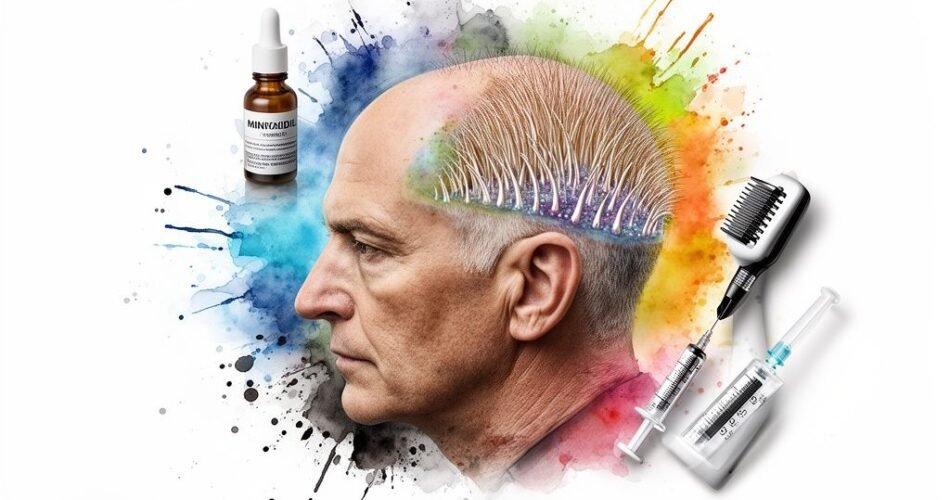
When you're looking for the most effective male pattern baldness treatment, the best approach usually involves combining FDA-approved medications like Finasteride and Minoxidil. This one-two punch works to both stop further hair loss and kickstart new growth. These proven medical solutions are the first line of defense for a reason—they offer a reliable way to manage this incredibly common condition and hold onto the hair you have.
What Really Causes Male Pattern Baldness

If you've started noticing your hair is thinning, you're in good company. Male pattern baldness, known in the medical world as androgenetic alopecia, is a widespread and predictable condition that comes down to two things: your genes and your hormones. It isn't a red flag about your health; it’s just a natural biological process for a huge number of men.
Just how common is it? The condition affects 42.68% of men in the United States. That number climbs even higher in parts of Europe, with Spain hitting rates of 44.50% and Italy reaching 44.37% as of 2024.
Before we dive into treatments, it's worth taking a moment to understand exactly what causes male pattern baldness.
The Role of DHT in Hair Loss
The main culprit behind male pattern baldness is a hormone called dihydrotestosterone (DHT). Your body naturally converts a small bit of testosterone into DHT, but some guys have a genetic sensitivity to what it does to their hair follicles.
Think of DHT’s effect on your hair like a dimmer switch. Over time, DHT latches onto receptors in your scalp and slowly starts turning down the power to your hair follicles. This process is called miniaturization, and it doesn't happen overnight.
With each new growth cycle, the affected follicles produce hairs that are shorter, finer, and weaker. Eventually, that dimmer switch gets turned all the way down, and the follicle just stops producing any visible hair.
This genetic sensitivity to DHT is the reason hair loss follows that all-too-familiar pattern—usually starting at the temples and crown—and it’s why effective treatments are designed to get in the way of this specific hormonal action.
Why Your Genes Matter
Your tendency to lose your hair is something you inherit. If baldness runs in your family, your odds of experiencing it are much higher. This genetic blueprint is what determines:
- When hair loss begins: Some men notice the first signs in their late teens, while for others, it doesn't become obvious until their 40s or 50s.
- The speed of progression: This is all about how quickly your hair loss moves from a little thinning to more significant baldness.
- The final pattern: Your genes also dictate the extent of hair loss you'll eventually have, which often follows the well-known stages of the Norwood scale.
Getting that the root cause is this mix of genetics and hormones is the first real step toward taking control. It makes it crystal clear why certain treatments work—because they target these exact mechanisms. With this foundation, you can start to confidently explore the solutions available today to manage your hair loss.
The Two FDA-Approved Pillars of Hair Loss Treatment
When you start looking into proven treatments for male pattern baldness, you’ll quickly find that two names stand out from the rest. These aren’t cosmetic cover-ups or temporary fixes; they are the two reliable cornerstones approved by the U.S. Food and Drug Administration (FDA) to actually intervene in the biological process of hair loss.
Understanding how each one works is the key to setting realistic expectations and figuring out the best path forward. Think of them as two different players on the same team—one plays offense to boost growth, and the other plays defense to stop the damage.

Comparing FDA-Approved Hair Loss Medications
To get a clear picture of how these two powerhouse treatments work, it helps to see them side-by-side. Each has a unique job to do, and they often work best when used together.
| Feature | Topical Minoxidil (Rogaine) | Oral Finasteride (Propecia) |
|---|---|---|
| Primary Goal | Stimulates hair growth and revives dormant follicles. | Blocks the hormone (DHT) that causes hair loss. |
| How It Works | Increases blood flow and nutrients to the scalp. | Inhibits the 5-alpha-reductase enzyme systemically. |
| Application | Applied directly to the scalp 1-2 times daily (foam/liquid). | Taken as a pill once daily. |
| Best For | General thinning and jump-starting growth, especially at the crown. | Stopping hair loss progression and preserving existing hair. |
| Availability | Over-the-counter (no prescription needed). | Prescription-only. |
While both are incredibly effective, they tackle the problem from completely different angles. Minoxidil is about creating a better environment for growth, while Finasteride is about stopping the attack on your follicles at its source.
Minoxidil: The Growth Stimulator
Minoxidil, which most people know by the brand name Rogaine, is a topical treatment that you apply directly to your scalp. Its main job is to act as a vasodilator, which is just a technical way of saying it widens blood vessels.
Think of your hair follicles as tiny plants. Minoxidil basically upgrades the irrigation system, boosting blood flow to deliver more oxygen and nutrients right to the roots. This extra nourishment can wake up dormant follicles and push them back into their active growth phase.
This "power boost" can lead to a few great outcomes:
- Thicker Hair Shafts: Miniaturized hairs can grow back stronger and thicker.
- Slowing Hair Loss: It helps keep your hair in the anagen (growth) phase for longer.
- Potential Regrowth: Some guys see new growth in areas that have started to thin.
Minoxidil comes as a foam or liquid solution and is typically applied once or twice a day. It’s an easy-to-get over-the-counter option, and studies show it works for roughly two-thirds of the men who use it consistently.
Finasteride: The DHT Shield
While Minoxidil is busy stimulating the follicles, Finasteride takes a totally different approach. It goes after the hormonal root cause of male pattern baldness. Sold under brand names like Propecia, Finasteride is a daily pill that works from the inside out.
Its mission is to be a "DHT shield." Finasteride works by blocking an enzyme—called 5-alpha-reductase—that converts testosterone into dihydrotestosterone (DHT), the hormone that shrinks your hair follicles. By drastically lowering DHT levels in your scalp, it protects your hair from getting smaller and weaker.
Key Takeaway: Finasteride doesn’t directly grow hair. It creates a healthier, low-DHT environment where your follicles can finally get a break from the constant hormonal attack and get back to their normal growth cycles.
Because it tackles the underlying cause, Finasteride is exceptionally good at stopping hair loss in its tracks and helping you hold on to the hair you have. Many men also see significant regrowth, particularly at the crown. You can explore a deeper dive into topical solutions available for men's hair loss.
Stepping Up to Advanced Hair Restoration Procedures

While medications are fantastic for hitting the pause button on hair loss and protecting what you’ve got, sometimes you need a more direct approach. This is where procedural treatments come in, offering more dramatic results, especially for areas that have already seen significant thinning.
These advanced options work on a completely different principle. Instead of fighting DHT or stimulating follicles with medicine, they either physically restore hair or use your body's own biological triggers to kick-start new activity.
Think of it this way: if medications are like fertilizing your lawn to keep it healthy, these procedures are like laying down new sod or aerating the soil to bring a patchy area back to life. They're a hands-on intervention designed to create visible, lasting change. Let’s walk through three of the most popular and effective options out there.
Hair Transplants: The Gold Standard for Permanence
A hair transplant is considered the ultimate solution for restoring a hairline or filling in a bald spot for one simple, powerful reason: it’s permanent. The whole thing is based on a brilliant concept called "donor dominance." The hair on the back and sides of your head is genetically wired to resist DHT—it’s programmed to grow for life, no matter what’s happening up top.
A surgeon simply relocates these resilient hair follicles from that permanent "donor" zone to the thinning areas. It’s like moving a healthy, thriving plant from a dense part of your garden to a bare patch that needs some green. Once transplanted, these follicles just keep on growing hair naturally, for good.
There are two main ways to get this done:
- Follicular Unit Transplantation (FUT): This technique involves removing a thin strip of scalp from the donor area. Technicians then carefully dissect it into individual follicular units under a microscope before implanting them. FUT allows for a huge number of grafts in one go but does leave a fine linear scar.
- Follicular Unit Extraction (FUE): With FUE, the surgeon extracts individual hair follicles one by one directly from the scalp using a tiny punch tool. This method avoids the linear scar, leaving behind tiny, dot-like scars that are virtually invisible. It's the go-to choice for guys who like to wear their hair short.
Transplants are incredibly effective, but they are a surgical procedure with a significant price tag, often running from $4,000 to $15,000 and sometimes more, depending on how much work you need.
Platelet-Rich Plasma (PRP) Therapy
Platelet-Rich Plasma (PRP) therapy is a non-surgical treatment that harnesses your body's own healing machinery to wake up tired hair follicles. The process is straightforward: a small amount of your blood is drawn, spun in a centrifuge to isolate and concentrate the platelets, and then this "liquid gold" is injected back into your scalp.
So, what's so special about platelets? They are absolutely packed with powerful growth factors that act like a five-star fertilizer for your hair.
These growth factors send a powerful signal to dormant or shrunken follicles, nudging them to wake up, thicken, and get back into an active growth phase. The result is often visibly thicker, stronger hair and a noticeable drop in shedding.
PRP is a great option on its own for early-stage thinning, but it’s also frequently used alongside medications or hair transplants to boost their results. A typical plan starts with a series of sessions about a month apart, followed by maintenance treatments every 6-12 months.
Low-Level Laser Therapy (LLLT)
Low-Level Laser Therapy (LLLT), often called red light therapy, is another non-invasive route that uses specific wavelengths of light to energize the cells inside your hair follicles. You can get this done in a clinic, but it's most popular in the form of convenient at-home caps and helmets.
Think of your follicle cells as tiny, rechargeable batteries. Over time, DHT damage can drain their energy. LLLT acts like a charging station, using light to fire up cellular energy production (ATP).
This energy boost can help:
- Extend the growth phase of the hair cycle.
- Improve blood flow and nutrient delivery to the scalp.
- Cool down inflammation around the follicles.
LLLT is best seen as a supportive male pattern baldness treatment. It’s perfect for men with diffuse thinning who want a painless, side-effect-free way to complement their main strategy. The key here is consistency—you’ll need to commit to sessions of 15-30 minutes several times a week to see results.
The science behind treating hair loss is moving faster than ever, and what we have today is just the beginning. While the current options are solid, researchers are constantly finding new ways to get to the root of the problem—literally. We're on the brink of a new era of treatments that are smarter, more targeted, and more powerful than anything we've seen before.
The big goal right now? Figure out how to get the DHT-blocking muscle of drugs like finasteride, but with laser-like precision. Imagine stopping DHT right at the scalp, shielding the hair follicle from its damaging effects without messing with your hormones elsewhere. That’s not science fiction; it's where the next generation of treatments is headed.
A New Frontier in Topical DHT Blockers
One of the most exciting areas of development is a whole new class of topical treatments built for this exact job. These aren’t just growth stimulants; they're DHT antagonists that go to work right where you apply them. The concept is brilliantly simple: deliver the active ingredient straight to the follicles that need it, minimizing its trip through the rest of your body.
A game-changing example is a topical solution called clascoterone. What makes it so different is how it works. Instead of tanking your body's overall DHT production, it essentially out-competes DHT for a spot on the androgen receptors in your scalp's oil glands and hair follicles. Think of it like putting a cover over a keyhole—the DHT "key" might be floating around, but it can't get in to cause any trouble.
This kind of localized action is a massive leap forward in the science of hair restoration.
The Power of Targeted Treatment
This "scalp-first" strategy could completely change the game for a lot of men. By keeping the DHT-blocking action confined to the scalp, researchers are aiming to slash the risk of the systemic side effects that are a common concern with oral medications. It's a much more elegant approach.
And the early results are turning heads. A new topical clascoterone 5% solution delivered a stunning 539% improvement in hair regrowth compared to a placebo in two major phase III trials. These studies, which included 1,465 men, show just how effective a direct, localized DHT blocker can be. You can read more about these impressive trial results and see what this could mean for the future.
This focus on targeted therapy marks a major shift. It's about working smarter, not just harder, by delivering the right intervention to the right place for maximum impact and minimal collateral damage.
What Lies Beyond
Beyond these new topicals, the horizon is packed with other incredible possibilities. Scientists are digging into entirely new biological pathways to wake up dormant follicles and keep them in their growth phase.
Some of the most promising fields of research include:
- Stem Cell Therapies: This is the stuff of the future—using stem cells to regenerate or reactivate follicles that have shut down, potentially creating brand new hair growth.
- JAK Inhibitors: Originally developed for autoimmune diseases, these drugs have shown a surprising knack for regrowing hair, likely by calming down inflammation around the follicle.
- New Growth Pathways: Researchers are identifying brand-new biological signals that can kickstart the anagen (growth) phase of the hair cycle and keep it going longer.
While many of these are still in development, they paint a very hopeful picture of a future where male pattern baldness is even more manageable. The science isn't standing still—it's sprinting toward safer, more effective solutions.
Building Your Personalized Hair Treatment Plan
Knowing what treatments are out there is one thing, but turning that knowledge into a real-world plan is what actually gets results. The right strategy for you comes down to a few key things: where you are with your hair loss right now, your budget, and what you can realistically stick with day-to-day.
Think of it like getting in shape. Someone just starting out at the gym doesn't jump into an elite athlete's routine. In the same way, your hair loss plan has to match your specific situation.
This keeps you from going overboard with a treatment that's too aggressive for minor thinning or, just as bad, trying something too weak for more advanced loss. It’s all about finding that sweet spot.
Matching Treatments To Your Hair Loss Stage
The Norwood scale is basically the roadmap for male pattern baldness, breaking it down into seven stages. Figuring out where you land on that scale is the single best way to narrow down your options and start building a smart treatment plan.
Let's walk through a few common scenarios:
- Early Stages (Norwood 2-3): You're just starting to see a receding hairline or some thinning at the crown. Right now, the name of the game is prevention and preservation. Kicking things off with FDA-approved medications is your strongest first move.
- Intermediate Stages (Norwood 4-5): The thinning is more obvious now, and that spot on the crown might be getting bigger. At this point, a combination approach is usually your best bet. This could mean using both Finasteride and Minoxidil, and maybe adding in treatments like LLLT or PRP.
- Advanced Stages (Norwood 6-7): You’ve got significant hair loss across the top of your head. Medications can still help you hang on to the hair you have, but if you want to restore density to bald areas, you’ll likely need a procedural intervention like a hair transplant.
The big takeaway here is simple: the earlier you start, the more hair you have to save. It is far, far easier to protect the hair follicles you’ve still got than it is to try and wake up ones that have already gone dormant.
As you build out your strategy, a solid guide can help you figure out how to stop hair loss and work towards thicker, healthier hair.
To make this even clearer, this table breaks down which treatments are generally best suited for each stage of hair loss.
Treatment Suitability By Hair Loss Stage
| Stage of Hair Loss (Norwood Scale) | Primary Recommended Strategy | Secondary/Adjunct Options |
|---|---|---|
| Norwood 1-2 (Early/Minimal) | Watchful Waiting & Lifestyle: Focus on diet, stress management, and gentle hair care. | OTC minoxidil (2% or 5%) for prevention. |
| Norwood 3-4 (Moderate) | FDA-Approved Medications: Start with topical Minoxidil and/or oral Finasteride. | LLLT, PRP therapy, or specialized shampoos. |
| Norwood 5 (Established) | Combination Therapy: A consistent regimen of both Finasteride and Minoxidil is key. | LLLT, PRP, and considering a hair transplant consult. |
| Norwood 6-7 (Advanced) | Hair Transplant Surgery: The most effective option for restoring significant density. | Continued use of medications to preserve remaining hair. |
This table serves as a general guideline, but remember, your personal hair loss journey is unique. The best next step is always to get a professional's opinion to confirm your stage and tailor a plan specifically for you.
The Most Important First Step A Professional Diagnosis
Looking in the mirror is a good start, but nothing beats a real medical opinion. A doctor can nail down your exact stage of hair loss, make sure nothing else is causing it, and recommend the safest and most effective male pattern baldness treatment for your situation.
This flowchart maps out a simple decision-making process based on how much hair you've lost.

As you can see, whether you're dealing with a little thinning or more advanced loss, the smartest move is to start with a medical consultation. It ensures your entire plan is built on a solid, accurate diagnosis.
Not too long ago, getting that professional advice meant booking an in-person appointment, taking time off work, and sitting in a waiting room. Today, technology has made this critical first step ridiculously easy.
Leveraging Telemedicine For A Tailored Plan
Modern telehealth platforms give you a direct, private, and fast line to expert medical advice. Instead of waiting weeks for an appointment, you can get a diagnosis and a personalized treatment plan from a licensed physician, sometimes in just a few hours.
The process is refreshingly straightforward:
- Fill Out a Secure Online Form: You’ll answer some questions about your health history and your hair loss, and you can upload a few photos for the doctor to see.
- A Doctor Reviews Your Case: A board-certified physician will go over everything to figure out the cause and stage of your hair loss.
- Get Your Personalized Plan: The doctor gives you a diagnosis and lays out their treatment recommendations. If a prescription like Finasteride is right for you, they’ll send the e-prescription straight to your pharmacy.
This whole setup removes the biggest hurdles that used to stop people from getting started. To see just how simple it is to take control of your hair loss, you can learn more about getting a consultation with an online dermatologist today.
How to Get a Hair Loss Prescription Online
Taking the first step to treat male pattern baldness used to mean scheduling an appointment, sitting in a waiting room, and maybe even feeling a bit self-conscious. Not anymore. Technology has completely streamlined the process, letting you get a real diagnosis and a prescription from a doctor, all from the comfort of your own home. Telehealth has removed all the old friction, making expert care easier to access than ever.
The whole approach is built around your schedule and your privacy. Instead of carving out half a day for a doctor's visit, you can start a consultation whenever it works for you—whether that’s first thing in the morning or late at night after everyone else has gone to bed. This kind of immediate access is what gets an effective treatment plan in motion without any frustrating delays.
The Modern Path to Treatment
Getting a prescription online is a simple, secure, and surprisingly quick process. It’s designed to take you from worrying about your hair to having a solid action plan in just a few hours.
Here’s a breakdown of how it usually works in three straightforward steps:
- Complete a Secure Online Intake: You’ll start by filling out a confidential form covering your medical history and specific concerns about your hair loss. This is also where you’ll upload a few clear photos of your scalp, which gives the physician the visual proof they need to make an accurate diagnosis.
- A Physician Reviews Your Case: A board-certified, U.S.-licensed physician will personally go over all your information and photos. They’ll assess the exact pattern and stage of your hair loss to figure out the most effective treatment for your specific situation.
- Receive Your Personalized Plan and Prescription: The doctor provides a diagnosis and lays out a recommended treatment plan. If a prescription medicine like Finasteride is the right fit, they’ll send an e-prescription directly to whatever pharmacy you choose.
The entire process is built on a foundation of privacy and security. HIPAA-compliant platforms make sure your personal health information is protected from start to finish, so you can feel confident seeking care discreetly.
Why Online Consultations Just Work
The advantages of using a telehealth service for hair loss are pretty clear. It gets rid of the traditional roadblocks and puts you back in control of your health, offering a no-nonsense way to get the care you need.
- Unmatched Convenience: Get medical advice 24/7 from absolutely anywhere, without ever needing a video call.
- Speed and Efficiency: Go from consultation to treatment plan in a matter of hours, not weeks.
- Complete Privacy: You can discuss sensitive health topics through a secure, text-based platform on your own terms.
- Affordability: Consultations are typically a single, transparent fee, making expert medical advice truly accessible.
This approach gives you a direct line to a medical expert without the hassle. To get a better sense of what a digital consultation is like, you can learn more about how to get an online prescription and start your journey today.
Your Questions About Hair Loss Treatments, Answered
Jumping into the world of hair loss treatments can bring up a lot of questions. To help you feel confident about what's next, we’ve put together some straightforward answers to the things most guys want to know. Think of this as your quick-reference guide to clear up any lingering doubts.
How Long Until I Actually See Results?
This is the big one, and the honest answer is: you need to be patient. With powerhouse medications like Minoxidil and Finasteride, you realistically won't see any noticeable changes for at least 3 to 6 months. This is a marathon, not a sprint.
In fact, some guys even notice a bit of extra shedding in the first few weeks. Don't panic! This is actually a good sign that the treatment is working, pushing out old, weaker hairs to make room for new, healthier ones. The best results—the ones you're really hoping for—usually show up after 12 to 18 months of sticking with it every single day.
Can I Combine Different Treatments?
Absolutely. In fact, combination therapy is often the smartest and most effective strategy for tackling male pattern baldness. Most doctors recommend using topical Minoxidil and oral Finasteride together because they fight hair loss from two totally different angles.
This “one-two punch” approach almost always gets better results than using just one of them alone.
- Finasteride gets to work on the inside, lowering your body's DHT levels to protect your hair follicles from getting zapped.
- Minoxidil works on the outside, boosting blood flow to your scalp to kickstart new growth.
You can even add procedures like PRP or LLLT into the mix for an even stronger game plan. Just make sure you map out any combination strategy with a doctor first.
What Happens If I Stop My Treatment?
It’s crucial to understand that medical treatments for male pattern baldness are not a one-and-done cure. They work by actively protecting the hair you have and helping you grow more.
If you stop taking your medication, the genetic process causing your hair loss will kick right back in. Any hair you kept or regrew because of the treatment will likely fall out over the next 3 to 12 months. Your hair will eventually go back to how it would have looked if you’d never started treatment at all.
Are Over-the-Counter Products Worth It?
While drugstore shelves are full of shampoos and supplements that promise to stop hair loss, their real-world impact is pretty minimal compared to FDA-approved medications.
Sure, products with ingredients like ketoconazole can help create a healthy scalp environment, and biotin supplements can support overall hair health. But they aren't strong enough to stop male pattern baldness on their own. It's best to think of them as supporting players in a solid treatment plan that’s built around therapies with proven track records.
Ready to create your personalized treatment plan with a medical expert? ChatWithDr provides 24/7 text-based consultations with board-certified U.S. physicians. Get a diagnosis and a prescription sent to your local pharmacy in hours, all for just $39.99. Start your journey to healthier hair today at https://chatwithdr.com.
Related posts:
 Your Guide to Hair Loss Treatment Online
  Hair Loss Treatment Online: A Discreet Guide to Restoring Your Confidence
  Hair Loss Prescription Online: Get Treatment Without the Waiting Room
  Stop Hair Loss Today: The Fastest Way to Chat With a Doctor for Treatment
  The Ultimate Guide to Private Online Care: Everything You Need for Women’s & Men’s Health