
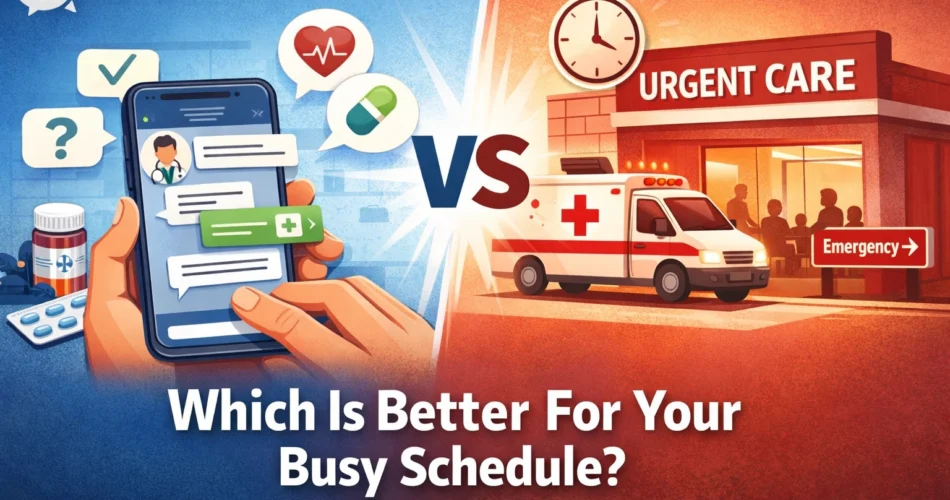
In the modern world, time is often more valuable than money. Between demanding careers, family obligations, and the constant hum of a 24/7 society, finding two hours to sit in a drafty waiting room for a minor medical issue feels like an impossible task. This is the primary reason why online medical chat has seen a meteoric rise in popularity compared to traditional urgent care centers.
When you are juggling a packed calendar, the question isn't just about who can provide the best care: it’s about who can provide it without derailing your entire day. Whether you are a truck driver crossing state lines, a parent managing a household, or a traveler in an unfamiliar city, understanding the differences between an online medical chat and a physical urgent care visit is essential for efficient health management.
The Reality of the Busy Schedule
For many, the traditional healthcare model is broken. To see a doctor, you often have to schedule weeks in advance. When an acute issue arises: like a sudden bout of strep throat or an irritating skin rash: the standard advice is to visit an urgent care clinic.
However, "urgent" care is frequently anything but fast. National averages suggest that while most patients are seen within an hour, the total time spent traveling, checking in, waiting, and being seen can easily exceed two to three hours. For a busy professional or a parent, that is a significant portion of the workday or evening gone.

What is Online Medical Chat?
Unlike traditional telehealth that might require scheduled video appointments (which can be just as difficult to fit into a schedule as a physical visit), online medical chat is a text-based service. It allows you to communicate with a licensed physician via secure medical messaging.
At ChatWithDr, this service is designed specifically for the person who doesn't have time to "hop on a call." You can initiate a consultation while waiting for a meeting to start, during a lunch break, or even late at night after the kids are in bed.
Key Features of ChatWithDr’s Text-Based Model:
- No Account Required: You don’t have to spend 10 minutes filling out a digital profile just to ask a question.
- 24/7 Availability: Medical issues don't follow a 9-to-5 schedule. Access care at 3:00 AM or 3:00 PM.
- Flat Rate Pricing: A simple $39.99 per consultation, avoiding the complexity of insurance billing and high co-pays.
- Response Time: You typically receive a response from a licensed doctor within 30 minutes to 4 hours.
Comparing the Two: A Side-by-Side Breakdown
To determine which is better for your schedule, we have to look at the logistical friction involved in both options.
1. The Time Commitment
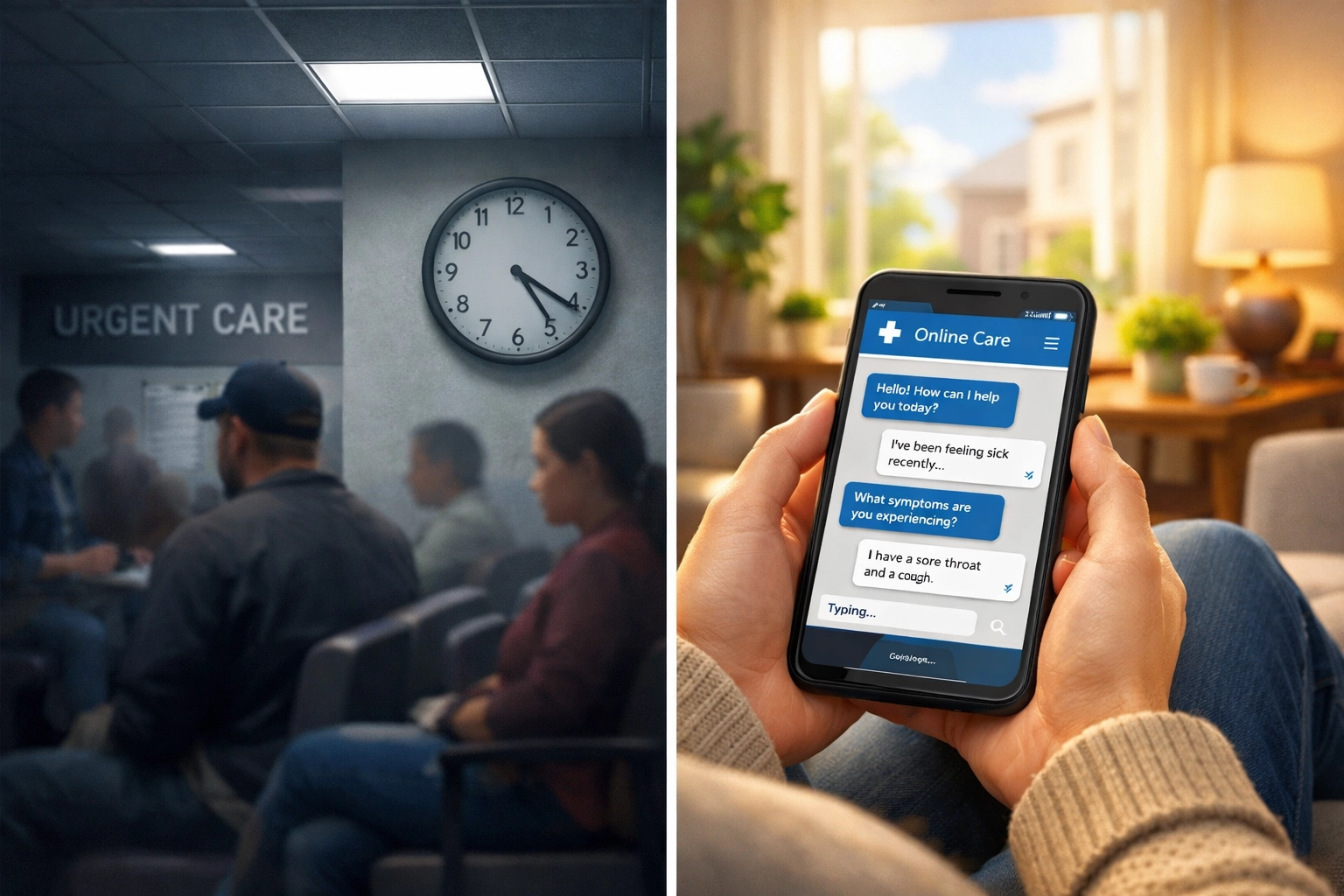
Urgent Care: Requires driving to a location, finding parking, and sitting in a waiting room. Even if the clinic is "empty," the administrative process of checking insurance and verifying identity takes time.
Online Medical Chat: Takes about 5 minutes to submit your symptoms and photos. You can go back to your work, chores, or rest while the doctor reviews your case.
2. Location Flexibility
Urgent Care: You are tethered to the physical location of the clinic. If you are a traveler in Vermont or South Dakota, finding a reputable clinic near you can be a chore.
Online Medical Chat: It moves with you. Whether you are at home in Florida, on a job site in Kansas, or staying in New Hampshire, your doctor is as close as your smartphone.
3. The "Sick Room" Factor
Urgent Care: One of the biggest drawbacks of physical clinics is the exposure to other illnesses. Sitting in a room with five other people coughing and sneezing is the last thing a busy person needs.
Online Medical Chat: Total isolation. You get the care you need without the risk of picking up a secondary infection from a waiting room.
Who Benefits Most from Online Medical Chat?
While everyone can benefit from faster healthcare, three specific groups find the text-based chat model life-changing.
The Professional Trucker
Truck drivers have some of the most difficult schedules in the country. They are often in different states every day and cannot easily park a rig to visit a local clinic. If a driver in California realizes they need an Epipen refill or is dealing with fungal infections from a truck stop shower, an online medical chat is the only viable option. They can consult a doctor during a mandatory rest break and have a prescription sent to a pharmacy along their route.
The Busy Parent
A parent's schedule is reactive. When a child develops a rash or the parent starts feeling the symptoms of strep throat, the logistics of packing everyone into a car for a 3-hour urgent care trip are a nightmare. Using ChatWithDr allows parents to get a professional opinion and treatment plan without disrupting the household routine.
The Frequent Traveler
Travelers often face health hurdles in unfamiliar territory. Whether it's needing emergency contraception while on vacation in South Carolina or managing a flare-up of a chronic condition in Colorado, the ability to chat with a doctor 24/7 ensures that health issues don't ruin a trip.
When Should You Still Choose Urgent Care?
Despite the convenience of online medical chat, it is not a replacement for all medical needs. There are specific instances where the physical infrastructure of an urgent care center is necessary:
- Imaging Needs: If you suspect a broken bone and need an X-ray.
- Lacerations: Wounds that require physical stitches or staples.
- Physical Testing: While many tests (like strep or UTI) can sometimes be managed via chat based on symptoms and history, certain diagnostics require a physical swab or blood draw on-site.
- Severe Symptoms: Chest pain, difficulty breathing, or neurological changes require an Emergency Room, not just urgent care.
However, for routine issues like erectile dysfunction, hair loss, or online birth control, the chat model is significantly more efficient.

The Financial Advantage
Beyond time, there is the cost. Urgent care visits can be notoriously expensive if you have a high-deductible insurance plan or no insurance at all. Bills can easily range from $150 to $300 for a simple visit.
ChatWithDr operates on a transparent, flat-fee model of $39.99. This price point makes healthcare accessible for those who might otherwise "tough it out" because they don't want to deal with the financial or temporal cost of a clinic. By lowering the barrier to entry, patients can address issues like Zepbound consultations or online ED treatment early, rather than waiting for conditions to worsen.
How to Get Started in Minutes
The beauty of the "no account required" model is that you can start your consultation immediately. If you are currently sitting at your desk in Minnesota or at a rest stop in South Dakota, follow these simple steps:
- Visit the Website: Go to ChatWithDr.com.
- Describe Your Symptoms: Use the secure messaging platform to text your concerns. You can even upload photos of rashes or throat inflammation.
- Pay the Flat Fee: The $39.99 fee covers the consultation.
- Wait for the Doctor: Continue with your day. Within 30 minutes to 4 hours, a licensed physician will review your information and respond.
- Receive Treatment: If appropriate, the doctor can send a prescription to your local pharmacy or provide a medical note for work.
You can also use the ChatWithDr App for even faster access on the go.
Conclusion: Priority on Your Time
If your schedule is the primary driver of your decision-making, online medical chat is the clear winner for minor acute issues and routine prescriptions. The ability to consult with a professional without an appointment, without an account, and without leaving your current location is the ultimate tool for the modern, busy individual.
While urgent care remains a vital part of the healthcare ecosystem for physical injuries, the 24/7 nature of online medical chat ensures that you never have to choose between your health and your responsibilities.
Disclaimer: This information is not a substitute for professional medical advice, diagnosis, or treatment. Always seek the advice of your physician or qualified health provider with questions regarding medical conditions or treatments.