
While you can find an OTC UTI treatment to manage the painful symptoms of a urinary tract infection, these products cannot cure the underlying bacterial infection. Getting rid of the bacteria for good is a job that only prescription antibiotics can do.
Can You Truly Treat a UTI Over the Counter?
When you’re dealing with the constant, burning urgency of a UTI, your first instinct is to rush to the pharmacy for anything that will bring immediate relief. That’s completely understandable, and the good news is, over-the-counter options can definitely provide some much-needed comfort.
But here’s the crucial part: you have to understand the difference between managing symptoms and actually curing the infection.
Think of it like this: OTC products are the firefighting crew that contains a blaze and keeps it from spreading, while antibiotics are the team that goes in and extinguishes the source of the fire. Symptom relievers numb the pain and take the edge off the discomfort, making the situation bearable. They don't, however, address the root cause—the bacteria that are multiplying in your urinary tract.
This distinction is the single most important thing to grasp for safely managing a UTI. Relying only on an OTC UTI treatment without eliminating the bacteria can allow the infection to worsen, potentially leading to a much more serious problem like a kidney infection.
Symptom Relief vs. Bacterial Cure
The core difference between these two approaches comes down to how they work. OTC products are all about the symptoms (like pain and burning), whereas prescription antibiotics go after the cause (the bacteria).
- OTC Products: These are mostly urinary analgesics, which act as a local anesthetic on the lining of your urinary tract. They provide temporary relief but have zero antibacterial properties.
- Prescription Antibiotics: These medications are designed specifically to kill the bacteria responsible for the infection, which is most often E. coli. They are the only way to completely resolve the infection.
This visual breaks down the very different roles of OTC relief versus a prescription cure.
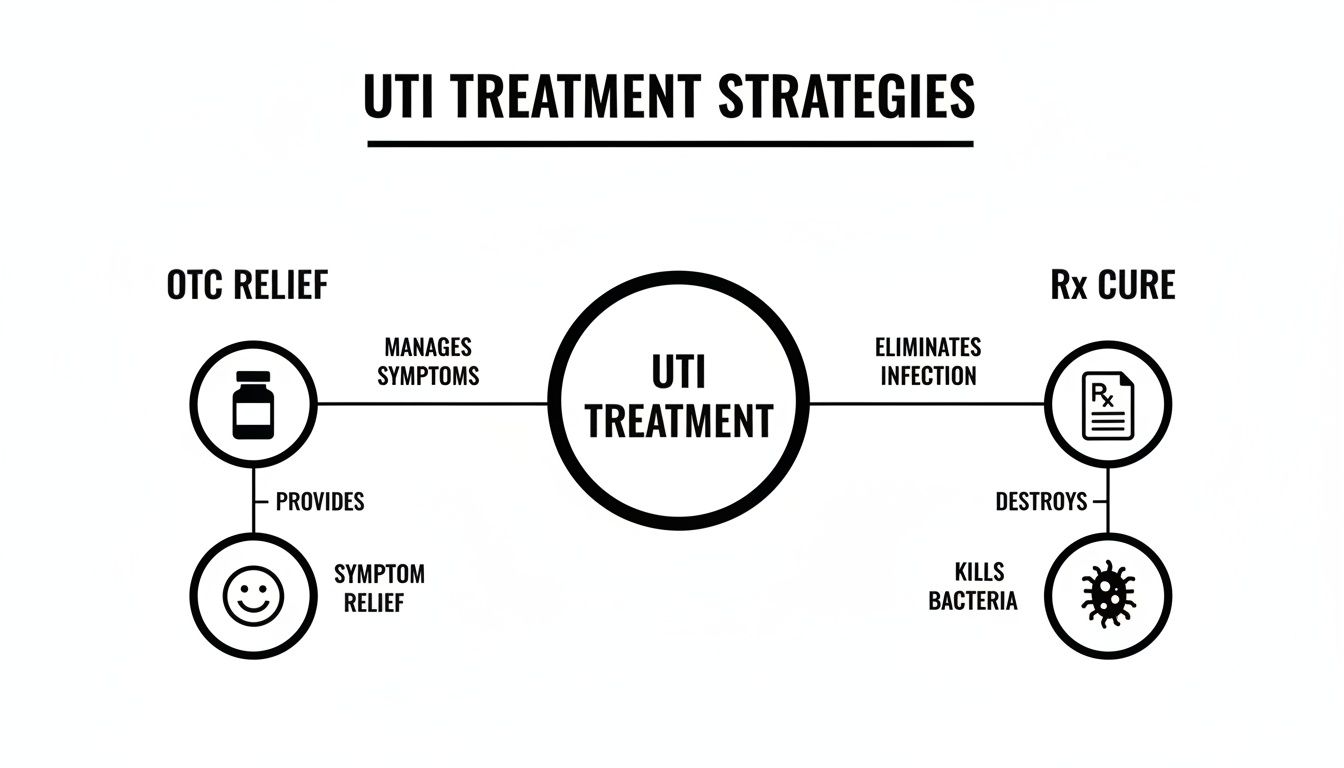
As the infographic shows, while OTC products offer a temporary fix for the discomfort, only prescription treatments can truly eradicate the bacterial cause and cure the infection for good.
To make this crystal clear, let's break down what each approach really accomplishes in a side-by-side comparison.
Comparing OTC Symptom Relief and Prescription Cures for UTIs
The table below gives you a straightforward breakdown of how over-the-counter products for UTIs differ from prescription antibiotics.
| Treatment Type | Primary Goal | How It Works | Common Examples | Final Outcome |
|---|---|---|---|---|
| OTC Options | Symptom Management | Masks or numbs pain and burning sensations in the urinary tract. | Phenazopyridine (like in Azo), Ibuprofen, Acetaminophen | Temporary comfort, but the underlying bacterial infection remains and can worsen. |
| Prescription Antibiotics | Bacterial Eradication | Kills the specific bacteria that are causing the infection. | Ciprofloxacin, Nitrofurantoin, Trimethoprim-sulfamethoxazole | Infection is cured, symptoms resolve completely, and risk of complications is minimized. |
Ultimately, it’s about using the right tool for the right job. OTC products are fantastic for making you feel better right now, but they are just a temporary patch.
The takeaway is simple but critical: Use over-the-counter products for immediate comfort, but always seek a medical diagnosis to get the prescription antibiotics necessary for a true cure. A proper diagnosis from a healthcare professional is non-negotiable for your health and safety.
Finding Fast Symptom Relief at the Pharmacy
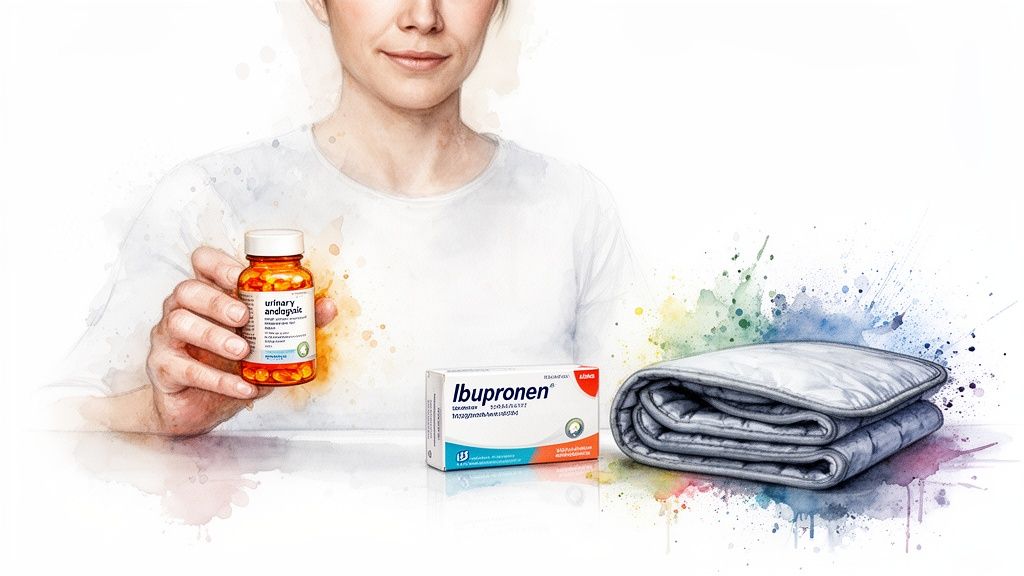
When a UTI strikes, it feels like your entire life grinds to a halt. The constant, nagging urge to go to the bathroom paired with that sharp, burning pain is enough to send anyone running for help. The good news? Your local pharmacy has some solid options to help you manage the misery while you sort out getting a prescription.
Think of these over-the-counter products as your first line of defense. They won't cure the infection, but they can provide a desperately needed bridge to comfort until antibiotics start working. And a lot of people rely on them—the global market for uncomplicated UTI treatment was valued at USD 7.7 billion in 2025 and is expected to hit USD 11.8 billion by 2035. Retail pharmacies are a huge part of that, capturing about 60% of sales because they're so accessible. You can dig into the growth of the UTI treatment market to see just how common this is.
Phenazopyridine: The Urinary Pain Specialist
If you’ve ever browsed the pharmacy aisle for a UTI treatment, you’ve probably seen Azo Urinary Pain Relief or similar products. The powerhouse ingredient in these is phenazopyridine hydrochloride, which is what’s known as a urinary analgesic.
It’s best to think of phenazopyridine as a local anesthetic that works specifically on your urinary tract. It doesn't actually fight the bacteria, but it goes to work directly on the lining of your bladder and urethra to numb the nerve endings. The result is a dulling of that awful burning, pain, and urgency—often giving you real relief in about an hour.
Just be prepared for one well-known, harmless side effect: phenazopyridine will turn your urine a bright, vivid orange or even reddish color. It's completely normal and temporary, but it can stain clothes, so it’s smart to be careful.
Important Safety Note: Phenazopyridine is only meant for short-term relief—a maximum of two days. If you use it any longer, you risk masking the symptoms of an infection that’s getting worse and needs a doctor's attention.
General Pain Relievers for Inflammation and Discomfort
Beyond the urinary-specific stuff, your standard over-the-counter pain relievers can be surprisingly helpful allies. These medications work throughout your body to knock down pain and inflammation.
- Nonsteroidal Anti-Inflammatory Drugs (NSAIDs): Things like ibuprofen (Advil, Motrin) and naproxen (Aleve) are especially good here. They help reduce the bladder lining inflammation caused by the infection, which can ease the cramping and lower abdominal pain that often comes with a UTI.
- Acetaminophen: While acetaminophen (Tylenol) isn't an anti-inflammatory, it's still a very effective pain reliever. It can help take the edge off the general discomfort and aching that tag along with the infection.
When you grab a general pain reliever, always stick to the dosage instructions on the package. If you have stomach issues or kidney problems, acetaminophen might be a safer bet than an NSAID, but it’s always a good idea to check with a pharmacist or your doctor if you’re unsure.
Combining OTC Strategies for Maximum Comfort
Using these pharmacy options together, strategically, can make a huge difference in how you feel. For example, you could take phenazopyridine for that fast, targeted relief from the burning while also taking ibuprofen to tackle the underlying inflammation and cramps. It’s a two-pronged approach that hits the symptoms from different angles.
But remember, these are all temporary fixes. While they make the whole ordeal more bearable, they don't get rid of the bacteria causing the problem. A real cure only comes from prescription antibiotics. If you have symptoms, getting a proper diagnosis is key. Modern telemedicine platforms now make it simple to get an online prescription from a board-certified doctor without ever leaving home, so you can start the right treatment right away.
Evaluating Natural Supplements and Home Remedies
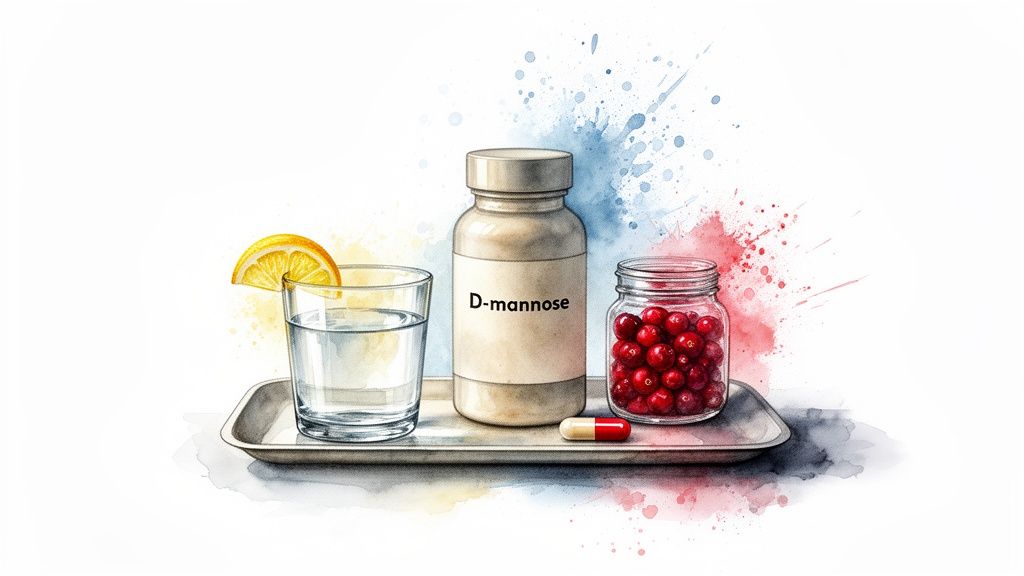
When a UTI hits, it's tempting to reach for anything that might help. Beyond the pharmacy aisle, a whole world of natural supplements and home remedies promises relief. But it's vital to know where they fit in. Think of these options as your supporting cast, not the main star. They can provide comfort and help your body's defenses, but they are not a primary OTC UTI treatment for an active infection.
The reality is, once bacteria like E. coli have taken hold in your urinary tract, the goal is to get them out. Supplements and home remedies just don't have the firepower to eliminate an established colony of bacteria on their own.
Their real strength is in prevention—making your urinary tract a less welcoming place for bacteria in the first place. Let's look at the evidence behind the most popular natural strategies.
Cranberry and D-Mannose for Prevention
You've probably heard the old advice to drink cranberry juice for a UTI. It's more than just a myth; there’s some real science behind it. Both cranberry and a simple sugar called D-mannose work in a pretty clever way.
The idea is that compounds in both substances can stop bacteria from sticking to your bladder walls. Picture the bacteria having tiny hooks they use to latch on. D-mannose and cranberry act like a shield, "gumming up" these hooks so the bacteria can't get a grip. This makes it way easier for your urine to just flush them out.
- Cranberry: Studies show it can help reduce how often UTIs happen, especially for people who get them over and over. But you need a high concentration of the active ingredient (proanthocyanidins, or PACs) to see any benefit. You’ll find that in capsules or pure, unsweetened juice—not the sugary cocktail stuff.
- D-mannose: This sugar is naturally found in fruits like cranberries and peaches. Since E. coli bacteria are drawn to it, taking a D-mannose supplement can trick the bacteria into latching onto the D-mannose molecules in your urine instead of your bladder.
It's crucial to remember that the evidence for both cranberry and D-mannose points toward prevention, not cure. They aren't strong enough to kick out an existing infection but might help you avoid the next one.
Probiotics and Supporting Gut Health
Your body is a bustling community of bacteria, both good and bad. Probiotics are the good guys, helping maintain a healthy balance in your gut and vaginal microbiomes. When this balance is right, it’s harder for harmful bacteria to overgrow and migrate to your urinary tract.
Taking probiotics, especially strains like Lactobacillus, can reinforce your body's natural defenses by making the environment more acidic and less friendly to UTI-causing bacteria. This is a great move after a course of antibiotics, which can wipe out both good and bad bacteria and leave you vulnerable. You can get probiotics from supplements or fermented foods like yogurt, kefir, and kombucha.
Practical Home Care Strategies
While supplements work from the inside, a few simple actions at home can bring a lot of physical relief and help your body heal.
- Hydrate Aggressively: This is probably the single most effective thing you can do. Drinking tons of water dilutes your urine, which can ease the burning feeling. More importantly, it makes you urinate more often, literally flushing bacteria out of your bladder.
- Use a Heating Pad: Applying gentle, low heat to your lower abdomen is a simple but surprisingly effective way to soothe the awful cramping and pressure that come with a UTI.
- Avoid Bladder Irritants: Your bladder is already inflamed and angry during an infection. The last thing you want to do is make it worse. Try to steer clear of common irritants like:
- Caffeine
- Alcohol
- Spicy foods
- Acidic fruits (like oranges and tomatoes)
- Artificial sweeteners
Combining these supportive measures can make a UTI far more bearable. Just remember, they are no substitute for the medical treatment needed to actually kill the bacteria and head off serious complications.
Why Antibiotics Are Non-Negotiable for a Cure
While over-the-counter products can be a lifesaver for managing UTI symptoms, it's crucial to understand what they can't do. No matter how much relief an OTC UTI treatment provides, it’s only masking the problem, not solving it. At its core, a urinary tract infection is a bacterial invasion, and only one class of medicine is built to wipe out bacteria: antibiotics.
Think of it like this: trying to fix a UTI with only pain relievers is like trimming the visible part of a weed. It makes your garden look better for a little while, but the root is still underground, ready to grow back even stronger. Antibiotics are the only thing that pulls the weed out by the roots, making sure it’s gone for good.
This is the non-negotiable reality of treating a UTI. To truly cure the infection and stop it from escalating into a dangerous kidney infection, you have to eliminate the bacteria causing it.
The Dangers of Self-Treating with Antibiotics
You might be tempted to find antibiotics without a prescription, but this is a risky path that contributes to a massive public health crisis. Research reviewing studies from 24 different countries found an alarming 62% rate of non-prescription antibiotic sales in pharmacies. This kind of unsupervised use is a huge driver of antibiotic resistance. You can dig into the findings on antimicrobial resistance to see the full scope of the problem.
When you try to self-diagnose and self-treat, you could easily take the wrong antibiotic, use an incorrect dose, or stop taking it too soon. Every one of these mistakes gives the bacteria a chance to survive, regroup, and develop defenses against the very drugs designed to kill them.
Antibiotic resistance occurs when bacteria evolve to defeat the drugs designed to kill them. This makes infections harder to treat and increases the risk of disease spread, severe illness, and death.
Why a Doctor's Prescription Is a Responsible Choice
Getting a prescription from a doctor isn’t just a formality; it’s a critical safety net. A healthcare professional makes sure you get the right medication for the specific bacteria likely causing your UTI. This targeted approach is not only better for you, but it's also the responsible choice for public health.
- Correct Diagnosis: A doctor confirms you actually have a bacterial UTI and not something else with similar symptoms.
- Targeted Treatment: They prescribe an antibiotic known to be effective against common culprits like E. coli.
- Proper Dosage: You get clear instructions on how much to take and for how long, ensuring the infection is completely wiped out.
By seeking professional medical advice, you protect yourself from complications and help keep these life-saving drugs effective for everyone. Thankfully, modern healthcare has made this process incredibly simple. You can see just how easy it is to get a professional diagnosis and online UTI treatment through telemedicine, often without ever leaving your home.
Red Flags That Demand Immediate Medical Attention
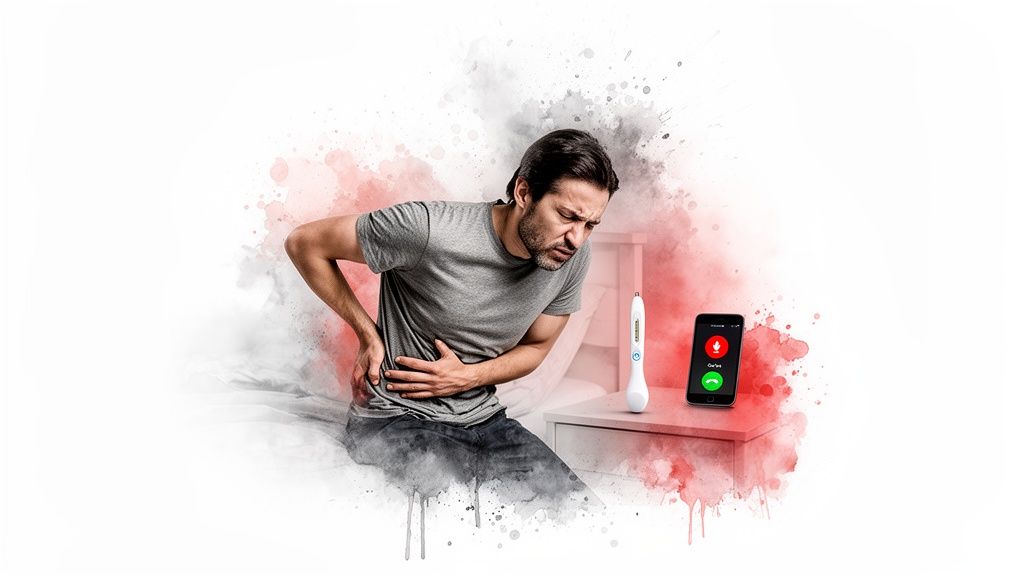
While an OTC UTI treatment can help you feel more comfortable, it’s only a temporary fix for what should be a simple bladder infection. It's absolutely critical to recognize the signs that the infection is no longer simple and has traveled from your bladder up to your kidneys. This is a serious medical condition known as pyelonephritis.
Ignoring these red flags can lead to severe complications, including permanent kidney damage or sepsis, which is a life-threatening infection of the bloodstream. Think of a bladder infection as a localized problem, like a small fire in a wastebasket. A kidney infection means that fire has spread to the walls of the house, threatening the entire structure. You need professional help, and you need it now.
This kind of escalation isn't just a personal health crisis; it's part of a much bigger picture. The global market for urinary tract infection treatment was valued at USD 9.85 billion in 2024 and is projected to climb to USD 14.73 billion by 2035, driven by the sheer number of UTIs happening worldwide. Getting severe symptoms checked out fast is key to managing both your personal health and broader public health costs. You can discover more insights about the UTI treatment market to understand its growing impact.
When to Stop Self-Treating and Seek Care
If you experience any of the following symptoms on top of the usual UTI discomfort, it's time to stop trying to manage it at home. You need to see a doctor, go to an urgent care clinic, or head to an emergency room right away.
- Fever and Chills: A fever that climbs above 100.4°F (38°C) is a classic sign your body is fighting a much bigger battle. If you get chills or start shaking, that’s an even stronger signal the infection is becoming systemic.
- Intense Back or Side Pain: This isn't the dull ache you get from a muscle strain. Kidney infection pain is often sharp and severe, hitting you in the mid-back area just below your ribs on one or both sides. This is often called flank pain.
- Nausea and Vomiting: Feeling sick to your stomach or being unable to keep fluids down means the infection is affecting your entire body, not just your urinary tract.
These symptoms are your body's emergency alert system. Do not wait for them to get better on their own. A kidney infection requires an immediate diagnosis and treatment with prescription antibiotics, which sometimes have to be given intravenously in a hospital.
Actionable Next Steps for Red Flag Symptoms
If you spot any of these warning signs, your window for self-treatment has closed. Here’s what to do:
- Stop taking all OTC pain relievers. They can mask how severe your symptoms really are and might even harm your kidneys if an infection is present.
- Contact a doctor, head to an urgent care center, or go to the emergency room immediately. Don't wait.
- Explain your symptoms clearly. Make sure to tell them you think a UTI has gotten worse.
Delaying care when these red flags appear is a dangerous gamble. Your health depends on recognizing the shift from a manageable bladder issue to a serious kidney infection and acting quickly.
Special Health Considerations for UTI Treatment
A urinary tract infection might seem straightforward, but how it’s handled can change dramatically depending on your health and life stage. An OTC UTI treatment that offers a bit of relief for a healthy young woman is absolutely not the right call for everyone. For certain groups, a UTI is a much bigger deal and requires an immediate medical response.
Trying to tough it out at home can be downright dangerous for some people. What might be a simple bladder infection for one person could signal a complex underlying issue or pose a major threat to another. This is exactly why a one-size-fits-all approach to UTIs just doesn’t work.
UTIs During Pregnancy
Pregnancy causes a whirlwind of hormonal and physical changes, and unfortunately, one of them is an increased risk for UTIs. An untreated UTI during pregnancy isn’t just about discomfort—it poses a serious risk to both you and your developing baby.
An infection can travel to the kidneys more easily, and studies have linked untreated UTIs to scary complications like preterm labor and low birth weight. That’s why doctors are so cautious that even asymptomatic bacteriuria (when there’s bacteria in the urine but no symptoms) is usually treated with pregnancy-safe antibiotics.
If you’re pregnant and even suspect you have a UTI, call your doctor right away. Don't try to manage it with over-the-counter products alone. A proper medical evaluation and a prescription for a pregnancy-safe antibiotic are crucial to protect your health and your baby’s.
When Men Get UTIs
UTIs are far more common in women, but they're not unheard of in men. The key difference is that a UTI in a man is almost always considered "complicated" by default. Why? Because it often points to an underlying anatomical problem that needs a closer look.
Some of the potential root causes for UTIs in men include:
- An enlarged prostate (benign prostatic hyperplasia or BPH)
- Kidney stones
- A urethral stricture (a narrowing of the tube that carries urine out of the body)
Because of these potential complications, men with UTI symptoms should always see a doctor for a proper diagnosis. A healthcare provider can figure out what's really going on and make sure the treatment tackles the root problem, not just the infection. If you're looking for more information on urinary health, you can learn more about UTIs in women in our detailed guide.
Managing Recurrent and Complicated Infections
For some people, UTIs aren't a rare annoyance but a frustrating, recurring nightmare. Recurrent UTIs—often defined as two or more infections in six months or three or more in a year—demand a smarter strategy than just another round of antibiotics. This usually means working with a doctor to pinpoint triggers and build a long-term prevention plan.
Certain groups, like the elderly, also need special attention for both treatment and prevention. For proven strategies, consult this guide on UTI prevention in elderly individuals. Likewise, kids who get UTIs need a careful medical workup to rule out any structural issues in their urinary tract.
In all of these cases—from pregnancy to recurrent infections to UTIs in men and children—self-treatment is not a safe bet. Getting professional medical guidance is the only way to get the right diagnosis, receive the right treatment, and head off potentially serious health problems.
Your Top Questions About OTC UTI Relief, Answered
When you're standing in the pharmacy aisle, staring at a wall of options for OTC UTI treatment, questions are bound to pop up. When you're in that much discomfort, you just want clear, straight answers so you can make a safe choice and get some relief. Let's clear up the most common concerns.
It's so important to make informed decisions here. Relying only on symptom relief can mask a much more serious infection that's getting worse. The goal is to use over-the-counter products as a temporary bridge to comfort, not as a replacement for the actual cure.
How Long Can I Safely Use OTC Products for a UTI?
You should never use OTC urinary pain relievers like phenazopyridine for more than two days. These products are only meant for short-term symptom management while you're in the process of getting proper medical care.
If your symptoms haven't improved within 48 hours—or if they get worse—it's crucial to see a doctor. Continuing to take these pills only hides the real problem: a bacterial infection that needs antibiotics to be fully wiped out.
Can Cranberry Pills or D-Mannose Cure an Active UTI?
No. There is no solid scientific evidence that cranberry supplements or D-mannose can cure an active UTI. While some studies suggest they might help prevent UTIs by making it harder for bacteria to stick to the bladder wall, they are not a substitute for antibiotics once an infection has already taken hold.
Relying on supplements to treat an established infection is risky. It gives the bacteria time to multiply and potentially travel up to your kidneys, leading to a much more serious condition. Think of them as a tool for prevention, not a cure.
Is It Possible to Get a UTI Prescription Online?
Absolutely. For uncomplicated UTIs, telehealth is a fantastic and incredibly convenient option. Modern services let you consult with a board-certified physician online, right from the comfort of your home.
You simply fill out a secure form detailing your symptoms, and a doctor reviews your case, provides a diagnosis, and can send a prescription for antibiotics directly to your local pharmacy—often within a couple of hours. This process cuts out all the hassle of an in-person visit when you need a cure, fast.
What Happens If a UTI Is Not Treated with Antibiotics?
Ignoring a UTI or just treating the symptoms with over-the-counter products can lead to very serious complications. The bacteria causing the infection won't just pack up and leave on their own; they will keep multiplying.
If left untreated, the infection can travel from the bladder up to the kidneys, causing a kidney infection known as pyelonephritis. This is a much more severe illness that can cause:
- Permanent kidney damage
- High fever, chills, and intense back pain
- Sepsis, a life-threatening infection that spreads into the bloodstream
This is exactly why getting prescription antibiotics to eliminate the bacteria is absolutely essential for your health and safety.
Don't let UTI symptoms disrupt your life. With ChatWithDr, you can get a diagnosis and prescription from a board-certified doctor online in as little as an hour, all from your phone for just $39.99. Get the fast, effective treatment you need today by starting your consultation at https://chatwithdr.com.