
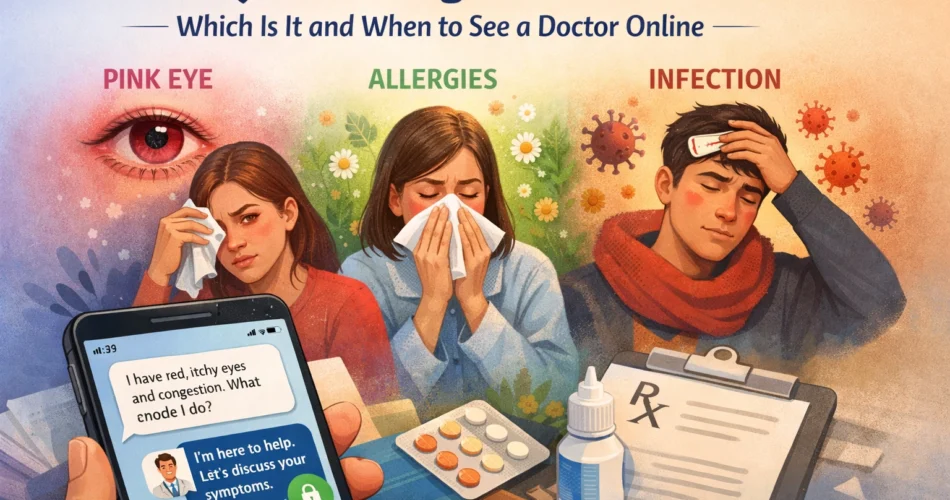
Medically reviewed by ChatWithDr's licensed healthcare providers
You wake up with red, irritated eyes and immediately wonder: Is this pink eye? Allergies? Something worse? The symptoms can look surprisingly similar, but the treatment (and whether you're contagious) depends entirely on the cause.
Understanding the difference between allergic conjunctivitis and infectious pink eye can save you time, money, and prevent spreading illness to others. Even better, knowing when you can chat with a doctor online versus when you need urgent care can get you feeling better faster, often without leaving home.
The Quick Comparison: What's Causing Your Red Eyes?
The fastest way to narrow down what's happening is to look at specific symptoms. Here's what distinguishes each condition:
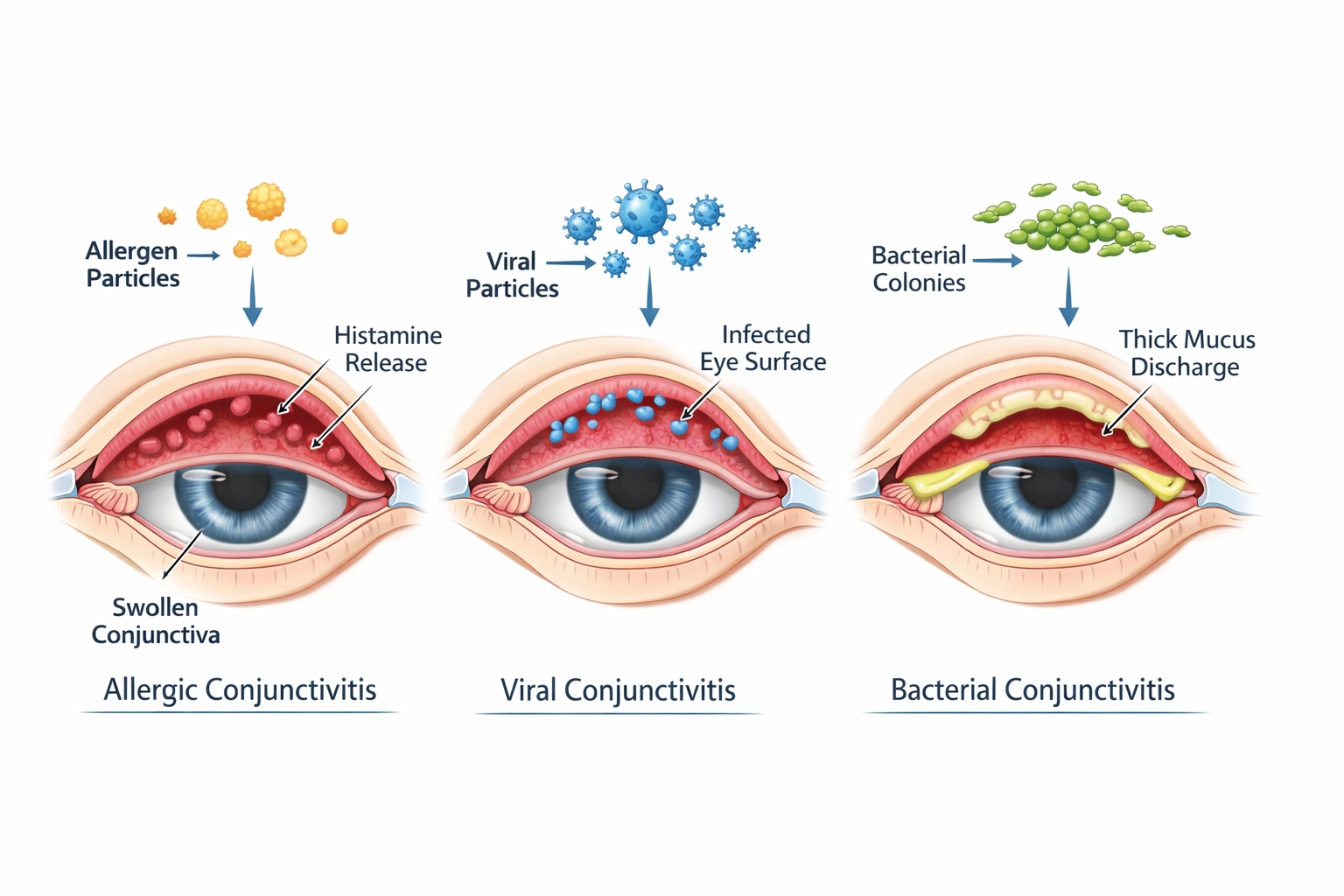
| Symptom | Allergies | Viral Pink Eye | Bacterial Pink Eye |
|---|---|---|---|
| Main Cause | Pollen, dust, pet dander | Viral infection (often with cold) | Bacterial infection |
| Itching Level | Intense, constant | Mild, gritty feeling | Mild to moderate |
| Discharge Type | Clear, watery, stringy | Watery, thin | Thick, yellow or green |
| Eyes Affected | Both eyes at once | Starts in one, may spread | Often one eye initially |
| Contagious? | No | Highly contagious | Highly contagious |
| Other Symptoms | Sneezing, runny nose | Sore throat, fever possible | Crusty eyelids, especially morning |
| Duration | As long as allergen present | 1-2 weeks | 1-2 weeks (faster with treatment) |
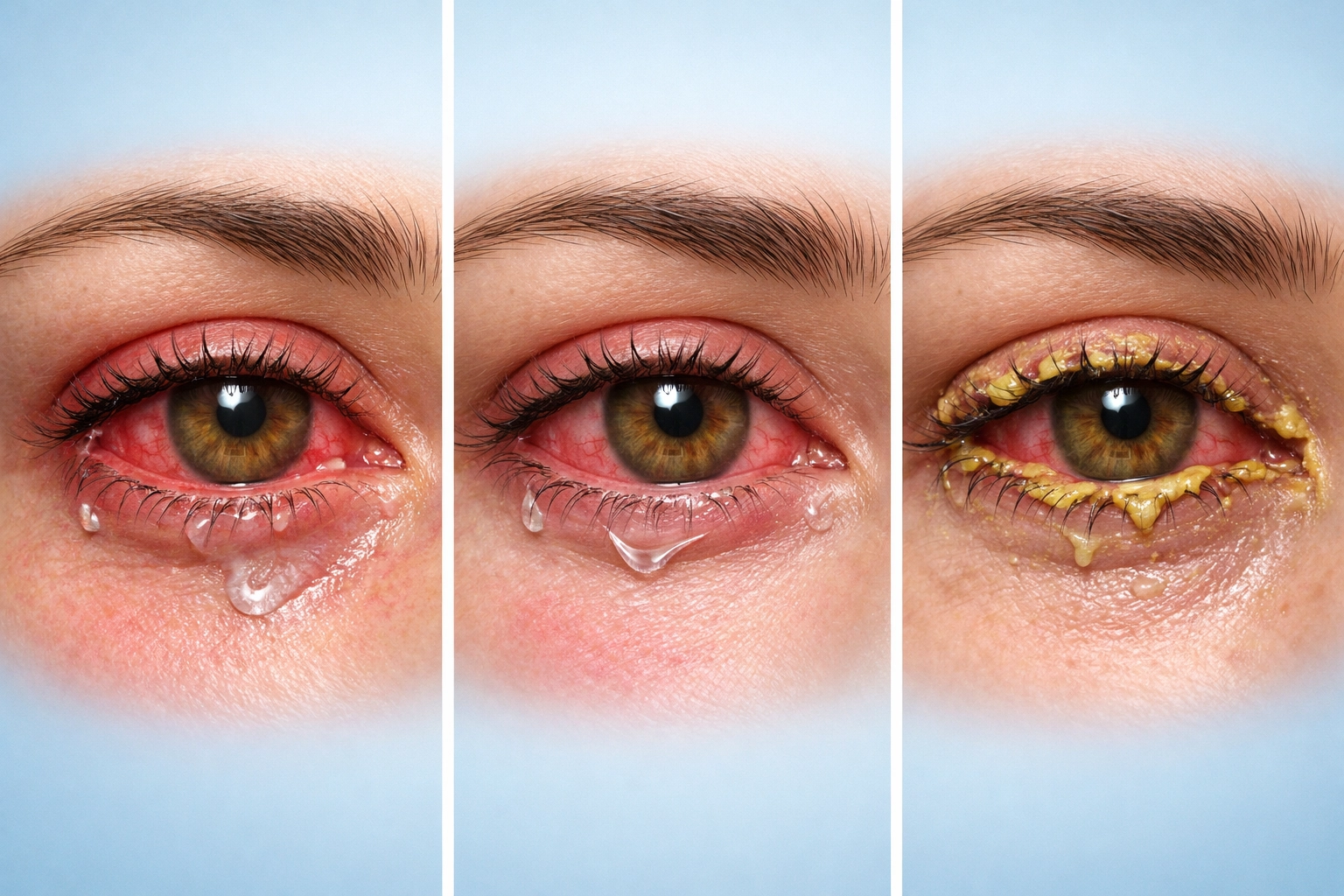
Allergic Conjunctivitis: When Your Eyes React to the Environment
If both your eyes suddenly became red, itchy, and watery at the same time: especially during spring or after being around a cat: you're probably dealing with allergic conjunctivitis.
Key identifying features:
- Relentless itching that makes you want to rub your eyes constantly
- Clear, watery discharge that might be stringy
- Puffy, swollen eyelids without crusty buildup
- Accompanying allergy symptoms like sneezing, runny nose, or nasal congestion
- Both eyes affected simultaneously
The good news? Allergies aren't contagious. The bad news? They'll stick around as long as you're exposed to whatever's triggering them.
What helps: Over-the-counter antihistamine eye drops can provide relief, along with oral allergy medications. Cold compresses reduce swelling and soothe itching. If symptoms persist or OTC options aren't cutting it, prescription allergy medications can make a significant difference.
Viral Pink Eye: The Contagious Eye Cold
Viral conjunctivitis often shows up alongside or after a cold, upper respiratory infection, or sore throat. It's incredibly contagious and spreads easily through shared towels, touching your face, or even being near someone who's coughing.
What to look for:
- Watery, thin discharge (not thick or colored)
- One eye typically gets infected first, then spreads to the other within days
- Gritty or sandy sensation in the eye
- Pink or red coloring in the white of the eye
- May accompany cold symptoms like sore throat, cough, or fever
- Light sensitivity and mild discomfort
Unfortunately, there's no antibiotic cure for viral pink eye since antibiotics only work on bacteria. It typically resolves on its own within 1-2 weeks.
What helps: Warm or cool compresses, artificial tears, and good hygiene to prevent spreading. Wash hands frequently, don't share towels or pillowcases, and avoid touching your eyes.

Bacterial Pink Eye: When You Need Antibiotics
Bacterial conjunctivitis is what most people think of when they hear "pink eye." It produces that telltale thick, goopy discharge that glues your eyelids shut overnight.
Telltale signs:
- Thick, yellow or green discharge that crusts over eyelids
- Eyelids stuck together when you wake up
- Usually starts in one eye but can spread
- Less itching than allergies, more of a gritty feeling
- Moderate redness and swelling
- Highly contagious
The upside? Unlike viral pink eye, bacterial conjunctivitis responds to antibiotic eye drops or ointment, which can speed up recovery significantly. Most people feel better within 24-48 hours of starting treatment.
This is exactly the kind of condition where online urgent care shines. You can get diagnosed and prescribed medication without sitting in a waiting room spreading (or catching) more germs.
Red Flags: When to Seek Immediate Medical Attention
Most cases of pink eye and allergic conjunctivitis are uncomfortable but not serious. However, certain symptoms require urgent evaluation: sometimes even emergency care.
Go to the ER or seek immediate care if you experience:
- Severe eye pain (not just irritation)
- Significant vision changes or blurry vision that doesn't clear with blinking
- Extreme light sensitivity where normal light is painful
- Eye trauma or foreign object that won't flush out
- Symptoms in a newborn (any eye redness in babies under 3 months)
- Symptoms with a compromised immune system
- No improvement after 3-4 days of antibiotic treatment
- Swelling or redness spreading beyond the eye to surrounding facial areas
For contact lens wearers: Remove your lenses immediately if you develop any eye redness or discomfort. Continuing to wear contacts with an eye infection can lead to serious complications, including corneal ulcers.
The Decision Tree: Telehealth, Urgent Care, or ER?
Not every red eye requires an emergency room visit, but knowing which option saves you time and money matters.
Use online telehealth when:
- You have classic pink eye symptoms (discharge, redness, mild discomfort)
- You suspect allergies but OTC treatments aren't working
- You need a prescription for antibiotic eye drops or allergy medication
- Symptoms are manageable but interfering with work or daily life
- You want to avoid exposing others in waiting rooms (or getting exposed yourself)
Choose urgent care for:
- Moderate eye pain with discharge
- Symptoms not clearly fitting one category
- Foreign object sensation that won't resolve
- Same-day evaluation needed but not life-threatening
Head to the ER for:
- Severe pain, vision loss, or trauma
- Chemical exposure to the eye
- Sudden vision changes
- Signs of serious infection spreading beyond the eye
How ChatWithDr Makes Pink Eye Treatment Simple
Here's the reality: most pink eye and allergy cases don't require you to take time off work, sit in a waiting room for an hour, and risk exposing yourself to more germs. ChatWithDr's online urgent care service offers a faster, more convenient alternative.
The process:
- Text with a licensed doctor 24/7: no account creation required
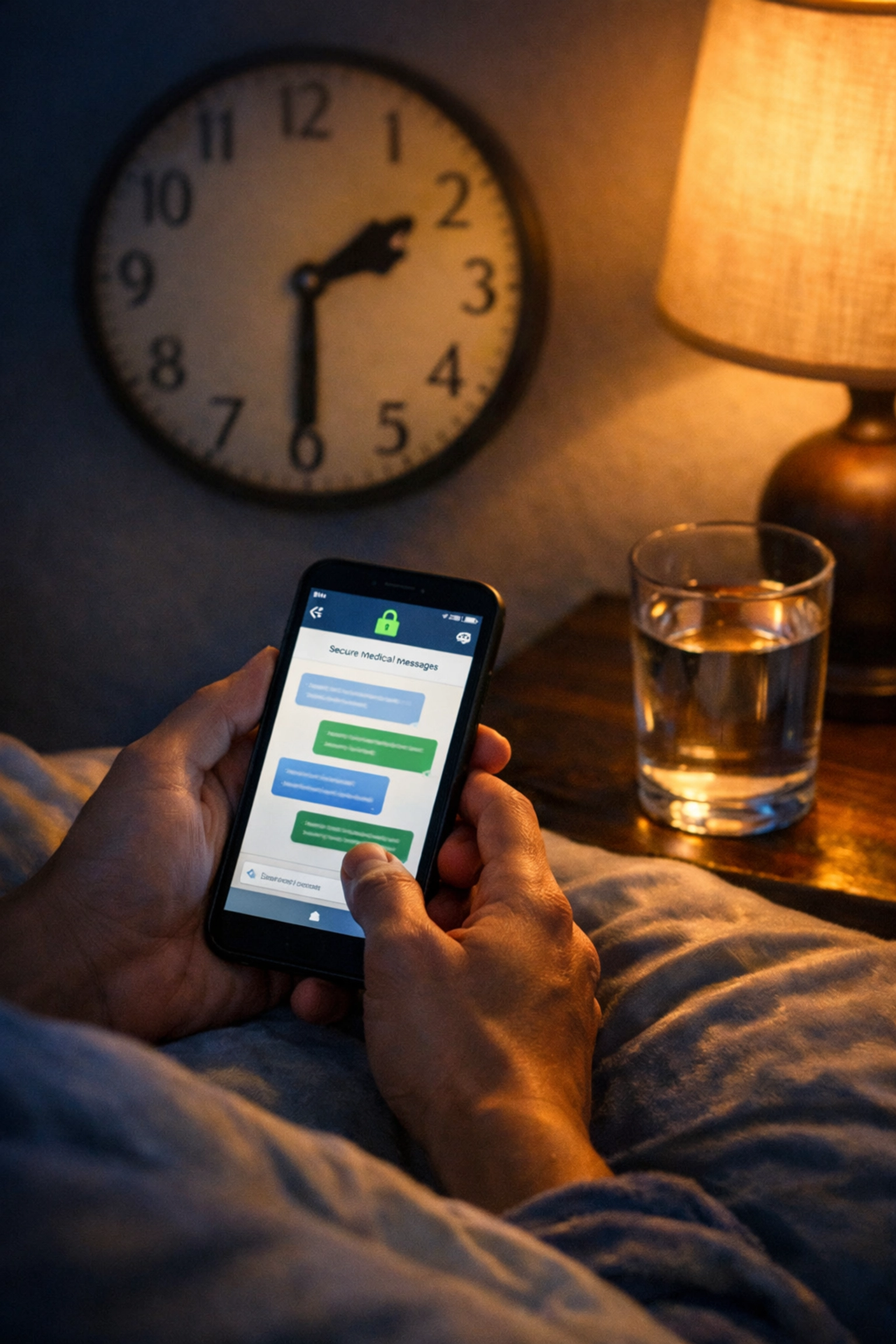
- Describe your symptoms through secure medical messaging
- Get diagnosed and treated in under 2 hours
- Receive prescriptions sent directly to your pharmacy if needed
- Pay a flat rate of $39.99: no hidden fees or insurance hassles
Whether it's 2 AM or Sunday afternoon, you can chat with a doctor and get treatment started without leaving your house. This is especially helpful when you're contagious and shouldn't be spreading germs in public spaces.
For bacterial pink eye, doctors can prescribe antibiotic eye drops or ointment. For allergies, they can recommend or prescribe stronger antihistamines and medicated eye drops that provide better relief than over-the-counter options.
Prevention: Keeping Pink Eye and Allergies at Bay
For infection prevention:
- Wash hands frequently, especially before touching your face
- Don't share towels, washcloths, or pillowcases
- Replace eye makeup every 3 months (sooner if you've had an infection)
- Clean contact lenses properly and replace as directed
- Avoid touching or rubbing your eyes
For allergy management:
- Keep windows closed during high pollen seasons
- Use HEPA filters in your home
- Wash bedding in hot water weekly
- Shower before bed to remove allergens from hair and skin
- Consider daily antihistamines during allergy season
The Bottom Line
Red, irritated eyes aren't always pink eye, and pink eye isn't always bacterial. Understanding the differences helps you get the right treatment faster:
- Intense itching + clear discharge + both eyes = probably allergies
- Watery discharge + cold symptoms + contagious = likely viral pink eye
- Thick, colored discharge + crusty eyes = bacterial pink eye needing antibiotics
The good news? Most cases can be diagnosed and treated through online consultation with a licensed doctor, saving you time and avoiding unnecessary exposure in waiting rooms. With ChatWithDr's flat $39.99 rate and under 2-hour response time, you can get relief started today: even if it's the middle of the night.
When in doubt, don't wait. Getting the right diagnosis early means faster relief and less chance of spreading infection to family, coworkers, or classmates.
Disclaimer: This information is not a substitute for professional medical advice, diagnosis, or treatment. Always seek the advice of your physician or qualified health provider with questions regarding medical conditions or treatments.
Related posts:
 Your Guide to Fast Pink Eye Treatment Online
  Pink Eye or Allergies? How to Tell the Difference (And Get Treatment Fast)
  How to Get Treatment for Pink Eye Online: Fast & Professional Care
  Pink Eye Relief Fast: Can You Get Eye Drops Prescribed via Online Medical Chat?
  Pink Eye Treatment Online: Get Prescription Eye Drops in Under 2 Hours