
Medically reviewed by ChatWithDr medical team
You've been congested for a week. Your head feels like it's filled with concrete. And you're wondering: is this still just a cold, or has it turned into something worse?
Here's the deal: most people can't tell the difference between a lingering cold and an actual sinus infection. And that confusion costs Americans over $1 billion annually in unnecessary ER visits and urgent care trips.
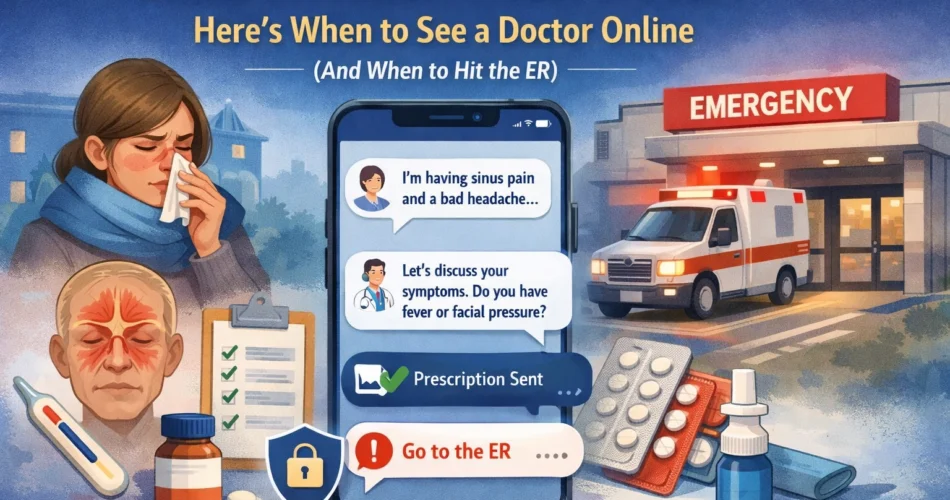
Let's clear things up so you know exactly when to treat symptoms at home, when to text a doctor online, and when to actually head to the emergency room.
The 10-Day Rule: Your First Clue
According to the Centers for Disease Control and Prevention, a common cold typically lasts 7-10 days. Symptoms start gradually, peak around day 3-5, then improve.
A sinus infection (sinusitis) follows a different pattern:
- Symptoms persist beyond 10-14 days without improvement
- You feel better for a few days, then suddenly get worse again
- Symptoms are more severe than a typical cold from the start
If your stuffed nose has overstayed its welcome past the two-week mark, you're likely dealing with a sinus infection rather than a stubborn cold.
Cold vs. Sinus Infection: The Symptom Showdown
Both conditions share overlapping symptoms: congestion, headache, fatigue: which makes diagnosis tricky. But there are distinctive red flags that separate the two.
Common Cold Symptoms:
- Clear or slightly cloudy nasal discharge
- Mild headache
- Scratchy or sore throat
- Sneezing and coughing
- Low-grade fever (rare in adults)
- Symptoms gradually improve after 5-7 days
Sinus Infection Symptoms:
- Thick, yellow or green nasal discharge (the hallmark sign)
- Facial pain and pressure, especially around the eyes, forehead, and cheeks
- Headache that worsens when you bend forward
- Reduced sense of smell or taste
- Bad breath (from postnasal drip)
- Upper tooth pain or ear pressure
- Persistent symptoms lasting 10+ days
The key distinguishing factor? Facial pressure and thick, discolored mucus. If you're pressing your fingers against your face trying to relieve pressure around your sinuses, that's your body waving a red flag.
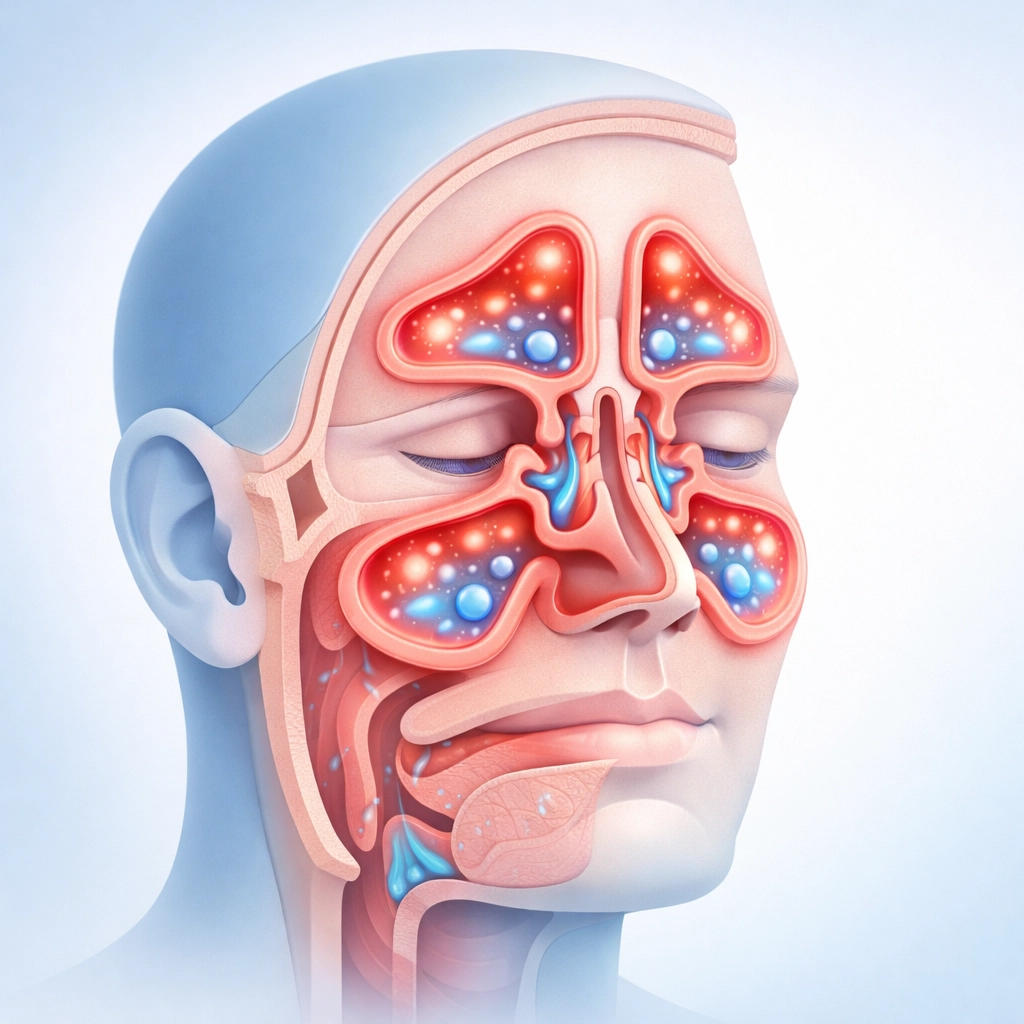
What's Actually Happening Inside Your Face
Your sinuses are air-filled cavities in your skull that produce mucus to trap bacteria and particles. When you catch a cold virus, those sinus passages can become inflamed and blocked.
In most cases, this resolves naturally. But sometimes:
- The trapped mucus becomes a breeding ground for bacteria
- The bacterial infection causes thicker, discolored discharge
- Inflammation persists, creating that signature facial pressure
About 90% of sinus infections start as viral (like colds) and resolve on their own. Only 2-10% develop into bacterial infections requiring antibiotics, according to research published in the American Family Physician journal.

When to Chat With a Doctor Online (Save $500+ and 3 Hours)
You don't need to sit in an urgent care waiting room for 2+ hours to get treatment for a sinus infection. Text-based telehealth: like ChatWithDr: lets you connect with licensed doctors who can diagnose and prescribe antibiotics if needed.
Chat with an online doctor if you experience:
- Symptoms lasting more than 10 days without improvement
- Thick yellow or green nasal discharge for 3+ days with facial pain
- Severe sinus pain or pressure that won't respond to OTC medications
- Fever above 100.4°F combined with facial pain
- Multiple sinus infections (3+ per year)
With ChatWithDr's $39.99 flat rate and less than 2-hour response time, you can get diagnosed and prescribed antibiotics: if medically appropriate: without leaving your couch. No account creation required, and doctors respond in under 2 hours, often much faster.
What online doctors can do for sinus infections:
- Review your complete symptom history via secure messaging
- Determine if your infection is viral or bacterial
- Prescribe antibiotics when clinically indicated
- Recommend effective OTC treatments
- Provide guidance on when symptoms require in-person evaluation
Start a consultation for sinus infection treatment and skip the waiting room entirely.
ER Red Flags: When It's NOT Just a Sinus Infection
While rare, sinus infections can occasionally spread to surrounding structures and become medical emergencies. These complications affect less than 1% of cases but require immediate emergency care.
Go to the ER immediately if you experience:
Vision or Eye Changes
- Swelling and redness around the eyes that lasts all day (not just morning puffiness)
- Double vision or decreased vision
- Eye pain or bulging eyes
- Inability to move your eye normally
Neurological Symptoms
- Severe headache with stiff neck (meningitis warning)
- Severe headache different from your usual sinus headaches
- Confusion or altered mental state
- Seizures
- Sensitivity to light with increasing irritability
Severe Systemic Symptoms
- High fever (103°F+) that won't break with medication
- Persistent vomiting
- Signs of sepsis (rapid heartbeat, rapid breathing, extreme weakness)
These symptoms may indicate the infection has spread to the brain (meningitis, brain abscess) or the eye socket (orbital cellulitis): both life-threatening conditions requiring IV antibiotics and immediate medical intervention.

The Decision Tree: Your 60-Second Action Plan
Still not sure what to do? Use this decision framework:
Treat at home if:
- Symptoms started less than 7 days ago
- You have mild congestion with clear or slightly cloudy mucus
- No facial pain or pressure
- No fever or only low-grade fever
- Symptoms are stable or gradually improving
Text a doctor online (ChatWithDr) if:
- Symptoms have lasted 10-14+ days
- You have thick yellow/green discharge with facial pain
- Previous home treatments haven't worked
- You have moderate symptoms affecting daily life
- You need a prescription but can't get to your doctor
Visit urgent care if:
- You need same-day in-person evaluation
- Your regular doctor isn't available for several days
- You prefer face-to-face consultation
- You have moderate to severe symptoms but no emergency red flags
Go to the ER if:
- You have ANY of the emergency red flags listed above
- Severe symptoms with sudden onset
- Vision changes, severe headache with neck stiffness, or altered mental state
What to Expect When You Text a Doctor About Sinus Symptoms
When you start a consultation through ChatWithDr for sinus infection treatment, here's what happens:
- Describe your symptoms via secure text messaging (no video call needed)
- Answer follow-up questions about symptom duration, color of discharge, facial pain location, fever, and prior treatments tried
- Receive a diagnosis from a licensed doctor within 2 hours
- Get a prescription sent to your pharmacy if antibiotics are medically necessary (usually amoxicillin or augmentin)
- Get guidance on symptom management including which OTC medications work best
The entire process costs $39.99: compared to $150-300 at urgent care or $500-1,500+ at the ER. And you can do it from your couch at 11 PM if needed.
Home Remedies That Actually Help (While You Wait for Treatment)
Whether you're treating a cold at home or waiting for antibiotics to kick in, these evidence-based remedies provide real relief:
Saline nasal irrigation: Use a neti pot or saline spray 2-3 times daily to flush mucus and reduce inflammation. Studies show this can be as effective as some medications.
Steam inhalation: Breathe steam from a bowl of hot water or hot shower for 10-15 minutes to loosen mucus.
Hydration: Drink at least 8-10 glasses of water daily to thin mucus secretions.
Warm compresses: Apply to your face for 10-15 minutes several times daily to relieve sinus pressure.
Sleep with your head elevated: Use extra pillows to promote drainage and reduce pressure.
OTC decongestants: Pseudoephedrine (Sudafed) or phenylephrine can reduce swelling, but don't use for more than 3 days to avoid rebound congestion.
Pain relievers: Ibuprofen or acetaminophen for headache and facial pain.
These won't cure a bacterial sinus infection, but they'll make you more comfortable while your body fights the infection: or while antibiotics do their work.

The Truth About Antibiotics for Sinus Infections
Here's what most people don't know: 70-80% of sinus infections resolve without antibiotics, even bacterial ones. Your immune system is surprisingly good at clearing these infections naturally within 2-3 weeks.
However, antibiotics are appropriate when:
- Symptoms have lasted 10+ days without improvement
- You have severe symptoms from the start (high fever, extreme facial pain)
- Symptoms worsen after initially improving (the "double worsening" pattern)
- You have risk factors (weakened immune system, structural sinus problems)
Online doctors can assess these factors through secure messaging and prescribe antibiotics when clinically indicated. They can also help you avoid unnecessary antibiotics when watchful waiting is the better approach.
If prescribed antibiotics, you'll typically feel significantly better within 48-72 hours. Complete the full course even if you feel better to prevent antibiotic resistance.
Other Conditions That Might Be Confusing You
Sometimes what seems like a sinus infection is actually:
Allergies: Year-round congestion with clear mucus, sneezing, and itchy eyes: but no fever or facial pain
Migraines: Severe headache with facial pressure that mimics sinus pain but includes light sensitivity and nausea (online migraine treatment available)
COVID-19 or flu: Similar symptoms but with body aches, fatigue, and fever (get tested for cold, flu, or COVID)
Strep throat: If your main symptom is throat pain rather than nasal symptoms (online strep testing available)
If you're unsure what's causing your symptoms, chatting with a doctor can help differentiate between these conditions and get you the right treatment.
The Bottom Line: Don't Suffer Through Two Weeks of Misery
Most colds resolve in 7-10 days. If you're past that mark with thick discharge and facial pain, you likely have a sinus infection that deserves medical attention.
The good news? You don't need to drag yourself to urgent care or waste hours in a waiting room. Text-based telehealth lets you connect with licensed doctors who can diagnose, prescribe, and guide your treatment: all from your phone.
Start a consultation with ChatWithDr for $39.99 (flat rate, no hidden fees) and get a response in under 2 hours. No account needed, no appointment required.
Know the ER red flags, trust your gut when something feels seriously wrong, but don't hesitate to seek convenient online care when you're dealing with stubborn sinus symptoms that won't quit.
Your sinuses: and your schedule: will thank you.
Disclaimer: This information is not a substitute for professional medical advice, diagnosis, or treatment. Always seek the advice of your physician or qualified health provider with questions regarding medical conditions or treatments.
Related posts:
 Why Do I Have So Much Mucus And How Can I Find Relief
  Cold vs Sinus Infection Know the Difference
  Sinus Infection vs. Cold: Which Is It and How to Get Antibiotics in Under 2 Hours
  Sinus Infection or Just a Cold? How to Get Sinus Infection Antibiotics Online Fast
  Your Guide to Fast Sinus Infection Treatment Online