

Medically reviewed by licensed physicians on the ChatWithDr medical team
You've been feeling awful for days. Your nose is stuffed, your head hurts, and you're wondering if it's "just a cold" or something more serious like a sinus infection. More importantly, if it is a bacterial sinus infection, can you actually get antibiotics quickly without spending hours in a waiting room?
The short answer: yes. But first, you need to know what you're dealing with.
According to the CDC, adults get an average of 2-3 colds per year, while acute sinusitis affects roughly 31 million Americans annually. The symptoms overlap significantly, which is why so many people struggle to tell them apart. Understanding the difference isn't just about satisfying your curiosity: it directly impacts whether you need antibiotics and how quickly you should seek treatment.
Cold vs. Sinus Infection: What's Really Going On?
Both conditions affect your upper respiratory system, but they're fundamentally different in cause, duration, and treatment needs.
The common cold is always caused by a virus (usually rhinovirus). It typically peaks within 3-5 days and resolves completely within 5-10 days. Your body fights it off on its own, and antibiotics won't help because they don't work against viruses.
A sinus infection (sinusitis) happens when your sinus cavities become inflamed and swollen. While many sinus infections start as viral (often following a cold), some develop into bacterial infections: and those may require antibiotics.

The 5 Key Differences That Matter
1. Duration of Symptoms
This is your most reliable clue. A cold improves within a week. If your symptoms persist beyond 10-12 days without improvement: or if they worsen after initially getting better: you're likely dealing with a sinus infection rather than a simple cold.
2. Facial Pressure and Pain
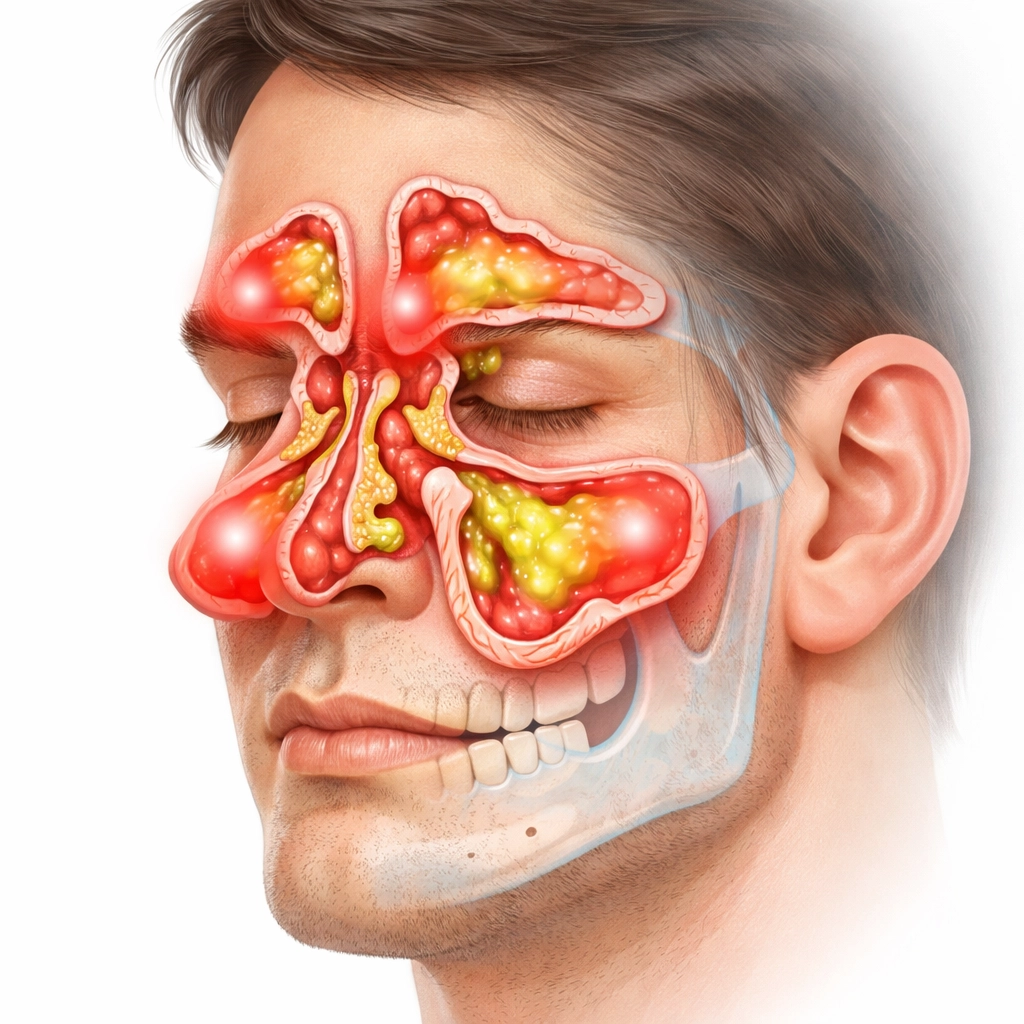
With a cold, you might feel mild sinus irritation or stuffiness. With a sinus infection, you'll experience constant, localized pain and pressure in specific areas:
- Across your cheeks and upper teeth
- Between and behind your eyes
- Across your forehead
- Pain that worsens when you bend forward or lie down
This pain happens because inflamed sinuses create pressure buildup in the closed cavities of your face.
3. Mucus Color and Consistency
While not definitive on its own, mucus characteristics provide important clues:
- Cold: Clear or white, watery mucus
- Sinus infection: Thick, yellow, or green mucus that may have an unpleasant odor
The color change happens because your immune system sends white blood cells to fight infection, and these cells contain enzymes that give mucus that yellow-green appearance.
4. Fever Patterns
Low-grade fever (under 100.4°F) is more common with colds, particularly in children. With bacterial sinus infections, you may develop a higher or more persistent fever: though many sinus infections don't cause fever at all.
5. Additional Sinus-Specific Symptoms
Sinus infections often come with symptoms that colds don't typically cause:
- Bad breath (halitosis) despite good oral hygiene
- Reduced or lost sense of smell and taste
- Persistent postnasal drip with thick discharge
- Tooth pain in your upper teeth
- Ear pressure or fullness
- Fatigue that feels more severe than a typical cold
When It's an Emergency: Red Flags to Watch For
While most sinus infections can be managed with outpatient care, certain symptoms require immediate emergency attention:
🚨 Go to the ER if you experience:
- Severe headache with high fever and stiff neck
- Sudden vision changes, double vision, or eye swelling
- Confusion or altered mental status
- Seizures
- Severe facial swelling or redness
- Difficulty breathing or swallowing
- Symptoms that rapidly worsen despite treatment
These symptoms could indicate serious complications like meningitis, brain abscess, or orbital cellulitis: rare but serious conditions that require immediate medical intervention.
Do You Actually Need Antibiotics?
Here's what most people don't realize: most sinus infections are viral and will resolve on their own without antibiotics. In fact, according to infectious disease specialists, roughly 70% of acute sinusitis cases are viral.
Antibiotics only work for bacterial sinus infections, and your body often clears these without medication too.
Signs You Might Need Antibiotics
Healthcare providers typically consider antibiotics when you have:
- Symptoms lasting 10+ days without improvement
- Severe symptoms from the start (high fever 102°F+, severe facial pain, purulent nasal discharge for 3-4 consecutive days)
- "Double worsening": you start to feel better, then suddenly get worse again
- Multiple sinus infections in a short period (chronic sinusitis)
The decision to prescribe antibiotics requires professional medical evaluation. Taking antibiotics when you don't need them contributes to antibiotic resistance and can cause unnecessary side effects.
Telehealth vs. Urgent Care: Making the Right Choice
When you're miserable with sinus symptoms, you have several options for getting medical help. Here's how to decide:
Choose Telehealth When:
- Your symptoms meet the criteria for possible bacterial infection (10+ days duration, severe symptoms, or double worsening)
- You don't have emergency warning signs
- You want treatment without leaving home
- You need a prescription quickly
- Cost is a consideration ($39.99 flat fee vs. $100-200+ for urgent care)
Choose Urgent Care When:
- You have moderate fever with facial swelling
- You've tried antibiotics before and they didn't work
- You need imaging (CT scan) to rule out complications
- You prefer in-person examination
Choose the ER When:
- You have any of the red flag symptoms listed above
- Your symptoms are severe and rapidly worsening
How to Get Antibiotics in Under 2 Hours Through Telehealth
If you've determined you likely have a bacterial sinus infection and need antibiotics, here's exactly how online urgent care with ChatWithDr works:
Step 1: Start Your Consultation
Text with a licensed physician through secure medical messaging: no video call required, no account setup needed. Simply describe your symptoms, how long you've had them, and any treatments you've tried.
Step 2: Provider Review (Under 2 Hours)
A U.S.-licensed doctor reviews your case and asks follow-up questions to determine if antibiotics are appropriate. This typically happens within 2 hours, often much faster.
Step 3: Prescription Sent
If the doctor determines antibiotics are medically necessary, they send the prescription directly to your pharmacy of choice electronically. You can pick it up the same day.
Total cost: $39.99 flat rate: no insurance required, no surprise bills.
This approach saves you:
- 2-4 hours in a waiting room
- $60-150+ in urgent care fees
- The hassle of exposing others to your illness
- The need to miss work or arrange childcare
It's particularly valuable when you're already feeling terrible and the last thing you want to do is sit in a crowded waiting room.

Home Remedies That Actually Help
Whether your sinus infection is viral or bacterial, these evidence-based home remedies can provide significant symptom relief:
Saline nasal irrigation: Use a neti pot or saline spray 2-3 times daily to flush out mucus and reduce inflammation.
Stay hydrated: Drink plenty of water to thin mucus and support your immune system.
Warm compresses: Apply warm, damp towels to your face several times daily to reduce pain and pressure.
Steam inhalation: Breathe in steam from a hot shower or bowl of hot water to loosen congestion.
Elevate your head: Sleep with an extra pillow to promote drainage and reduce nighttime congestion.
Over-the-counter medications: Decongestants (pseudoephedrine), pain relievers (ibuprofen or acetaminophen), and nasal corticosteroid sprays can provide relief. Always follow package directions.
These remedies work for both colds and sinus infections and can significantly reduce your discomfort while your body heals.
When to Follow Up
If you've started antibiotics for a bacterial sinus infection, you should notice improvement within 48-72 hours. Contact your healthcare provider again if:
- Your symptoms don't improve after 3 days on antibiotics
- Your symptoms worsen while on antibiotics
- You develop new symptoms like high fever or severe headache
- Your symptoms return shortly after finishing antibiotics
Some people need a longer course of antibiotics or a different antibiotic if the first one doesn't work.
The Bottom Line
The difference between a cold and sinus infection comes down to duration, symptom severity, and specific signs like facial pressure and thick, discolored mucus. Most importantly: not all sinus infections need antibiotics, but when they do, you don't have to wait days to get treatment.
Modern telehealth services make it possible to text with a licensed physician, get an evaluation, and receive a prescription sent to your pharmacy: all within 2 hours and all from your couch. For many people dealing with sinus infections, it's the fastest, most affordable, and most convenient path to feeling better.
If you're struggling to decide whether your symptoms warrant medical attention, err on the side of getting evaluated. A quick consultation can provide peace of mind, proper diagnosis, and a treatment plan that gets you back to feeling like yourself.
Ready to get relief? Connect with a licensed doctor through secure text messaging and get the care you need today.
Disclaimer: This information is not a substitute for professional medical advice, diagnosis, or treatment. Always seek the advice of your physician or qualified health provider with questions regarding medical conditions or treatments.
Related posts:
 Why Do I Have So Much Mucus And How Can I Find Relief
  Cold vs Sinus Infection Know the Difference
  Sinus Infection or Just a Cold? Here’s When to See a Doctor Online (And When to Hit the ER)
  Sinus Infection or Just a Cold? How to Get Sinus Infection Antibiotics Online Fast
  Sinus Infection vs Cold: How to Tell the Difference (And Get Treatment in Under 2 Hours)