
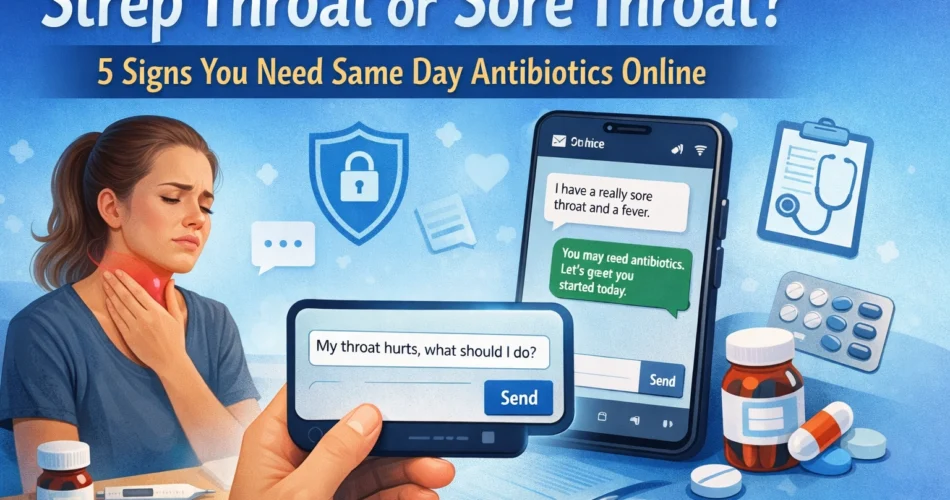
Medically reviewed by ChatWithDr's licensed healthcare providers | Last updated February 7, 2026
Waking up with a painful sore throat raises an immediate question: is this just a viral cold that will pass on its own, or is it strep throat that needs antibiotics today? The difference matters more than you might think. While most sore throats resolve without treatment, strep throat: caused by Group A Streptococcus bacteria: requires prompt antibiotic therapy to prevent serious complications like rheumatic fever and kidney inflammation.
The challenge is that strep throat and viral sore throats share overlapping symptoms, making it difficult to distinguish between them at home. However, certain telltale signs can help you determine whether you need same-day medical attention and a prescription. Here are five critical indicators that suggest you're dealing with strep throat rather than a common viral infection.
Why the Distinction Between Strep and Viral Sore Throat Matters
Not all sore throats are created equal. Viral infections account for approximately 70-85% of sore throats in adults, and these clear up on their own within 3-7 days without antibiotics. In fact, taking antibiotics for a viral sore throat won't help you feel better: it only increases your risk of side effects and contributes to antibiotic resistance.
Strep throat, on the other hand, is a bacterial infection that responds quickly to antibiotic treatment. Left untreated, it can lead to:
- Rheumatic fever: A serious inflammatory condition affecting the heart, joints, and nervous system
- Post-streptococcal glomerulonephritis: Kidney inflammation that can cause permanent damage
- Peritonsillar abscess: A painful collection of pus near the tonsils requiring surgical drainage
- Scarlet fever: A rash-producing complication more common in children
The good news is that when strep throat is treated with antibiotics within the first 9 days of symptom onset, these complications are almost entirely preventable. This makes early identification and same-day treatment crucial.

The 5 Signs You Need Same-Day Antibiotics for Strep Throat
1. Sudden Onset of High Fever (101°F or Higher)
One of the most distinctive features of strep throat is how quickly it hits. Unlike a viral sore throat that gradually worsens over several days, strep throat typically causes a high fever that appears suddenly: often overnight. You might go to bed feeling fine and wake up with a temperature of 101-104°F along with severe throat pain.
Viral sore throats, in contrast, usually develop slowly and may not produce a fever at all. If they do, the fever is typically low-grade and accompanied by other cold symptoms like congestion or coughing. The rapid onset of high fever combined with throat pain is a red flag that you're likely dealing with a bacterial infection that needs antibiotics.
2. Severe, Painful Difficulty Swallowing
Strep throat doesn't just make your throat uncomfortable: it makes swallowing genuinely painful. Patients often describe it as feeling like swallowing glass or razors. This intense pain comes on quickly and significantly interferes with eating, drinking, and even swallowing your own saliva.
While viral sore throats can certainly cause discomfort when swallowing, the pain is typically mild to moderate and more of a scratchy, irritated sensation. If you find yourself avoiding food and liquids because the pain is too severe, or if you're experiencing sharp, stabbing pain with each swallow, strep throat is more likely.
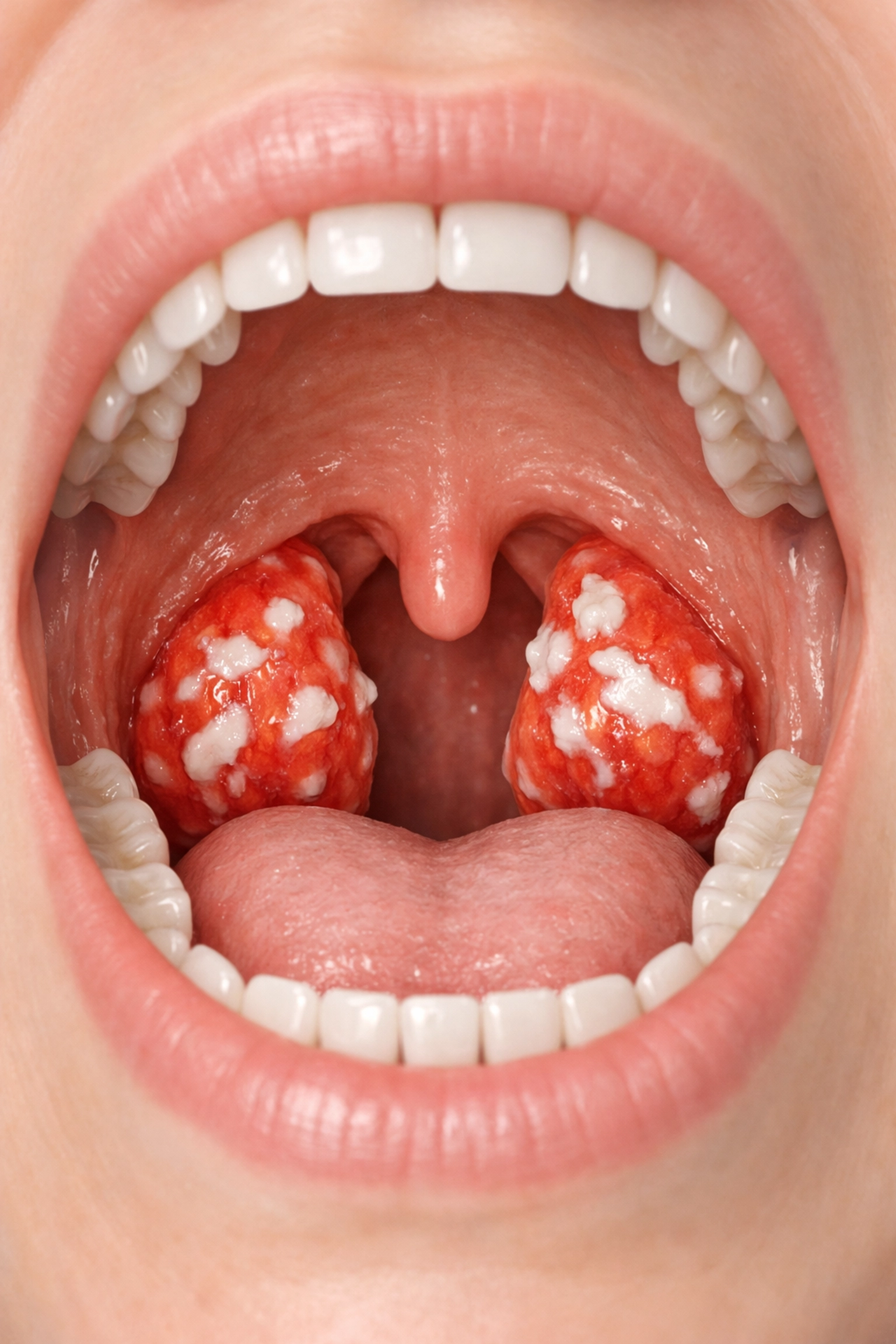
3. Red, Swollen Tonsils With White Patches or Streaks of Pus
Visual examination of your throat can provide valuable clues. Grab a flashlight and look in the mirror at the back of your throat. Strep throat characteristically causes:
- Bright red, inflamed tonsils that appear larger than normal
- White or yellowish patches on the tonsils
- White streaks or coating on the tonsils
- Sometimes small red spots (petechiae) on the roof of your mouth
These white patches are collections of pus and debris: a hallmark sign of bacterial infection. Viral sore throats may cause redness and swelling, but they typically don't produce the white patches or pus that strep does. If you see white spots on very red, swollen tonsils, it's time to seek medical evaluation for a strep test.
4. Swollen, Tender Lymph Nodes in the Front of Your Neck
Your lymph nodes are part of your immune system's defense mechanism, and they become swollen when fighting infection. With strep throat, the lymph nodes in the front of your neck (just below your jaw and near your earlobes) become noticeably enlarged and tender to the touch.
To check, use your fingertips to gently feel along both sides of your neck from your jaw down toward your collarbone. With strep, you'll typically find firm, marble-sized lumps that feel sore when pressed. These swollen nodes are one of the most reliable physical signs of bacterial infection.
While viral infections can also cause swollen lymph nodes, they're usually less pronounced and may be present throughout your neck rather than concentrated in the front.
5. Sore Throat WITHOUT Cold or Upper Respiratory Symptoms
This is perhaps the most important distinguishing factor: strep throat typically occurs without the typical cold symptoms. If you have a sore throat but no cough, no runny nose, no congestion, and no sneezing, you're much more likely to have strep rather than a viral infection.
Viral sore throats are almost always accompanied by other respiratory symptoms because the virus affects multiple areas of your upper respiratory tract. You'll usually have a runny or stuffy nose, coughing, sneezing, watery eyes, or voice hoarseness.
Strep throat, however, targets specifically the throat and tonsils. If your throat hurts intensely but you can breathe clearly through your nose and you're not coughing, that's a strong indicator of bacterial rather than viral infection.
Emergency Red Flags: When to Go to the ER Instead
While most cases of strep throat can be safely treated through online urgent care with same-day antibiotic prescriptions, certain symptoms require immediate emergency department evaluation:
- Difficulty breathing or shortness of breath: This could indicate a throat abscess or severe swelling blocking your airway
- Excessive drooling or inability to swallow saliva: Suggests severe throat swelling or abscess formation
- Muffled or "hot potato" voice: A specific quality of voice change that indicates a peritonsillar abscess
- Stiff neck with severe headache: Could indicate meningitis
- Signs of dehydration: Including decreased urination, dizziness, or confusion from inability to drink fluids
- Rash with fever: Could indicate scarlet fever or toxic shock syndrome
- Severe one-sided throat pain: Suggests possible abscess formation
If you experience any of these symptoms, call 911 or go directly to an emergency room rather than seeking online or urgent care treatment.

Telehealth vs. Urgent Care: Which Should You Choose?
For most cases of suspected strep throat, you have two excellent options for same-day diagnosis and treatment. Here's how to decide:
Choose Telehealth When:
- You have classic strep symptoms (the 5 signs above) without emergency red flags
- You need rapid antibiotic treatment but want to avoid exposure to other sick patients
- You prefer the convenience of getting diagnosed and treated from home
- You need a prescription sent directly to your pharmacy
- You want affordable care without insurance hassles
How it works: Through text-based medical messaging with a licensed doctor, you can describe your symptoms, share photos of your throat if needed, and receive a clinical assessment. If your symptoms strongly suggest strep throat, doctors can prescribe antibiotics based on clinical diagnosis. In cases where the presentation is less clear, they may recommend a rapid strep test at a nearby pharmacy or lab before prescribing.
Choose In-Person Urgent Care When:
- Your symptoms are ambiguous and you want the certainty of a rapid strep test before taking antibiotics
- You have severe symptoms that might require IV fluids or injectable medications
- You prefer face-to-face medical evaluation
- You have complications like suspected abscess or severe dehydration
The rapid strep test takes only 5-10 minutes in an urgent care setting and provides definitive diagnosis. However, many clinical studies show that when patients present with 3 or more of the classic strep signs (fever, swollen tonsils with pus, swollen neck nodes, no cough), the clinical diagnosis is highly accurate: making empiric antibiotic treatment reasonable.
How ChatWithDr Provides Same-Day Strep Throat Treatment
When you're dealing with painful strep throat symptoms, the last thing you want is to sit in a waiting room for hours or navigate complicated insurance requirements. ChatWithDr offers a streamlined approach to getting the antibiotics you need: fast.
The ChatWithDr advantage:
- $39.99 flat rate: No hidden fees, no insurance needed, no surprise bills
- No account creation required: Get care immediately without registration hassles
- Under 2-hour response time: Connect with a licensed doctor quickly when symptoms hit
- Text-based consultations: Describe symptoms and share throat photos securely via medical messaging
- Prescription sent to your pharmacy: Antibiotics ready for pickup in hours, not days
- Available 24/7: Access care evenings, weekends, and holidays when symptoms don't wait
Our licensed healthcare providers evaluate your symptoms through secure text messaging. If your presentation is consistent with strep throat: particularly if you have the five classic signs outlined above: we can prescribe appropriate antibiotics such as amoxicillin or azithromycin the same day. For borderline cases, we'll recommend confirmation testing at a nearby pharmacy or lab before prescribing.
Most patients with strep throat start feeling significantly better within 24-48 hours of starting antibiotics, with pain and fever improving first. However, it's critical to complete the full antibiotic course (typically 10 days) even after you feel better, to ensure the infection is completely cleared and prevent complications.
Take Action on Strep Throat Symptoms Today
Strep throat won't improve on its own: it requires antibiotic treatment to resolve the infection and prevent serious complications. If you're experiencing sudden fever, severe throat pain, white patches on your tonsils, swollen neck glands, and no cold symptoms, don't wait to seek treatment.
Chat with a licensed doctor through ChatWithDr today for fast, affordable strep throat evaluation and same-day antibiotic prescriptions. Your throat: and your overall health( will thank you.)
Related posts:
 Tonsillitis vs Strep Throat What’s the Real Difference
  Strep Throat vs Sore Throat: How to Tell the Difference
  Is Your Sore Throat Strep? Here's the Truth (Plus How to Get Antibiotics Today)
  How long does strep last: Timeline, Causes, and Quick Relief
  Strep Throat Antibiotics Online: Fast Diagnosis and Treatment Guide